

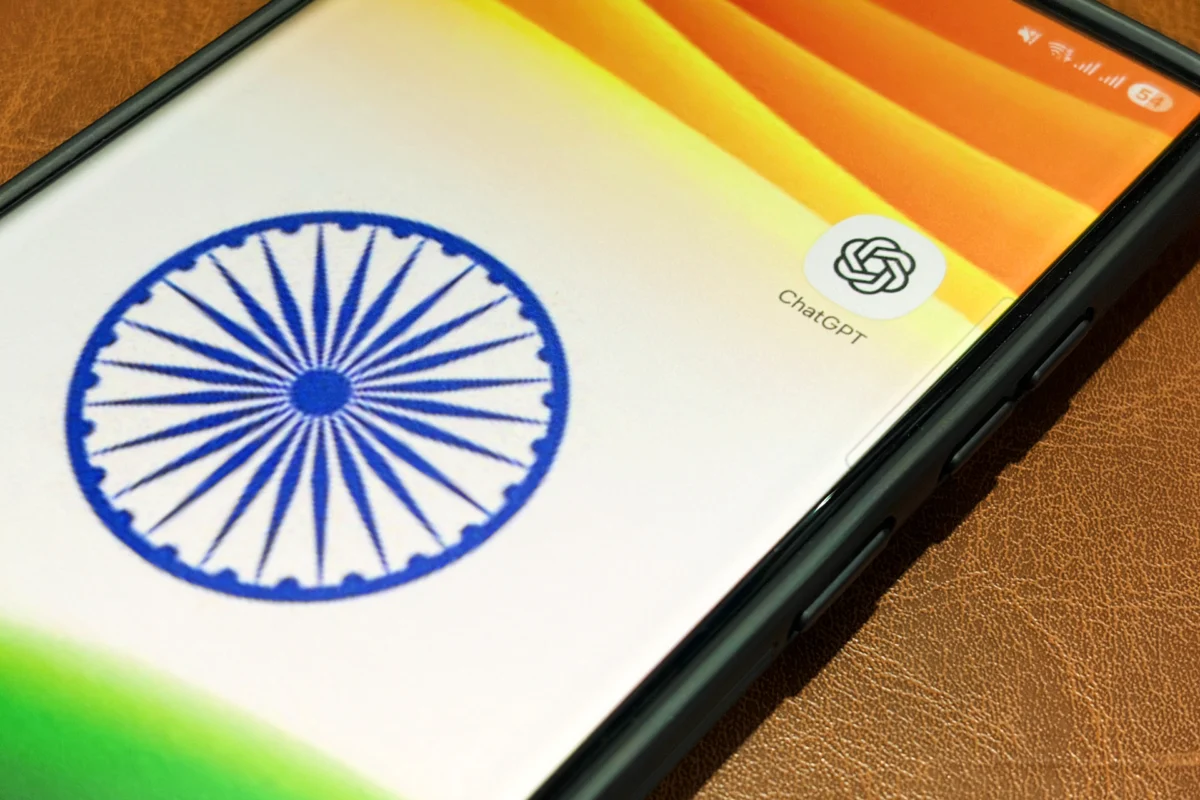
OpenAI officially announced on Thursday that it will begin integrating advertisements into its ChatGPT Free and ChatGPT Go subscription tiers in India, marking a significant shift in how the artificial intelligence giant monetizes its massive user base in the world’s most populous nation. This decision follows a recent update to the company’s terms of service, which paved the way for a transition from a purely subscription-based model to a hybrid revenue structure that includes digital advertising. India represents the third major market to receive this update, following a rollout in the United States in February and a subsequent expansion into European territories earlier this month.
The introduction of ads in India is not merely a regional update but a cornerstone of OpenAI’s broader fiscal strategy as it prepares for a highly anticipated initial public offering (IPO), expected to take place between late 2026 and 2027. By leveraging its 100 million weekly active users in India—the largest concentration of ChatGPT users outside of the United States—OpenAI aims to solidify its revenue streams and demonstrate a sustainable business model to potential investors. The move highlights a growing trend in the generative AI sector where the immense costs of computing and model training are being offset by traditional digital marketing mechanisms.
The Strategic Importance of the Indian Market
India has emerged as the primary growth engine for OpenAI’s consumer-facing products. In February 2026, CEO Sam Altman confirmed that the country had surpassed 100 million weekly active users, a milestone driven by the rapid adoption of mobile technology and a burgeoning developer ecosystem. A vast majority of these users currently utilize the "Free" tier or the "Go" tier—a localized, lower-priced subscription plan specifically designed for emerging markets.
The "ChatGPT Go" plan was introduced in August 2025 at a price point of under $5 (approximately ₹400), aimed at capturing users who found the standard $20 Plus subscription prohibitively expensive. To further penetrate the market, OpenAI even offered a limited-time promotion where the Go tier was provided free of charge for an entire year to select demographics. These aggressive expansion tactics have successfully built a massive audience, which OpenAI is now ready to monetize through high-context advertising.
To lead these expansion efforts, OpenAI recently poached the former head of Uber India to serve as its regional managing director. This appointment signals the company’s intent to move beyond being a Silicon Valley lab and toward becoming a localized service provider capable of navigating India’s complex regulatory and commercial landscape.
Advertising Mechanics and Brand Partnerships
The rollout in India is launching with a pilot program featuring 50 prominent global and domestic brands. To facilitate this, OpenAI has entered into strategic partnerships with two of the world’s largest advertising holding companies: WPP and Omnicom. These agencies will assist brands in navigating the nuances of AI-integrated advertising, ensuring that promotional content feels native to the conversational interface.
Central to this new initiative is the "ChatGPT Ad Manager," a self-service platform scheduled to launch next month. The tool is designed to democratize access to AI advertising, allowing businesses of all sizes to create targeted campaigns. OpenAI has set a relatively low barrier to entry, with a daily minimum budget requirement of just ₹725 (approximately $7.60). This pricing strategy is clearly intended to attract India’s millions of small and medium-sized enterprises (SMEs) that already utilize platforms like Meta and Google for digital outreach.
Dave Dugan, OpenAI’s head of global ads solutions, emphasized that the platform’s value proposition lies in "high-context moments." Unlike traditional display ads that appear on a sidebar or pre-roll video ads that interrupt content, ChatGPT ads are intended to appear when a user is in the "consideration" phase of a decision. For example, if a user asks for travel recommendations in Kerala, the AI might surface a sponsored suggestion for a specific resort or airline, providing what the company calls a "seamless integration of commerce and conversation."
A Chronology of OpenAI’s Monetization Journey
The path to advertising has been a gradual one for OpenAI, which initially positioned itself as a research-focused non-profit. The transition to a "capped-profit" entity and eventually a commercial powerhouse can be traced through several key milestones:
- November 2022: ChatGPT is launched as a free research preview, gaining 1 million users in five days.
- February 2023: OpenAI launches ChatGPT Plus, its first $20/month subscription model.
- Late 2024: Internal discussions begin regarding the long-term sustainability of compute costs vs. subscription revenue.
- August 2025: Launch of ChatGPT Go in India, testing a sub-$5 price point for emerging markets.
- February 2026: Advertising is introduced to the U.S. market for Free and Plus users on a limited basis.
- June 2026: OpenAI records a record Q2 revenue of $6.7 billion, up from $5.7 billion in Q1, signaling rapid growth but also increasing operational expenses.
- July 2026: Official launch of ads in India and Europe, marking the completion of its first-phase global ad rollout.
Financial Performance and IPO Aspirations
OpenAI’s financial trajectory is under intense scrutiny as the company nears its potential IPO. According to data reported by The Wall Street Journal, the company’s revenue growth has been robust, yet it faces stiff competition from rivals like Anthropic and Google’s Gemini. Recording $6.7 billion in the second quarter of 2026 represents a significant leap, but the costs associated with maintaining the infrastructure for hundreds of millions of users are estimated to be in the billions.
The company has set an ambitious goal of reaching 220 million paying subscribers by 2030. However, as of late 2025, only about 35 million users were paying for the premium Plus and Pro plans. This gap between total users and paying subscribers is the primary driver behind the ad-supported model. By monetizing the "Free" and "Go" tiers through ads, OpenAI can generate revenue from the 80% of its user base that is currently a cost center rather than a profit center.
Industry analysts suggest that the advertising arm could eventually account for 20% to 30% of OpenAI’s total revenue, mirroring the evolution of other "freemium" platforms like Spotify or YouTube. For investors, this diversification reduces the risk associated with a purely subscription-based model, which may eventually hit a ceiling in price-sensitive markets.
Competitive Landscape and Implications for the Ad Industry
The entry of OpenAI into the Indian advertising market poses a direct challenge to the "duopoly" of Google and Meta. In India, digital ad spending has seen double-digit growth annually, with a shift toward "intent-based" search. Because ChatGPT is increasingly used as a search alternative, it sits at the top of the marketing funnel where users are actively seeking information.
Unlike Google Search, which provides a list of links, ChatGPT provides a synthesized answer. This gives OpenAI a unique advantage: the ability to provide a "single-source" recommendation. While this is lucrative for advertisers, it has raised concerns among consumer advocacy groups regarding the objectivity of AI responses. OpenAI has stated that sponsored content will be clearly labeled to maintain transparency and ensure that users can distinguish between organic AI generation and paid promotions.
Furthermore, OpenAI’s heavy advertising during major Indian sporting events, such as the Women’s Premier League (WPL) and the Indian Premier League (IPL), demonstrates a commitment to brand building that is rare for AI labs. By becoming a household name in India, OpenAI is positioning itself not just as a tool for coders and writers, but as a general-purpose utility for the masses.
Broader Impact and Ethical Considerations
The introduction of ads into an AI interface brings about several technical and ethical considerations. First is the impact on latency and user experience. OpenAI has assured users that the inclusion of ads will not degrade the performance of the model or increase wait times for responses.
Second is the issue of data privacy. To serve "relevant, high-context" ads, the system must analyze user prompts in real-time. OpenAI has updated its privacy policy to clarify how data is used for ad targeting, asserting that personal identifiers are stripped and that advertisers do not have access to individual chat histories. However, in a market like India, where data protection laws (such as the Digital Personal Data Protection Act) are still being fully implemented, the company will face rigorous oversight.
Finally, there is the question of "AI Hallucination" in the context of advertising. If an AI generates a factual error while presenting a sponsored link, it could lead to liability issues for both the platform and the brand. OpenAI’s partnership with WPP and Omnicom is likely intended to create a framework for "brand safety," ensuring that ads do not appear alongside controversial or harmful AI-generated content.
Conclusion
The rollout of ads in India represents a pivotal moment in the history of OpenAI. It signifies the end of the "experimentation phase" of generative AI and the beginning of its era as a mature, commercialized industry. By targeting India’s 100 million users with a low-cost ad manager and strategic agency partnerships, OpenAI is betting that the future of AI is not just in the code, but in the commerce that the code facilitates. As the company marches toward its IPO, the success of this ad-supported model in India will serve as a litmus test for its ability to turn global popularity into long-term financial stability.
