

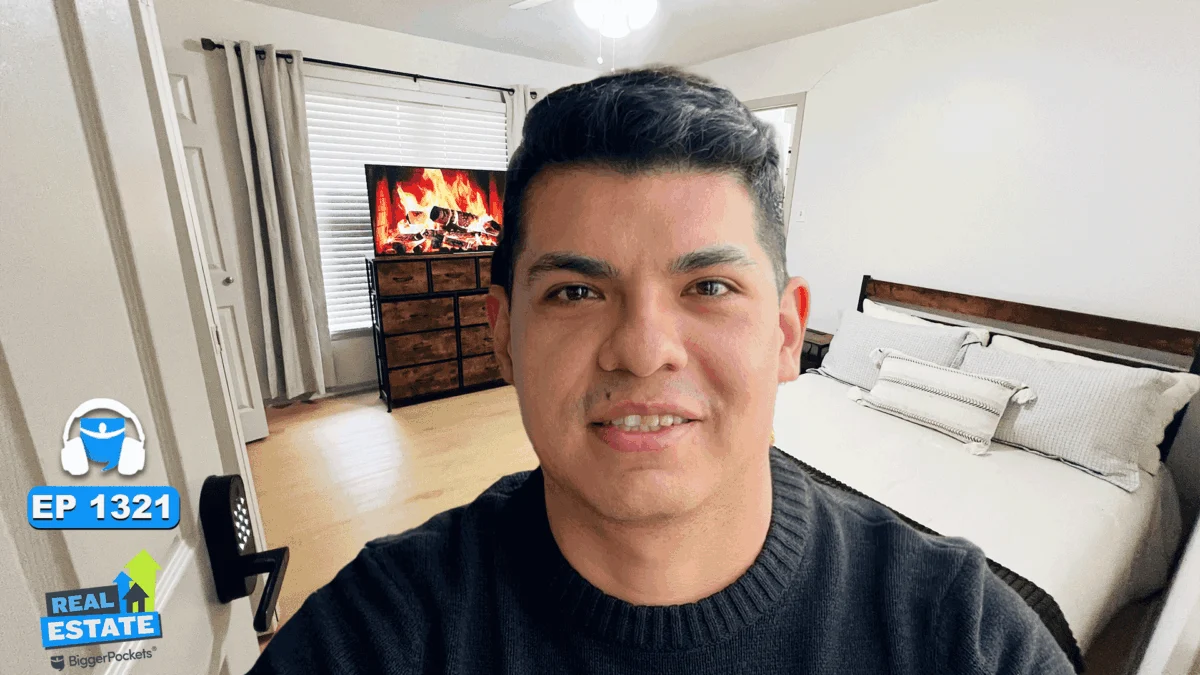
The transition from the hospitality industry to high-stakes real estate investment is a narrative often discussed in entrepreneurial circles, but rarely is it executed with the speed and precision demonstrated by Andres Martinez. In a span of just three years, Martinez has transitioned from waiting tables at a Dallas-area restaurant to controlling a real estate portfolio that generates over $13,000 in monthly net cash flow. As of 2026, his operations include 10 owned rental properties and an additional four under management, totaling 107 individual units. His success is rooted in a highly specialized "co-living" strategy, a model that has gained significant traction in the Dallas-Fort Worth (DFW) metroplex as housing affordability remains a critical concern for the American workforce.
The Catalyst: Navigating Economic Barriers in 2023
Martinez’s journey began in January 2023, a period characterized by volatile interest rates and a tightening credit market. Despite earning a near-six-figure income through his work in the restaurant industry and various side hustles—including furniture flipping and electronics reselling—Martinez faced significant hurdles when attempting to enter the housing market. As an immigrant who arrived in the United States at age 18 and a former jazz music student, he found that traditional lending institutions were hesitant to qualify him for a mortgage that met his family’s needs.
The primary obstacle arrived in late 2023 when interest rates surged from the 3%–4% range to over 7.5%. This shift effectively priced many first-time buyers out of the market. However, rather than retreating, Martinez pivoted toward "creative finance." This approach, specifically the "Subject-To" (Sub-To) method, allowed him to take over existing mortgage payments from sellers without needing to secure a new, high-interest bank loan. This pivot marked the beginning of his transformation from a hopeful homeowner to a professional investor.
The Chronology of a High-Volume Hustle
The initial phase of Martinez’s career was defined by "wholesaling"—the practice of finding off-market deals and selling the contract to other investors for a fee. His entry into this space was not immediate; it required a level of persistence that industry experts cite as a prerequisite for success.
- The Outreach Phase (Early 2023): Martinez reportedly made between 500 and 600 cold calls to listings on platforms like Zillow before securing his first contract. This effort resulted in a $10,000 wholesale fee, providing the "proof of concept" necessary to commit to real estate full-time.
- The Nine-Month Plateau: Following his initial success, Martinez experienced a significant drought. For nine months, despite making 200 to 300 calls daily, he failed to close a single deal. During this period, he was terminated from his restaurant job twice due to his focus on real estate inquiries during work shifts.
- The Turning Point (Late 2023): Facing personal family health crises and dwindling savings, Martinez was on the verge of exiting the industry. A follow-up text from a previous lead regarding a seller-financed deal resulted in another $10,000 fee, followed closely by a second deal. This sequence provided the capital and momentum to shift from wholesaling to long-term asset acquisition.
The Co-Living Strategy: Maximizing Revenue per Square Foot
By 2024, Martinez recognized that traditional single-family rentals offered thin margins in a high-inflation environment. He turned his attention to "co-living," an investment model where a single-family home is converted into multiple independent rental units, typically on a per-room basis.
His first acquisition in this niche was a 2019-built home in Fort Worth, Texas. Using a "Subject-To" arrangement, Martinez acquired the property with only $3,000 down. The property originally featured five bedrooms, but Martinez invested approximately $40,000 to convert common areas and underutilized spaces into three additional bedrooms, bringing the total to eight.
The financial metrics of this model are starkly different from traditional rentals:
- Traditional Rental Income: Approximately $2,500–$3,000 per month.
- Co-Living Rental Income: Approximately $6,500 per month ($800–$1,000 per room).
- Fixed Costs (PITI): $2,100 per month.
- Net Cash Flow: Approximately $2,700–$2,800 per month after expenses.
This "yield-stacking" approach allowed Martinez to scale his portfolio rapidly, as the cash flow from a single co-living property often equals that of four or five traditional rental houses.
Overcoming Operational Friction and Contractor Fraud
The path to a $13,000 monthly income was not without significant operational setbacks. Martinez’s early ventures into property renovation were plagued by contractor issues. In one instance, a contractor absconded with funds, forcing Martinez to pay $40,000 out of pocket to replace flooring and complete construction. At one point, he was forced to stay at the property to prevent disgruntled sub-contractors—who had not been paid by the primary contractor—from destroying the work they had completed.
In response to these challenges, Martinez integrated vertically. He transitioned from being a client of general contractors to managing the construction process himself. By hiring skilled tradespeople directly and maintaining a consistent workflow, he reduced renovation timelines from the industry standard of eight weeks to just two weeks. This operational efficiency ensured that properties could be "stabilized" (fully rented) much faster, minimizing the "holding costs" that often cripple smaller investors.
Management Systems and Tenant Logistics
Managing 107 tenants across 14 properties requires a sophisticated infrastructure to prevent the "personality conflicts" often associated with room rentals. Martinez utilizes a combination of Artificial Intelligence (AI) and Virtual Assistants (BAs) to handle day-to-day operations, allowing him to focus on portfolio growth.
Key pillars of his management philosophy include:
- Strict Pre-Screening: Martinez emphasizes that "every landlord’s secret is pre-screening." Potential tenants are warned upfront about the communal nature of the housing and the strict cleanliness standards required.
- Month-to-Month Flexibility: All tenants begin on a month-to-month lease. This serves as a trial period to ensure they are a good fit for the house culture. If successful, they typically transition to 12-month leases.
- Parking Infrastructure: To mitigate neighbor complaints—a common issue with co-living—Martinez specifically targets corner lots or properties with ample backyard space that can be converted into off-street parking.
Market Analysis: The Socioeconomic Necessity of Co-Living
The rise of investors like Martinez reflects a broader shift in the American housing market. In 2026, the "affordability gap" remains a significant driver of the rental economy. Many service-sector workers, such as those in hospitality or retail, find that a studio apartment in a major metro area like Dallas can consume more than 50% of their take-home pay.
Co-living provides a middle-market solution. By renting a private room for $800 to $900 a month—utilities and high-speed internet often included—tenants can live in high-quality, modern neighborhoods that would otherwise be inaccessible. From an investment standpoint, this strategy de-risks the portfolio; if one tenant leaves a co-living house, the property still generates 85-90% of its income, whereas a vacancy in a traditional single-family rental results in a 100% loss of revenue for that period.
Broader Impact and Future Outlook
Andres Martinez’s trajectory from a waiter to a real estate mogul serves as a blueprint for "grit-based" investing in the modern era. His story highlights a transition from the "hustle" phase of wholesaling to the "systems" phase of asset management. By 2026, Martinez has shifted his focus toward educating other investors and refining his AI-driven management tools.
The success of the co-living model in Texas suggests a potential expansion of this strategy into other high-growth markets where housing supply hasn’t kept pace with population growth. While the strategy is management-intensive and requires significant "sweat equity" in the early stages, the financial rewards offer a path to capital independence that traditional real estate models struggle to match in a high-interest-rate environment. For Martinez, the goal was never just about the number of properties, but about the "flavor of freedom"—a goal he has undeniably achieved within a remarkably short three-year window.
