

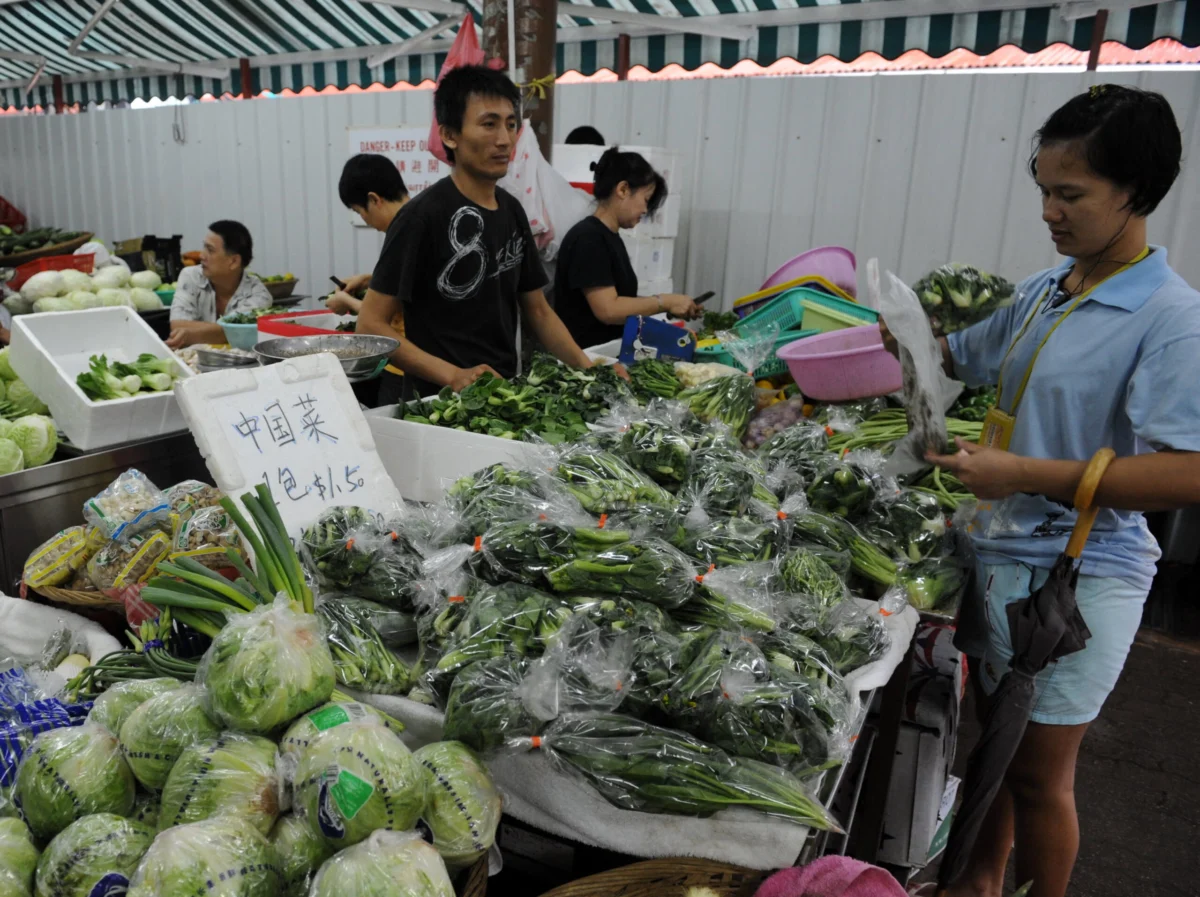
Singapore’s inflation rate surged to a near two-year high in July, exceeding economists’ expectations as elevated global energy prices, exacerbated by geopolitical developments including the ongoing Iran war, significantly impacted the city-state’s electricity and transportation costs. Consumer prices rose by 2.2% year-on-year in July, a notable acceleration from the 1.9% recorded in June and surpassing the 2.3% forecast by economists polled by Reuters. While the year-on-year figure showed an increase, the consumer price index experienced a slight dip of 0.2% on a month-on-month basis.
This inflationary pressure, primarily driven by external factors, underscores Singapore’s vulnerability to global economic shocks. The Monetary Authority of Singapore (MAS) and the Ministry of Trade and Industry (MTI) jointly acknowledged the significant role of rising global energy prices in their release, which directly translated into higher electricity and gas charges for consumers, as well as increased transportation fares. The interconnectedness of global energy markets means that events like the Iran war, which can disrupt supply chains and create uncertainty, have a tangible and immediate effect on domestic price levels in import-reliant economies like Singapore.
Global Headwinds Fueling Domestic Price Hikes
The joint statement from MAS and MTI painted a stark picture of the prevailing economic landscape, warning that "Global oil prices remain high and volatile while adverse weather conditions are expected to lower agricultural yields and raise Singapore’s imported food prices." This dual threat of energy price volatility and potential agricultural supply disruptions points towards a sustained inflationary environment in the coming months. The implication is that consumers can anticipate further price increases across a range of imported goods and services, adding to the existing cost-of-living pressures.
The MAS, recognizing the escalating inflationary risks, had already taken a pre-emptive stance by tightening its monetary policy in a surprise move in July. This proactive measure signaled the central bank’s concern about the persistence of imported inflation. Last month, the MAS had explicitly warned that higher fuel and electronic input costs were likely to contribute to a rise in inflation in the subsequent quarters. This foresight now appears to be borne out by the July inflation figures.
Core Inflation and the Impact on Household Budgets
While headline inflation captures the overall price increases, core inflation offers a more nuanced view by excluding volatile components such as private transport and accommodation. In July, core inflation also saw an uptick, rising to 2%, although it remained below the 2.2% forecast. This indicates that the inflationary pressures are not solely confined to volatile sectors but are also seeping into the broader basket of goods and services that households consume regularly.
The cumulative effect of rising prices for essentials like food, energy, and transportation can significantly erode household purchasing power. For families, this translates into difficult choices, potentially leading to reduced spending on discretionary items or a shift towards cheaper alternatives. The Singaporean government, aware of the potential hardship, has historically implemented measures to cushion the impact of economic shocks on its citizens.
Government Support Packages and Economic Resilience
In response to the ongoing economic challenges, including those stemming from the Iran war, the Singaporean government has rolled out two substantial support packages. These packages, totaling approximately S$2 billion, are designed to provide direct relief to households and businesses. The measures include cash handouts, consumption vouchers for households to stimulate spending, and tax rebates for companies to ease their operational burdens. These initiatives aim to mitigate the immediate impact of inflation and support economic activity during a period of uncertainty.
The timing of the inflation data is also significant as it comes against a backdrop of robust economic performance. Singapore has significantly upgraded its Gross Domestic Product (GDP) forecast for the full year 2026. The revised forecast now anticipates growth to be between 4.5% and 5.5%, more than doubling the lower end of its previous projection of 2%-4%. This upward revision suggests a strong underlying economic resilience, with various sectors of the economy demonstrating their ability to withstand external pressures and contribute to overall growth. The robust GDP forecast indicates that while inflation is a concern, the broader economic picture remains positive, supported by strong domestic demand and a recovering global economy.
Broader Economic Context and Future Outlook
The current inflationary environment in Singapore is not an isolated phenomenon. Many countries globally are grappling with similar challenges, driven by a confluence of factors including supply chain disruptions, pent-up demand following pandemic-related lockdowns, and the impact of geopolitical events on commodity prices. The war in Iran, by creating uncertainty in global energy markets and potentially affecting trade routes, has added another layer of complexity to the inflation outlook.
For Singapore, a small and open economy highly dependent on international trade and energy imports, managing inflation is a critical policy objective. The MAS’s monetary policy decisions are closely watched by businesses and investors, as they signal the central bank’s commitment to price stability. The current tightening of monetary policy is a clear indication of the MAS’s resolve to anchor inflation expectations and prevent a sustained surge in prices that could undermine economic stability.
The expectation of further price increases for imported goods and services suggests that the inflationary pressures may persist. The MAS and MTI will undoubtedly continue to monitor the situation closely, assessing the effectiveness of current support measures and considering further policy interventions if necessary. The interplay between global economic conditions, geopolitical events, and domestic economic policies will be crucial in shaping Singapore’s inflation trajectory in the coming months.
Detailed Chronology of Events Leading to July Inflation Data
To understand the current inflation situation, it is important to place it within a broader timeline of economic developments and policy responses.
- Early 2026: Global energy prices begin to show a steady upward trend, influenced by recovering global demand post-pandemic and nascent geopolitical tensions in the Middle East.
- March 2026: The Iran war escalates, leading to increased volatility in global oil markets. Supply concerns begin to ripple through international commodity prices.
- April-May 2026: Singapore experiences the initial effects of rising global energy prices, with modest increases in electricity tariffs and transportation costs. Inflationary pressures are still relatively contained.
- June 2026: Singapore’s inflation rate rises to 1.9% year-on-year, reflecting the sustained impact of higher energy prices and initial signs of imported inflation on food items. Economists begin to express concerns about the trajectory.
- July 27, 2026: The Monetary Authority of Singapore (MAS) announces a surprise tightening of its monetary policy. In its Monetary Policy Statement, the MAS warns that imported inflation is likely to rise in the coming quarters due to higher fuel and electronic input costs. This move signals a heightened concern about inflation among policymakers.
- Early August 2026: The Singaporean government announces two support packages totaling approximately S$2 billion to help households and businesses cope with rising costs. These packages include cash handouts, consumption vouchers, and tax rebates.
- August 11, 2026: The Ministry of Trade and Industry (MTI) releases preliminary GDP forecasts, significantly upgrading the full-year growth outlook to 4.5%-5.5%. This positive economic outlook provides a backdrop against which the inflation data is analyzed.
- Mid-August 2026: The Department of Statistics Singapore releases the official July inflation figures. The data reveals that consumer prices rose by 2.2% year-on-year, exceeding expectations and marking a near two-year high. The joint statement from MAS and MTI attributes the rise primarily to elevated global energy prices.
Supporting Data and Analysis
The 2.2% year-on-year inflation in July 2026 is a significant figure, as it represents the highest rate recorded since October 2024, when inflation stood at 2.4%. The acceleration from June’s 1.9% indicates a widening inflationary gap. The fact that this figure missed the Reuters poll expectation of 2.3% suggests that the upward pressure on prices was more pronounced than anticipated by a majority of economists.
The joint release by MAS and MTI provides granular detail on the drivers of inflation. While specific percentage contributions are not provided in the excerpt, the emphasis on electricity and gas charges, as well as transportation fares, highlights the direct impact of energy price surges. Singapore’s reliance on imported energy sources makes it particularly susceptible to global price fluctuations. According to the International Energy Agency (IEA), global oil prices have been on an upward trajectory for much of 2026, driven by a combination of increased demand and supply-side uncertainties.
The mention of adverse weather conditions impacting agricultural yields is another critical factor. Singapore imports a substantial portion of its food. Disruptions to agricultural production in key exporting countries, whether due to extreme weather events or other factors, can lead to higher import costs for food products. This can have a direct impact on the food component of the consumer price index, which is a significant expenditure for households.
The core inflation rate of 2% in July, while lower than headline inflation, still represents a substantial increase compared to previous periods. This suggests that the inflationary pressures are becoming more generalized, moving beyond just energy and transport to other goods and services. The MAS’s mandate is to ensure price stability, and sustained core inflation above its target range would necessitate further policy adjustments.
Official Responses and Policy Implications
The MAS’s decision to tighten monetary policy in July was a clear signal of its concern about the inflationary outlook. By raising the slope of the Singapore dollar’s appreciation policy, the MAS aims to curb imported inflation by making imports cheaper in Singapore dollar terms and to moderate domestic price pressures. This policy stance is crucial in anchoring inflation expectations and preventing a wage-price spiral, where rising prices lead to demands for higher wages, which in turn fuel further price increases.
The government’s support packages are a pragmatic response to cushion the immediate impact of inflation on vulnerable households and businesses. Cash handouts and consumption vouchers provide direct relief and aim to maintain consumer spending, thereby supporting economic growth. Tax rebates for companies are intended to ease their operating costs, which can help prevent these businesses from passing on all cost increases to consumers.
The contrasting data points of rising inflation and a significantly upgraded GDP forecast present a complex economic landscape. While inflation poses a challenge to household purchasing power and potentially economic stability, strong GDP growth suggests underlying economic resilience. Policymakers must therefore strike a delicate balance: addressing inflationary pressures without stifling economic growth. The MAS’s approach of using monetary policy to manage inflation while the government employs fiscal measures to support households and businesses reflects this balancing act.
Broader Impact and Future Outlook
The inflation figures for July underscore the challenges faced by many economies in the current global environment. The interconnectedness of global markets means that events in one region can have significant repercussions elsewhere. For Singapore, a global hub for trade and finance, managing inflation is not only crucial for domestic stability but also for maintaining its competitiveness on the international stage.
The forecast for continued price increases in imported goods and services suggests that the inflationary pressures are likely to persist for some time. The MAS and MTI will be closely watching a range of economic indicators, including global commodity prices, supply chain developments, and domestic demand-side pressures, to inform their policy decisions. The effectiveness of the current monetary and fiscal measures, as well as the evolving geopolitical landscape, will be critical factors in determining the future trajectory of inflation in Singapore. The ability of the government and the central bank to navigate these complex challenges will be key to ensuring sustained economic prosperity and price stability for the nation.
