

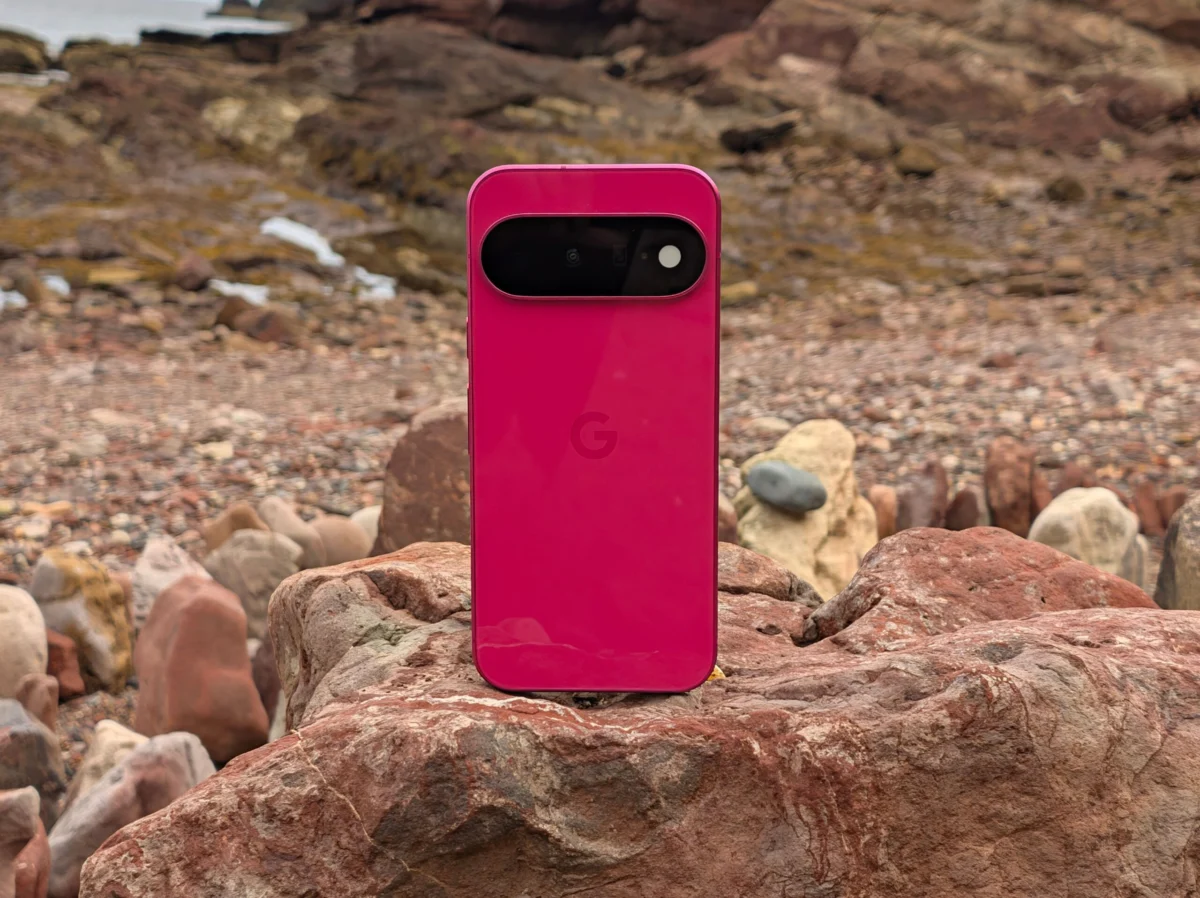
The launch of the Google Pixel 11 marks a significant milestone in the evolution of Google’s hardware ecosystem, signaling a refined focus on ergonomics, display efficiency, and the maturation of the proprietary Tensor silicon. Positioned as the entry point to the flagship series, the Pixel 11 attempts to bridge the gap between high-end performance and the compact form factor that has become increasingly rare in a market dominated by "plus" and "ultra" sized devices. By analyzing the hardware specifications, performance benchmarks, and design choices, it becomes clear that Google is prioritizing user experience and integrated AI efficiency over raw, unbridled processing power.
Design Philosophy and Ergonomic Shifts
The Pixel 11 enters the market with a design language that emphasizes continuity while introducing subtle refinements. The most notable change in the aesthetic department is the updated color palette. This year, Google has introduced "Hibiscus," a vibrant hot pink that targets a demographic seeking expressive hardware. This is joined by "Pistachio," a warm green hue that serves as a softer alternative to the traditional "Frost" (white) and "Obsidian" (black) options. Notably absent from this year’s lineup is "Indigo," a deep blue that was a consumer favorite in the Pixel 10 series. This color strategy aligns Google with competitors like Apple, where "fun" or saturated colors are reserved for standard models, while the "Pro" variants maintain a more muted, professional aesthetic.
Despite being marketed as a "small" phone, the Pixel 11 features a 6.3-inch screen. In the current mobile landscape, this footprint is considered compact, especially when compared to the Pixel 11 Pro XL. The transition from last year’s larger models to the Pixel 11 reveals a significant improvement in one-handed usability. While the device maintains a slightly thicker profile than some ultra-slim competitors, its physical dimensions and rounded corners contribute to a comfortable in-hand feel. Furthermore, Google has engineered the Pixel 11 to share a nearly identical profile with the Pixel 11 Pro, allowing for case interchangeability between the two models—a move that simplifies the accessory ecosystem for retailers and consumers alike. However, the use of premium finishes necessitates protection; early field tests indicate that the exterior paintwork is susceptible to scuffing if subjected to abrasive environments like sand or gravel.
Display Engineering and Visual Performance
The display remains one of the Pixel 11’s strongest assets, though it carries over several specifications from its predecessor. The 6.3-inch OLED panel offers a resolution of 1080 x 2424 pixels. While this resolution is lower than the QHD+ panels found on the Pro models, the pixel density remains high enough to provide sharp text and vibrant imagery. The display supports a peak brightness of 3,000 nits, an industry-leading figure that ensures legibility under direct sunlight.
A point of contention among enthusiasts is the refresh rate implementation. The Pixel 11 supports both 60 Hz and 120 Hz, but it lacks the Low-Temperature Polycrystalline Oxide (LTPO) technology found in the Pro series. This means the device cannot utilize a variable refresh rate that scales down to 1 Hz to conserve battery life. By default, the device is set to 60 Hz to maximize longevity, requiring users to manually enable the 120 Hz "Smooth Display" mode in the settings. While the visual difference between the Pixel 11 and the Pro model is negligible to the average user, the Pro model features slightly slimmer bezels and a marginally sharper output, positioning it as the superior choice for media consumption.
The Tensor G6: Efficiency Over Peak Power
At the heart of the Pixel 11 is the Tensor G6, Google’s latest custom-designed System-on-Chip (SoC). The G6 is not designed to compete directly with the raw benchmarks of Qualcomm’s Snapdragon 8 series or Apple’s A-series chips in terms of gaming performance. Instead, Google has optimized the G6 for efficiency and integrated AI tasks. According to internal data, the Tensor G6 delivers a 20 percent gain in power efficiency, 25 percent faster web browsing, and a 15 percent improvement in app loading times compared to the Tensor G5.
Equipped with 12 GB of RAM and storage options of 256 GB or 512 GB, the Pixel 11 excels in daily productivity. The device feels responsive during multitasking, and the camera interface—a frequent pain point in earlier Pixel generations—now operates with noticeably less lag. Real-world testing also shows that the G6 improves background processing; for instance, notifications from smart home devices, such as the Nest video doorbell, load significantly faster than on previous hardware iterations.
However, the Tensor G6 continues to struggle under heavy sustained loads. In testing with high-fidelity mobile titles like Wuthering Waves, the Pixel 11 exhibited inconsistent performance. Even on "Balanced" graphics settings, the device suffered from frequent frame drops and stuttering during intensive combat sequences. Thermal management also remains a challenge; after an hour of high-end gaming, the device becomes uncomfortably warm, and battery depletion is rapid, dropping approximately 14 percent in a single hour of play. While casual games like Mini Metro or Alto’s Odyssey run flawlessly, the Pixel 11 is not recommended for the dedicated gaming community.
Connectivity and Biometric Security
The Pixel 11 represents a significant shift in Google’s connectivity strategy, particularly in the United States. Following the trend established by other major manufacturers, the US version of the Pixel 11 is now eSIM-only. The removal of the physical SIM tray has been a polarizing move. While physical SIM cards facilitate easy switching between devices, Google and major US carriers have streamlined the eSIM transfer process to mitigate friction. For international travelers, the transition to eSIM-only requires a shift toward digital roaming solutions, which are becoming increasingly prevalent and user-friendly.
In terms of security, the Pixel 11 utilizes an under-display fingerprint sensor that is both fast and reliable. However, the Face Unlock feature remains a secondary convenience rather than a full replacement for biometric security in all conditions. Unlike Apple’s FaceID, which uses infrared sensors, Google’s implementation relies heavily on the front-facing camera. As a result, Face Unlock performance degrades significantly in low-light environments, which may prove frustrating for users transitioning from the iOS ecosystem.
Chronology of the Pixel Series Evolution
To understand the Pixel 11’s place in the market, one must look at the trajectory of the series over the last four years:
- Pixel 8 Series (2023): Introduced the seven-year software support promise and the Tensor G3, focusing heavily on generative AI features like Magic Editor.
- Pixel 9 Series (2024): Saw a major design overhaul with flat edges and the introduction of the "Fold" into the main flagship numbering.
- Pixel 10 Series (2025): Marked the 10th anniversary, introducing the Tensor G5, which was the first chip fully designed in-house by Google without Samsung’s foundational architecture.
- Pixel 11 Series (Current): Focuses on refining the G-series silicon (Tensor G6) for thermal efficiency and standardizing the 6.3-inch form factor across the base and Pro lines.
This timeline illustrates Google’s shift from being a software company that makes "reference" hardware to a legitimate hardware contender that iterates on its own proprietary silicon and design language.
Market Implications and Industry Response
The decision to keep the Pixel 11 at a 6.3-inch screen size is a strategic response to market data suggesting a "silent majority" of users are fatigued by oversized devices. While the industry has pushed toward 6.7-inch and 6.8-inch displays, Google’s commitment to a manageable form factor gives it a unique selling point against the base models of the iPhone and Samsung Galaxy S-series.
Industry analysts suggest that the eSIM-only move in the US will likely be mirrored by other manufacturers in the coming years, as it frees up internal space for larger batteries or improved haptic engines. Carrier responses have been largely positive, as eSIM-only devices reduce the overhead associated with physical inventory and shipping. However, consumer advocacy groups have raised concerns regarding the "locking" of consumers to specific carriers through digital hurdles, though the FCC has been monitoring these developments to ensure market competitiveness.
Conclusion: A Balanced Flagship
The Google Pixel 11 is a device defined by its refinements rather than revolutionary leaps. It addresses the core needs of the modern smartphone user: a high-quality display, a reliable and fast interface, and a form factor that does not sacrifice usability for screen real estate. While it falls short in high-end gaming performance and low-light facial recognition, its strengths in AI-driven efficiency and day-to-day responsiveness make it a compelling option.
For users currently operating on a Pixel 9 or older, the Pixel 11 offers a substantial upgrade in terms of display brightness and processing efficiency. However, for those who prioritize mobile gaming or require a physical SIM slot for frequent international travel, the limitations of the Tensor G6 and the move to eSIM may necessitate a closer look at the competition. Ultimately, the Pixel 11 solidifies Google’s position as a manufacturer that prioritizes a cohesive, intelligent user experience over the pursuit of purely technical benchmarks.
