

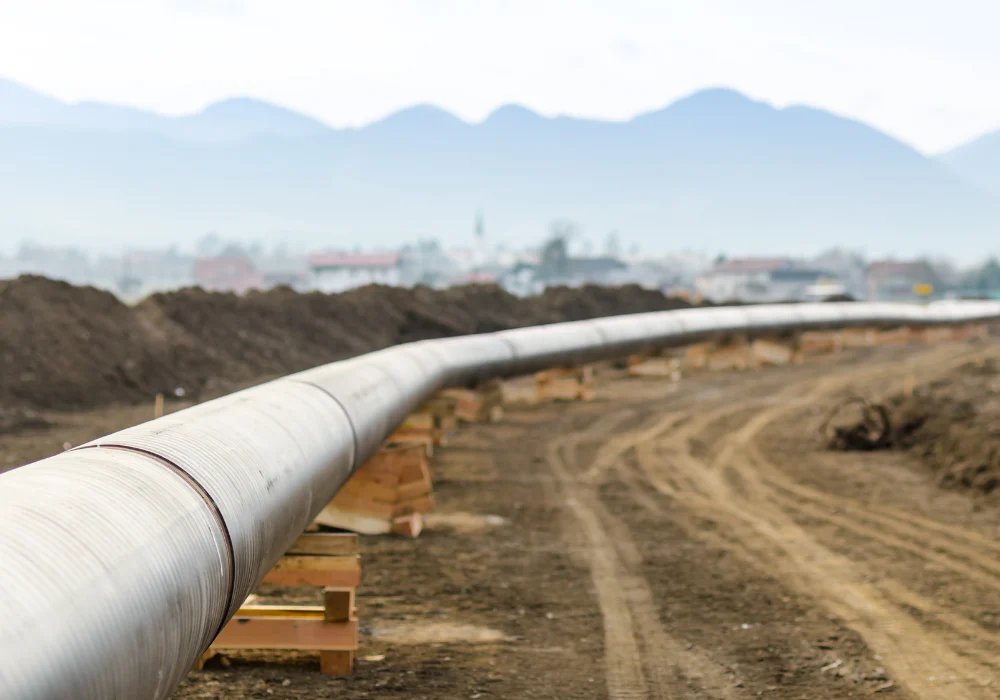
In a move that signals a profound shift in Canada’s national economic strategy, the federal government and the Province of Alberta have jointly committed to the development of a massive new West Coast oil pipeline, a project that is currently notable for its near-total lack of private sector financial backing. Announced in July 2026 by Prime Minister Mark Carney and Alberta Premier Danielle Smith, the West Coast Line represents a multi-billion-dollar bet on the long-term viability of bitumen extraction at a time when global energy markets are increasingly pivoting toward decarbonization. Under the proposed framework, the federal government and the Alberta provincial government would serve as equal partners in the venture, with development spearheaded by the federally owned Trans Mountain Corporation. Most significantly, the two governments are slated to carry approximately 90% of the project’s capital costs, a detail that has sparked intense debate regarding the role of public risk in private enterprise.
The project is the centerpiece of a broader suite of "nation-building" initiatives fast-tracked by the federal Major Projects Office (MPO). Valued at more than $130 billion, these initiatives span liquefied natural gas (LNG), nuclear energy, mining, and transportation. However, the West Coast Line stands out due to its sheer scale and the reluctance of the private sector to participate. While the Calgary-based Pembina Pipeline has signaled a non-binding 10% interest, no major oil producer has stepped forward to share the financial burden. This reluctance by highly profitable energy giants suggests a significant divergence between government policy and market confidence regarding the future of fossil fuel infrastructure in North America.
A Chronology of the Extractive Pivot
The unveiling of the West Coast Line was not an isolated event but the culmination of a rapid series of legislative and diplomatic maneuvers throughout early 2026. On July 2, the federal government and the British Columbia provincial government signed the "Cooperative Prosperity Agreement," committing billions in public funds to LNG development, mining, and the expansion of the Roberts Bank port terminal south of Vancouver. This terminal has since been identified as the essential marine terminus for the Alberta pipeline.
Shortly after the West Coast Line was announced, a second proposal emerged. The governments of Alberta and Ontario revealed plans for the "Northern Shield," a secondary pipeline intended to transport crude eastward. Like its western counterpart, the Northern Shield lacked a private proponent at the time of its announcement, indicating a pattern where the public sector assumes the role of primary developer for energy infrastructure. By August 2026, Ottawa formally proposed listing the West Coast Line as a "project of national interest," a designation that allows for the streamlining of regulatory hurdles and the potential bypass of certain provincial environmental constraints.
This sequence of events confirms that the Carney and Smith administrations view resource extraction not merely as a sector of the economy, but as the primary engine for national development. The federal government’s list of 23 fast-tracked initiatives suggests a long-term commitment to traditional extractive industries, even as international peers accelerate their transition to renewable energy systems.
The Financial Landscape: Risks and Public Exposure
The estimated costs for the West Coast Line are staggering. According to Alberta’s official submission to the Major Projects Office, the base construction cost is projected between $35.2 billion and $43.7 billion. However, these figures exclude escalation, inflation, and financing costs. Market analysts and fiscal watchdogs warn that the total public bill could be significantly higher when associated infrastructure is factored in.
The Roberts Bank terminal expansion is estimated at roughly $10 billion, while the "Pathways" carbon-capture project—intended to mitigate the pipeline’s environmental impact—is officially pegged at $16.5 billion. Recent independent estimates, however, suggest the carbon-capture component alone could exceed $20 billion. When accounting for the historical tendency for large-scale Canadian pipeline projects to suffer from massive cost overruns—most notably the Trans Mountain Expansion (TMX), which saw its budget balloon from $5.4 billion to $34 billion—the total public commitment for this new energy corridor could realistically exceed $100 billion.
The decision to use public funds to absorb these risks comes at a time when the four largest oil-sands producers in Canada are experiencing record profits. Data from the Alberta Federation of Labour and Canadians for Tax Fairness indicates that between 2021 and 2023, the industry earned $135.2 billion in operating profits. Despite these gains, investment in new production has actually declined. From 2011 to 2014, annual investment averaged $27.9 billion; from 2021 to 2024, that figure dropped to $15.9 billion. Instead of reinvesting in infrastructure, companies have prioritized dividends and share buybacks, returning capital to shareholders—73% of whom are foreign-owned entities.
Market Realities and the "Stranded Asset" Threat
The hesitation of the private sector to fund the West Coast Line is rooted in the shifting economics of global energy. Bitumen remains one of the most expensive and carbon-intensive sources of oil to produce. As global decarbonization efforts accelerate, high-cost producers are the most vulnerable to price fluctuations and declining demand. The International Energy Agency (IEA) has projected that global oil demand will peak by 2030, with a significant supply surplus emerging shortly thereafter.
Given that the West Coast Line is unlikely to be fully operational before the mid-2030s, the project faces a high risk of becoming a "stranded asset"—an infrastructure project that fails to provide a return on investment because it is no longer economically viable or legally permissible to operate. For private corporations, the 20-to-30-year horizon required for such an investment to pay off is increasingly viewed as a liability. By stepping in to fill this gap, the Canadian and Albertan governments are effectively shielding private companies from the long-term risks of the energy transition.
Regulatory Streamlining and Environmental Rollbacks
To facilitate these massive projects, the federal and provincial governments have moved to weaken environmental safeguards that were previously seen as barriers to development. A new cooperation agreement between Canada and Alberta aims to "streamline and add flexibility" to impact assessments. This has resulted in a narrower scope for environmental reviews and the creation of "pre-designated development zones" where industrial activity can proceed with minimal oversight.
Furthermore, the federal government has recently rolled back several key climate policies. These include the weakening of consumer carbon pricing, the postponement of the oil and gas emissions cap, and the softening of electric vehicle (EV) mandates. While the government maintains that the multi-billion-dollar Pathways carbon-capture project will offset the environmental impact of increased production, the math remains contentious.
The Pathways project aims to capture 6 million tonnes of CO2 per year by 2035. However, the West Coast Line is designed to carry one million barrels of oil per day. When burned, that volume of oil produces approximately 157 million tonnes of CO2 annually. Thus, even if the carbon-capture goals are met, they would address less than 10% of the total lifecycle emissions associated with the oil transported by the new pipeline.
Indigenous Consultation and Legal Hurdles
The project also faces significant social and legal challenges. While the government has promised an "Indigenous equity purchase right," allowing First Nations to buy into the project, the specifics regarding the size and timing of this equity remain undefined. More critically, several First Nations along the proposed southern route have stated they were not consulted prior to the July announcement.
Currently, 14 First Nations are challenging the federal fast-tracking law (Bill C-5) in court, arguing that the legislation infringes upon Treaty rights and bypasses necessary environmental and cultural assessments. The outcome of these legal battles could significantly delay the project or force expensive rerouting, further increasing the burden on taxpayers.
Broader Impact: The Opportunity Cost of Extraction
The commitment of $100 billion or more to extractive infrastructure raises questions about "opportunity cost"—the value of what is given up to pursue a specific path. As Canada faces crises in affordable housing, healthcare, and climate adaptation, fiscal capacity is finite. Critics argue that the same level of public investment and political capital could be used to transform the national grid, expand renewable energy storage, and fund a "just transition" for workers in the fossil fuel sector.
Economic data suggests that the oil and gas sector is becoming a less reliable driver of shared prosperity. Despite record profits, the sector employs 30,000 fewer people today than it did in 2014. For every dollar paid to workers, the industry now generates $3.14 in profit, a sharp increase from the $0.92 generated during the previous boom. This indicates an industry that is producing more with fewer people, with the majority of the financial benefits flowing to foreign shareholders rather than the Canadian labor market.
As the world moves toward an electrification strategy built on renewables and low-carbon industry, Canada’s decision to double down on bitumen extraction represents a contrarian gamble. While the governments of Mark Carney and Danielle Smith frame the West Coast Line as a path to sovereignty and strength, the project’s reliance on public funding and the systematic dismantling of environmental protections suggest a strategy that may be out of step with the economic realities of the 21st century. Whether this investment will secure Canada’s future or leave the public holding the bill for an obsolete industry remains the central question of the nation’s current political era.
