

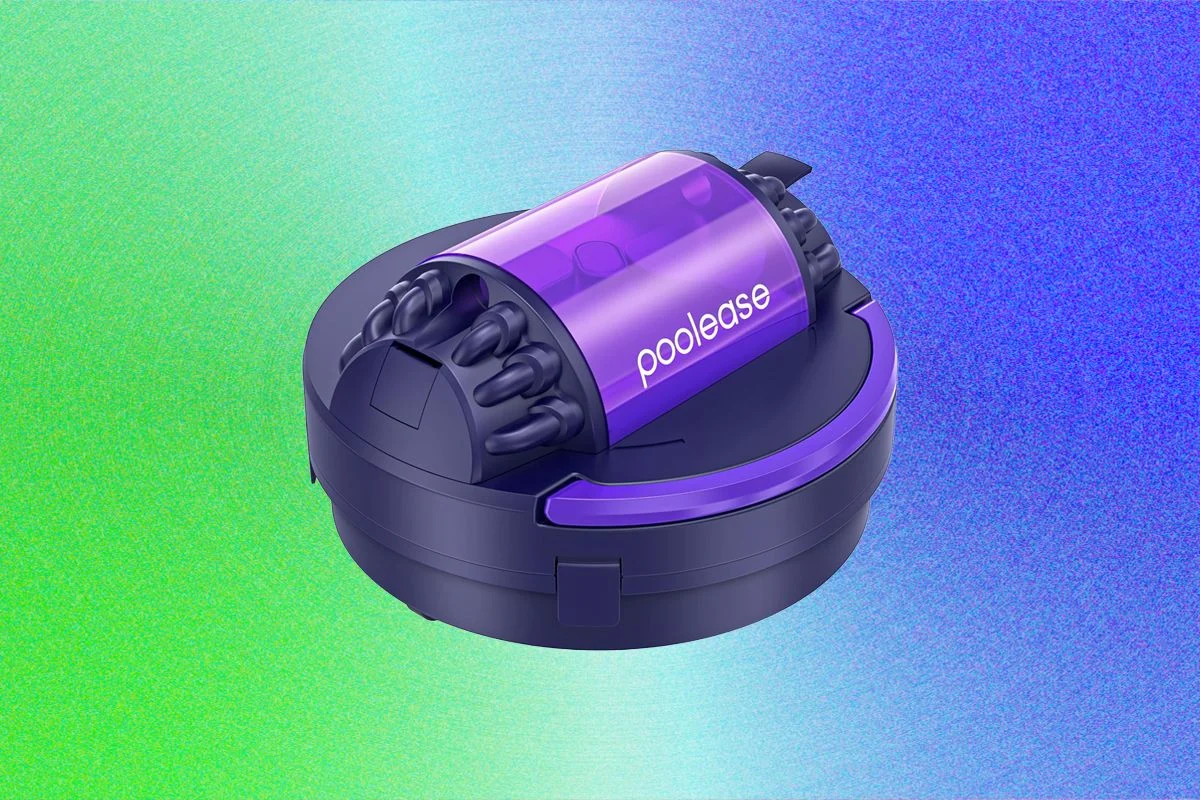
The emergence of low-cost automated home maintenance solutions has reached a new threshold with the introduction of the Poolease X1, a robotic pool cleaner positioned at a remarkably accessible price point of approximately $110. While the promise of affordable automation is appealing to a broad demographic of homeowners, recent performance evaluations suggest that the intersection of low cost and high efficiency remains elusive in the pool maintenance sector. In rigorous testing environments involving both organic and synthetic debris, the Poolease X1 demonstrated a consistent inability to achieve total coverage, typically collecting only 70 to 80 percent of the matter present on the pool floor. This performance metric, while technically superior to manual neglect, leaves a significant margin of residue that necessitates secondary cleaning interventions, fundamentally challenging the value proposition of the device.
The operational shortcomings of the Poolease X1 are most visible in its debris management. Despite the manufacturers’ specifications, the unit frequently leaves material scattered across the pool floor in a random distribution. To contextualize this for the average consumer, industry analysts often use the analogy of professional landscaping: if a gardener were to leave 20 percent of a lawn unmowed, the service would be considered a failure by standard consumer expectations. In the case of the X1, the remaining 20 to 30 percent of debris—which includes leaves, twigs, and various synthetic particles—creates a visual and sanitary inconsistency that detracts from the primary purpose of an automated cleaner.
Technical Specifications and Navigational Impediments
A primary factor contributing to the X1’s inconsistent performance is its physical design, specifically the minimal clearance between the chassis and the pool floor. During field testing, the robot demonstrated a recurring tendency to become immobilized on standard pool fixtures. The most prominent obstacle identified was the circular floor drain. Even with a rise of less than an inch above the floor surface, the drain proved to be a significant hazard for the X1. The dimensions of the robot appear to be precisely calibrated in a manner that allows it to "beach" itself on these low-profile obstructions.
When beached, the unit’s wheels lose sufficient contact with the ground, rendering its drive system ineffective. While the robot’s internal logic eventually allows it to free itself through repeated maneuvers, the time lost during these episodes—often several minutes per occurrence—reduces the overall efficiency of the cleaning cycle. This navigational fragility suggests that the X1 may be best suited for perfectly flat, featureless surfaces, which are rarely found in modern residential pool designs that incorporate drains, specialized tiling, or varying gradients.
The Maintenance Lifecycle and Consumer Effort
Automation is generally marketed as a labor-saving convenience, yet the Poolease X1 requires a level of manual intervention that may offset its automated benefits. Unlike premium models that may include "surface-return" features or "climb-to-wall" retrieval settings, the X1 must be manually retrieved from the pool floor using a telescopic pole and a specialized hook provided by the manufacturer. This requirement adds a layer of physical labor to the process that is absent in more sophisticated, albeit more expensive, robotic cleaners.
Furthermore, the post-operational cleaning process for the X1 has been reported as problematic. While the basic debris removal is straightforward, the internal architecture of the chassis contains several narrow crannies where debris frequently becomes lodged. Field reports indicate that these areas are difficult to clear through simple rinsing. Users often find themselves forced to either manually extract the debris by hand or utilize high-pressure water jets. The latter method, while effective at dislodging trapped organic matter, often results in the operator being sprayed with water, further complicating the maintenance routine.
Perhaps most significantly, the X1’s suction system appears insufficient for the removal of fine particulates. In multiple test cases, the unit failed to pick up any noticeable amount of dirt or silt. This suggests that while the robot can handle larger, buoyant debris to a certain extent, its vacuum pressure is not calibrated for the heavy lifting required to maintain water clarity at a microscopic level. For pool owners dealing with dust-heavy environments or fine sand, the X1 serves more as a "skimmer" for the floor rather than a comprehensive deep-cleaning tool.
Chronology of Market Entry and Competitive Landscape
The release of the Poolease X1 comes at a time when the robotic pool cleaner market is bifurcating. On one end, premium brands such as Maytronics (Dolphin) and Polaris offer high-performance units ranging from $800 to $1,500. These units feature advanced mapping, cloud connectivity, and multi-stage filtration. On the other end, a surge of "budget" robots has appeared on e-commerce platforms, targeting the sub-$200 market.
The Poolease X1 entered this space as a "value" alternative, aiming to capture the segment of the population that owns smaller, above-ground pools or "tank-style" pools. Historically, the chronology of this product category shows a shift from corded, heavy-duty suction cleaners to cordless, battery-powered autonomous units. The X1 represents the most aggressive price reduction in this technological evolution. However, the data gathered from its performance suggests that the technology may have been scaled back too far to remain effective for standard inground installations.

Comparative Data and Performance Metrics
To understand the X1’s position, it is helpful to look at industry-standard benchmarks for robotic cleaners. A "high-efficiency" rating in the industry typically requires a 95% or higher debris collection rate in a single cycle. The X1’s 70-80% rate places it in the "utility" or "entry-level" category.
| Feature | Premium Robotic Cleaner | Poolease X1 |
|---|---|---|
| Average Price | $900 – $1,400 | $110 – $130 |
| Debris Collection Rate | 98% | 70-80% |
| Fine Silt Filtration | Yes (Ultra-fine filters) | No (Basic mesh) |
| Obstacle Navigation | Active (Sensor-based) | Passive (Mechanical) |
| Retrieval Method | Auto-rise or Handle | Pole and Hook |
This data highlights the "value conundrum" mentioned by product evaluators. While the X1 is nearly ten times cheaper than a top-tier model, it does not provide ten percent of the utility; rather, it provides a partial service that may ultimately increase the total time a homeowner spends on pool maintenance due to the need for manual touch-ups.
Official Responses and Manufacturer Positioning
While Poolease has not issued a formal rebuttal to specific performance critiques, the product’s marketing materials emphasize "simplicity" and "affordability." Industry analysts suggest that the manufacturer’s target demographic is likely not the owner of a large, complex inground pool, but rather the consumer looking for a "disposable" or "low-risk" entry point into pool automation.
Inferred responses from the broader budget-hardware industry suggest that such products are designed with the understanding that they will have a shorter lifecycle and fewer features. The $110 price tag is often categorized as a "sacrificial price point," where the consumer is willing to accept mediocre performance in exchange for a low initial capital outlay. However, from a professional journalistic perspective, the discrepancy between "advertised capability" and "field performance" remains a point of contention for consumer advocacy.
Broader Impact and Industry Implications
The existence of the Poolease X1 and its performance profile raises significant questions about the future of the "smart home" and automated maintenance industry. There is a growing trend toward the commoditization of robotics, where complex engineering is stripped down to its bare essentials to meet a price target. This "race to the bottom" has several implications for the market.
First, there is the environmental impact. Low-cost robots like the X1 often utilize components that are not easily serviced or replaced. When a $110 robot fails or consistently underperforms, consumers are more likely to dispose of the unit and purchase a new one rather than invest in professional repairs. This contributes to the growing issue of electronic waste (e-waste).
Second, there is the impact on consumer trust. When entry-level products fail to meet basic expectations—such as clearing a floor drain or picking up silt—it can sour the consumer’s perception of the entire product category. A homeowner who has a poor experience with a budget robot may be less likely to invest in a higher-quality, more effective unit in the future, perceiving the technology itself as "gimmicky" rather than a legitimate tool.
Final Analysis of the Poolease X1 Value Proposition
The Poolease X1 represents a significant milestone in the pricing of robotic pool cleaners, but it serves as a cautionary tale regarding the limits of cost-cutting in hardware engineering. The unit’s inability to handle standard pool obstacles, its weak suction for fine particulates, and its requirement for manual "fishing" and difficult cleaning routines suggest that it is not a replacement for traditional pool maintenance.
For owners of very small, flat-bottomed pools or those in need of a temporary, emergency backup, the X1 may offer enough utility to justify its $110 cost. However, for the standard residential pool owner, the device appears to be "too little" for the task at hand. As the adage suggests, in the world of autonomous maintenance, you often get what you pay for. The Poolease X1 tries to automate a complex chore, but like an untrained worker, it leaves enough of the job unfinished that the employer—in this case, the homeowner—must still step in to finish the work.
In conclusion, while the Poolease X1 is a functional piece of technology, its performance gaps highlight the necessity of robust engineering in the underwater environment. Future iterations of budget cleaners will need to address clearance issues and suction power if they hope to move beyond the status of a novelty and into the realm of reliable household appliances. For now, the X1 remains a low-risk investment that delivers a low-reward result.
