

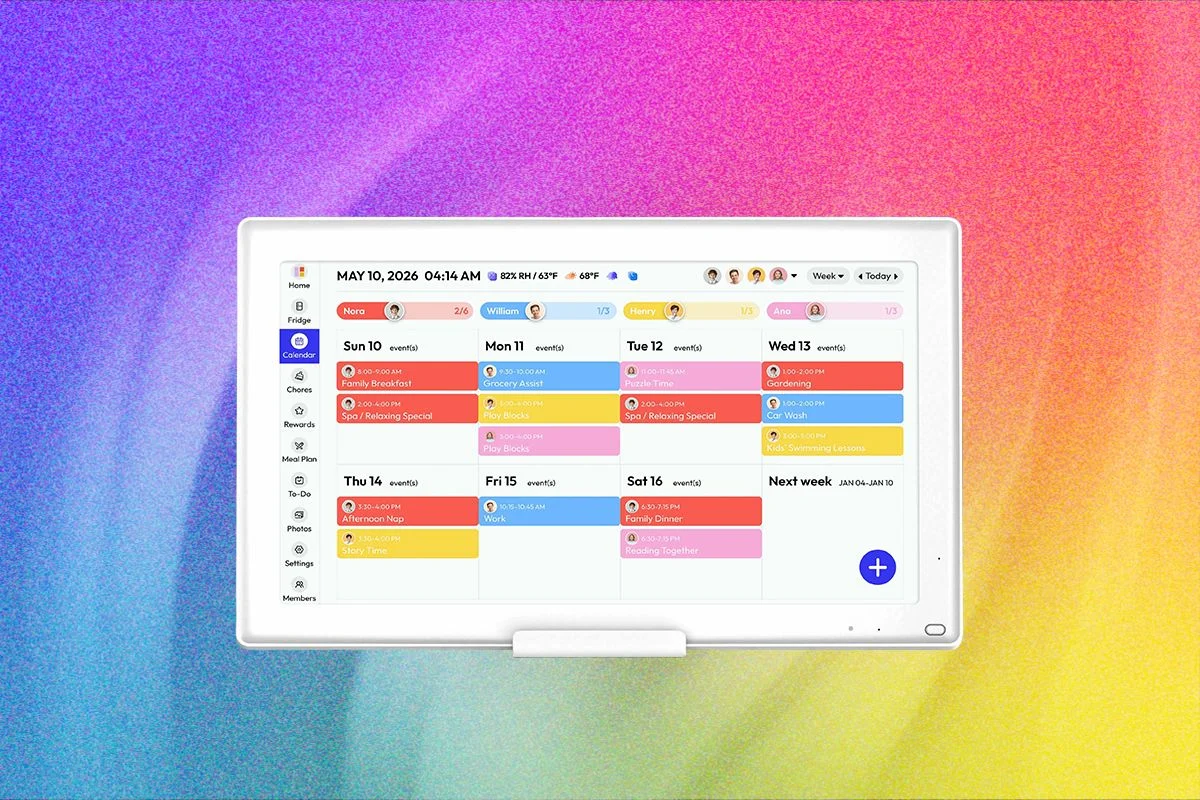
The household organization market has undergone a significant transformation over the last decade, transitioning from traditional paper-based systems to integrated digital command centers. Digital wall calendars, once considered niche luxury gadgets characterized by sluggish performance and high price points, have matured into sophisticated family management tools. These devices are designed to centralize disparate digital schedules—ranging from Google Calendar and Apple iCal to corporate Microsoft Outlook accounts—into a single, high-resolution display mounted in high-traffic areas like kitchens or entryways. As of 2024, the market has seen a surge in both consumer demand and technological variety, offering hardware that ranges from compact tabletop units to expansive 27-inch wall-mounted displays.
The Technological Shift from Paper to Silicon
For decades, the standard for household coordination was the paper calendar or the dry-erase whiteboard. However, as individual family members began managing their lives through personal smartphones, a "digital silo" effect emerged. Mom’s work schedule, Dad’s travel itinerary, and children’s extracurricular activities often existed on separate platforms, leading to scheduling conflicts and miscommunication. Early attempts to solve this via smart displays, such as the Amazon Echo Show or Google Nest Hub, were often criticized for being too general-purpose, cluttered with advertisements, or overly reliant on voice assistants that frequently failed to understand complex queries.
The current generation of digital wall calendars addresses these pain points by focusing exclusively on "passive information" delivery. Unlike tablets, which require active engagement, these devices are designed to be viewed at a glance. Technological advancements in IPS (In-Plane Switching) displays and low-power processors have enabled these screens to remain on indefinitely without significant energy consumption or screen burn-in, providing a persistent visual reference point for the entire household.
Chronology of Market Development
The trajectory of the digital calendar market can be divided into three distinct phases:
- The Digital Photo Frame Era (2010–2018): Early devices were primarily intended for rotating family photos. While some offered rudimentary calendar overlays, they lacked the synchronization protocols (such as CalDAV) necessary for real-time updates.
- The Smart Display Emergence (2018–2022): Big tech players introduced smart displays. While these could show calendars, the user interface (UI) was often buried under layers of news feeds, weather widgets, and streaming services. Consumers began expressing a desire for a "cleaner" dedicated interface.
- The Dedicated Command Center Rise (2022–Present): Companies like Skylight, Hearth, and Everblog identified a gap in the market for dedicated, large-format family organizers. This era introduced features such as color-coded task management, meal planning, and automated grocery list generation.
By 2024, the hardware had become sufficiently powerful to support "instant sync," where a change made on a smartphone appears on the wall display in near real-time, eliminating the latency issues that plagued earlier models.
Comparative Analysis of Leading Market Models
The digital wall calendar market is currently bifurcated between subscription-based premium services and one-time-purchase hardware.

The Premium Integration Standard: Skylight Calendar 2
Skylight has established itself as the market leader by leveraging its existing ecosystem of digital photo frames. Its flagship, the Skylight Calendar 2, retails for approximately $320. The device is praised for a clean, intuitive UI that facilitates the easy importation of multiple calendar feeds. A key feature of the Skylight system is its ability to handle shared events; when two family members are invited to the same event, the device displays it once but highlights it with both individuals’ designated colors. However, the company utilizes a "freemium" model, where advanced features such as meal planning, a photo screensaver mode, and the "Sidekick" AI assistant require a Plus subscription costing roughly $79 annually.
The Subscription-Free Alternative: Everblog HomeCal
In response to "subscription fatigue," competitors like Everblog have introduced the HomeCal series. The 21.5-inch model offers a significantly larger viewing area than standard tablets for a one-time cost of approximately $350. While the software experience is slightly more aligned with a modified Android tablet, it offers robust features like a "Fridge" section for inventory tracking and a dedicated chores tab without recurring fees. Data suggests that consumers who prioritize long-term value over UI polish are increasingly gravitating toward these models.
The Budget and Android-Based Segment: Apolosign
Apolosign offers a versatile range of sizes (15.6 to 27 inches) that operate on an Android-based OS. These devices are often available at lower price points (frequently discounted to $270) and offer two distinct modes: a dedicated Calendar mode and a standard Android mode. The latter allows users to install third-party apps like Spotify or Netflix. However, technical analysis indicates that these devices may present challenges for iOS users, as two-way synchronization between the Android-based hardware and Apple’s ecosystem can be inconsistent.
Functional Integration: Beyond Basic Scheduling
Modern digital calendars have expanded their utility beyond mere date-keeping, incorporating features that address the "mental load" of household management.
- Chore Charts and Gamification: Many devices now include task-tracking systems designed for children. Features like "Rewards" pages allow parents to set goals and track progress visually. Data from child development experts suggests that visual aids help children under the age of 10 better understand temporal concepts and responsibility.
- Meal Planning and Grocery Synchronization: The integration of meal planners with grocery lists represents a significant efficiency gain. For example, the Skylight Calendar 2 can automatically populate a shopping list based on a stored recipe added to the weekly meal plan.
- Digital Photo Integration: Recognizing that a large black screen is an aesthetic deterrent, most manufacturers have included a "Photo Frame" mode. This allows the device to serve as home decor when not actively being used for planning, a feature that has significantly boosted adoption rates among design-conscious consumers.
Supporting Data and Economic Implications
The economic footprint of the smart home organization sector is expanding. According to market research, the "Smart Kitchen and Home Organization" segment is projected to grow at a CAGR (Compound Annual Growth Rate) of over 12% through 2030. This growth is driven by the increasing number of dual-income households where complex scheduling requires more than manual entry.
Pricing remains a primary barrier to entry. With high-end models like the Hearth Display retailing for $699, the market is currently skewed toward middle-to-high-income demographics. However, the introduction of "companion devices" like the $140 Skylight Buddy—a 7-inch screen specifically for children’s rooms—suggests a move toward a multi-room ecosystem that could eventually lower the average cost per unit through hardware scaling.
Official Responses and User Sentiment
While major tech corporations like Amazon and Google have not released dedicated "calendar-only" hardware, their software updates for the Echo Show 15 and Google Nest Hub Max have increasingly mimicked the "command center" layout of these specialized startups.

User sentiment analysis from platforms like Reddit and specialized home automation forums indicates a high satisfaction rate regarding "decreased phone usage." Many users report that having a central display reduces the need to check smartphones during family time, thereby decreasing the likelihood of "digital distraction" where a quick calendar check turns into thirty minutes of social media scrolling.
However, privacy advocates have raised concerns regarding the "always-on" nature of these devices. Since many include microphones for potential voice assistant integration and are connected to the cloud to sync calendar data, the security of the household’s daily itinerary is a point of ongoing discussion. Manufacturers have responded by emphasizing end-to-end encryption and, in some cases, providing physical camera shutters.
Broader Impact and Future Implications
The rise of the digital wall calendar signifies a broader shift in human-computer interaction. We are moving away from the "active device" (the phone or laptop) toward "ambient computing," where information is integrated into the physical environment.
Looking ahead, the integration of Generative AI is expected to be the next frontier. Future iterations of these devices may not only show that a family member has a soccer game but also proactively suggest a departure time based on real-time traffic data, or automatically propose a meal plan based on the items remaining in a smart refrigerator.
In conclusion, digital wall calendars have evolved from clunky, overpriced novelties into essential infrastructure for the modern, tech-integrated family. By centralizing communication, gamifying household chores, and reducing the reliance on individual mobile devices, they provide a rare example of technology that encourages real-world interaction rather than detracting from it. As hardware costs continue to stabilize and software ecosystems become more interoperable, the digital command center is poised to become as ubiquitous in the American kitchen as the microwave or the refrigerator.
