

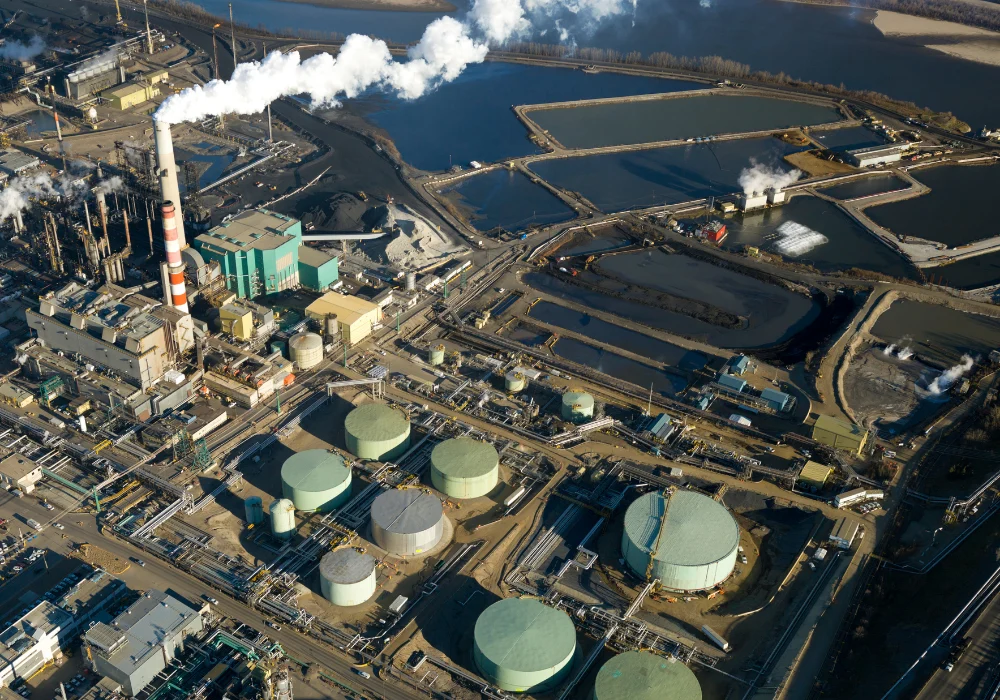
A comprehensive new research report from the C.D. Howe Institute reveals that Alberta’s industrial carbon pricing framework, known as the Technology Innovation and Emissions Reduction (TIER) system, imposes a significantly lower financial burden on oil sands producers than political rhetoric often suggests. According to the analysis, the average oil sands facility will pay less than $2 per barrel in carbon-related costs under the current and updated pricing schedules. This finding effectively positions the industrial carbon price as a marginal operating expense rather than a transformative economic deterrent, raising questions about the strength of the financial signal intended to drive large-scale decarbonization within Canada’s energy sector.
The report, authored by G. Kent Fellows, a fellow-in-residence at the C.D. Howe Institute, arrives at a critical juncture in Canadian energy policy. Following the recent repeal of the consumer-facing carbon price in certain jurisdictions and the formalization of an implementation agreement between the Alberta and federal governments, the industrial carbon tax remains the primary mechanism for regulating greenhouse gas emissions in the province. However, the data suggests that for the vast majority of oil sands operators, these costs represent a fraction of total production outlays, which typically range between $21 and $65 per barrel.
The Mechanics of the TIER System and Recent Regulatory Adjustments
Alberta has a long-standing history with carbon pricing, having established North America’s first mandatory industrial greenhouse gas emission reduction program in 2007. The current iteration, the TIER system, was introduced in 2020 to replace the previous administration’s Carbon Competitiveness Incentive Regulation (CCIR). TIER applies to large industrial facilities emitting 100,000 tonnes or more of carbon dioxide equivalent (CO2e) annually.
Under TIER, facilities are assigned an emissions benchmark. If a facility emits less than its benchmark, it earns "high-performance credits" that can be sold to other emitters or banked for future use. Conversely, facilities that exceed their benchmarks must comply by either paying into a provincial fund at a set price per tonne or by purchasing emissions performance credits or offsets on the open market.
The landscape for this system shifted significantly following a Memorandum of Understanding (MOU) signed between the Government of Alberta and the Federal Government of Canada late last year. This agreement was designed to harmonize provincial and federal climate goals while providing industry with long-term certainty. However, critics and analysts note that the MOU also resulted in a deceleration of the carbon price trajectory. While the federal "backstop" originally envisioned a price of $170 per tonne by 2030, the new agreement adjusts the top price to $115 per tonne in 2030, eventually reaching $140 per tonne by 2040.
Comparative Cost Analysis: Carbon Pricing versus Operating Realities
The core of the C.D. Howe Institute report focuses on the "per barrel" impact of these regulations. By translating the "per tonne of CO2" cost into a "per barrel of oil" metric, the research provides a clearer picture of the industry’s bottom line. In 2023, the industrial carbon price added an average of $1.12 per barrel to the cost of oil sands production.
The report highlights a spectrum of impacts based on the emissions intensity of specific facilities. High-emitting producers—those with older infrastructure or more energy-intensive extraction methods—faced costs of approximately $4.05 per barrel. Meanwhile, low-emission producers saw costs as low as $1.09 per barrel. In some instances, facilities with exceptionally low emissions intensities compared to their benchmarks effectively received subsidies through the generation and sale of carbon credits.
When projected through 2050, the analysis suggests that even with the scheduled price increases, the cost will remain below $5 per barrel for almost all facilities. The average across the entire oil sands sector is expected to stay below the $2 threshold. To put this in perspective, Fellows notes that the carbon price represents a small portion of overall marginal costs. With 99% of operators facing production costs between $21 and $65 per barrel, the carbon levy is a minor variable in the broader economic feasibility of oil sands projects.
Chronology of Alberta’s Industrial Carbon Policy
The evolution of Alberta’s carbon policy reflects a complex interplay between provincial autonomy, federal mandates, and industrial lobbying. Understanding the current $2-per-barrel reality requires a look back at the legislative milestones:
- 2007: Alberta introduces the Specified Gas Emitters Regulation (SGER), the first of its kind in North America, requiring large emitters to reduce their emissions intensity by 12%.
- 2015: The Climate Leadership Plan is introduced by the provincial NDP government, transitioning from SGER to the Carbon Competitiveness Incentive Regulation (CCIR) and introducing a broad-based consumer carbon tax.
- 2019: Following a change in provincial government, the consumer carbon tax is repealed, leading to the federal government imposing its backstop carbon price on Albertan consumers.
- 2020: The TIER system is implemented for industrial emitters, designed to satisfy federal requirements while maintaining provincial control over the funds collected.
- 2023: The Alberta-Federal MOU on energy policy is signed. This agreement provides a framework for the "implementation agreement," which outlines the specific price escalations and credit market rules that led to the current low-cost projections.
- 2024: Analysis of the implementation agreement confirms that the price ceiling for carbon in the industrial sector has been lowered compared to previous federal projections, ensuring that costs remain manageable for the oil sands.
Stakeholder Reactions and the "Price Signal" Debate
The revelation that carbon pricing costs are so low has elicited a variety of responses from climate policy advocates, industry groups, and political figures.
Environmental think tanks, such as the Canadian Climate Institute, have previously described the industrial carbon price as costing producers roughly the price of a "Timbit" (a small doughnut hole) per barrel. They argue that while the TIER system is a functional regulatory tool, the price signal is currently too weak to compel the massive capital investments required for deep decarbonization, such as large-scale Carbon Capture and Storage (CCS) hubs.
On the other hand, industry groups like the Pathways Alliance—a consortium of Canada’s largest oil sands producers—have emphasized the need for "carbon price certainty." They argue that while the current cost per barrel may be low, the long-term risk of price volatility in the credit market makes it difficult to justify multi-billion-dollar investments in emissions-reduction technology. The MOU’s provision to set a minimum price for carbon credits was a direct response to these concerns, intended to prevent a market collapse that would render credits worthless.
Politically, the industrial carbon price remains a contentious issue. Conservative leader Pierre Poilievre has campaigned on a platform of "axing the tax," though his primary focus has been on the consumer-facing levy. The C.D. Howe report suggests that even if the industrial tax remains, its economic "bite" is far less severe than the "much-maligned" reputation of the carbon tax would suggest.
Implications for Future Decarbonization and Investment
The central challenge identified in the report is the behavior of the "rational profit-maximizing firm." For a company to invest in expensive carbon reduction technology, the cost of abating a tonne of carbon must be lower than the cost of paying the carbon tax. If the tax remains at a level that results in a $2-per-barrel impact, and the market price for credits remains low, firms may find it more economical to simply pay the tax rather than innovate.
Fellows writes that the current low prices in the TIER emissions credit market suggest that "decarbonizing price signals are weaker at the margin than often assumed." This creates a paradox for policymakers: the price is high enough to generate revenue and maintain a regulatory framework, but perhaps not high enough to achieve the net-zero targets Canada has committed to for 2050.
Furthermore, the report suggests that the low cost of compliance might actually protect the competitiveness of Alberta’s oil sands in the global market. By keeping carbon costs marginal, the province ensures that its heavy crude remains viable against producers in jurisdictions with no carbon pricing. However, this competitive advantage comes at the potential cost of slower progress on environmental goals.
Conclusion and Future Outlook
As Alberta and the federal government continue to navigate the implementation of the MOU, the C.D. Howe Institute’s findings provide a factual baseline for future debates. The data indicates that the industrial carbon price is currently a manageable cost for the oil sands sector, debunking the notion that it poses an existential threat to the industry’s profitability.
The focus for the next decade will likely shift from the existence of the carbon price to its efficacy. With projections showing costs staying below $2 per barrel for the average facility, the conversation among investors, environmentalists, and lawmakers will center on whether this "marginal cost" is sufficient to drive the technological revolution necessary for the oil sands to survive in a low-carbon global economy. For now, the "carbon tax" in the oil sands is less a heavy hammer and more a modest administrative fee, leaving the heavy lifting of emissions reduction to future policy adjustments or voluntary industry action.
