

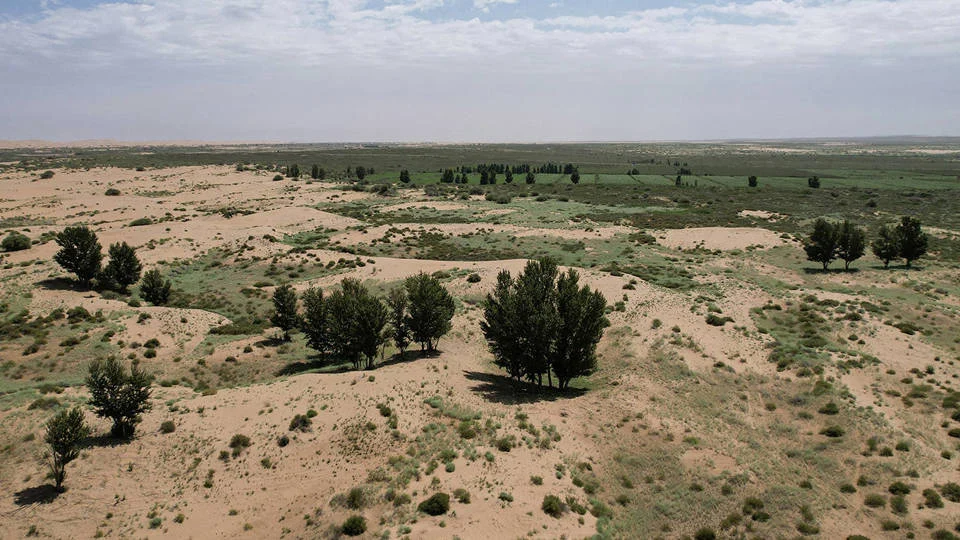
As delegates gather this week in Ulaanbaatar, Mongolia, for the 17th Conference of the Parties (COP17) to the UN Convention to Combat Desertification (UNCCD), a palpable sense of urgency and optimism is fueling a drive towards a more ambitious global response to land degradation. This critical summit, held under the theme "Restoring Land. Restoring Hope," signifies a potential turning point in humanity’s struggle against the creeping desertification and soil depletion that threaten ecosystems, economies, and the very fabric of human civilization. While the challenges are immense, five key developments suggest that this year’s conference could indeed be different, marking a shift from rhetoric to tangible action.
The Alarming Scale of Land Degradation
The statistics paint a stark picture of the escalating crisis. Every single second, an area of healthy land equivalent to four football fields is lost to degradation. This relentless pace translates into an annual loss of fertile terrain that rivals the size of two Spains. The economic repercussions are equally staggering, with the global economy bleeding nearly $1 trillion each year due to the cascading effects of degraded land. This economic drain exacerbates existing vulnerabilities, putting billions of people at risk of food insecurity, water scarcity, and displacement. Projections by the UNCCD are dire: without a significant intervention, up to 95% of the Earth’s landmass could be degraded by 2050. Land degradation, defined as the loss of a land’s capability to produce benefits for a particular use, will render vast swathes of territory unproductive. This environmental catastrophe will be amplified by increasingly frequent and severe droughts, which are projected to affect more than three-quarters of the world’s population.
Five Promising Signs for a Renewed Global Effort
Despite the gravity of the situation, the convergence of several factors offers a beacon of hope. The UNCCD’s COP17 in Ulaanbaatar arrives at a moment when the essential components for large-scale land restoration – political will, robust international cooperation, enhanced implementation capacity, and sustainable financing – are beginning to align. The following five indicators suggest that this could be the juncture where global ambition is finally translated into impactful action.
1. Broadening Participation and the Riyadh Action Agenda
A significant development preceding COP17 was the unprecedented success of COP16, held in Riyadh in 2024. This summit was the largest and most inclusive gathering of its kind to date, a testament to the growing recognition of land degradation’s pervasive impact. For the first time, land use and drought were elevated to the forefront of the global agenda, with their interconnectedness to critical issues like food and water security, gender equality, and land tenure explicitly acknowledged.
The landmark outcome of COP16 was the establishment of the Riyadh Action Agenda. This represents the first-ever global framework specifically dedicated to land restoration and drought resilience. Its collaborative nature is already proving effective, having brought together over 100 public and private partners. This broad coalition underscores a shared commitment to tackling land degradation through multifaceted approaches.
Beyond the framework itself, COP16 served as a powerful catalyst for financial mobilization. It successfully garnered $12 billion in commitments for vital programs, including the Riyadh Global Drought Resilience Partnership. This initiative aims to bolster the capacity of drought-prone regions to withstand and adapt to increasingly severe arid conditions. Furthermore, the summit significantly expanded private-sector engagement through initiatives like Business4Land, recognizing that sustainable land management requires investment and innovation from all sectors.
Looking ahead, two key initiatives stemming from the Riyadh Action Agenda are poised to accelerate progress: "Land & Soil Breakthroughs" and the "Community Platform." "Land & Soil Breakthroughs" is expected to drive technological advancements and policy innovations for soil health, while the "Community Platform" will foster knowledge sharing and empower local communities, who are often the first and most affected by land degradation. These forward-looking initiatives demonstrate a commitment to translating political pledges into concrete national plans, including the development of national drought action plans and land degradation neutrality targets.
2. Convergence of the Rio Conventions: A Unified Planetary Approach
For decades, the environmental agendas emanating from the 1992 Rio Earth Summit – namely, the UN Framework Convention on Climate Change (UNFCCC), the UN Convention on Biological Diversity (CBD), and the UNCCD – have largely operated in parallel. This fragmented approach, while well-intentioned, has often led to missed opportunities for synergistic solutions. However, a crucial shift is underway. There is a growing understanding that climate change, biodiversity loss, and land degradation are not isolated environmental challenges but rather interconnected facets of a single, overarching planetary crisis. This long-overdue recognition is foundational for developing integrated policies, financing mechanisms, and implementation strategies.
COP16 further solidified this new paradigm by adopting a decision to strengthen collaboration among the three Rio Conventions. This move acknowledges that addressing land degradation effectively requires understanding its interplay with climate regulation and the preservation of biodiversity. This trend towards integration is not confined to the Rio Conventions; it is evident across a spectrum of global initiatives. The concept of the "water, energy, food, and ecosystem nexus" highlights the intricate dependencies between these vital resources, while various "just-transition frameworks" emphasize the need for equitable and inclusive approaches to environmental policy. Similarly, the development of integrated sustainable finance taxonomies reflects a growing desire to align financial flows with broader ecological goals.
The momentum behind these collaborative efforts is building. The Belém Joint Statement, issued by the parties to the Rio Conventions, and the Antalya Dialogue, focused on synergies between these conventions, both signal a growing consensus. The year 2026 is particularly significant, as the UNFCCC, CBD, and UNCCD are all scheduled to hold their respective COPs within a few months of each other. This proximity presents a unique and timely opportunity to align global efforts and forge a unified strategy to confront the interconnected planetary crisis.
3. Ascending Leadership of Developing and Emerging Economies
A striking and positive development in the global land agenda is the increasing leadership role being assumed by developing and emerging economies. This shift is vividly reflected in the UNCCD’s COP-hosting record. Since 2013, every biennial summit has been hosted by a developing or emerging nation, including Namibia, China, India, and Côte d’Ivoire. Egypt is slated to host COP18, further underscoring this trend. This geographical dispersal of leadership signifies a more equitable and inclusive global governance of land issues.
National initiatives from these regions are powerfully demonstrating that large-scale land restoration is not only achievable but is already being implemented with remarkable success. Ethiopia’s ambitious Green Legacy Initiative, which has focused on massive tree-planting campaigns, exemplifies this commitment. Pakistan’s Ten Billion Tree Tsunami initiative has made significant strides in reforestation efforts. Saudi Arabia’s comprehensive Saudi Green Initiative is setting ambitious targets for emissions reduction and land restoration. China’s Three-North Shelterbelt Program, a multi-decade effort to combat desertification in its northern regions, stands as a testament to long-term, large-scale land management.
Beyond national efforts, a burgeoning ecosystem of global partnerships is emerging, driven by these economically dynamic nations. The Brazil-led Resilient Agriculture Investment for Net-Zero Land Degradation initiative is fostering collaboration on sustainable agricultural practices. Simultaneously, numerous local networks across Asia, Africa, and Latin America are actively advancing restoration and resilience projects at the grassroots level. These collective developments paint a clear picture: developing and emerging economies are no longer merely recipients of global environmental policy but are increasingly shaping the vision and spearheading the implementation of the global land agenda.
4. Emergence of New-Generation Large-Scale Restoration Initiatives
The landscape of land restoration is evolving beyond individual national projects to encompass ambitious, multi-regional undertakings. These new-generation initiatives build upon the legacy of foundational efforts like the 2011 Bonn Challenge, which set a target to restore 350 million hectares of degraded and deforested landscapes by 2030. This global commitment galvanized action and demonstrated the potential of large-scale restoration.
The Middle East Green Initiative, a testament to regional cooperation, has garnered the endorsement of nearly 30 countries. Its ambitious goals include planting 50 billion trees and restoring 200 million hectares, addressing the significant land degradation challenges faced by the region. On a continental scale, Africa’s Great Green Wall initiative, designed to combat desertification across the Sahel, is regaining crucial momentum with renewed support from 22 countries. This project, initially launched in 2007, aims to create a mosaic of green and productive landscapes.
In Latin America and the Caribbean, Initiative 20×20 has successfully rallied 18 countries around concrete restoration commitments, focusing on restoring millions of hectares of degraded land. Furthermore, the Riyadh Global Drought Resilience Partnership is actively working to safeguard the world’s 74 most drought-vulnerable countries, providing them with the tools and resources to build resilience against water scarcity. These initiatives underscore a critical evolution: land restoration is increasingly recognized not as a solitary national endeavor but as a vital regional and continental imperative, requiring coordinated action and shared strategies.
5. Mobilization of Capital: Shifting the Financial Landscape
For years, land restoration and drought resilience efforts have suffered from chronic underinvestment. However, this narrative is beginning to change as capital mobilization for these critical areas starts to scale up. Climate financing provided by multilateral development banks has seen a significant increase in recent years, reaching a record $163 billion in 2025. A portion of this substantial funding is now being directed towards land restoration and drought resilience initiatives, providing much-needed financial impetus.
More profoundly, the very model of financing for land restoration is undergoing a rapid and innovative transformation. Initiatives such as the Middle East Green Initiative and the Riyadh Global Drought Resilience Partnership are strategically leveraging public funding to unlock vastly larger pools of concessional and private capital. This catalytic approach aims to de-risk investments and attract private sector participation.
Innovative financial vehicles are accelerating this paradigm shift. Luxembourg’s Drought Resilience Investment Facility, for instance, is designed not only to fund drought resilience projects but also to cultivate a viable and sustainable market for such investments. This forward-thinking approach recognizes that long-term resilience requires market-based solutions. Moreover, private-sector coalitions like Business4Land are fostering collaborative investment strategies. The emergence of instruments such as thematic bonds and resilience credits is further redefining the economic value of healthy land. These financial innovations are helping to position productive, restored land as a valuable asset capable of generating not only environmental and social returns but also significant economic benefits.
The Road Ahead: From Momentum to Action
The confluence of these five factors—enhanced global participation, the integration of environmental agendas, the leadership of developing nations, the rise of ambitious restoration initiatives, and the surge in capital mobilization—points to a clear conclusion: the global land agenda has reached a critical turning point. The question is no longer whether large-scale land restoration is possible, but rather how quickly governments, institutions, and investors can capitalize on this unprecedented momentum. The cost of inaction is escalating daily, and the window of opportunity to reverse the tide of land degradation and secure a sustainable future is narrowing. COP17 in Ulaanbaatar represents a crucial opportunity to solidify these gains and translate growing optimism into decisive, impactful action.
