

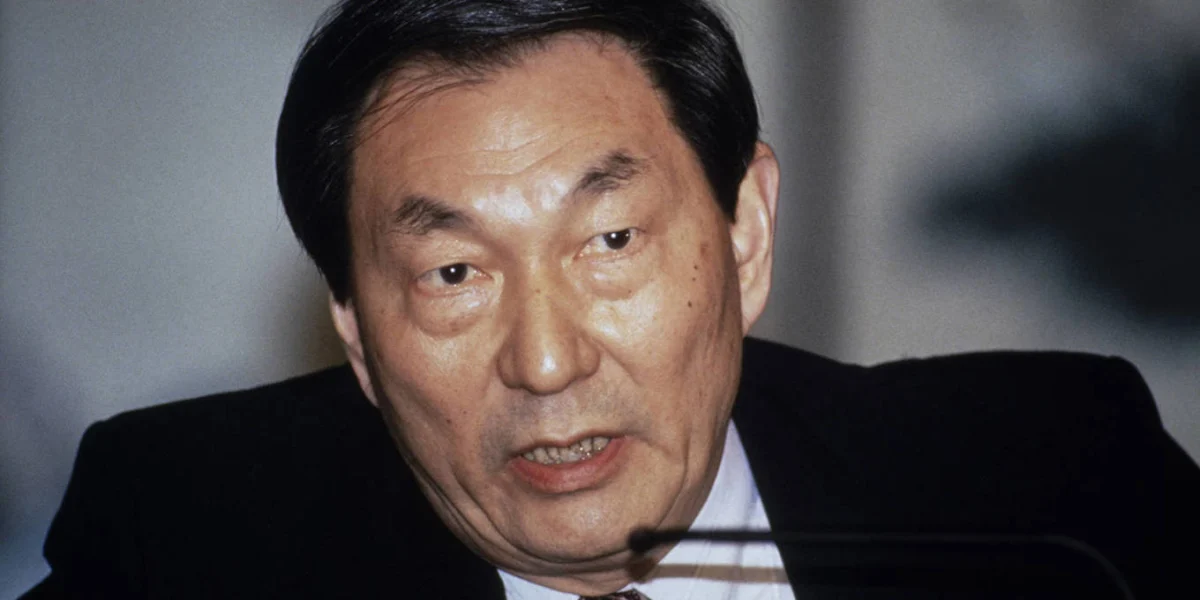
The recent passing of former Chinese Premier Zhu Rongji, at the age of 97, has prompted a wave of widespread accolades. He is overwhelmingly recognized for his pivotal role in spearheading market-oriented reforms that ignited China’s unprecedented economic expansion, transforming it into a global powerhouse. However, a deeper examination of his tenure reveals that two consequential policy shifts under his leadership, while undeniably fueling economic growth, have also cast long shadows over China’s demographic trajectory and the broader global economic landscape. These landmark initiatives, the 1994 tax-sharing reform and China’s accession to the World Trade Organization (WTO) in 2001, represent a complex legacy, a dual-edged sword that continues to shape the nation’s future.
The Genesis of Reform: A Nation at a Crossroads
Zhu Rongji assumed the premiership in 1998, inheriting an economy in transition. Deng Xiaoping’s "Reform and Opening Up" policy, initiated in 1978, had already set China on a path away from a centrally planned economy. However, by the late 1990s, the fiscal architecture of the nation was in need of significant overhaul to support the burgeoning market economy and ensure more equitable revenue distribution between the central government and its provincial counterparts. Simultaneously, China’s integration into the global trading system was seen as the ultimate step in solidifying its economic reforms and unlocking its vast potential.
The 1994 Tax-Sharing Reform: Centralizing Power, Unleashing Local Ambition
The 1994 fiscal reform, implemented before Zhu Rongji’s premiership but significantly consolidated and expanded upon during his influential economic leadership, represented a fundamental restructuring of China’s tax system. Prior to this reform, local governments held considerable autonomy in tax collection and revenue retention, leading to significant disparities in fiscal capacity across regions and fostering a degree of financial fragmentation. The reform aimed to rectify this by clearly delineating tax powers and revenues between the central and local governments.
Key Features of the 1994 Reform:
- Centralization of Revenue: A substantial portion of key tax revenues, including value-added tax (VAT), corporate income tax, and individual income tax, was designated as central government revenue.
- Transfer Payments: To compensate local governments for the loss of direct revenue, the central government established a system of transfer payments, aiming to ensure a baseline level of fiscal support.
- Tax Administration: A more unified and professional tax administration system was introduced, aiming to improve collection efficiency and reduce tax evasion.
Economic Implications:
The reform successfully strengthened the central government’s ability to fund national infrastructure projects, implement macroeconomic policies, and provide essential public services. It created a more predictable and stable fiscal environment, which was crucial for attracting foreign investment and fostering domestic enterprise. The increased flow of capital to the central government also facilitated large-scale development projects, laying the groundwork for China’s manufacturing boom.
Demographic Undercurrents:
While the economic benefits were undeniable, the reform’s impact on demographics is more nuanced and arguably less discussed. The centralization of fiscal power, coupled with the subsequent emphasis on export-oriented growth and industrialization, inadvertently contributed to a significant rural-to-urban migration. As economic opportunities concentrated in burgeoning industrial centers, millions of rural residents sought employment, leading to a massive influx into cities. This migration, while a testament to China’s economic dynamism, also placed immense pressure on urban infrastructure and social services, and contributed to the widening urban-rural income gap. Furthermore, the economic incentives fostered by this system, prioritizing growth and industrial output, may have indirectly influenced family planning decisions, though this is a complex and multifactorial issue. The demographic shifts, including a declining birth rate and an aging population, began to emerge as significant challenges in the subsequent decades, a trend that some analysts argue was subtly exacerbated by the economic structures solidified by this reform.
China’s WTO Accession in 2001: A Global Integration with Profound Consequences
Zhu Rongji was a principal architect of China’s historic accession to the World Trade Organization in 2001, a culmination of over a decade of arduous negotiations. This was a watershed moment, signaling China’s full integration into the global trading system and its commitment to a more open, market-based economy.
Key Commitments and Outcomes:
- Trade Liberalization: China committed to reducing tariffs, eliminating non-tariff barriers, and opening up various sectors to foreign competition.
- Intellectual Property Rights: China agreed to strengthen its protection of intellectual property rights, a crucial point for many trading partners.
- Market Access: Foreign companies gained greater access to the Chinese market, and Chinese companies were better positioned to compete globally.
Economic Transformation:
WTO membership unleashed a torrent of foreign investment and facilitated a dramatic expansion of China’s export sector. The country became the "world’s factory," producing a vast array of goods for global consumption. This surge in exports and investment fueled unprecedented GDP growth, lifting hundreds of millions of people out of poverty. The reform agenda, spurred by WTO commitments, also led to further liberalization of the domestic economy, including reforms in state-owned enterprises and the financial sector.
Global Economic Ripples:
China’s integration into the WTO had profound implications for the global economy. It led to a significant shift in global manufacturing, with many production facilities relocating to China due to its lower labor costs and large market potential. This resulted in lower consumer prices for goods worldwide, but also contributed to job losses in manufacturing sectors in developed economies. The rise of China as an economic superpower fundamentally altered global trade dynamics, supply chains, and geopolitical balances.
Demographic Reckoning:
The economic boom facilitated by WTO accession further accelerated the demographic shifts initiated by the 1994 reforms. The demand for labor in export-oriented industries, predominantly in coastal regions, continued to draw massive internal migration. While this provided economic opportunities for millions, it also contributed to a further concentration of population in urban areas and a decline in the rural population.
Crucially, the economic policies that prioritized rapid growth and export competitiveness, while undeniably successful in lifting living standards, did not adequately address the long-term demographic challenges. The focus on economic expansion, coupled with factors such as the legacy of the One-Child Policy (which began in 1979 and was gradually relaxed over time), contributed to a rapidly declining birth rate and a burgeoning aging population. By the late 2010s and early 2020s, China was grappling with a demographic crisis characterized by a shrinking workforce, an increasing dependency ratio, and concerns about future economic sustainability.
Expert Perspectives and Reactions
Economists and demographers have offered varied perspectives on Zhu Rongji’s legacy. Many acknowledge his instrumental role in modernizing China’s economy.
"Zhu Rongji was a pragmatic leader who understood the necessity of market mechanisms," commented Professor Li Wei, an economist at Peking University. "His reforms provided the essential framework for China’s economic miracle. However, the unintended consequences for demographics were a challenge that subsequent leaders have had to confront."
Dr. Anya Sharma, a demographer specializing in East Asian populations, noted, "The period of rapid economic growth under Zhu’s influence coincided with significant social transformations. While the economic uplift was immense, the focus on industrialization and urbanization, coupled with evolving social norms and the lingering effects of birth control policies, created a fertile ground for declining fertility rates. The demographic shifts we see today are a complex interplay of these factors."
A Look at the Data: The Demographic Tide
The statistics paint a stark picture of China’s demographic evolution during and after Zhu Rongji’s era of influence:
- Fertility Rate: China’s total fertility rate (TFR) has been below replacement level for decades. While exact figures fluctuate, it has consistently been in the range of 1.0-1.5 children per woman in recent years, far below the 2.1 needed to maintain a stable population. This decline began in earnest in the 1990s and continued through the 2000s.
- Aging Population: The proportion of China’s population aged 65 and above has been steadily increasing. By 2022, this demographic group constituted over 14% of the total population, a figure that is projected to rise significantly in the coming decades, posing challenges for healthcare, pensions, and the labor force.
- Urbanization: The period of rapid economic growth saw a dramatic increase in urbanization. In 1990, less than 30% of China’s population lived in urban areas. By 2020, this figure had surpassed 60%, reflecting the massive internal migration driven by economic opportunities.
Broader Implications and the Path Forward
Zhu Rongji’s economic reforms undeniably propelled China to its current economic standing. However, the demographic challenges that have emerged are now a significant concern for the nation’s future. A shrinking workforce, an aging population, and a declining birth rate have implications for economic growth, social stability, and national competitiveness.
The Chinese government has since implemented policies to encourage higher birth rates, including the relaxation of birth control policies and financial incentives for families. However, reversing decades of demographic trends is a formidable task, with deep-seated societal and economic factors influencing reproductive decisions.
The legacy of Zhu Rongji’s tenure is thus one of profound economic transformation intertwined with evolving demographic realities. His policies laid the foundation for China’s rise as an economic superpower, but they also contributed to the emergence of demographic headwinds that will shape the nation’s trajectory for generations to come. The ongoing efforts to balance economic development with demographic sustainability represent the enduring challenge inherited from this pivotal era of Chinese history.
