


The Chinese solar sector has entered a pivotal era of maturation, transitioning from a period of unfettered, subsidy-driven expansion toward a more complex landscape defined by market-based pricing, technological sophistication, and systemic integration. Following several years of record-breaking growth that culminated in a historic 2025, the industry is now confronting a multifaceted set of challenges, including a deceleration in domestic installation rates, significant manufacturing overcapacity, and a rapidly evolving international trade environment. This shift represents a move away from a "quantity-first" approach toward a focus on high-efficiency output and grid stability, as the nation’s energy infrastructure struggles to keep pace with the sheer volume of renewable generation.
According to the latest data released by the National Energy Administration (NEA), China’s solar performance in the first half of 2026 reflects this cooling period. The country recorded 72.07 gigawatts (GW) of new solar photovoltaic (PV) additions during the first six months of the year, bringing the cumulative national capacity to a staggering 1.27 terawatts (TW). While these figures would be considered monumental in any other market, they represent a notable deceleration from the breakneck pace of 2025, when China added more than 315 GW in a single calendar year. Data provided by TaiyangNews further underscores this trend, noting that installations in January and February 2026 alone fell by more than 17% year-on-year. Industry analysts attribute this slowdown to the conclusion of a massive development rush that preceded the expiration of China’s long-standing feed-in-tariff regime, which had previously guaranteed fixed prices for renewable energy producers.
The Shift to Market-Oriented Electricity Pricing
Perhaps the most significant structural change facing the industry is the transition to market-based electricity pricing. Beginning in early 2026, the majority of new renewable energy projects in China have been required to operate under a competitive market framework rather than relying on government-mandated price supports. This shift has fundamentally altered the financial viability and strategic planning of solar developments. Under the new model, the value of electricity is no longer static; instead, it fluctuates based on real-time supply and demand, placing a premium on projects that can provide power during peak consumption periods.
This transition coincides with a massive influx of variable renewable energy (VRE) on the national grid. By the end of June 2026, China’s energy mix included 679 GW of wind capacity alongside its 1.27 TW of solar. Together, these two sources now account for nearly half of the country’s total installed generating capacity. This high penetration of renewables creates a "duck curve" effect, where an overabundance of solar power during midday hours drives market prices down—sometimes into negative territory—while demand peaks in the evening when solar output ceases. For developers, this means that the profitability of a project is now determined by its location, its proximity to high-demand industrial centers, and its ability to integrate with storage solutions, rather than just the total volume of panels installed.
The Energy Storage Boom and Grid Integration
To mitigate the volatility inherent in such a massive solar and wind portfolio, China has pivoted aggressively toward energy storage. The NEA reports that new energy storage capacity reached 153 GW, or approximately 396 gigawatt-hours (GWh), by the end of June 2026. This represents a 61% increase compared to the same period in the previous year. Storage is no longer an optional add-on for solar farms; in many provinces, it has become a mandatory requirement for new grid connections. These "solar-plus-storage" configurations are essential for absorbing excess generation during the day and discharging it during peak demand, thereby stabilizing the grid and reducing "curtailment"—the practice of forcing solar plants to disconnect to prevent grid overloads.
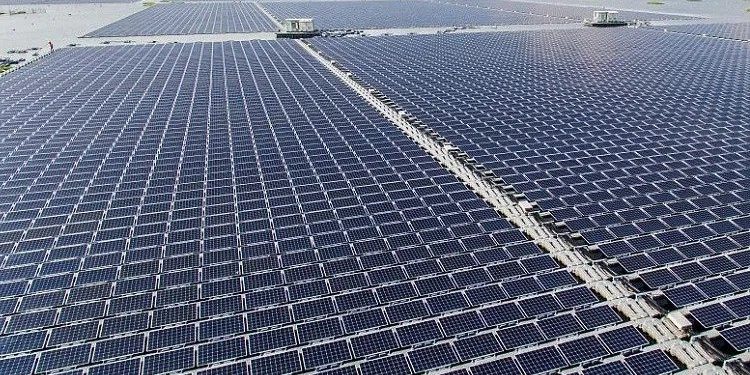
The utilization rate for solar power in the first half of 2026 stood at 91.4%, a figure that reflects both the success of grid management and the ongoing pressure of oversupply. While a 9% loss of potential energy is significant, it is a byproduct of a system that is still catching up to its own generation capacity. To facilitate this integration, electricity market trading has expanded rapidly, with 3.685 trillion kilowatt-hours (kWh) traded in the first half of 2026, a 24.2% increase year-on-year. This increasingly liquid market allows for more efficient distribution of power across China’s vast geography, moving energy from the resource-rich western provinces to the industrial hubs of the east.
Manufacturing Overcapacity and Export Policy Shifts
On the manufacturing front, China continues to dominate the global solar supply chain, though domestic and international pressures are forcing a consolidation of the sector. The industry is currently grappling with severe overcapacity, as years of aggressive investment by both established giants and new entrants have resulted in a global supply that far exceeds total demand. This has led to a sustained period of weak pricing for modules, wafers, and cells, squeezing the profit margins of even the most efficient manufacturers.
The export landscape has also shifted due to policy changes designed to address trade frictions and internal economic goals. On April 1, 2026, the Chinese government officially removed the value-added tax (VAT) export rebate for photovoltaic products. This move, which had been signaled as early as January, aimed to discourage the export of low-value, commodity-grade modules and to reduce the "dumping" allegations from international trade partners in the United States, Europe, and India.
The impact of this policy was immediate. While solar panel exports exceeded 35 GW in the first two months of the year, total module shipments saw a visible decline in May and June. However, a significant trend emerged in the component sector: solar-cell exports surged by 44% during the same period. This suggests that Chinese manufacturers are strategically shifting their focus toward supplying overseas production chains. By exporting high-efficiency cells rather than finished modules, Chinese companies can bypass certain trade restrictions and supply local assembly plants in Southeast Asia, South Asia, and Africa, where domestic demand for solar remains on a high-growth trajectory.
Technological Evolution: TOPCon, HJT, and Back-Contact
As price competition intensifies, technological efficiency has become the primary battleground for survival. In the first half of 2026, the industry saw a rapid transition toward N-type silicon technologies, which offer higher conversion efficiencies and lower degradation rates than the older P-type PERC (Passivated Emitter and Rear Cell) technology that dominated the last decade.
Current commercial module efficiencies have reached new milestones:

- Back-Contact (BC) Products: Reaching up to 25% efficiency, these products are increasingly favored for high-end residential and commercial applications where space is limited and aesthetics are a factor.
- TOPCon (Tunnel Oxide Passivated Contact) Products: Averaging 24.1% efficiency, TOPCon has emerged as the new mainstream standard for large-scale utility projects due to its balance of performance and manufacturing cost.
- Heterojunction (HJT) Products: Maintaining a steady 23.8% efficiency, HJT remains a strong contender for projects in extreme climates due to its superior temperature coefficient.
For developers operating in a market-constrained environment, these efficiency gains are critical. Higher efficiency means fewer panels are required to achieve the same power output, which in turn reduces "balance-of-system" (BOS) costs, including land use, mounting structures, and wiring. In an era where every cent of project economics is scrutinized, the shift to advanced technology is not merely a choice but a necessity for survival.
Domestic Demand Drivers and the AI Revolution
Despite the cooling of the initial solar "gold rush," domestic demand for electricity in China remains robust, providing a foundational market for renewable energy. National electricity consumption rose by 5.3% in the first half of 2026. This growth is being driven by two primary engines: high-technology manufacturing and the digital economy.
The manufacturing of high-tech equipment saw a 9.8% increase in power demand, reflecting China’s broader economic shift toward advanced industrialization. However, the most dramatic surge was found in internet data services, where consumption skyrocketed by 44%. This is largely attributed to the rapid expansion of data centers required to support artificial intelligence (AI), cloud computing, and the massive processing needs of a digitized economy. These energy-intensive facilities are increasingly seeking direct procurement of green energy to meet corporate sustainability goals and manage long-term energy costs, creating a reliable and growing "off-taker" market for new solar installations.
Conclusion and Outlook
The Chinese solar industry in 2026 is no longer a nascent sector defined by rapid, subsidized growth. It has matured into a sophisticated industrial ecosystem that is currently navigating the "growing pains" of its own success. The deceleration in installation rates is not a sign of decline, but rather a necessary recalibration as the nation focuses on integrating the massive capacity it has already built.
The coming years will likely see a period of consolidation, where only the most technologically advanced and financially resilient manufacturers will thrive. The emphasis has shifted from "how much solar can we build" to "how efficiently can we use the solar we have." With the continued expansion of energy storage, the refinement of market-based pricing, and the relentless pursuit of cell efficiency, China is setting the template for how a modern, renewable-heavy grid must function. While the challenges of overcapacity and trade barriers remain significant, the fundamental drivers—domestic industrial demand and the global imperative for decarbonization—ensure that the solar industry remains a central pillar of China’s economic and environmental strategy.
