

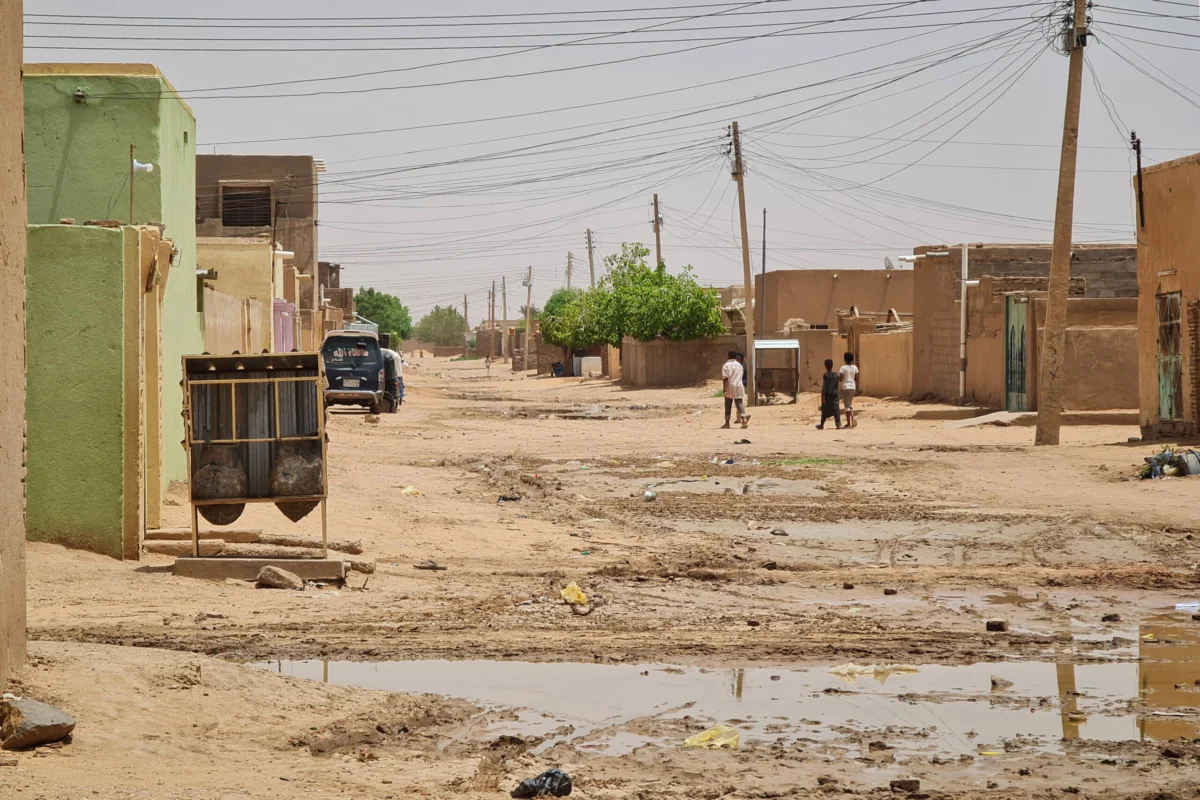
The devastating toll of Sudan’s ongoing internal conflict reached a grim new milestone on Saturday when an airstrike in a residential neighborhood of the capital, Khartoum, claimed the lives of at least 17 people. Among the deceased were five children, according to Sudanese health officials, marking one of the most lethal instances of collateral damage since fighting erupted in mid-April. The strike hit the Yarmouk district in southern Khartoum, an area that has become a flashpoint for intense urban warfare between the Sudanese Armed Forces (SAF), led by General Abdel Fattah al-Burhan, and the paramilitary Rapid Support Forces (RSF), commanded by General Mohamed Hamdan Dagalo, widely known as Hemedti.
The Ministry of Health confirmed the casualties via a statement on social media, noting that at least 25 houses were leveled or severely damaged in the blast. While the specific nature of the ordnance—whether delivered by a fixed-wing fighter jet or a remotely piloted drone—remains unconfirmed by independent observers, the RSF issued a swift statement accusing the military of conducting the raid. The paramilitary group further claimed to have downed a military MiG fighter jet during the engagement, though these assertions have not been verified by neutral third parties or the military command.
The Yarmouk Strike and Immediate Aftermath
The Yarmouk neighborhood is strategically significant due to its proximity to a major military industrial complex and fuel depots, which have been the subject of fierce contention between the rival factions for several weeks. Local volunteer groups, known as "The Emergency Rooms," which have emerged as the primary providers of localized humanitarian aid during the vacuum of state services, reported that at least 11 others were wounded in the Saturday morning strike. Images circulated by these activists depicted harrowing scenes of residents digging through mounds of concrete and rebar to locate survivors, alongside photographs of injured children receiving makeshift medical attention.
The SAF, which maintains a significant advantage in aerial capabilities, has frequently utilized its air force to target RSF positions embedded within densely populated urban centers. Conversely, the RSF has increasingly deployed anti-aircraft weaponry and allegedly utilized tactical drones to harass military positions. This dynamic has turned Khartoum, a metropolis of over five million people, into a labyrinth of checkpoints, snipers, and artillery zones, forcing civilians to bear the brunt of the violence.
Chronology of the Sudan Conflict: From Transition to Total War
The current crisis is the culmination of months of simmering tensions that followed the October 2021 military coup, which derailed Sudan’s fragile transition toward civilian-led democracy. To understand the gravity of the June 17 strike, it is essential to view it within the broader timeline of the conflict:
- April 15, 2023: Heavy gunfire and explosions erupt in Khartoum and the northern city of Merowe. The SAF and RSF trade blame for initiating the hostilities. The primary point of contention involves the proposed integration of the RSF into the regular army as part of a transition plan.
- Late April 2023: Major world powers, including the United States, United Kingdom, and various European and Middle Eastern nations, begin emergency evacuations of diplomatic staff and citizens as the airport in Khartoum becomes a battlefield.
- May 11, 2023: Representatives from both factions sign the "Jeddah Declaration" in Saudi Arabia, promising to protect civilians and allow humanitarian passage. However, the agreement lacks a formal ceasefire mechanism and is violated almost immediately.
- Early June 2023: The conflict expands significantly in the Darfur region. The RSF and allied Arab militias are accused of ethnically motivated attacks against the Masalit community and other non-Arab groups.
- June 14, 2023: The Governor of West Darfur, Khamis Abdalla Abkar, is abducted and killed shortly after criticizing the RSF in a televised interview. His death signals a dangerous new phase of targeted assassinations and lawlessness.
- June 17, 2023: The Yarmouk airstrike occurs, highlighting the continued failure of international pressure to secure even a temporary cessation of hostilities in the capital.
Supporting Data and Humanitarian Impact
The scale of the disaster in Sudan is reflected in the increasingly desperate statistics provided by international monitoring agencies. As of mid-June, the Federal Ministry of Health and various non-governmental organizations estimate that the death toll has surpassed 1,000, though the true figure is likely significantly higher due to the inability of officials to reach many areas of the city.
According to the International Organization for Migration (IOM), the conflict has displaced more than 2.2 million people. This includes over 1.6 million internally displaced persons (IDPs) who have sought refuge in safer provinces such as Al Jazirah and the Red Sea state, and more than 500,000 people who have fled across Sudan’s borders into neighboring Chad, Egypt, South Sudan, and Ethiopia.
The healthcare infrastructure in Khartoum has effectively collapsed. The World Health Organization (WHO) reports that nearly 60% of health facilities in conflict-affected areas are non-functional. Hospitals that remain open are grappling with severe shortages of electricity, clean water, and life-saving medicines, including insulin and dialysis supplies. In many cases, medical personnel have been forced to flee after being targeted or harassed by combatants.
Escalation in Darfur and the Ethnic Dimension
While Khartoum serves as the political and industrial prize, the situation in the western region of Darfur has taken a more ominous turn. The city of Genena, the provincial capital of West Darfur, has been described by the United Nations as a scene of "humanitarian catastrophe." Reports from refugees arriving in Chad suggest that the RSF, supported by "Janjaweed" Arab militias, have engaged in systematic campaigns of arson and execution.
The assassination of Governor Khamis Abdalla Abkar on Wednesday underscored the total breakdown of order. Abkar was the leader of a former rebel movement that had signed a peace deal in 2020 and had become a vocal critic of the RSF’s tactics in his province. While the RSF denied responsibility for his slaying, the UN and the African Union have called for an independent investigation, citing witnesses who saw the governor being taken into RSF custody prior to his death.
Official Responses and International Stagnation
The international response to the Yarmouk airstrike and the broader conflict has been characterized by a series of failed mediation attempts. The United States and Saudi Arabia have led talks in Jeddah, but these were suspended after the SAF withdrew, citing "repeated violations" by the RSF.
U.N. Secretary-General António Guterres has expressed "profound concern" over the escalating ethnic violence in Darfur and the continued bombardment of civilian areas in Khartoum. In a recent briefing, U.N. officials warned that Sudan is on the brink of a full-scale civil war that could destabilize the entire Horn of Africa and Sahel regions.
The African Union (AU) and the Intergovernmental Authority on Development (IGAD) have proposed various roadmaps for peace, including the deployment of a regional peacekeeping force. However, both General al-Burhan and General Dagalo have shown little appetite for compromise, with each believing they can achieve a decisive military victory. The SAF continues to demand that the RSF vacate civilian homes and government buildings as a prerequisite for talks, while the RSF demands the removal of the current military leadership.
Fact-Based Analysis of Implications
The strike on Yarmouk illustrates a critical shift in the tactical landscape of the war. As the RSF maintains its grip on ground-level urban territory by occupying residential homes and hospitals, the SAF is increasingly relying on its air superiority to dislodge them. This strategy, however, is fraught with risk, as the density of Khartoum’s urban fabric makes it impossible to conduct airstrikes without high civilian casualties.
Furthermore, the destruction of at least 25 homes in a single strike suggests a lack of precision or a disregard for the principles of distinction and proportionality under international humanitarian law. This trend is likely to accelerate the exodus of the middle class from Khartoum, leaving behind a hollowed-out city populated only by combatants and the most vulnerable residents who lack the means to flee.
The implications for regional security are equally dire. Sudan occupies a vital geopolitical position, bordering seven countries and the Red Sea. A prolonged vacuum of power could invite increased interference from regional actors seeking to secure their interests, ranging from gold mining rights to port access. The involvement of ethnic militias in Darfur also threatens to reignite the genocidal violence that plagued the region in the early 2000s, potentially drawing neighboring Chad into a cross-border conflict.
As the fighting enters its third month, the incident in Yarmouk serves as a reminder of the human cost of the power struggle between two generals. Without a robust and enforceable international intervention, the cycle of airstrikes and urban skirmishes appears set to continue, further eroding the foundations of the Sudanese state and plunging millions more into a state of permanent displacement and hunger.
