

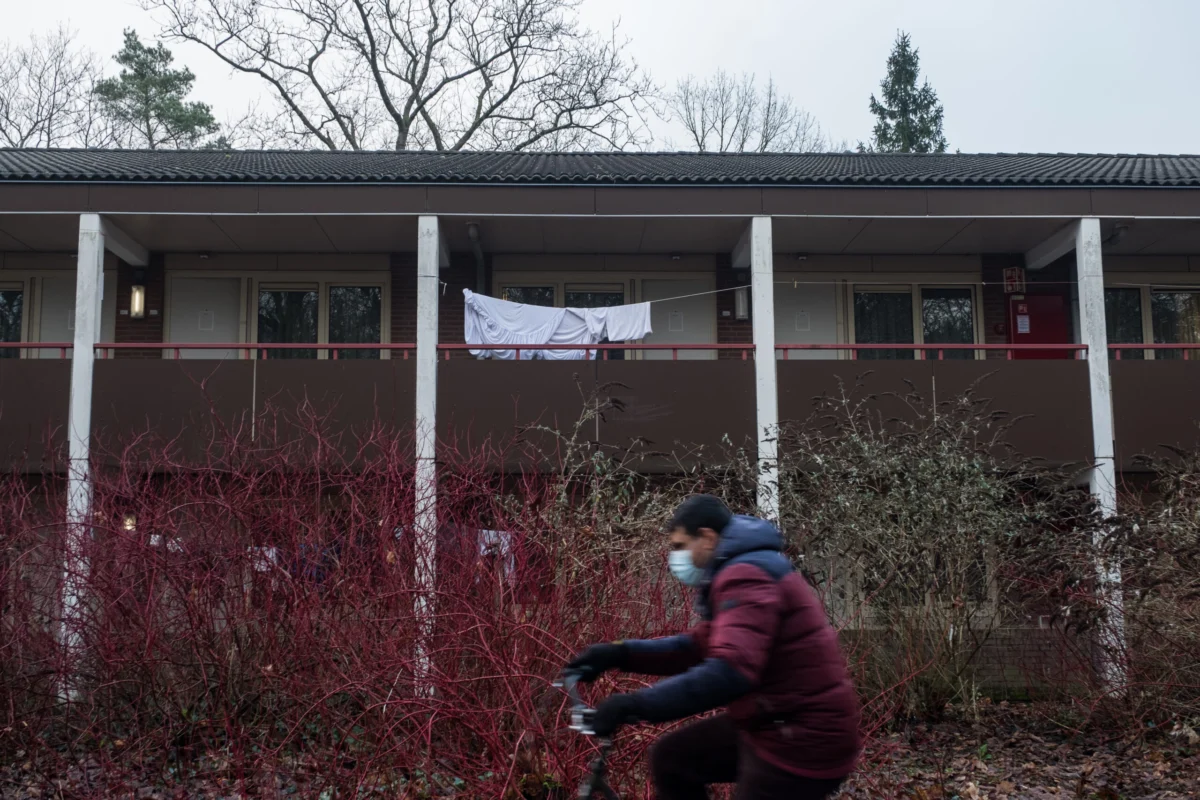
In the quiet Dutch town of Steenwijk, Abdul Wali holds a tangible symbol of a past promise: a special coin and certificate bestowed upon him in 2023 by the Dutch government, acknowledging his invaluable services in Afghanistan. For Wali, these items represent more than mere recognition; they embody the commitment the Netherlands made to approximately 4,500 Afghan staff – predominantly interpreters, security guards, and personnel for the European Union’s police mission – and their family members, who were dramatically evacuated from Afghanistan following the Taliban’s rapid takeover of Kabul in August 2021. Yet, five years after escaping the clutches of the Taliban, Wali and thousands like him find their new lives in Europe hanging precariously in the balance, threatened by sudden shifts in Dutch and broader European asylum policies that could see them stripped of their path to permanent residency and even face deportation back to the very regime they fled.
The Shadow of August 2021: A Chaotic Retreat
The images that seared into global consciousness in August 2021 depicted a desperate exodus: Afghans swarming Hamid Karzai International Airport, scrambling to board departing aircraft, a stark illustration of the terror gripping the nation under the returning Taliban. This chaotic withdrawal marked the culmination of a two-decade international presence in Afghanistan, during which Western nations, including the Netherlands, relied heavily on local Afghan partners. Dutch forces maintained a significant presence in Afghanistan from 2002 to 2010 as part of the International Security Assistance Force (ISAF), contributing to security and reconstruction efforts. Later, the Netherlands participated in NATO’s Resolute Support Mission and numerous development and NGO initiatives, such as Cordaid, for which Abdul Wali worked. These missions depended critically on Afghan interpreters, logistical staff, and local experts, many of whom became inextricably linked to the Western presence.
When Kabul fell, European governments, including the Dutch, faced intense criticism for the disorganized evacuation process. Thousands of vulnerable Afghans, whose association with foreign entities or the former administration made them prime targets for Taliban reprisals, were left behind, their lives endangered. The Netherlands, like other allies, initiated emergency evacuations, bringing to safety those deemed most at risk. Abdul Wali was among them, arriving in the Netherlands in November 2021, his evacuation facilitated by the lobbying efforts of Dutch politicians and military personnel who recognized the severity of the threats he faced from the Taliban due to his work for Cordaid and his assistance to a Dutch military interpreter. "We are a targeted group of the Taliban; we are known to them," Wali conveyed to Al Jazeera, highlighting the indelible mark his past work had left.
From Refuge to Limbo: The Shifting Sands of Dutch Policy
Upon arrival, Abdul Wali, his wife, and their four children embarked on the arduous journey of building a new life. They settled in Steenwijk, a small town in the north of the Netherlands, embracing their new community. They befriended Dutch neighbours, diligently learned the language, and their three daughters enrolled in a local school. Abdul Wali secured employment at a local factory, contributing to the Dutch economy and providing stability for his family. This period represented a crucial phase of integration, where the promise of safety and a future seemed within reach. Indeed, by June of the previous year, the Wali family had reached a significant milestone: they became eligible to apply for Dutch passports, signaling a definitive path towards full integration and citizenship.
However, this hope was abruptly shattered. In a sudden legislative shift, the Dutch government altered the legal framework governing the status of these Afghan evacuees. Thousands, including Abdul Wali, who had been granted refugee status, now found themselves with only temporary residency permits, effectively consigning them to a state of perpetual uncertainty. This policy reversal has profound implications, removing the previously understood pathway to permanent residency and eventual citizenship. The shift means that while they are currently safe in the Netherlands, their long-term future remains undefined, subject to ongoing political decisions and reassessments of conditions in Afghanistan. "We and all the other families are now uncertain about our future; we are worried and feel unsafe," Abdul Wali articulated, encapsulating the pervasive anxiety gripping the community. He firmly believes the Dutch government bears a moral and practical responsibility for its former Afghan staff, given the existential risks they continue to face from the Taliban.
Europe’s Shifting Stance: Engagement and Deportation
The Dutch policy change is not an isolated incident but rather reflects a broader, unsettling trend across Europe. The continent is grappling with a surge in anti-immigration sentiment and the rise of far-right political parties, pushing governments to adopt stricter refugee policies. This political climate has led to increasingly pragmatic, and often controversial, approaches to migration management, even if it means engaging with the very regimes that prompt refugee flows.
Since the Taliban regained control in 2021, approximately half a million Afghans have sought asylum in the EU, according to the EU Agency for Asylum. Despite the EU’s official stance of not recognizing the Taliban administration, a notable meeting took place in Brussels on June 23, where 15 European ambassadors convened with a Taliban delegation. The primary item on the agenda, reportedly, was the potential return of Afghan refugees to Afghanistan. This engagement signals a willingness by some European states to work with the de facto authorities in Kabul to facilitate deportations, even if it implicitly legitimizes the Taliban.
Germany has been at the forefront of this contentious shift. It was the first EU country to engage with Taliban-appointed diplomats at Afghan missions in Berlin and Bonn. In 2024, Germany controversially lifted a de facto ban on deporting Afghans back to Kabul. This decision followed two high-profile stabbing incidents in Germany that year, for which a Syrian and an Afghan man were jailed, igniting public debate and pressure for tougher migration policies. In the past two years, around 200 individuals – predominantly those with criminal records – have been deported to Afghanistan from Germany. Disturbingly, in late July, Germany took the unprecedented step of deporting an Afghan man who had no criminal record, signaling a significant expansion of its deportation criteria.
Further evidence of this coordinated European effort emerged from a Swiss document obtained by the Dutch newspaper NRC. This document revealed plans by several European nations, including the Netherlands, Germany, Denmark, and Norway, to deport significantly more refugees to Afghanistan. As Al Jazeera has previously reported, Greece has also expressed its ambition to deport individuals, highlighting a continent-wide push to externalize migration challenges, often at the expense of those seeking protection.

Voices from the Brink: Fear, Betrayal, and the Plea for Protection
The human cost of these policy shifts is immense, felt deeply by individuals like Fridoon, who, for safety concerns regarding his family still in Afghanistan, prefers to use only his first name. A trained lawyer, Fridoon dedicated his expertise to EUPOL Afghanistan and served as a political assistant for the EU mission. Now in the Netherlands, he spends most of his free time diligently learning Dutch, a testament to his commitment to integration. Fridoon was among 1,800 Afghan refugees who collectively penned a letter to the Dutch government and parliament last year, desperately seeking clarity and security for their precarious futures. "We didn’t choose to come here; we didn’t have a choice then to leave our country because of the work we did," he stated, underscoring the involuntary nature of their displacement. "They have protected us [for the past] five years… and now we request that they will protect us still, especially our children. When we return, death will be waiting for us." The haunting prospect of deportation keeps him awake at night, a constant dread that permeates his family life.
Cees Roels, a former Dutch Deputy Ambassador who was stationed in Kabul during the Taliban’s advance in August 2021, expressed his profound shock and dismay at the EU’s decision to improve relations with the Taliban, exemplified by the June meeting in Brussels. "What the EU wants to do is create a system where the Taliban is the gatekeeper of European migration policies, and what people underestimate is that it is the Taliban that creates a situation that people want to move," Roels critically observed. His words highlight a fundamental paradox: by engaging with the Taliban to manage migration, European nations risk legitimizing a regime whose repressive policies are a primary driver of displacement, potentially exacerbating the very problem they seek to control.
Refugee advocacy groups across Europe have vociferously condemned these policy reversals and proposed deportations. Organizations like VluchtelingenWerk Nederland (Dutch Council for Refugees) argue that such actions not only violate the moral obligations owed to those who assisted Western missions but also risk contravening international human rights law, particularly the principle of non-refoulement, which prohibits the return of individuals to countries where they face persecution. They emphasize the dire humanitarian situation in Afghanistan, where the Taliban’s rule has systematically dismantled human rights, particularly for women and girls, and where economic conditions remain dire.
The Dutch Perspective: Navigating Domestic and International Pressures
The Dutch government’s stance, while not explicitly detailed in official statements regarding this specific policy shift, can be understood within the broader context of national and European migration debates. The Netherlands, like many EU member states, faces significant domestic pressure to manage migration flows effectively. The rise of populist and far-right parties, which often campaign on platforms of stricter immigration controls, has influenced policy-making. Officials are understood to argue that such policies aim to maintain control over national borders, adapt to evolving security assessments in countries of origin, and align with broader EU efforts to streamline asylum procedures and reduce irregular migration.
The balancing act involves humanitarian concerns, national security interests, and the legal complexities of international asylum law. While acknowledging the past contributions of Afghan personnel, the government might also cite the sheer volume of asylum applications and the need for a sustainable and manageable asylum system. However, for those like Abdul Wali, who were explicitly brought to the Netherlands under the premise of protection due to their direct assistance to Dutch and allied missions, the policy change feels like a profound betrayal of trust and a disregard for their specific vulnerabilities.
Legal and Humanitarian Ramifications: A Precarious Future
The implications of these policy shifts are far-reaching, encompassing severe humanitarian risks and complex legal challenges. The principle of non-refoulement, a cornerstone of international refugee law enshrined in the 1951 Refugee Convention, prohibits states from returning individuals to countries where they would face a real risk of persecution, torture, or other serious human rights violations. Given the established human rights record of the Taliban regime and the specific threats faced by individuals associated with Western entities, any deportation to Afghanistan would inevitably invite scrutiny under international law.
For the children of these Afghan families, the uncertainty is particularly cruel. In Steenwijk, Abdul Wali’s sons and daughters ride their bikes around the neighborhood, their innocent joy contrasting sharply with the precariousness of their situation. "They can’t wait to go back to school. I can’t even start to imagine what it would mean if, back in Afghanistan, our daughters can’t get an education any more," Abdul Wali lamented. The Taliban’s systematic denial of education for girls beyond primary school underscores a profound human rights violation, and returning these children to such a reality would effectively strip them of their fundamental right to education and future prospects.
The broader impact extends to the integrity of international cooperation and the moral standing of Western nations. The implicit message sent by abandoning those who risked their lives to assist foreign missions could deter future local partners in other conflict zones, undermining trust and making future interventions more difficult. The EU’s engagement with the Taliban, while framed as pragmatic, risks legitimizing a regime that is an international pariah and could embolden them further, knowing that European countries are willing to negotiate on the return of refugees.
Conclusion: Unanswered Questions and Lingering Uncertainty
The story of Abdul Wali and thousands of other Afghan evacuees in the Netherlands encapsulates a profound moral and political dilemma facing Europe. The coin and certificate, once symbols of gratitude and a promise of sanctuary, now serve as poignant reminders of a commitment seemingly under threat. As European governments navigate the complex pressures of domestic politics, rising anti-immigration sentiment, and the challenges of managing migration, the focus has shifted towards stricter policies, even if it means engaging with the Taliban and considering deportations.
The human cost, however, remains paramount. For families like the Walis and Fridoon’s, the dream of a safe, stable future in the Netherlands is now clouded by fear and uncertainty. Their plea for continued protection, rooted in the very reasons they were evacuated, resonates deeply. As the international community watches, the unfolding decisions by the Netherlands and other European nations will not only determine the fate of thousands of vulnerable Afghans but also define the moral compass of European asylum policy and its commitment to those who once served alongside them. The questions remain: will the promises made in times of crisis be upheld, or will political expediency lead to a betrayal that reverberates for generations?
