

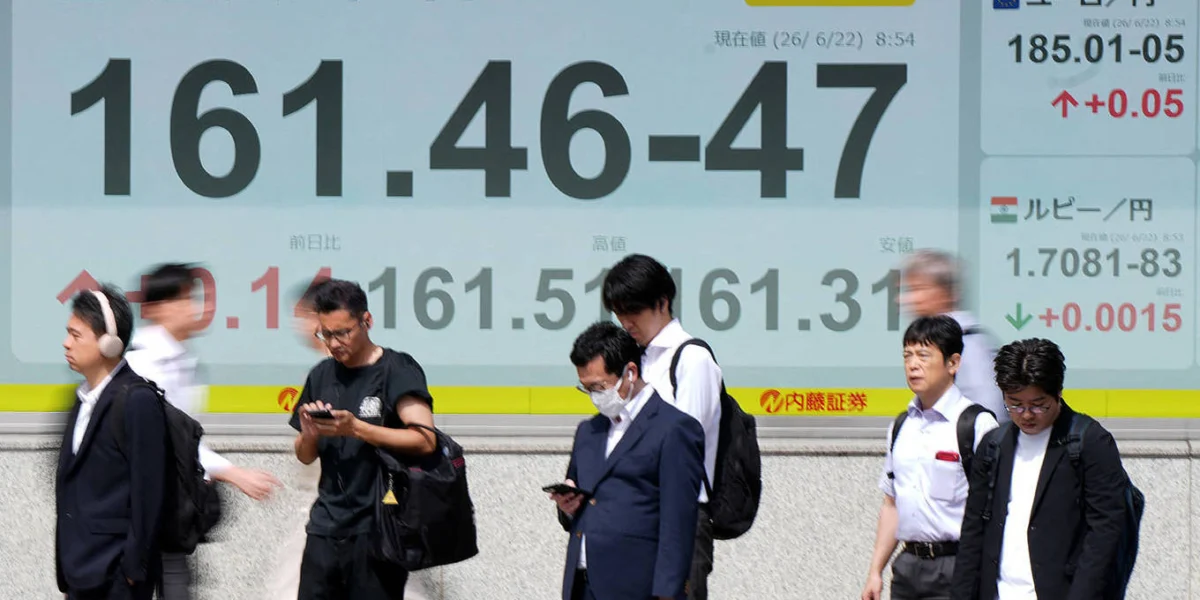
CAMBRIDGE – The persistent strength of the U.S. dollar and the corresponding trade and current-account surpluses enjoyed by major Asian economies like China, Japan, and South Korea have once again propelled the valuation of their currencies – the renminbi (RMB), yen (JPY), and won (KRW) – to the forefront of international monetary economic discourse. While some observers contend that these Asian currencies are undervalued relative to the dollar, leading to trade imbalances with the United States, a deeper examination of the fundamental economic drivers suggests that coordinated foreign-exchange intervention alone is unlikely to yield significant or sustainable improvements in addressing these complex global economic disparities.
The Persistent Imbalance: A Longstanding Economic Narrative
The current situation is not an isolated phenomenon but rather a recurring theme in global economic relations. For years, a significant divergence has been observed in the balance of payments between the United States and several key East Asian nations. The U.S. has consistently run substantial trade deficits, importing more goods and services than it exports, leading to a corresponding current-account deficit. Conversely, China, Japan, and South Korea have frequently posted robust trade surpluses, exporting significantly more than they import. This economic dynamic naturally influences currency valuations. A persistent trade surplus often implies a higher demand for a country’s goods and services, which, in theory, should lead to an appreciation of its currency. However, the reality is more nuanced, with a multitude of factors influencing exchange rates.
The assertion that the renminbi, yen, and won are undervalued vis-à-vis the dollar is primarily driven by the sheer scale of these bilateral trade and current-account surpluses. For instance, in 2023, the United States experienced a goods and services trade deficit of approximately $773 billion, with a significant portion attributable to its trade relationships with China, Japan, and South Korea. China alone accounted for over $277 billion of that deficit. Similarly, Japan’s trade balance with the U.S. has historically shown a surplus for Tokyo, and while fluctuating, South Korea has also maintained a strong export-driven economy with a positive trade balance.
The Debate Over Currency Valuation and Intervention
The prevailing argument for undervaluation suggests that if these Asian currencies were allowed to appreciate more freely, they would become more expensive for American consumers and businesses, thereby reducing U.S. demand for imports from these countries. Simultaneously, a stronger Asian currency would make Asian exports more expensive, potentially curbing their surplus. This, in turn, would theoretically help rebalance global trade flows and reduce the persistent U.S. trade deficit.
However, the efficacy of foreign-exchange intervention – a policy where central banks buy or sell their own currency in the open market to influence its value – in achieving these long-term goals is widely debated among economists. Proponents of intervention argue that it can provide a short-term correction to what they perceive as misaligned currency values, preventing disruptive speculative attacks or excessive volatility. They might point to historical instances where central bank actions have demonstrably impacted exchange rates, at least temporarily.
Beyond Intervention: The Fundamental Drivers of Imbalances
The core argument against relying solely on currency intervention, as posited by economists like Jeffrey Frankel, is that it fails to address the underlying economic fundamentals that create these surpluses and deficits in the first place. These fundamentals are multifaceted and deeply embedded in the economic structures of the nations involved.
1. Savings and Investment Differentials: A primary driver of current-account imbalances is the difference between national savings and investment rates. Countries with high savings rates and relatively lower investment rates tend to run current-account surpluses, as they are essentially lending to the rest of the world. Conversely, countries with low savings rates and high investment demand, like the United States, tend to run deficits. For instance, China has historically maintained a high household savings rate, while U.S. savings rates have been comparatively lower.
2. Productivity and Competitiveness: Differences in productivity growth and technological advancement also play a crucial role. Countries that are more productive and innovative can produce goods and services more efficiently and at lower costs, giving their exports a competitive edge in the global market. While the renminbi, yen, and won might not be significantly undervalued in nominal terms, improvements in production efficiency in China, Japan, and South Korea can effectively make their exports cheaper in real terms, contributing to trade surpluses.
3. Global Demand and Supply Dynamics: The structure of global demand and supply also influences trade balances. For example, the U.S. has a high demand for manufactured goods, many of which are produced in Asia. Conversely, Asian economies may have a higher demand for U.S. services, such as financial services or intellectual property, but not enough to offset their goods trade surplus.
4. Capital Flows and Financial Markets: International capital flows significantly impact exchange rates. If foreign investors are attracted to a country’s financial markets due to higher interest rates, economic stability, or growth prospects, this can lead to an inflow of capital, which can strengthen the country’s currency. Conversely, if a country is a net exporter of capital, this can weaken its currency. The attractiveness of U.S. Treasury bonds as a safe haven, for example, has historically drawn significant capital to the United States, influencing dollar strength.
5. Policy Choices: Government policies related to trade, industrial development, and fiscal management also contribute to these imbalances. Subsidies for export industries, trade barriers, or stimulative fiscal policies can all affect a nation’s trade balance and, consequently, its currency valuation.
Historical Context and Timeline of Currency Debates
The debate surrounding the valuation of Asian currencies and the U.S. dollar is not new. It has resurfaced periodically over the past few decades, often intensifying during periods of significant trade imbalances.
-
1980s and the Plaza Accord: In the mid-1980s, the United States, facing a burgeoning trade deficit, orchestrated the Plaza Accord with other major industrialized nations. This agreement led to a coordinated intervention to depreciate the U.S. dollar against the Japanese yen and the German Deutsche Mark. The goal was to make U.S. exports cheaper and imports more expensive, thereby reducing the trade deficit. While it had a significant impact on the yen’s appreciation, its long-term effectiveness in permanently rebalancing trade was debated.
-
Early 2000s and the Renminbi: The early 2000s saw renewed pressure on China to allow the renminbi to appreciate. China had maintained a de facto peg to the U.S. dollar for several years, which critics argued gave its exporters an unfair advantage. In 2005, China announced a move to a managed float, allowing the renminbi to appreciate gradually. However, the pace of appreciation and the extent of intervention remained subjects of international discussion.
-
Post-2008 Financial Crisis: Following the global financial crisis of 2008, concerns about currency manipulation and competitive devaluations resurfaced. Many countries, including some in Asia, intervened in their currency markets to support their export sectors amidst a global economic downturn.
-
Recent Years (2010s-2020s): The structural imbalances have persisted. While the U.S. dollar has remained a dominant global reserve currency, trade patterns and capital flows have continued to create tensions. The COVID-19 pandemic and subsequent supply chain disruptions further complicated global trade dynamics, leading to shifts in trade balances and renewed discussions about currency valuations.
Potential Implications and Broader Impact
The continued existence of these significant trade and current-account imbalances, and the ongoing debate about currency valuation, carry several important implications for the global economy.
-
Trade Tensions and Protectionism: Persistent imbalances can fuel trade protectionism. Countries running deficits may feel compelled to impose tariffs or other trade barriers to protect domestic industries, leading to retaliatory measures and escalating trade disputes. This can disrupt global supply chains and hinder economic growth.
-
Global Financial Stability: Large and persistent current-account deficits can make countries vulnerable to sudden shifts in capital flows. A rapid outflow of foreign investment can lead to currency depreciation, rising interest rates, and economic instability.
-
Monetary Policy Constraints: For countries running persistent surpluses and intervening heavily in currency markets, their central banks accumulate large foreign exchange reserves. Managing these reserves and unwinding them can pose challenges for monetary policy independence. For countries running deficits, their monetary policy may be influenced by the need to attract or retain foreign capital.
-
Impact on Developing Economies: The dynamics between major economies can have ripple effects on developing countries, influencing their export opportunities, access to capital, and overall economic development.
Official Responses and Perspectives
While the specific pronouncements from officials of China, Japan, and South Korea regarding currency valuation are often carefully worded, their general stances can be inferred from their policy actions and statements.
-
China: Beijing has consistently maintained that the renminbi’s exchange rate is determined by market forces, albeit with a degree of managed flexibility to ensure stability. They often emphasize that their trade surpluses are a result of global comparative advantages and strong international demand for their products, rather than deliberate currency manipulation. Recent policy statements often highlight efforts to promote domestic consumption and reduce reliance on exports, aiming to rebalance their economy from within.
-
Japan: The Bank of Japan (BoJ) has historically intervened in currency markets only in extreme cases of excessive yen appreciation that could harm its export-dependent economy. While concerned about the yen’s volatility, the BoJ’s primary focus has often been on combating deflation and stimulating domestic demand through its quantitative easing programs. Statements from BoJ officials typically emphasize the need for a stable and predictable exchange rate environment.
-
South Korea: The Bank of Korea (BoK) has also been known to intervene to smooth out excessive volatility in the won’s exchange rate. However, similar to Japan, their primary policy tools have focused on managing inflation and supporting economic growth. They often highlight the importance of market-determined exchange rates but reserve the right to intervene to prevent disorderly market conditions.
-
United States: U.S. Treasury officials have consistently voiced concerns about persistent trade imbalances and have at times accused trading partners of currency manipulation. They advocate for market-determined exchange rates and for trading partners to take steps to reduce their surpluses and open their markets to U.S. exports.
Conclusion: A Call for Structural Reforms
The debate over the undervaluation of the renminbi, yen, and won versus the dollar underscores a fundamental truth in international economics: currency exchange rates are not solely a reflection of immediate market forces or the outcome of isolated policy decisions. They are deeply intertwined with the structural characteristics of national economies, including savings and investment patterns, productivity levels, and global demand dynamics.
While coordinated foreign-exchange intervention might offer temporary relief or prevent sharp, destabilizing currency movements, it is unlikely to provide a lasting solution to the deep-seated imbalances that contribute to these debates. A more sustainable path toward rebalancing global trade and addressing currency valuation concerns likely lies in addressing these fundamental economic drivers. This would involve a concerted effort by surplus economies to boost domestic demand and consumption, and by deficit economies to increase their savings rates and address structural impediments to competitiveness. Without such fundamental adjustments, the cycle of trade imbalances and currency valuation debates is likely to persist, posing ongoing challenges for international economic cooperation and stability. The path forward requires a nuanced understanding of these complex economic interdependencies and a commitment to structural reforms that foster a more balanced and sustainable global economic order.
