

Russia’s President Vladimir Putin has issued a stark warning, threatening to seize European commercial vessels if member states of the European Union proceed with plans to confiscate ships carrying Russian cargo. The pronouncement marks a significant escalation in the economic and geopolitical standoff between Moscow and the West, signaling a potential new front in the ongoing hybrid conflict.
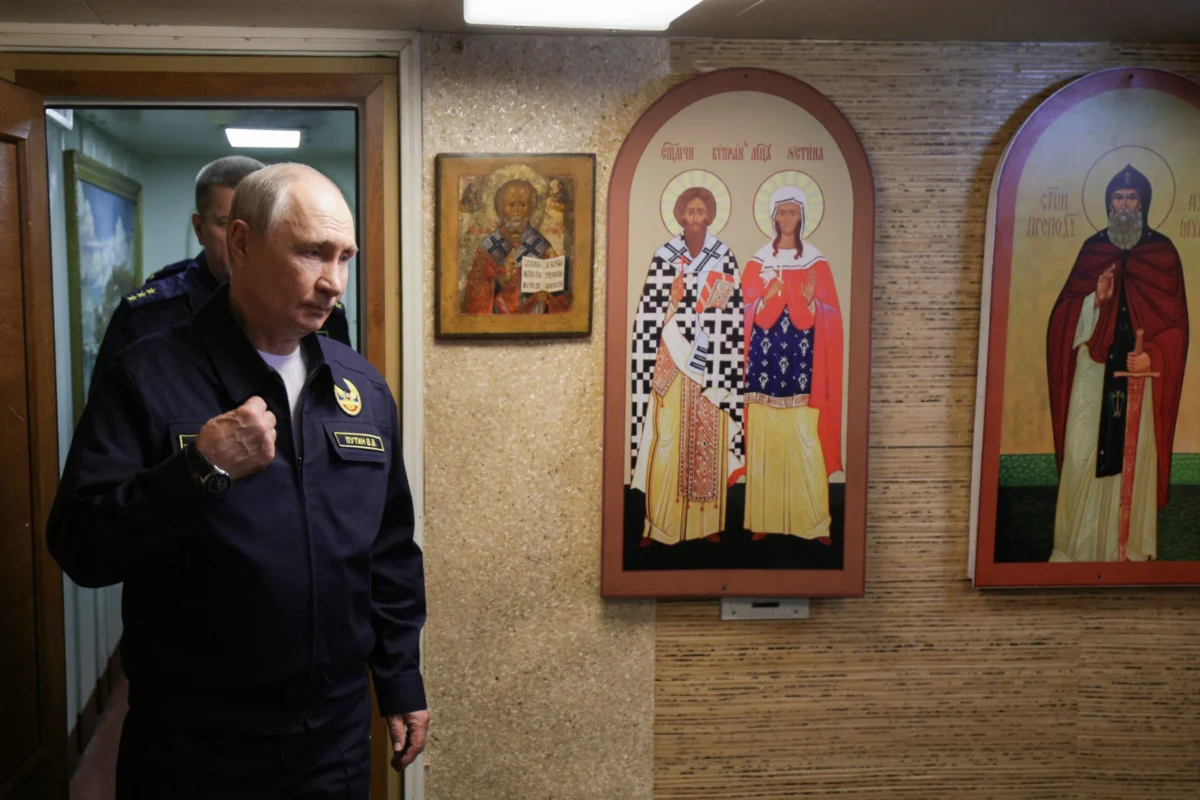
The Kremlin leader delivered his unequivocal threat on Wednesday while aboard a Russian cruiser, the Marshal Shaposhnikov, off the Pacific island of Sakhalin. The strategically chosen location coincided with extensive naval drills being conducted by Russia’s Pacific Fleet, underscoring the military backing to his economic pronouncements. According to reports from Russia’s state news agency TASS, Putin declared that Moscow would be prepared to carry out its own seizures “wherever we deem it necessary and appropriate,” emphasizing a wide geographic scope for potential retaliatory actions.
The Escalating Maritime Standoff
Putin’s warning comes in direct response to recent actions by several European nations, which have intensified their efforts to intercept and impound vessels suspected of belonging to Moscow’s so-called "shadow fleet." This fleet, largely comprised of older tankers operating under opaque ownership structures and flags of convenience, is instrumental in facilitating the clandestine transport of Russian oil and other commodities, thereby circumventing the stringent sanctions imposed by the European Union and its allies following Russia’s full-scale invasion of Ukraine in February 2022.
The European Union, in its latest package of sanctions, has granted member states the authority not only to seize these ships but also to sell off their cargo, including oil. This move is designed to further choke Russia’s revenue streams, which are crucial for funding its military operations. Putin explicitly referenced these new provisions, stating that some countries are attempting to “restrict the movement of vessels belonging to our economic operators” and have recently “came up with the idea of possibly seizing our ships and selling off property stolen from us.” He condemned these actions as “piracy and robbery,” a term that immediately elevates the dispute to a level of profound illegality and moral outrage from Moscow’s perspective.
“If these plans are put into practice, we will have to respond in kind,” Putin asserted in comments carried by Russia’s RIA Novosti news agency. He further revealed that “relevant instructions” had already been relayed to Russia’s Ministry of Defence and the Pacific Fleet, the primary naval force responsible for Russia’s maritime military interests across the vast Pacific region, stretching from the Arctic to Southeast Asia. This directive indicates a formal activation of a retaliatory strategy, moving beyond mere rhetoric to potential operational readiness.
The European "Shadow Fleet" Crackdown
The concept of a "shadow fleet" emerged shortly after the imposition of a G7 price cap on Russian oil in December 2022, alongside an EU embargo on seaborne crude and refined products. To circumvent these measures, Russia rapidly assembled a vast network of aging tankers, often purchased through shell companies and operating without typical Western insurance or safety certifications. These vessels, often switching off their transponders or engaging in ship-to-ship transfers at sea, aim to obscure the origin and destination of their cargo, making enforcement challenging.
The European Union, alongside the United States and the United Kingdom, has been increasingly frustrated by the effectiveness of this shadow fleet in undermining the impact of sanctions. Estimates suggest that this fleet comprises hundreds of vessels, enabling Russia to continue exporting significant volumes of oil, albeit often at discounted prices. The recent shift in European policy, allowing for the seizure and sale of cargo, represents a more aggressive enforcement posture.
One notable incident, hinted at in the original reports, involved the UK boarding and seizing a Russian shadow fleet tanker in the English Channel in June 2026. This action, alongside others, demonstrated a practical commitment by European nations to enforce the sanctions regime more vigorously. The legal justification for such seizures often relies on specific national legislation enacted to implement EU sanctions, targeting vessels that are found to be in violation of these prohibitions within territorial waters or under specific international agreements. The European Union’s latest sanctions package, the 14th since the invasion, was specifically designed to close loopholes and strengthen enforcement mechanisms, including the ability to target entities and individuals involved in the circumvention of sanctions, and explicitly empowering member states to seize and sell assets.
A Timeline of Sanctions and Seizures
- February 2022: Russia launches its full-scale invasion of Ukraine. Western nations, led by the EU, G7, and US, immediately begin imposing wide-ranging economic sanctions, targeting Russia’s financial sector, energy exports, and key individuals.
- December 2022: G7 nations, Australia, and the EU implement a price cap on Russian seaborne crude oil ($60 per barrel), alongside an EU embargo on seaborne crude imports. This prompts the rapid expansion of Russia’s "shadow fleet" to transport oil outside the cap mechanism.
- February 2023: EU imposes a price cap on Russian refined petroleum products and an embargo on imports. Enforcement efforts begin to ramp up, with increased monitoring of suspicious shipping activity.
- Throughout 2023-2024: Numerous reports emerge of shadow fleet activities, including ship-to-ship transfers, false documentation, and uninsured voyages, causing concern for environmental and safety risks. Western intelligence agencies and maritime authorities increase surveillance.
- June 2026: A significant escalation occurs with the UK reportedly boarding and seizing a Russian shadow fleet tanker in the English Channel, sending a clear signal of increased enforcement. Other European countries follow suit with similar interdictions.
- July 2026: The EU passes its latest, most robust sanctions package, explicitly permitting member states to seize vessels suspected of carrying Russian cargo in contravention of sanctions and to sell off that cargo. This provides a clear legal basis for the actions Putin is now reacting to.
- August 2026: President Putin issues his retaliatory threat from the Russian Far East, warning of reciprocal seizures of European vessels.
International Law and Maritime Commerce
The legality of seizing vessels and cargo on the high seas is a complex domain governed by international maritime law, primarily the United Nations Convention on the Law of the Sea (UNCLOS). Generally, states have sovereignty over their territorial waters (up to 12 nautical miles from the coast), where they can enforce their laws. Beyond this, in international waters, the principle of freedom of navigation prevails, and a vessel is primarily subject to the jurisdiction of its flag state.
However, international law also allows for certain exceptions, such as enforcing sanctions mandated by the UN Security Council, or in cases of piracy, slave trade, or unauthorized broadcasting. Unilateral sanctions, while legally binding for the states that impose them, do not automatically grant jurisdiction over foreign-flagged vessels in international waters. This is why many of the recent European seizures have occurred either within their territorial waters or involved vessels linked to entities explicitly sanctioned under their domestic laws, often relying on port state control measures.
Putin’s accusation of "piracy and robbery" frames the European actions as illegal under international law, implying that Russia views these seizures as acts of aggression. If Russia were to proceed with retaliatory seizures, especially of commercial vessels not directly involved in sanctions evasion and potentially in international waters, it would constitute a severe violation of international maritime law and could trigger widespread condemnation, potentially leading to further legal challenges and diplomatic crises. Such actions would significantly increase the risks for global shipping, potentially leading to soaring insurance premiums, rerouting of major trade arteries, and creating a climate of profound uncertainty for maritime commerce worldwide.
Geopolitical Undercurrents: NATO and the Asia-Pacific
Putin’s warning about maritime seizures was not delivered in isolation. It was integrated into a broader address that also touched upon Russia’s strategic concerns regarding the expansion of the NATO military alliance into the Asia-Pacific region and the heightened tensions in the Arctic. “NATO is making inroads into the ‘region, new military-political blocs are being formed, and new weapons systems that pose a threat to Russia are ‘being deployed or are slated for deployment,” the Russian leader stated.
This assertion reflects Moscow’s long-standing apprehension about what it perceives as Western encirclement and the erosion of its strategic buffer zones. The Asia-Pacific region, historically dominated by distinct security architectures, has seen increased engagement from NATO members, particularly the United States, as part of a broader strategy to counter China’s rising influence and address North Korean provocations. NATO itself has increasingly focused on the "systemic challenges" posed by China, and has sought to strengthen partnerships with regional actors like Japan, South Korea, Australia, and New Zealand. This perceived "inroad" by NATO into a region traditionally viewed by Russia as outside the alliance’s primary remit contributes to Moscow’s sense of geopolitical vulnerability and justifies its own military posturing.
The timing of Russia’s naval exercises in the West Pacific is particularly poignant, occurring just a week before major joint US-South Korean war games. These drills, designed to simulate a possible invasion from North Korea, underscore the volatile security environment in Northeast Asia. Russia’s concurrent exercises can be interpreted as a show of force, a demonstration of its military reach, and a signal of solidarity with its partners in the region, particularly China and North Korea.
The Russia-North Korea Axis
Tensions in the region are further exacerbated by growing accusations from Kyiv and Seoul that Pyongyang and Moscow are significantly intensifying their military cooperation. On Tuesday, Ukraine’s President Volodymyr Zelenskyy accused Russia of utilizing North Korean missiles in a deadly air raid across Ukraine, providing concrete evidence of this burgeoning alliance. A day earlier, Zelenskyy had warned that Moscow was receiving more ballistic projectiles and troops from its ally Pyongyang, a development he cautioned posed dangers not only for Ukraine but also for countries across East Asia.
North Korean leader Kim Jong Un has been a staunch supporter of Putin’s four-year invasion, and reports indicate he has already dispatched thousands of troops and substantial supplies of weaponry to bolster Russia’s war effort. This military alignment is a strategic boon for Russia, providing it with much-needed artillery shells and ballistic missiles to sustain its protracted conflict in Ukraine, while offering North Korea a critical partner against what it perceives as hostile US and South Korean policies. For the broader international community, this axis represents a concerning development, potentially destabilizing both the European and Asian security landscapes. The transfer of advanced military technology or expertise from Russia to North Korea, in exchange for conventional armaments, could further embolden Pyongyang’s nuclear and missile programs, posing an existential threat to its regional neighbors and beyond.
Economic Repercussions and Global Trade
Should Russia execute its threat of retaliatory vessel seizures, the economic repercussions would be immediate and far-reaching. The global shipping industry, already navigating complex geopolitical risks and supply chain disruptions, would face unprecedented uncertainty. Insurance premiums for voyages through areas deemed high-risk – potentially including major shipping lanes where Russian naval presence is significant – would skyrocket, if coverage remains available at all. Many shipowners and operators might opt to avoid such routes entirely, leading to longer transit times, increased fuel costs, and significant delays in the delivery of goods.
Commodity markets, particularly for oil, gas, and agricultural products, would likely react with volatility. Any disruption to the flow of goods, whether due to actual seizures or merely the heightened risk of them, would translate into higher prices for consumers worldwide. Furthermore, the legal battles over seized vessels and cargo could drag on for years, creating a quagmire of international litigation and further complicating global trade. The principle of freedom of navigation, a cornerstone of global commerce, would be severely undermined, fostering an environment of mistrust and insecurity that could deter investment and stifle economic growth.
Conclusion
President Putin’s threat to seize European vessels marks a dangerous escalation in the economic confrontation between Russia and the West. Delivered amidst significant naval drills and alongside accusations against NATO’s expansion and deepening military ties with North Korea, the message is clear: Moscow is prepared to meet perceived aggression with reciprocal force, even if it risks further destabilizing global maritime commerce and international relations. The coming weeks will be crucial in determining whether this threat remains rhetoric or translates into action, setting a perilous precedent for the future of state-sanctioned seizures and the delicate balance of international law and economic warfare. The world now watches to see if the cycle of tit-for-tat actions will plunge global shipping into an era of unprecedented risk and uncertainty.
