

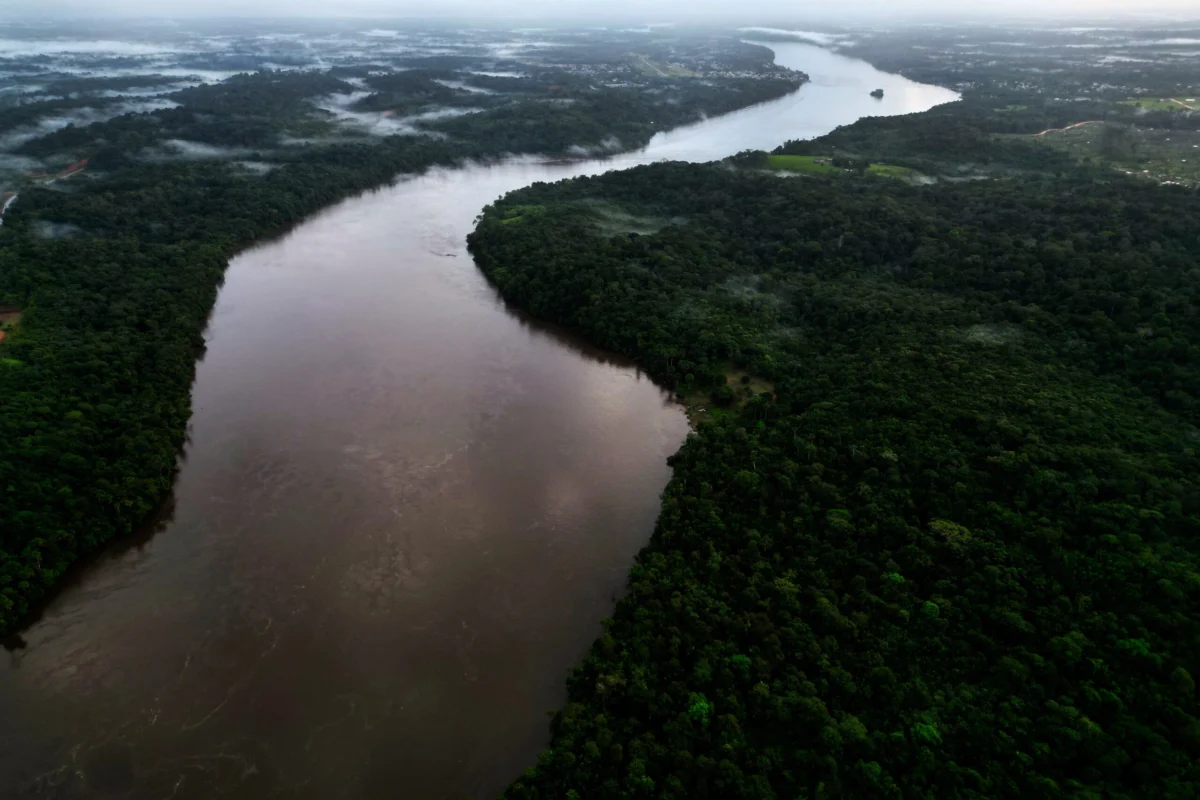
Brazil’s Supreme Court is poised to deliberate on a series of landmark cases that carry profound implications for the future of the Amazon rainforest, setting the judiciary against a mostly conservative Congress that has moved to weaken environmental safeguards. These critical hearings, scheduled to commence this week, come at a time of intense ideological division within the country regarding the delicate balance between fostering economic growth and preserving one of the world’s most vital ecosystems. The Supreme Court’s intervention underscores its role as a potential bulwark against legislative actions that President Luiz Inacio Lula da Silva’s leftist administration views as detrimental to its ambitious climate agenda, particularly after Congress overrode several of his key environmental vetoes earlier this year.
The stakes are exceptionally high. The Amazon, often referred to as the "lungs of the planet," plays an indispensable role in global climate regulation, biodiversity conservation, and the livelihoods of millions, including Indigenous peoples. While recent data indicates a significant downturn in Amazonian deforestation—falling to its lowest level in a decade during the first half of 2026 under Lula’s renewed environmental focus—these judicial challenges threaten to unravel years of progress and establish precedents that could reshape Brazil’s environmental governance for generations. The cases before the country’s top court represent some of Brazil’s most consequential environmental battles, pitting powerful agricultural and industrial lobbies against Indigenous rights advocates and environmental protection groups.
The Contentious Landscape of Indigenous Land Rights
One of the most intensely debated issues revolves around Indigenous land rights, specifically the legal principle known as the "time limit" thesis, or Marco Temporal. On Friday, the Supreme Court began reviewing final motions seeking clarification on its pivotal 2025 ruling, which definitively rejected this controversial theory. The Marco Temporal, championed by Brazil’s influential agribusiness lobby, posits that Indigenous communities can only claim territories that were demonstrably occupied or under legal dispute at the time the nation’s 1988 Constitution came into effect. This narrow interpretation fundamentally contradicts the historical reality of Indigenous presence and forced displacement across Brazil.
Chronology and Context of Marco Temporal
The 1988 Constitution marked a significant turning point for Indigenous rights in Brazil, recognizing their original rights to the lands they traditionally occupy. However, the subsequent decades have been marred by protracted legal battles over the demarcation and protection of these territories. The Marco Temporal thesis emerged as a powerful counter-argument from sectors advocating for agricultural expansion, arguing that a fixed cut-off date would provide "legal certainty" for landowners and investors. This argument often overlooks the systemic violence, forced removals, and lack of state protection that prevented many Indigenous communities from physically occupying or legally disputing their ancestral lands at a specific historical moment.
The Supreme Court’s 2025 decision to reject the Marco Temporal was hailed as a monumental victory by Indigenous peoples and their allies. It affirmed that Indigenous rights to ancestral lands are original and inherent, not contingent on a specific date. However, the agribusiness caucus, representing a powerful bloc in Congress, swiftly responded by pushing through legislative measures attempting to enshrine the Marco Temporal into law, directly challenging the judiciary’s authority. President Lula subsequently vetoed these legislative efforts, only to see many of his vetoes overridden by Congress, highlighting the deep political chasm on this issue.
Implications for Indigenous Communities and the Amazon
The current motions before the justices seek to clarify the practical application of the 2025 ruling, addressing critical questions such as compensation for non-Indigenous occupants of traditionally Indigenous lands and potential deadlines for completing Indigenous land demarcations. Indigenous groups across Brazil, representing hundreds of distinct ethnicities and millions of people, assert that the Marco Temporal ignores decades of violence, displacement, and the systematic erosion of their ancestral territories. They argue that applying such a restriction would not only perpetuate historical injustices but also legitimize the ongoing invasion and exploitation of their lands.
The potential impact of these clarifications is immense. It could affect the demarcation status of hundreds of Indigenous territories, encompassing vast swathes of the Amazon and other biomes. Communities, including isolated and uncontacted groups like the Kawahiva people, whose existence and traditional way of life depend entirely on the integrity of their ancestral lands, face existential threats. Indigenous territories are consistently proven to be among the best-preserved areas of the Amazon, acting as critical barriers against deforestation and biodiversity loss. A weakening of their land rights could unleash a new wave of land grabbing, illegal logging, and mining, accelerating environmental degradation and exacerbating social conflicts in the region. The court’s final pronouncements will therefore not only shape the future of Indigenous peoples in Brazil but also critically influence the country’s capacity to protect its natural heritage.
The Future of the Soya Moratorium: A Test of Environmental Governance
On Wednesday, the Supreme Court is scheduled to delve into another high-stakes legal battle concerning the future of Brazil’s soya moratorium. This groundbreaking agreement, initially established in 2008, has been widely lauded as a significant success story in the global effort to combat deforestation. The moratorium effectively barred major soya traders from purchasing soya beans grown on land deforested in the Amazon after July 2008, thereby creating a market incentive for sustainable practices.
Origins and Efficacy of the Moratorium
The soya moratorium emerged from a collaborative effort involving environmental NGOs, international companies, and the Brazilian Association of Vegetable Oil Industries (ABIOVE). At its inception, Brazil was rapidly expanding its agricultural frontier, and soya cultivation was a primary driver of deforestation in the Amazon. The moratorium sought to break this link, offering a market-based solution to a complex environmental problem. Over the years, it has been credited with playing a crucial role in curbing Amazon deforestation attributable to soya expansion, even as Brazil solidified its position as an agricultural powerhouse and the world’s largest producer and leading exporter of soya beans. Studies have shown that while soya production surged, its contribution to new deforestation in the Amazon biome significantly decreased, demonstrating the effectiveness of the agreement. For instance, data indicates that the moratorium helped reduce deforestation rates in soya-producing regions by over 80% compared to pre-moratorium levels.
Recent Challenges and ABIOVE’s Withdrawal
Despite its proven success, the soya moratorium has faced renewed pressure from powerful agricultural interests. In January of this year, several major soya-producing states, influenced by the agribusiness lobby, passed laws revoking tax incentives for companies participating in the moratorium. These legislative actions were interpreted by many as a direct attempt to undermine the agreement and encourage expansion into previously protected areas. In response to this shifting regulatory landscape and the withdrawal of crucial state support, the Brazilian Association of Vegetable Oil Industries (ABIOVE) announced its withdrawal from the moratorium, signaling a potential end to the voluntary agreement that had been a cornerstone of sustainable soya production.
The Ministry of Environment and Climate Change, under President Lula’s administration, has vigorously defended the soya moratorium, emphasizing its historical success in decoupling agricultural expansion from environmental destruction. They argue that the moratorium served as a crucial instrument for Brazil to expand its agricultural production responsibly, enhancing its international reputation as a sustainable producer. The legal challenge before the Supreme Court seeks to determine the legality of these state-level actions and, by extension, the future viability of voluntary, market-driven environmental agreements in Brazil.
Broader Implications for Agriculture and Global Trade
The court’s decision on the soya moratorium will have far-reaching implications. If the state laws are upheld, it could set a dangerous precedent, discouraging future voluntary agreements and potentially reigniting deforestation pressures in the Amazon from soya expansion. This would not only jeopardize Brazil’s environmental commitments but also risk its standing in international markets, where consumers and import regulations increasingly demand sustainably sourced products. European Union regulations, for example, are moving towards banning imports linked to deforestation, making Brazil’s adherence to such standards critical for its export economy. The fate of the soya moratorium represents a significant test of Brazil’s commitment to reconciling its agricultural prowess with its environmental responsibilities on a global stage.
Environmental Licensing Law: Fast-Tracking Development at What Cost?
The third major environmental case slated for the Supreme Court’s review on Wednesday involves a direct challenge to a new environmental licensing law that took effect in February. This legislation, enacted by the conservative-leaning Congress, has drawn fierce criticism from environmental groups and scientists who warn it could severely weaken crucial safeguards in one of the world’s most ecologically sensitive regions.
Provisions of the New Licensing Law
The new law is designed to fast-track the approval process for a wide array of development projects, including mines, highways, industrial plants, hydroelectric dams, and large-scale agricultural ventures. Proponents argue that the law aims to streamline bureaucratic procedures, reduce delays, and stimulate economic investment and infrastructure development, which they claim are essential for job creation and national progress. However, critics contend that the "streamlining" comes at the expense of robust environmental impact assessments and public participation, fundamentally undermining the integrity of the licensing process.
Key provisions of the law include:
- Reduced scrutiny: Lowering the requirements for environmental impact studies for certain types of projects.
- Self-licensing mechanisms: Allowing some projects to proceed based on self-declarations of environmental compliance, with minimal governmental oversight.
- Centralization of power: Shifting some licensing authority away from federal environmental agencies to state or municipal entities, which may be more susceptible to local political and economic pressures.
- Fast-track timelines: Imposing strict deadlines for the approval of licenses, potentially limiting the time available for thorough reviews and public consultations.
Concerns from Environmental Advocates
Environmental organizations, including the Climate Observatory (Observatório do Clima), have sounded urgent alarms over the potential consequences of this new legislation. Suely Araujo, a prominent expert from the Climate Observatory and former president of the Brazilian Institute of Environment and Renewable Natural Resources (IBAMA), has explicitly stated that the law is already having tangible and detrimental consequences in the Amazon. She cites the paving of the controversial BR-319 highway, a project long opposed by environmentalists due to its potential to open vast tracts of pristine rainforest to illegal logging, land grabbing, and deforestation, as an example where the new law is enabling progress without adequate prior environmental review. Furthermore, plans to dredge the Tapajos River, a major Amazonian tributary, without comprehensive impact assessments, illustrate how critical ecosystems are being exposed to heightened risks.
The environmental community’s primary concern is that the law prioritizes economic interests over ecological protection, creating loopholes that can be exploited by developers seeking to bypass stringent environmental requirements. They argue that a weakened licensing framework will lead to irreversible environmental damage, including increased deforestation, water pollution, loss of biodiversity, and impacts on Indigenous and traditional communities who depend directly on healthy ecosystems. The Amazon’s intricate web of life, including countless species yet to be discovered and its vital role in regulating rainfall patterns across South America, stands to suffer significantly from a less rigorous licensing regime.
Broader Implications for Sustainable Development
The Supreme Court’s decision on this environmental licensing law will be a litmus test for Brazil’s commitment to sustainable development. It will determine whether the country prioritizes short-term economic gains from infrastructure and industrial projects over the long-term health of its natural capital and the well-being of its population. The outcome will also send a clear signal to international investors and partners about Brazil’s regulatory stability and its adherence to global environmental standards. Critics argue that fast-tracking projects without proper environmental review is not true progress but rather a mortgaging of the future, risking Brazil’s international credibility and its ability to attract investments aligned with a green economy.
Brazil’s Environmental Crossroads: A Defining Moment
The confluence of these three critical cases before Brazil’s Supreme Court marks a defining moment for the nation’s environmental policy and its standing on the global stage. President Lula da Silva’s administration came into office with a strong mandate to reverse the previous government’s environmental dismantling and restore Brazil’s leadership in climate action. His early efforts have shown promise, with deforestation rates falling and a renewed engagement with international climate initiatives. However, the persistent legislative challenges from a powerful conservative Congress underscore the deep-seated political and economic interests that continue to exert pressure against environmental protections.
The Supreme Court, often seen as the ultimate arbiter of constitutional law and human rights in Brazil, now finds itself at the epicenter of this ideological struggle. Its decisions in these cases will not only interpret existing laws but also effectively shape the future trajectory of environmental governance in a country that holds the key to a significant portion of the world’s biodiversity and carbon sinks. The implications extend far beyond Brazil’s borders, touching upon global climate stability, indigenous rights, and the future of sustainable economic models.
As lawmakers and environmental groups remain profoundly divided over how Brazil should navigate the complex path of economic development while safeguarding its natural treasures, the Supreme Court’s pronouncements will carry immense weight. They will determine whether the legal framework strengthens or weakens the protections for the Amazon, whether the rights of Indigenous peoples are upheld against powerful economic lobbies, and whether Brazil maintains its commitment to environmental stewardship in the face of developmental pressures. The world watches keenly, understanding that the future of the Amazon, and by extension, a critical part of the global climate system, hangs in the balance.
