

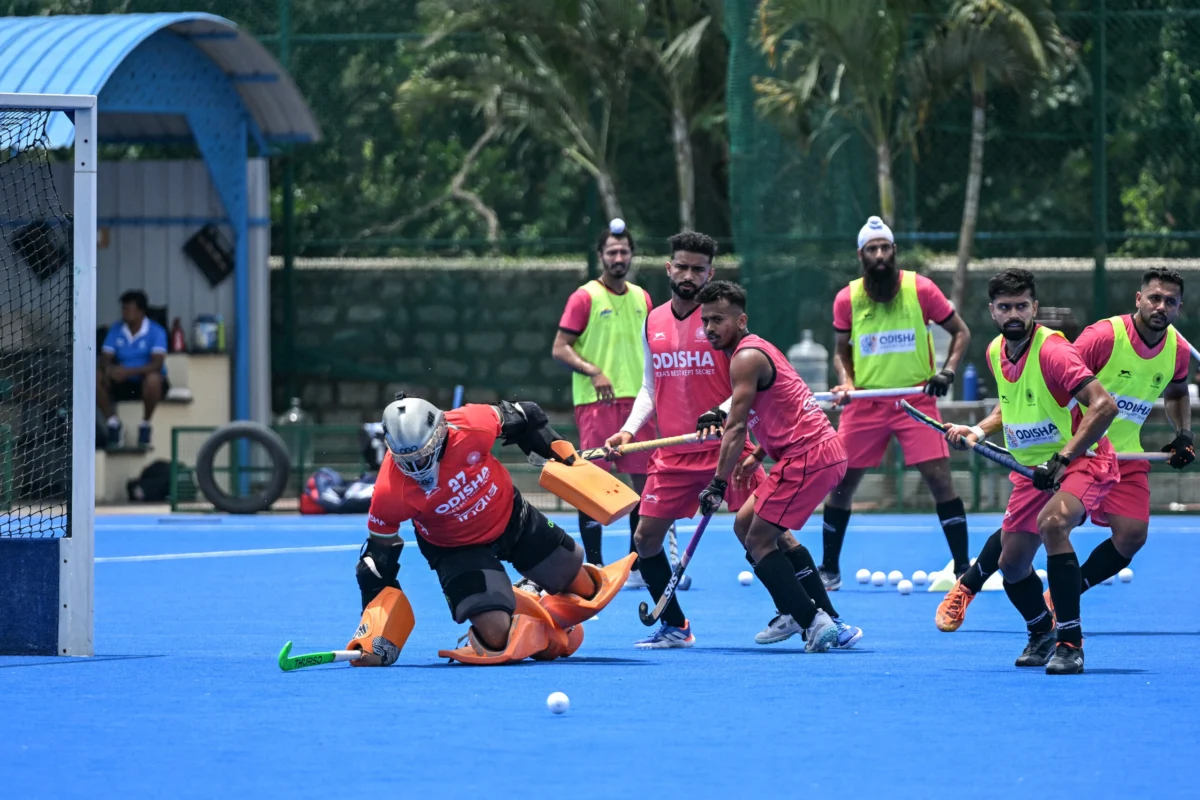
The global hockey fraternity is poised for an exhilarating spectacle as the FIH Hockey World Cup 2026 approaches, jointly hosted by Wavre, Belgium, and Amstelveen, The Netherlands, from August 15 to 30. This edition promises not only a battle for global supremacy in both men’s and women’s categories but also the renewal of one of sport’s most intense rivalries: India versus Pakistan. With a revamped tournament format designed to heighten competitive drama and the world’s top teams vying for glory, the 2026 World Cup is set to be a landmark event in the sport’s history.
A Dual Hosting Showcase: Belgium and the Netherlands
The decision to jointly host the FIH Hockey World Cup in two of Europe’s most prominent hockey nations underscores the deep-rooted passion and infrastructure for the sport in Belgium and the Netherlands. Both countries boast rich hockey traditions, consistently producing world-class talent and hosting major international tournaments. The Netherlands, a powerhouse in both men’s and women’s hockey, will host matches at the iconic Wagener Stadium in Amstelveen, a venue synonymous with elite-level hockey. This stadium, known for its vibrant atmosphere and state-of-the-art facilities, has been the scene of numerous memorable contests, including past World Cups and European Championships. Belgium, the reigning Olympic champions in men’s hockey, will stage games in Wavre, a city ready to welcome the world’s best. While specific stadium details for Wavre are anticipated, Belgium’s recent success has significantly boosted the sport’s profile, making it a fitting co-host. The joint venture not only leverages the strong hockey cultures of both nations but also ensures a wider geographical spread for fans and a robust logistical framework for the tournament.
The FIH Hockey World Cup has a storied history, with the inaugural men’s tournament held in Barcelona, Spain, in 1971, and the women’s edition following in Mandelieu, France, in 1974. Over the decades, it has evolved into a premier event, second only to the Olympic Games in prestige. The 2026 edition, featuring 16 teams in each of the men’s and women’s competitions, divided into four initial pools, represents a continued commitment by the International Hockey Federation (FIH) to expand the sport’s global footprint and enhance its competitive appeal. Germany enters the men’s tournament as the defending champions, having clinched the title in a dramatic final in 2023, while the Netherlands will be looking to retain their women’s crown, secured in 2022.
Revolutionizing the Tournament Structure: The Crossover Pools
A significant innovation for the 2026 World Cup is the introduction of a revised format, which replaces the traditional quarterfinal stage with a dynamic "crossover pools" phase. This structural change is designed to ensure more high-stakes matches and maintain competitive intensity throughout the tournament’s progression. After the initial pool stage, where teams compete within their designated groups, the top teams will be re-grouped into four new pools: Pools E, F, G, and H. This second phase, effectively a modified second group stage, will see teams play three additional matches, intensifying the race for the semifinals.
Under this new system, the top two teams from Pools E and F will directly advance to the semifinals, a clear incentive for strong performances in the crossover stage. Teams not qualifying for the semifinals will proceed to classification matches, determining positions from 5th to 16th. This format aims to minimize "dead rubber" matches and provide more opportunities for teams to prove their mettle against a wider array of opponents. The rationale behind such a shift often includes increasing competitive balance, enhancing fan engagement by extending the period of high-stakes play, and providing a clearer pathway to the medal rounds. The tournament will culminate with the bronze-medal match and the grand final, where the world champions will be crowned.
The Men’s Championship: Pools and Key Contenders
The men’s tournament features a compelling lineup, with traditional powerhouses and emerging talents all vying for the coveted trophy. The initial pool stage promises fierce competition from the outset.

Men’s Pools:
- Pool A: Netherlands, Argentina, New Zealand, Japan
- Pool B: Germany, Belgium, France, Malaysia
- Pool C: Australia, Spain, Ireland, South Africa
- Pool D: India, England, Pakistan, Wales
Defending champions Germany, known for their tactical discipline and potent attack, will face stiff challenges, particularly from co-hosts Belgium in Pool B, a team that has consistently been at the pinnacle of international hockey in recent years. Pool A sees the Netherlands, always a formidable force on home turf, contend with a strong Argentine side. Australia, a perennial contender, headlines Pool C, while Pool D sets the stage for the highly anticipated India-Pakistan encounter. The new format means that every match, especially in the crossover pools, will carry immense weight, requiring strategic depth and consistent performance from all participating nations.
The Women’s Championship: A Growing Global Spectacle
While the men’s tournament often garners significant attention, the women’s FIH Hockey World Cup has steadily grown in stature and competitiveness, showcasing incredible talent and thrilling contests. The Netherlands, as defending champions from 2022, will be aiming for another triumphant campaign on home soil. However, they face a formidable challenge from a strong field of contenders.
Women’s Pools (Illustrative, based on current global rankings and typical tournament participation):
- Pool A: Netherlands, South Korea, Chile, France
- Pool B: Argentina, Germany, Canada, Spain
- Pool C: Australia, USA, South Africa, Belgium
- Pool D: England, New Zealand, India, Japan
Teams like Argentina, Australia, and Germany consistently demonstrate world-class skill and tactical prowess, promising a tightly contested championship. The growth of women’s hockey has been a priority for the FIH, with increasing investment in development programs and media coverage. This has led to a noticeable rise in the competitive parity across nations, making predictions increasingly difficult and the tournament more exciting for fans. The women’s tournament will also follow the same innovative format, with initial pool play leading into crossover pools, culminating in the semifinals and the final. The presence of emerging nations alongside established giants highlights the global reach and expanding talent pool within women’s hockey.
The Epic Rivalry: India vs. Pakistan
The highlight of the initial pool stage for many will undoubtedly be the clash between India and Pakistan in Pool D. Scheduled for August 19 at Wagener Stadium in Amstelveen, the match will begin at 15:00 local time (6:30 PM in India and 6:00 PM in Pakistan). This encounter transcends mere sport; it is a renewal of one of the fiercest and most emotionally charged rivalries in the sporting world, deeply intertwined with the shared history of conflict and partition between the two South Asian nations.
The anticipation surrounding an India-Pakistan match is always immense, drawing unparalleled viewership and generating an electrifying atmosphere. This particular contest carries added significance as it marks the first time in 16 years that the arch-rivals will meet at a Hockey World Cup. Their last World Cup encounter was in the 2010 edition held in New Delhi, India, where the hosts secured a dominant 4-1 victory in a pool match.
Historically, India and Pakistan have faced each other five times at the Hockey World Cup. India holds a slight edge with three victories to Pakistan’s two. Their most memorable World Cup clash was the 1975 final, a legendary encounter that saw India emerge victorious with a thrilling 2-1 win, claiming their sole World Cup title. Beyond the World Cup, their rivalry has produced countless iconic moments across various tournaments, including the Olympic Games, Asian Games, and Champions Trophy, each adding another chapter to their storied history. While Pakistan holds the distinction of being the most successful men’s team in the Hockey World Cup, with four titles (1971, 1978, 1982, and 1994), India boasts an unparalleled record in Olympic hockey, having secured eight gold medals. The 2026 match will not only be a test of skill and strategy but also a battle of wills, promising a captivating spectacle for fans worldwide. While official statements from team management are yet to emerge, the palpable excitement among fans and pundits speaks volumes about the significance of this encounter, often described as a mini-final in itself.

FIH Men’s Hockey World Cup 2026: Full Schedule
The tournament schedule is packed with high-octane action from start to finish, reflecting the intensity of the new format.
(All times local, GMT+2)
August 15
13:00 – India vs Wales (Pool D)
14:30 – Germany vs Malaysia (Pool B)
19:00 – England vs Pakistan (Pool D)
21:00 – Belgium vs France (Pool B)
August 16
11:30 – Australia vs Ireland (Pool C)
14:30 – Spain vs South Africa (Pool C)
16:00 – Netherlands vs New Zealand (Pool A)
19:00 – Argentina vs Japan (Pool A)
August 17
12:30 – Pakistan vs Wales (Pool D)
14:00 – France vs Malaysia (Pool B)
15:00 – India vs England (Pool D)
20:30 – Germany vs Belgium (Pool B)
August 18
09:30 – New Zealand vs Japan (Pool A)
14:00 – Spain vs Australia (Pool C)
17:00 – Ireland vs South Africa (Pool C)
18:00 – Argentina vs Netherlands (Pool A)
August 19
12:30 – England vs Wales (Pool D)
15:00 – Pakistan vs India (Pool D)
17:00 – France vs Germany (Pool B)
20:30 – Belgium vs Malaysia (Pool B)
August 20
11:00 – Australia vs South Africa (Pool C)
12:30 – New Zealand vs Argentina (Pool A)
17:00 – Ireland vs Spain (Pool C)
18:00 – Netherlands vs Japan (Pool A)
August 21 (Crossover Pools Begin)
11:00 – 3rd Pool B vs 4th Pool C (Pool H)
14:00 – 3rd Pool C vs 4th Pool B (Pool H)
17:00 – 1st Pool C vs 2nd Pool B (Pool F)
20:30 – 1st Pool B vs 2nd Pool C (Pool F)

August 22
10:00 – 3rd Pool A vs 4th Pool D (Pool G)
13:00 – 3rd Pool D vs 4th Pool A (Pool G)
16:00 – 1st Pool A vs 2nd Pool D (Pool E)
19:00 – 1st Pool D vs 2nd Pool A (Pool E)
August 23
11:30 – 4th Pool B vs 4th Pool C (Pool H)
14:30 – 3rd Pool B vs 3rd Pool C (Pool H)
17:30 – 1st Pool B vs 1st Pool C (Pool F)
20:30 – 2nd Pool B vs 2nd Pool C (Pool F)
August 24
09:30 – 4th Pool A vs 4th Pool D (Pool G)
12:30 – 3rd Pool A vs 3rd Pool D (Pool G)
14:45 – 2nd Pool A vs 2nd Pool D (Pool E)
18:00 – 1st Pool A vs 1st Pool D (Pool E)
August 28 (Classification & Semifinals)
09:30 – 3rd Pool G vs 3rd Pool H (13th/14th place)
11:00 – 4th Pool G vs 4th Pool H (15th/16th place)
12:30 – 2nd Pool G vs 2nd Pool H (11th/12th place)
14:00 – 1st Pool G vs 1st Pool H (9th/10th place)
15:00 – 3rd Pool E vs 3rd Pool F (5th/6th place)
17:00 – 4th Pool E vs 4th Pool F (7th/8th place)
18:00 – 1st Pool E vs 2nd Pool F (Semifinal 1)
20:30 – 1st Pool F vs 2nd Pool E (Semifinal 2)
August 30 (Medal Matches)
14:00 – Loser Semifinal 1 vs Loser Semifinal 2 (Bronze medal)
16:30 – Winner Semifinal 1 vs Winner Semifinal 2 (Final)
Global Reach and Legacy of the Tournament
The FIH Hockey World Cup 2026 is expected to attract a massive global audience, further solidifying field hockey’s position as a prominent international sport. Broadcast partnerships with major sports networks and digital streaming platforms will ensure that matches are accessible to fans across continents. The FIH has consistently worked towards expanding the sport’s footprint, and events like this World Cup are crucial in showcasing the athleticism, skill, and tactical depth of modern hockey.
Beyond the immediate thrill of competition, the World Cup leaves a lasting legacy. For the host nations, it boosts tourism, generates economic activity, and inspires a new generation of athletes. Investment in state-of-the-art facilities like Wagener Stadium ensures that infrastructure benefits endure long after the final whistle. For the sport itself, the tournament serves as a powerful platform for promoting hockey at grassroots levels, encouraging youth participation, and fostering international camaraderie. The FIH’s focus on sustainability, fair play, and technological advancements also contributes to the sport’s evolution, making it more engaging and environmentally conscious. The discussions around new formats, such as the crossover pools, also signify a proactive approach to keeping the sport fresh and exciting for both players and spectators. The 2026 World Cup is therefore not just a tournament but a celebration of hockey’s rich heritage and its promising future.
