

Nvidia, the dominant force in artificial intelligence chips, is spearheading an ambitious initiative to transform its powerful AI compute infrastructure into a distinct and investable asset class. The company announced a strategic partnership with six of the world’s largest asset managers – Apollo Global Management, Blackstone, BlackRock, Brookfield Asset Management, Goldman Sachs, and KKR – to establish financing platforms designed to mobilize over $500 billion in third-party capital. This monumental collaboration aims to treat AI compute infrastructure akin to established long-term assets like commercial real estate, toll roads, or utilities, thereby enabling customers to secure financing against these assets rather than solely relying on their own balance sheets.
The Genesis of a New Asset Class
The announcement, made on a Monday and accompanied by a rare live joint interview with executives from all seven participating firms on CNBC, signals a potentially transformative shift in how the burgeoning AI industry will be funded. At its core, the initiative seeks to alleviate the immense capital expenditure burden currently faced by hyperscale cloud providers, frontier AI labs, and large enterprises striving to build out the sophisticated data centers and acquire the cutting-edge Nvidia hardware essential for advanced AI development and deployment.
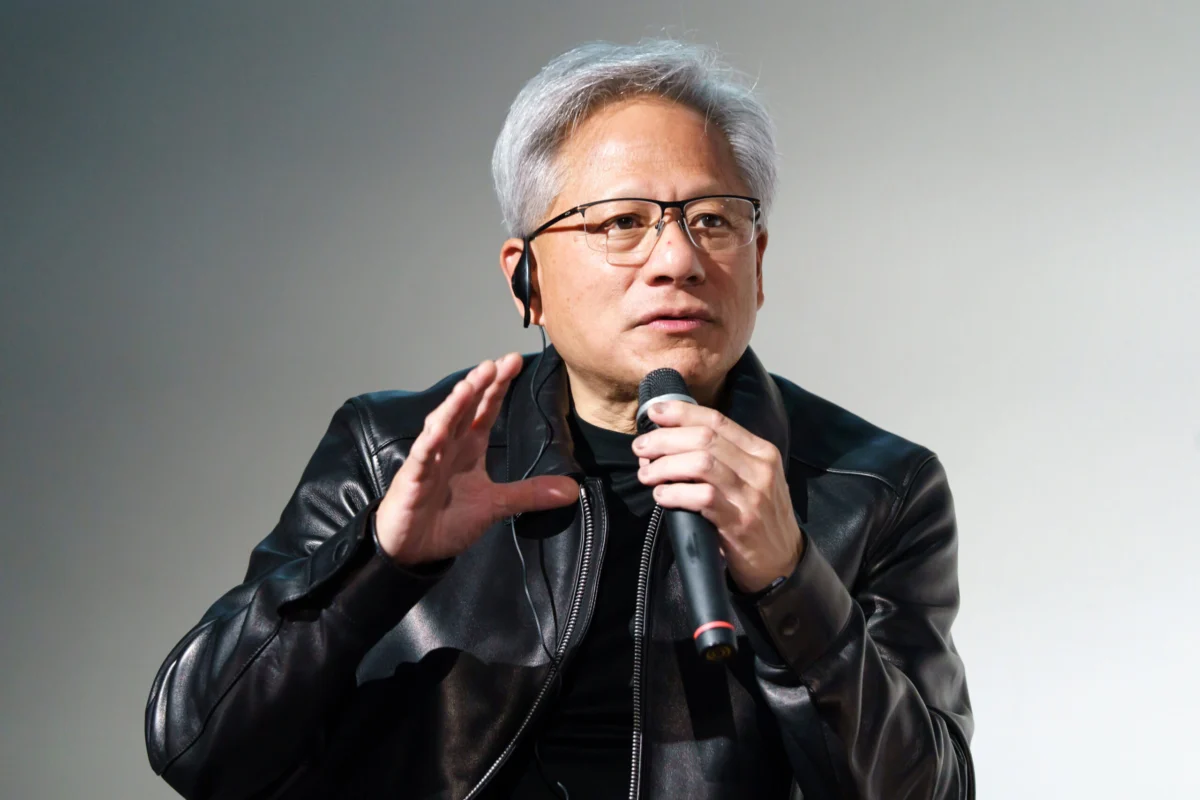
For years, graphics processing units (GPUs), while powerful, have been largely perceived within financial circles as rapidly depreciating hardware assets. Nvidia founder and CEO Jensen Huang directly challenged this traditional view, articulating a vision where AI compute capacity, particularly Nvidia’s widely adopted platforms, represents a durable, revenue-generating asset. "This is really the first time that technology chips have become an investable asset class," Huang stated during the CNBC interview. He elaborated, "These are revenue-generating assets now. They’re productive, they’re long-lived, they’re fungible, they’re flexible." Huang’s argument posits that due to the broad adoption and inherent transferability of Nvidia’s hardware across diverse customers and applications, lenders can reliably underwrite compute as a long-term asset with a significant operational life.
This paradigm shift aims to unlock vast pools of institutional credit, insurance funds, and private capital, channeling them directly into the foundational infrastructure of the AI revolution. By facilitating access to external financing, Nvidia is not only seeking to accelerate the deployment of its technology but also to expand its addressable market by making sophisticated AI infrastructure more financially accessible to a wider array of organizations.
A Confluence of Financial Titans
The six Wall Street behemoths joining forces with Nvidia represent a formidable coalition of capital and expertise.
- Apollo Global Management: A leading global alternative investment manager with significant experience in credit, private equity, and real assets.
- Blackstone: The world’s largest alternative asset manager, known for its extensive real estate, private equity, and infrastructure investments.
- BlackRock: The world’s largest asset manager, with trillions under management across a diverse range of strategies, including infrastructure.
- Brookfield Asset Management: A global alternative asset manager focused on real assets, including infrastructure, real estate, and private equity.
- Goldman Sachs: A multinational investment bank and financial services company, renowned for its capital markets expertise and advisory services.
- KKR: A leading global investment firm that offers alternative asset management as well as capital markets and insurance solutions.
These firms collectively manage trillions of dollars in assets and possess deep experience in structuring complex financing arrangements for large-scale infrastructure projects. Their involvement underscores the perceived long-term value and stability of AI infrastructure as an investment opportunity. Memorandums of understanding (MOUs) have been signed with each of these firms, outlining their commitment to establishing the necessary financing platforms.
Redefining Compute: Nvidia’s Vision

Jensen Huang’s assertion that "the computer is now part of the infrastructure, like electricity, like the internet," fundamentally underpins this new financial strategy. He envisions AI compute as a utility, a foundational layer essential for modern economic activity. This perspective necessitates a re-evaluation of how such assets are valued and financed. Unlike consumer electronics or even traditional enterprise IT equipment which often see rapid obsolescence, Nvidia argues that its AI chips, particularly in the context of large-scale data center deployments, offer enduring value due to their critical role in an ever-expanding digital economy.
This vision challenges historical financial models that have typically applied rapid depreciation schedules to hardware. While skeptics might question the longevity of AI chips in the face of continuous technological advancements and newer generations emerging regularly, Nvidia’s counter-argument hinges on the universality and adaptability of its compute architecture, suggesting that even older generations can remain highly productive for specific workloads, much like older power plants or communication networks continue to serve a purpose within a larger infrastructure grid.
Wall Street’s Embrace of Digital Infrastructure
The interest from these alternative asset managers is not entirely new; many have already been actively deploying significant capital into digital infrastructure. Firms like Apollo and Blackstone, for instance, have previously structured debt and equity financing for various technology companies, including prominent AI labs such as Anthropic. This existing appetite for digital assets, ranging from fiber optic networks to data centers, provides a strong precedent for the current initiative. Institutional investors, including pension funds and insurance companies, are increasingly seeking stable, long-term returns offered by infrastructure investments, and AI compute capacity now presents itself as a compelling new frontier within this category.
Larry Fink, CEO of BlackRock, highlighted the potentially revolutionary nature of this collaboration, suggesting it could be the "start of the next future for financial engineering." He drew a parallel to the creation of mortgage-backed securities in the 1970s, a financial innovation that profoundly reshaped capital markets by securitizing a previously illiquid asset class. While mortgage-backed securities later became a focal point of the 2008 financial crisis, Fink’s analogy underscores the ambition to unlock and mobilize vast amounts of capital for a new asset class through innovative financial structures. He further emphasized the urgency, stating, "We need to raise this money as fast as possible and put this to work, because I think it’s really imperative that the United States is the leader in AI in the world."
Jon Gray, President of Blackstone, echoed this sentiment, noting that demand for AI is currently outstripping supply, with usage at Blackstone’s portfolio companies having surged sevenfold in the past year alone. He asserted that AI compute will soon be recognized as a "financeable asset class" in the same way that real estate is viewed by mortgage lenders.
Goldman Sachs CEO David Solomon remarked on the pivotal moment, stating, "We’re in a pivotal moment of a historic AI investment cycle. Our investment and distribution roles reflect our confidence in NVIDIA’s leadership, and we’re excited for the new opportunity to create a market for credit backed by NVIDIA compute." Solomon revealed that Jensen Huang himself approached the Wall Street giants with the initial concept for this financing project, highlighting Nvidia’s proactive stance in addressing market financing needs.
Addressing the AI Capital Expenditure Challenge
The financing push comes at a critical juncture for the technology sector. The explosion of generative AI has triggered an unprecedented surge in capital expenditure (CapEx) among hyperscale cloud providers and other tech giants. Companies like Amazon, Meta, and Alphabet are on track to pour hundreds of billions into data centers and specialized hardware to meet the escalating demand for AI processing power. This massive investment, while necessary for innovation, has begun to draw scrutiny.
As recently as July, global markets experienced a "swoon" as investors began to question the long-term profitability and return on investment of these staggering AI outlays. Rating agencies like Moody’s have issued warnings that these unprecedented capital expenditures are starting to squeeze free cash flow and could force tech giants into heavier debt loads, potentially impacting their credit quality. For instance, Amazon’s CapEx reached nearly $70 billion in 2022, a significant portion of which was directed towards infrastructure. Meta Platforms, despite significant cost-cutting efforts in other areas, continues to project multi-billion-dollar investments in AI infrastructure annually.

Nvidia’s initiative directly addresses this looming financial pressure. By providing alternative financing mechanisms, it allows companies to acquire the necessary AI infrastructure without solely burdening their own balance sheets. This can free up internal capital for other strategic investments, improve free cash flow metrics, and potentially mitigate concerns from credit rating agencies and investors regarding excessive debt accumulation. Essentially, it helps shift what would traditionally be a massive capital expenditure into a more manageable financed structure, akin to leasing or project finance for large industrial equipment.
The Mechanics of the Financing Platforms
While specific details of each financing platform will likely vary, the general principle involves the asset managers structuring and raising capital from institutional investors. This capital will then be deployed to finance the acquisition of Nvidia hardware and the construction of data centers by Nvidia’s customers. These financing arrangements could take various forms, including:
- Asset-Backed Lending: Loans secured directly by the Nvidia GPUs and associated data center infrastructure, with repayment tied to the revenue generated by the compute capacity.
- Leasing Arrangements: Structured leases that allow customers to access the hardware with predictable payments, ultimately avoiding upfront CapEx.
- Project Finance: Larger, more complex deals for entirely new data center builds, where the project itself (and its expected revenue streams from providing AI compute services) serves as the basis for financing.
- Securitization: Potentially, the creation of new financial instruments backed by pools of AI compute assets, similar to how mortgages are pooled and securitized.
The involvement of firms like BlackRock, with its vast distribution network, suggests that these new "credit backed by NVIDIA compute" products could become widely available to a broad spectrum of institutional investors seeking exposure to the AI boom through a less volatile, infrastructure-oriented lens.
Broader Economic and Technological Implications
The implications of this initiative stretch far beyond Nvidia’s balance sheet and Wall Street’s profit margins.
- Acceleration of AI Adoption: By making AI compute more financially accessible, the partnership could significantly accelerate the pace of AI development and deployment across various industries, from healthcare to manufacturing and finance.
- Democratization of Compute: While still costly, easier financing could allow smaller enterprises and even advanced research labs to access high-end AI infrastructure that might otherwise be prohibitively expensive.
- Nvidia’s Market Dominance: This move further solidifies Nvidia’s entrenched position in the AI ecosystem. By facilitating financing for its products, Nvidia makes its hardware even more attractive and accessible, potentially widening the gap between itself and competitors like AMD and Intel.
- New Investment Landscape: It opens up an entirely new avenue for institutional investors to gain exposure to the high-growth AI sector with potentially more stable, infrastructure-like returns, distinct from equity investments in volatile tech stocks.
- Innovation in Financial Products: The initiative is likely to spur further innovation in financial engineering, leading to new types of credit instruments and investment vehicles tailored to technology infrastructure.
Potential Challenges and Future Outlook
While the announcement is met with significant enthusiasm, potential challenges and areas of scrutiny remain.
- Technological Obsolescence: The rapid pace of innovation in AI chips could pose a risk. While Nvidia argues for the long-lived nature of its assets, newer generations of GPUs with significantly improved performance could, in theory, devalue older hardware faster than anticipated, impacting the underlying collateral for these loans.
- Valuation and Risk Assessment: Accurately valuing and assessing the risk of AI compute assets over a multi-year horizon will be a complex undertaking for lenders, requiring sophisticated models and deep industry insight.
- Market Concentration: The concentration of AI compute power in Nvidia’s ecosystem, while currently a strength, could also become a point of concern regarding market control and potential dependencies.
- Regulatory Scrutiny: As a novel form of financial engineering, these new asset classes and financing structures may eventually attract attention from financial regulators, keen to understand their systemic implications and ensure appropriate risk management.
Despite these potential hurdles, the collaboration between Nvidia and these financial titans marks a pivotal moment. It represents a bold attempt to bridge the gap between cutting-edge technological innovation and the traditional world of infrastructure finance, aiming to lay a robust financial foundation for the continued expansion of the artificial intelligence era. As capital begins to flow through these newly established platforms, the trajectory of AI development and its integration into the global economy could accelerate dramatically, fulfilling Jensen Huang’s vision of compute as a ubiquitous, financeable utility.
