

The escalating cost of housing has solidified its position as the paramount political concern for American voters aged 18 to 34, surpassing even the cost of food and the imperative of protecting democracy, according to a recent CNBC survey. This finding from the CNBC All-America Economic Survey for the second quarter of 2026 underscores a potent electoral challenge and opportunity as both major parties strategize for the upcoming midterm elections. Conducted between July 8 and 12, polling 1,000 registered voters nationwide, the survey highlights housing affordability as a particularly salient issue among the younger demographic whose engagement is crucial for electoral success.
The Pervasive Crisis of Housing Affordability
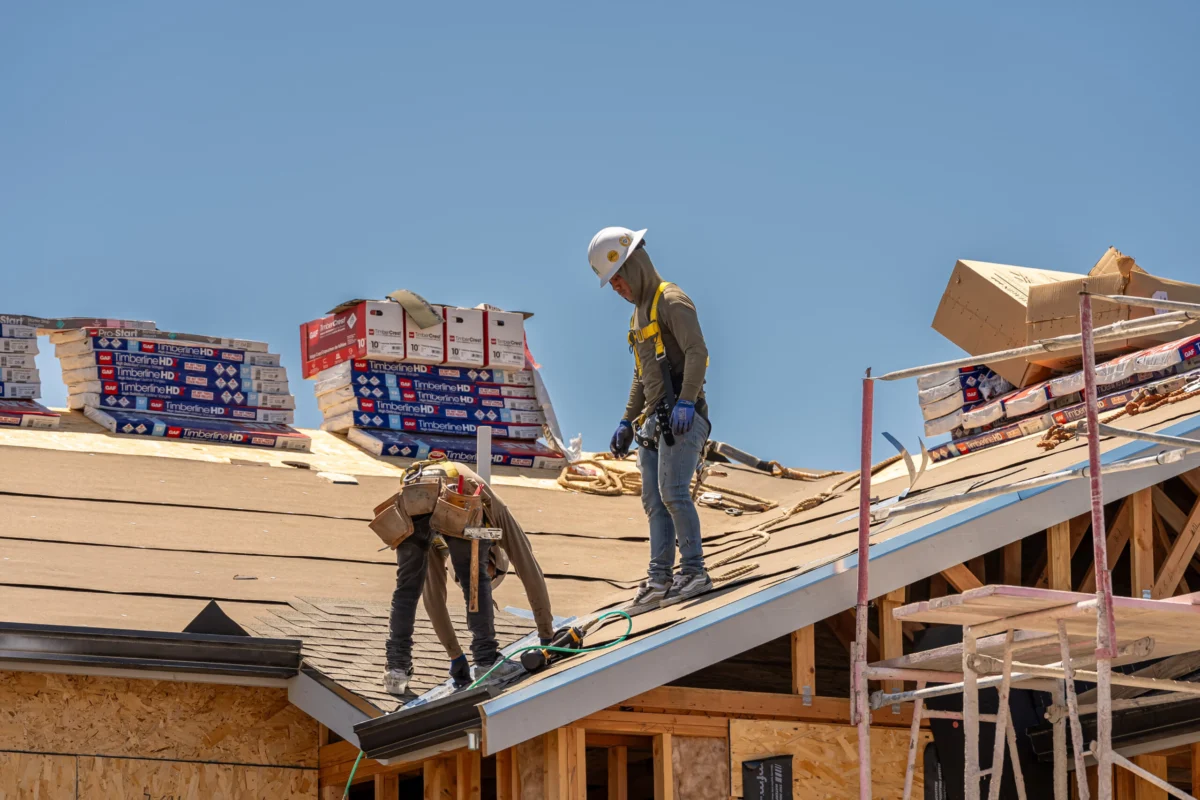
While the image of workers applying roofing material to a new home in Vacaville, California, on July 14, 2026, might symbolize growth, it simultaneously masks a deepening crisis of accessibility for many. For young voters, the dream of homeownership, or even securing stable, affordable rental housing, feels increasingly out of reach. Jay Campbell, a partner at Hart Research and the Democratic pollster for the survey, drew a significant parallel: "It was my contention and the contention of some other people that Democrats had a huge miss in 2024 by not talking more about healthcare. It is an issue where Democrats have had an advantage in polling for a long time. I think housing could be the healthcare of 2024, given especially the need for Democrats to turn young people out who are inclined to be anti-Trump and pro-democratic." This statement suggests that housing could become the defining "pocketbook" issue that mobilizes key demographic groups.
The survey revealed that, for the broader electorate, housing costs were tied with healthcare as the fourth most important issue facing the country, trailing only the cost of food and groceries, protecting democracy, and immigration and border security. However, its significance amplified among specific groups: it was the single most important issue for male respondents aged 18 to 49 and the second-most important for all genders in the 35-to-49 age bracket, just behind food costs. This broad yet concentrated concern signifies a widespread economic strain affecting a significant portion of the working-age population.
The roots of the current housing crisis are multifaceted and run deep. Expenses relative to income have become increasingly disproportionate, exacerbated by ballooning mortgage costs driven by persistent inflation, rising insurance premiums, and escalating property taxes. A June report by Harvard University’s Joint Center for Housing Studies painted a stark picture of the rental market: nearly half (49%) of all renting households, approximately 22.7 million, spent more than 30% of their income on housing in the past year. Even more alarming, 12.1 million of these households are severely cost-burdened, dedicating over half of their income to housing. This financial strain leaves little room for other necessities, savings, or economic advancement, creating a pervasive sense of insecurity and frustration.
Historically, the United States has grappled with housing affordability, but the current confluence of factors has intensified the challenge. Post-pandemic economic shifts, including a surge in demand for larger homes, supply chain disruptions hindering construction, and persistently high interest rates aimed at curbing inflation, have created a "perfect storm." The national median home price has soared by double-digit percentages in many markets over recent years, far outpacing wage growth. Furthermore, institutional investors have increasingly entered the single-family housing market, further tightening supply and pushing up prices, particularly in entry-level segments crucial for young families and first-time buyers.
A Deepening Political Divide on Housing
The importance of housing costs exhibits a distinct partisan split, complicating the political landscape. Self-described Democrats in the survey identified housing as their third-most important issue, following food costs and protecting democracy. Independents, a critical swing demographic, also prioritized food costs and democracy, then immigration and border security, with housing costs ranking fourth. Republicans, by contrast, listed housing lower on their hierarchy of concerns, instead focusing primarily on immigration, the cost of food, and foreign policy matters, specifically Iran. This divergence in priorities highlights a potential vulnerability for Republicans, especially given their current control of both chambers of Congress and the White House.
The "Affordability Election" and Legislative Gridlock
"Affordability" and "cost of living" have become the defining buzzwords leading into the 2026 midterms, with both parties attempting to claim ownership of solutions to the housing crisis. In June, a significant legislative development occurred when a bipartisan bill aimed at increasing housing supply, lowering rental and purchase costs, and limiting the role of private equity in the housing market advanced out of Congress with overwhelming support. This legislative victory could have been a moment for Republicans to showcase their ability to deliver on kitchen-table issues. However, the narrative took an unexpected turn.
President Donald Trump abruptly canceled a planned signing ceremony for the bill, a ceremony that had already been meticulously set up at the Capitol. He subsequently refused to sign the legislation, dismissively labeling it a "big yawn." This action, or rather inaction, by the President created a political vacuum. Despite Trump’s refusal, the bill nevertheless became law earlier in July due to a technicality – a provision in the U.S. Constitution allowing a bill to become law without the President’s signature if he does not veto it within ten days (excluding Sundays) while Congress is in session.
This episode provided Democrats with potent political ammunition, enabling them to frame the situation as the latest example of President Trump and the Republican Party failing to prioritize the tangible economic concerns of everyday Americans. Democrats contend that the President’s focus has instead drifted towards issues like the ongoing war with Iran and the push for a national voter ID law, perceived by many as less directly impactful on daily financial struggles.
Public Perception and Electoral Implications
The CNBC survey revealed a clear advantage for Democrats on the housing issue. When asked which party would do a better job addressing housing concerns, 38% of respondents favored Democrats, compared to 32% who chose Republicans. This lead widened significantly among those who ranked housing costs as a top two issue: a commanding 53% believed Democrats would handle it better than Republicans. This suggests that for voters most acutely affected by housing prices, the Democratic platform resonates more strongly.
This frustration over housing costs is not an isolated phenomenon but tracks with a broader trend of consumer angst fueled by persistent inflation and the geopolitical instability arising from the war with Iran. The survey underscored significant disapproval of the Trump administration’s economic stewardship: 60% disapproved of his handling of the economy overall, 63% disapproved of his approach to the situation with Iran, and a substantial 68% disapproved of the administration’s performance on inflation and the cost of living. These figures indicate a widespread dissatisfaction that could profoundly influence the midterm elections.
Looking ahead to the control of Congress after the midterms, respondents gave Democrats a slight edge, with 49% preferring Democratic control compared to 45% for Republicans. With a margin of error of 3.1%, this represents a narrow but statistically significant preference. Current projections widely anticipate Democrats reclaiming control of the House of Representatives, while the path to a Senate majority remains more challenging.
Official Reactions and Competing Narratives
Democratic Congressional Campaign Committee (DCCC) spokesperson Viet Shelton wasted no time in capitalizing on these findings. In a pointed statement, Shelton asserted, "Americans are struggling with rising rents, unaffordable home prices, and costly mortgage rates – all happening under Republican rule. Voters blame Republicans for their broken promises to lower housing costs, and Trump’s refusal to address this affordability crisis has left vulnerable Republicans looking like incompetent stooges incapable of delivering on pocketbook issues." Shelton further emphasized, "The perception that ‘Republicans don’t give a damn about the issue’ has given Democrats an opening." This narrative aims to paint the Republican Party as out of touch and ineffective on an issue of profound importance to voters.
Republicans, however, are not conceding ground readily. National Republican Congressional Committee (NRCC) spokesman Mike Marinella offered a counter-narrative, stating, "Democrats have spent years fueling a housing crisis with their failed policies. Republicans have taken real action to build more homes, lower costs, and help more families achieve the American Dream." While acknowledging President Trump’s decision not to sign the bipartisan bill, Marinella subtly highlighted that the President also did not veto it, suggesting a nuanced position rather than outright opposition. This argument attempts to shift blame for the crisis to past Democratic policies and reframe Republican efforts as proactive solutions.
Broader Implications and The Road Ahead
The centrality of housing costs in the minds of young voters, coupled with the Democratic advantage on the issue, suggests that it will be a pivotal battleground in the 2026 midterms. The ability of either party to articulate a credible, actionable plan to address affordability will likely be a key determinant of electoral success. For Democrats, the challenge will be to translate public sentiment into tangible policy proposals that resonate with voters and motivate turnout, particularly among the youth. For Republicans, the imperative is to counter the perception of indifference and demonstrate a genuine commitment to alleviating the housing crisis, potentially by highlighting local initiatives or alternative legislative approaches.
Beyond the immediate electoral implications, the ongoing housing affordability crisis poses significant long-term economic and social challenges. It threatens economic mobility, exacerbates wealth inequality, and could stifle demographic growth in key regions. The debate surrounding housing policy, encompassing issues from zoning reform and land use to government subsidies and the regulation of institutional investors, is expected to intensify. As the 2026 midterms draw closer, the housing market will undoubtedly remain under intense scrutiny, not just as an economic indicator, but as a defining political battleground for the future of the American Dream.
CNBC’s Diana Olick contributed to this report.
