

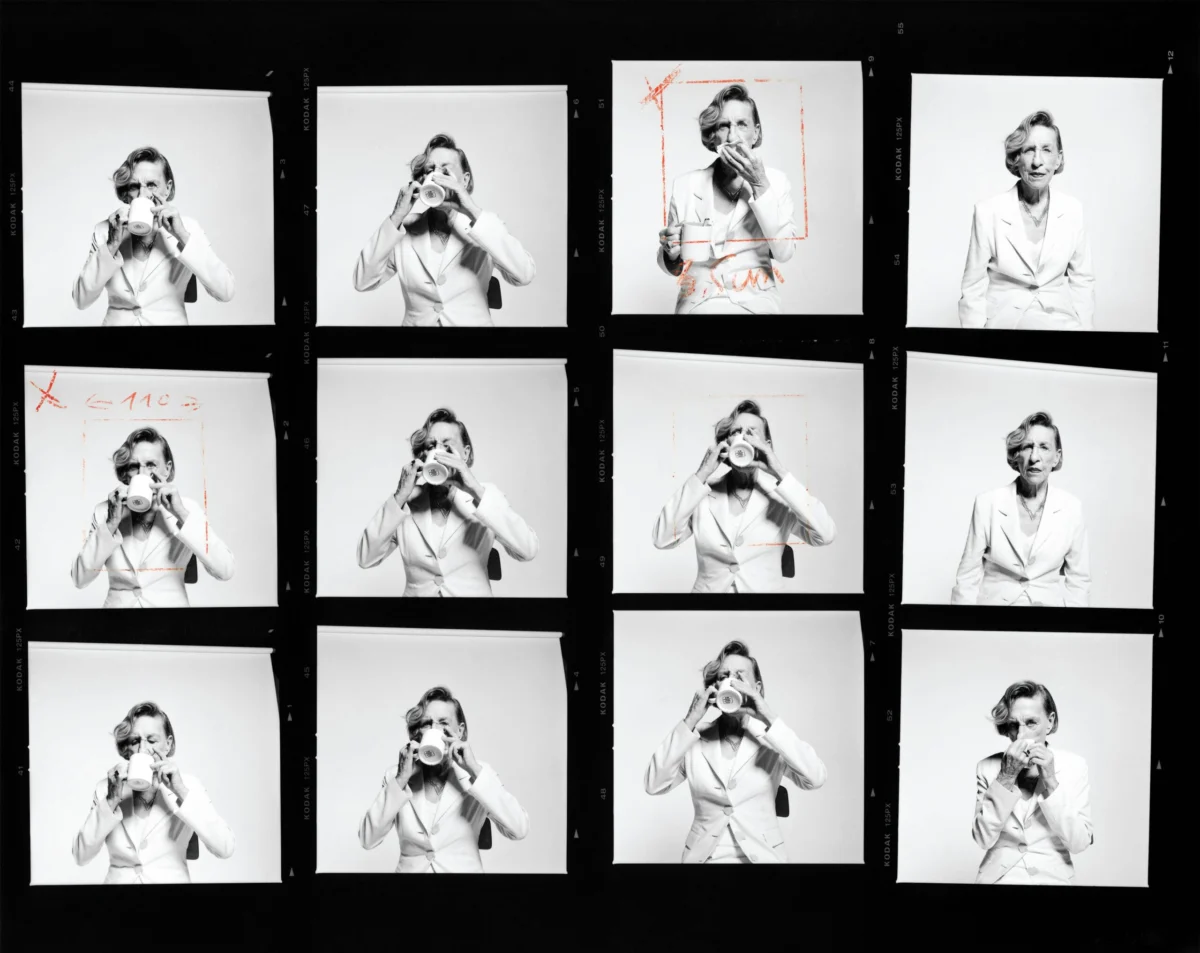
The design world is currently marking the centennial of the birth of Andrée Putman, the Parisian visionary whose career redefined the intersection of luxury, austerity, and hospitality. Often referred to by the moniker "La Reine du Damier" (the Queen of the Checkerboard), Putman’s influence remains a cornerstone of contemporary interior design. Her legacy is currently undergoing a significant institutional revival, led by her daughter, Olivia Putman, and Aurélie Laure, the CEO of the newly rebranded Andrée Putman Studio. This resurgence includes the opening of flagship showrooms in Paris and New York, alongside the reissue of over 60 iconic furniture and lighting designs that encapsulate her "high-low" philosophy.

Putman’s career was defined by a rejection of conventional opulence. In 1984, when Ian Schrager and Steve Rubell—the entrepreneurs behind the legendary Studio 54—approached her to design Morgans Hotel in New York, they reportedly sought her out specifically because of a rumor that she "knew how to do bathrooms without marble." At the time, luxury was synonymous with heavy stone and gilded fixtures. Putman countered this with a rigorous, geometric aesthetic, utilizing inexpensive black-and-white square tiles arranged in a checkerboard pattern. This decision did more than save on construction costs; it established a visual language that felt both avant-garde and timeless, effectively launching the global "boutique hotel" phenomenon.
The Genesis of a Design Icon
Born in 1925 into a wealthy family of bankers and musicians, Andrée Putman’s path to design was neither direct nor conventional. Her early years were spent studying piano at the Paris Conservatory, where she received a first prize for harmony from Francis Poulenc. However, she eventually abandoned a career in music, pivoting toward journalism and promotion. She worked for the magazine L’Œil and later for the retail chain Prisunic, where she sought to bring high-quality design to the masses—a precursor to her later work in "democratic luxury."

It was not until the age of 53, following a divorce and a period of personal transition, that Putman founded Ecart International in 1978. Ecart was established with a dual purpose: to create new interiors and to reissue forgotten furniture designs from the 1920s and 1930s. She became a champion of the Art Deco movement, reviving the work of then-obscure designers like Eileen Gray, Jean-Michel Frank, and Pierre Chareau. By bringing these minimalist, functionalist pieces back into production, she provided the design world with an alternative to the flamboyant post-modernism of the late 20th century.
Chronology of Influence: Key Milestones
To understand the scope of Putman’s impact, one must look at the timeline of her most influential projects and business ventures:

- 1925: Birth of Andrée Putman in Paris.
- 1978: Founding of Ecart International. Putman begins rescuing the legacies of early 20th-century modernists.
- 1984: Completion of Morgans Hotel in New York. This project marks the birth of the boutique hotel and introduces her signature checkerboard motif.
- 1984: Putman designs the "Agenda de Ministre" office furniture for the French Minister of Culture, Jack Lang, bridging the gap between industrial utility and executive prestige.
- 1990: Completion of the Hotel Im Wasserturm in Cologne, a converted water tower that showcased her ability to transform industrial structures into luxury spaces.
- 1994: Redesign of the Concorde’s interior for Air France. Putman applied her principles of "quiet luxury" to the supersonic jet, creating a sense of calm and space within the aircraft’s narrow fuselage.
- 1997: Founding of Studio Andrée Putman, focusing on interior architecture and product design.
- 2013: Death of Andrée Putman at the age of 87 in her Paris home.
- 2024: The centennial of her birth is marked by the rebranding of her firm to "Andrée Putman Studio" and the launch of major international showrooms.
The Boutique Hotel Revolution and the Morgans Impact
The 1984 opening of Morgans Hotel is frequently cited as a pivotal moment in the history of the hospitality industry. Before Morgans, hotels were generally divided into two categories: standardized corporate chains or grand, traditional luxury establishments. Putman, working with Schrager and Rubell, introduced a third category—the boutique hotel—which prioritized style, atmosphere, and a curated "lifestyle" experience over sheer scale or traditional amenities.
Putman’s use of industrial materials, such as metal sinks and standard tiling, challenged the industry’s reliance on expensive finishes. By focusing on lighting, proportion, and a monochromatic palette, she proved that "atmosphere" was a more valuable commodity than material wealth. Industry data suggests that the boutique hotel segment has since grown to become a multi-billion dollar global industry, with Putman’s "Morgans model" serving as the blueprint for thousands of properties worldwide.

A Legacy Reissued: The 2024 Revival
Under the leadership of Olivia Putman and Aurélie Laure, Andrée Putman Studio is currently executing a strategic expansion designed to bring her work to a new generation of collectors and architects. The decision to establish a presence on New York’s Bowery is particularly symbolic. During the 1980s, the Bowery was the epicenter of the New York art scene, and Putman was a frequent collaborator and peer of artists like Jean-Michel Basquiat, Keith Haring, and Andy Warhol.
The current collection features over 60 designs, many of which have been out of production for decades. Notable reissues include:

- The Compas Dans L’Oeil Floor Lamp (1988): A minimalist lighting fixture originally designed for the guest rooms at Morgans Hotel, characterized by its slender, architectural silhouette.
- The Crescent Moon Sofa: An iconic piece that demonstrates Putman’s ability to blend soft, organic curves with a disciplined structural framework.
- The Mille et un Carrés Table (1992): Originally conceived for the Paris dining room of graphic designer Jean-Paul Goude, this table features Putman’s signature tile work. In a nod to her "high-low" philosophy, the studio has introduced a limited-edition version featuring silver leaf.
- The Voie Lactée Rug (1978): A wool-and-silk rug designed for her own Paris loft, now available in contemporary editions.
Professional Reactions and Design Analysis
Contemporary designers continue to cite Putman as a primary influence, particularly regarding her ability to create "atmospheres" rather than just rooms. Rafael de Cárdenas, a prominent New York-based designer, noted that Putman’s work possesses a "classicist approach of reducing decoration to its bare minimum," describing the subtlety of her work as "beguiling."
Elliott Barnes, an interior designer who worked alongside Putman for 17 years, emphasizes her talent for recontextualization. He recalls her penchant for wearing industrial ball-bearing bracelets as high fashion, a practice that mirrored her architectural work. "She could take something out of its context and into another one," Barnes observed. "All of a sudden it became fresh and incredibly timeless."

From a technical perspective, Putman’s work is characterized by a "restrained sharpness." Her interiors often utilized "metallic gauze" curtains to maximize space and light, and she frequently employed industrial lighting in domestic settings. This bridge between the industrial and the domestic helped pave the way for the "industrial chic" movement that dominated urban design in the early 2000s.
Broader Implications for the Design Market
The revival of Andrée Putman Studio reflects a broader trend in the luxury market: a return to "quiet luxury" and a renewed interest in mid-to-late 20th-century modernism. As the global furniture market faces increasing saturation, heritage brands that can offer a narrative of authenticity and historical significance are seeing a surge in demand.

Furthermore, the studio’s dual-hub strategy—maintaining operations in both Paris and New York—acknowledges the unique "American story" of this French designer. Putman’s success was largely propelled by the American market’s willingness to embrace her radical minimalism, which was initially met with more skepticism in her native France.
The centennial celebrations and the reopening of her archives serve as a reminder that Putman’s work was never about fashion, but about a specific way of seeing the world. By elevating the mundane—the bathroom tile, the industrial lamp, the simple grid—she taught the design world that elegance is found in the removal of the unnecessary. As the studio continues to release "highlights" from her prolific output, it is clear that Andrée Putman’s checkerboard remains a permanent fixture on the map of modern design.
