

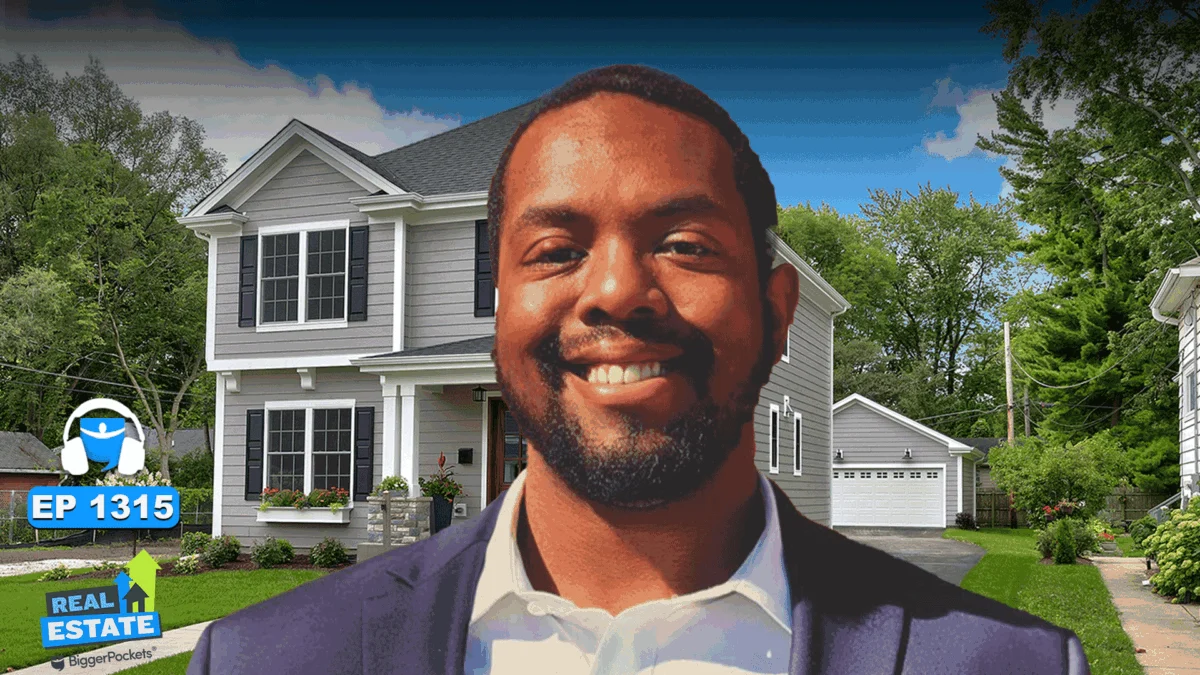
The Philosophical Catalyst: Moving Beyond the W-2 Paradigm
The impetus for Murphy’s entry into real estate was rooted in a realization regarding the fundamental nature of the "W-2" (salaried employee) lifestyle. While working in software sales, marketing tools to commercial real estate brokers and financial institutions, Murphy experienced a pivotal moment during a corporate meeting. A high-ranking executive stated that the work being performed was not necessarily desired by the staff but was a prerequisite for continued payment and family support. This "do this or don’t get paid" mentality served as a catalyst for Murphy to seek a decoupled income stream—one where his livelihood was not tied to active daily labor.
Initial financial modeling led Murphy to explore various asset classes. He evaluated dividend-paying stocks, such as AT&T, which at the time offered a 7% yield. However, his analysis revealed that to achieve a target income of $70,000 per year, he would require approximately $1 million in capital—a figure that seemed unattainable on a $30,000 base salary. Further investigation into the "4% rule" for general stock market withdrawals suggested a need for nearly $2 million in assets. Real estate emerged as the most viable alternative, as it offered the ability to use leverage (mortgages) and required a significantly lower upfront cash position to achieve the same cash flow objectives.
Chronology of Early Investment: From House Hacking to Scaled Assets
Murphy’s entry into the market began in 2016 in the Washington D.C. metropolitan area. Faced with high entry prices in the city proper—where median homes often exceeded $700,000—he pivoted to the more affordable suburb of Hyattsville, Maryland. Utilizing a Federal Housing Administration (FHA) loan, which allows for down payments as low as 3.5%, Murphy purchased a five-bedroom property for approximately $12,000 down.
This first deal utilized a "house hacking" strategy. Murphy lived in the basement while renting out the four upstairs bedrooms for $700 each. While the $2,800 in gross rent essentially served as a break-even point after accounting for a $2,000 mortgage, utilities, and maintenance, it effectively eliminated Murphy’s own housing expense. This allowed him to aggressively save his primary income for future acquisitions.
In 2017, Murphy expanded into Hagerstown, a post-industrial market in northern Maryland. He purchased a triplex for $96,000, intended as a turnkey investment. However, this transaction highlighted the risks of inadequate contract stipulations. The seller delivered the property "occupied," but without specific tenant screening requirements, Murphy inherited problematic residents who eventually required eviction. Despite an additional $20,000 in renovation costs following the evictions, the property eventually stabilized with a total monthly rent of $1,900. This asset later served as a cornerstone for his portfolio growth, as it appreciated significantly over the subsequent six years, eventually allowing Murphy to execute a cash-out refinance of $50,000 to fund more aggressive acquisitions.
The Baltimore Pivot and the BRRRR Strategy
The true scaling of the portfolio began in 2022, following Murphy’s departure from his W-2 role. Relocating to Baltimore, he focused on the row house market, specifically targeting properties in the $100,000 range. At this stage, he adopted the BRRRR strategy: Buy, Rehab, Rent, Refinance, Repeat.
A typical deal in this phase involved:
- Purchase Price: ~$100,000
- Renovation Costs: $30,000 to $40,000
- Closing/Holding Costs: $20,000
- All-in Capital: ~$150,000–$160,000
- Appraised Value (ARV): $200,000–$220,000
By refinancing these properties at 75% to 80% of their after-repair value, Murphy was able to "recycle" his initial capital, pulling most or all of his original investment out of the property to fund the next purchase. Between 2022 and 2024, Murphy maintained a rigorous pace, initiating a new renovation approximately every four to six weeks.
Vertical Integration and Operational Efficiency
One of the critical factors in Murphy’s ability to scale was the decision to bring core operations in-house. After facing a $65,000 budget overrun on his first two Baltimore projects using third-party contractors, Murphy briefly took on the role of a hands-on laborer and general contractor. This period of "in-the-trenches" work provided him with a granular understanding of construction costs, timelines, and material requirements.
Consequently, Murphy established a dedicated construction crew consisting of 1099 contractors who work exclusively on his projects. This vertical integration eliminated the "contractor premium" and ensured a standardized aesthetic and material list across the portfolio. By using the same flooring, paint colors, and fixtures in every unit, the team achieved significant economies of scale and reduced the decision-making fatigue associated with large-scale property management.
Furthermore, Murphy transitioned to in-house property management. This move allowed for tighter control over tenant screening—a lesson learned from the Hagerstown triplex—and ensured that maintenance requests were handled efficiently by the same crew that performed the initial renovations.
Stakeholder Management and the "Mentorship Loop"
Murphy attributes much of his success to a specific philosophy regarding networking and stakeholder management. He posits that the most effective way to secure mentorship and favorable terms from lenders is to solve the "pain points" of the other party.
For contractors, the pain point is often inconsistent work. Murphy solved this by providing a steady pipeline of projects, ensuring his crew never faced downtime. For hard money lenders, the risk is capital loss. Murphy mitigated this by maintaining conservative debt-to-value ratios and transparent financial reporting.
Regarding mentorship, Murphy developed a three-step "foolproof" system:
- Reframe the Mentor: View mentorship not as one person holding your hand, but as a network of experienced peers to whom you ask specific, technical questions.
- Ask Practical Questions: Avoid vague requests to "pick someone’s brain." Instead, ask data-driven questions about specific markets or renovation techniques.
- The Feedback Loop: Crucially, Murphy emphasizes returning to the mentor to report how their advice was implemented and what the result was. This creates a "dopamine hit" for the mentor, making them more likely to provide further assistance.
Current Status and Broader Market Implications
Today, Aaron Murphy’s 75-unit portfolio consists primarily of long-term rentals in Baltimore and surrounding Maryland counties. The cash flow generated by these assets has enabled a significant lifestyle shift. Murphy and his wife are currently in the midst of a one-year trip around the world, managing operations remotely from locations such as Portugal and the Philippines.
While the "digital nomad" lifestyle is often associated with tech workers, Murphy’s story demonstrates that residential real estate, when treated as a systematized business rather than a passive investment, can offer similar geographic flexibility. However, he maintains that this level of freedom required years of "trench work" and a willingness to live in sub-optimal conditions during the early phases of acquisition.
From a broader economic perspective, Murphy’s success in the Baltimore market highlights the viability of "Tier 2" or "Tier 3" cities for real estate investors. While major metros like D.C. or New York offer high appreciation, the price-to-rent ratios in markets like Baltimore and Hagerstown allow for the cash flow necessary to replace a W-2 salary.
Analysis of the "Murphy Model"
The "Murphy Model" of real estate investment serves as a case study in operational discipline. By focusing on a single geographical area (Maryland) and a specific asset class (residential row houses and small multi-families), he was able to master the local variables that often derail less focused investors.
His transition from a 3.5% down FHA house hack to a 75-unit vertically integrated operation illustrates a clear hierarchy of growth:
- Phase 1: Expense reduction (House Hacking).
- Phase 2: Capital accumulation and learning from failure (Hagerstown).
- Phase 3: Aggressive scaling through leverage and systems (Baltimore BRRRR).
- Phase 4: Operational maturity and lifestyle design.
As of late 2024, Murphy continues to evaluate his next steps, considering whether to continue scaling toward 200+ units or to pivot toward different asset classes. Regardless of the future trajectory, his 11-year journey stands as a factual testament to the efficacy of the BRRRR method and the importance of systematization in the pursuit of financial independence. For the modern investor, the message is clear: replacing a professional income does not require a stroke of luck, but rather a repeatable process and the resilience to survive the inevitable learning curve of the real estate market.
