

President Donald Trump announced a significant shift in U.S. trade policy concerning generic pharmaceuticals, unveiling a phased tariff schedule designed to compel drugmakers to relocate manufacturing facilities to the United States. The new policy, detailed in a social media post on Tuesday, will impose zero tariffs on imported generic drugs for a two-year period, commencing August 1, 2026. This grace period will be followed by a steep 100% tariff in August 2028, escalating to 200% a year later. This aggressive approach signals a strong commitment to reshoring pharmaceutical production and aims to address long-standing concerns about the United States’ reliance on foreign supply chains for essential medicines.
The rationale behind this tiered tariff structure, as articulated by President Trump, is to serve as a "penalty" for companies that fail to establish manufacturing operations within the U.S. during the designated two-year window. The administration’s objective is to foster domestic job creation and bolster national security by reducing dependence on overseas drug production, particularly from nations with complex geopolitical relationships. This move is part of a broader strategy by the Trump administration to rebalance international trade and protect American industries.
The U.S. Generic Drug Market: A Landscape of Foreign Dependence
The U.S. pharmaceutical market, particularly for generic drugs, has become heavily reliant on international manufacturing. According to Legis1, a congressional intelligence platform, nearly all prescriptions in the United States are filled with generic medications, a significant portion of which originates from overseas. These complex global supply chains often involve intricate ownership structures, raising questions about transparency and security. This reliance has been a growing concern for policymakers, who view it as a potential vulnerability in national health and economic security.
The U.S. pharmaceutical industry’s global footprint is extensive, with many active pharmaceutical ingredients (APIs) and finished drug products manufactured in countries like India and China. India, in particular, plays a critical role, with its pharmaceutical companies supplying nearly 50% of all generic medicines consumed in America, according to data from a Facebook post by CNBC TV18 India. The U.S. market accounts for approximately one-third of India’s pharmaceutical exports, primarily comprising more affordable versions of widely used medications. Meanwhile, Chinese firms are dominant in the upstream supply of crucial APIs such as amoxicillin and heparin, essential components in a wide array of pharmaceuticals.
A Strategic Escalation of Trade Policy
This latest tariff action represents an intensification of President Trump’s broader trade agenda, which has consistently prioritized bringing manufacturing back to American shores. His administration has previously leveraged tariff threats and its "most favored nation" (MFN) pricing policy to pressure pharmaceutical companies into lowering drug costs for American consumers. The MFN policy, implemented in May 2025, ties U.S. drug prices to those paid in other high-income countries, offering companies a three-year exemption from tariffs in exchange for price concessions.
Prior to this announcement regarding generic drugs, President Trump had already imposed a 100% tariff on patented pharmaceutical products and ingredients under Section 232 of the Trade Expansion Act. This measure, enacted on April 2, 2026, targeted patented medications and their components, while initially exempting generics, biosimilars, and related ingredients. Larger pharmaceutical companies were granted a 120-day grace period before the tariff took effect, with smaller manufacturers relying on contract production receiving 180 days. This earlier action demonstrated a clear intent to address the high cost of branded medications and secure the domestic supply of essential patented drugs.
Expert Analysis: Balancing Ambition with Economic Realities
The strategic move to impose tariffs on generic drugs is seen by trade policy experts as a direct attempt to reshape the global pharmaceutical supply chain. Deborah Elms, head of trade policy at the Hinrich Foundation, notes that President Trump’s goal is to reshore low-cost drug production to the U.S. However, she also raises crucial economic considerations. Elms points out that establishing pharmaceutical production facilities in the U.S. is a complex and capital-intensive undertaking. Furthermore, even with domestic manufacturing, a significant portion of the raw materials and intermediate components would likely still need to be sourced internationally.
"I am not sure that even a potential 200% tariff will change the fundamental math," Elms commented, suggesting that the inherent costs and complexities of pharmaceutical manufacturing might limit the effectiveness of tariffs alone in driving a complete onshore shift. The intricate nature of drug development and production, which involves specialized expertise, rigorous regulatory compliance, and global sourcing of materials, presents a formidable challenge to rapid domestic relocation.

Broader Implications for International Trade Partners
The implications of these tariffs extend far beyond U.S. borders, significantly impacting major pharmaceutical exporting nations. For India, the announcement poses a substantial long-term risk. Arpit Chaturvedi, South Asia advisor at Teneo, highlighted that the pharmaceutical sector is a vital contributor to India’s net export earnings. The full implementation of President Trump’s stated tariffs would represent a severe blow to India’s trade balance.
Chaturvedi further cautioned that Washington would find it challenging to simply replace India as a primary supplier of generic medicines. The existing infrastructure, established supply networks, and cost advantages that Indian manufacturers possess have been built over decades. The transition to a U.S.-centric supply chain for generics would likely be a protracted and expensive process, potentially leading to disruptions and increased costs for American consumers in the short to medium term.
Navigating the Two-Year Runway: A Window for Negotiation
The two-year grace period before the tariffs escalate offers a critical window for diplomatic and economic engagement. New Delhi, recognizing the potential economic fallout, has an opportunity to engage in robust negotiations with the U.S. This could involve exploring avenues for tariff relief, potentially through commitments to corporate investment in American manufacturing facilities or other strategic partnerships.
The timing of the tariff implementation, with the 200% levy set to take effect in 2029 – an election year in the U.S. – also presents a strategic consideration for India. Chaturvedi suggested that New Delhi might harbor the hope that the policy could be revisited or altered depending on the political landscape.
Strategies for Indian Pharmaceutical Companies
In the interim, Indian drugmakers are expected to pursue a multi-pronged strategy to mitigate the impact of the new U.S. tariff policy. This is likely to include:
- Lobbying Efforts: Engaging with U.S. policymakers and industry stakeholders to advocate for exemptions or modifications to the tariff structure.
- Regulatory Approvals: Accelerating the pursuit of Food and Drug Administration (FDA) approvals for their products, which could facilitate market access and potentially offer a competitive advantage.
- Contract Manufacturing Agreements: Exploring partnerships with U.S.-based companies for contract manufacturing, which could allow them to maintain a presence in the U.S. market while adhering to domestic production requirements.
- Market Diversification: Actively seeking to expand their market share in other regions and countries to reduce their reliance on the U.S. market.
The threat of tariffs could also lead to a recalibration of product portfolios. With margins on many common generics already exceptionally thin, some manufacturers may find it economically unfeasible to continue producing certain drugs if wholesalers are unwilling or unable to absorb or pass on the added tariff costs. This could result in the withdrawal of some products from the market, potentially impacting availability and affordability for certain medications.
The Psychedelic Research Executive Order: A Separate, Emerging Frontier
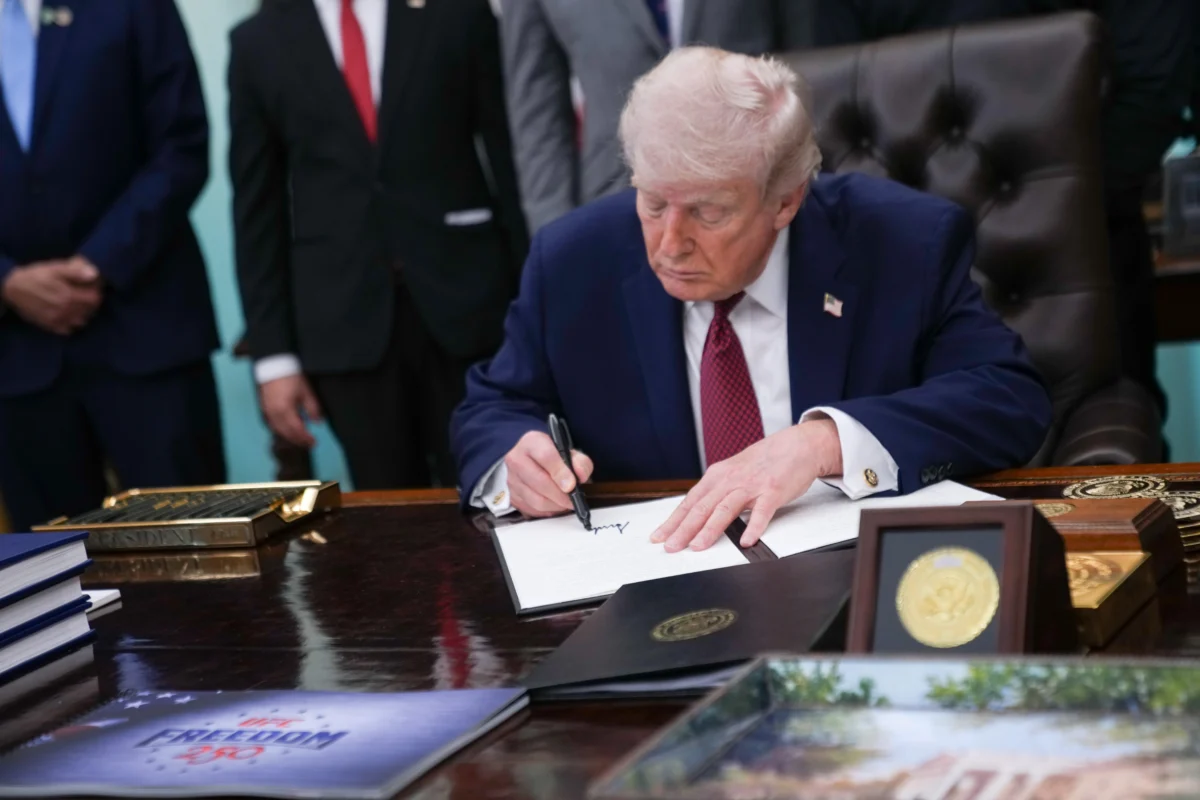
It is important to note that the news regarding pharmaceutical tariffs is distinct from another recent executive action by President Trump. On Saturday, April 18, 2026, President Trump signed an executive order in the Oval Office at the White House, directing research into the potential medical benefits of psychedelic drugs for veterans. This initiative signals a growing interest in exploring novel therapeutic approaches for mental health conditions affecting the veteran community, such as PTSD and depression. While this executive order addresses a different aspect of healthcare policy, it underscores a broader trend of the administration engaging with innovative and sometimes unconventional solutions within the medical field.
The convergence of policies aimed at controlling drug costs, securing supply chains, and exploring new treatment modalities highlights a dynamic and evolving landscape in U.S. healthcare and pharmaceutical policy under President Trump. The long-term success of the generic drug tariff strategy will depend on the ability of drugmakers to adapt, the U.S. to build robust manufacturing capacity, and international trade relations to navigate these significant shifts.
