

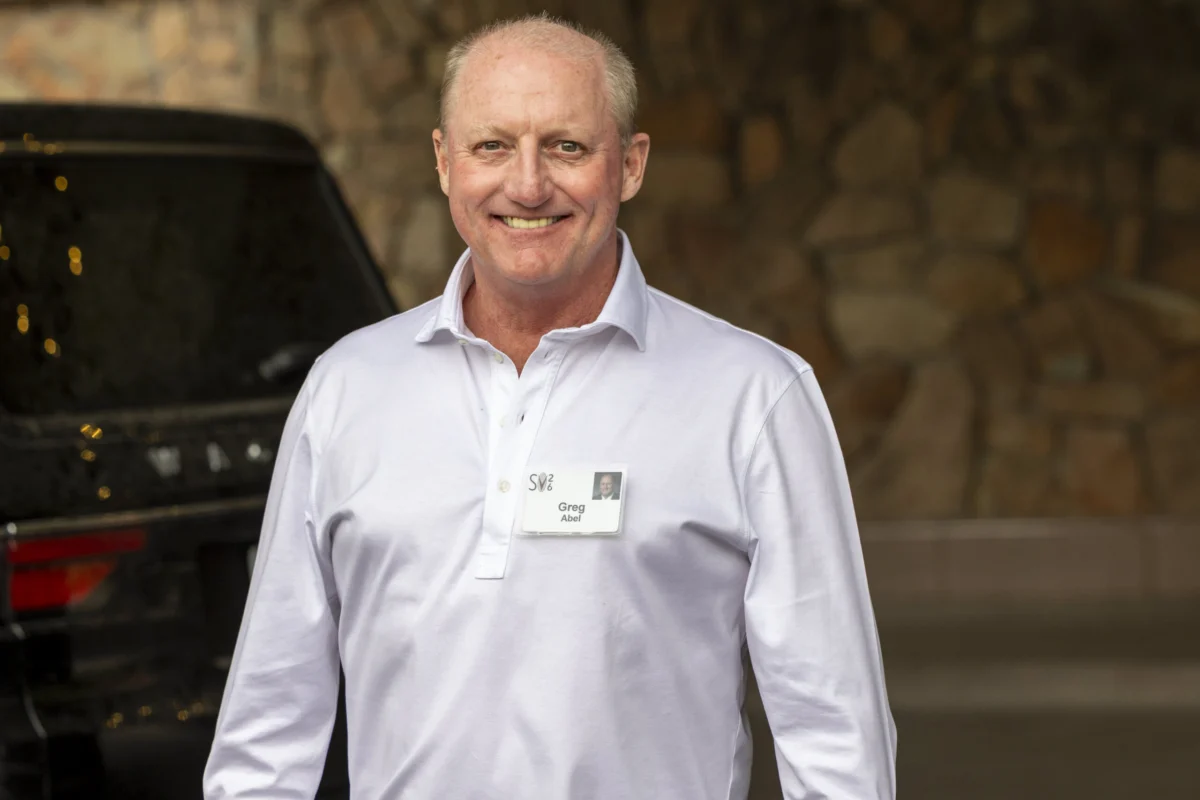
In a definitive move signaling a new era of capital allocation, Berkshire Hathaway, under the leadership of CEO Greg Abel, significantly reduced its formidable cash reserves in the second quarter of 2026. This decisive deployment of capital, encompassing substantial share buybacks and a notable surge in equity investments, marks a strategic departure from the more conservative stance observed in recent years and underscores Abel’s growing influence on the conglomerate’s financial direction. The detailed financial report, released on Saturday morning for the three months ending June 30, revealed a landscape of proactive investment and varied operational performance across Berkshire’s diverse portfolio.
Abel’s Assertiveness: A New Era of Capital Allocation Takes Shape
The most striking revelation from Berkshire’s Q2 report was the substantial reduction in its cash holdings, the first significant decline since early 2022. As of March 31, the company’s cash pile stood at a record high of $397.4 billion. By June 30, this figure had decreased by a considerable 8.0% to $365.5 billion. For a company of Berkshire’s immense scale, an 8% quarterly reduction represents a monumental shift in capital strategy. Furthermore, when applying Berkshire’s preferred metric—excluding BNSF’s cash and adjusting for Treasury bills purchased but not yet paid for—the cash reserves still saw a robust 3.8% decline, settling at $359.2 billion from $380.2 billion at the end of the previous quarter. This aggressive deployment is widely interpreted by market observers as a clear indication of Greg Abel asserting his authority and strategic vision in his second full quarter at the helm.
For years, Berkshire Hathaway grappled with the challenge of deploying its ever-growing cash hoard, often exceeding $100 billion, a figure that Warren Buffett himself has famously dubbed "idle capital." This colossal sum had been a source of both strength and consternation for investors, symbolizing the company’s financial fortress but also the difficulty in finding suitable "elephant-sized" acquisitions that met Buffett’s stringent criteria for value and quality. The recent reduction suggests that under Abel, Berkshire is now finding more avenues to put this capital to work, potentially signaling a more opportunistic and dynamic approach to investment in a competitive market landscape. The shift also comes amidst broader market trends where large-cap companies are under increasing pressure to demonstrate efficient capital allocation to drive shareholder value, making Abel’s actions particularly resonant.
Resurgent Share Buybacks Signal Robust Investor Confidence
A significant component of Berkshire’s capital deployment in Q2 was its renewed commitment to share repurchases. The company spent $4.5 billion on buying back its own shares, a substantial increase compared to the mere $235 million allocated in the first quarter of 2026. This Q1 figure had marked the first instance of buybacks since 2024, highlighting the recent dormancy in this area. The $4.5 billion figure, while falling below some aggressive analyst estimates (such as Barron’s rough estimate of $5 billion to $11 billion and UBS analyst Brian Meredith’s forecast of $8.5 billion), was nevertheless a powerful statement.
Analysts quickly noted the implications. Cathy Seifert of CFRA Research, commenting to Bloomberg, emphasized, "People are going to be encouraged by the buybacks. It’s also Greg’s way of taking the helm and asserting himself." This sentiment was echoed by Gabelli Funds portfolio manager Macrae Sykes, who told CNBC that "Material repurchases provide confidence for shareholders that some of the best corporate capital allocators see current value." These statements underscore the dual message conveyed by the buybacks: a belief by Berkshire’s leadership that its shares are undervalued, and a clear demonstration of Abel’s active management.
The momentum in buybacks appears to have extended beyond the second quarter. By comparing the outstanding shares reported as of July 29 in the Q2 report to those on June 30, Barron’s now estimates that Berkshire deployed an additional $3.4 billion on share repurchases in July. Much of this additional buying presumably occurred before the stock experienced a rally near the end of the month, suggesting that Abel and his team were acting on perceived value opportunities even as the market began to appreciate Berkshire’s stock. This continuous activity reinforces the idea that capital allocation, particularly through buybacks, is a core pillar of Abel’s strategy when the company’s intrinsic value warrants it, aligning with Warren Buffett’s long-held philosophy of repurchasing shares when they trade below a conservative estimate of intrinsic value.
Strategic Equity Deployment: From Seller to Aggressive Buyer
Beyond share repurchases, Abel also orchestrated a significant pivot in Berkshire’s equity investment strategy. For the first time in 14 quarters—a period stretching over three and a half years—Berkshire Hathaway was a net buyer of equities, with net purchases amounting to a substantial $20 billion. This reversal from a prolonged period of net selling signifies a renewed appetite for external investments and a potential shift in portfolio composition.
A cornerstone of this equity buying spree was the widely reported $10 billion investment in Alphabet, Google’s parent company, which was announced in June. This significant bet on a technology giant, while not entirely new territory for Berkshire (given previous Apple investments), nevertheless highlights a willingness to allocate substantial capital to growth-oriented companies within the tech sector. The full extent of Berkshire’s buying and selling activity will become clearer in the coming week when its Q2 portfolio snapshot (13F filing) is released, offering granular details on what specific stocks were added, trimmed, or exited. Analysts and investors alike will be keenly scrutinizing this filing for further clues into Abel’s investment preferences and how they might differ from or complement Buffett’s long-standing portfolio choices. This strategic re-engagement with the equity market suggests a more active stance in identifying and capitalizing on perceived market dislocations or long-term growth opportunities, a potential hallmark of Abel’s leadership.
Mixed Performance in Core Operating Segments Highlights Portfolio Diversity
While capital allocation dominated headlines, Berkshire’s core operating businesses presented a mixed, yet largely positive, picture in the second quarter. Overall, operating earnings increased a robust 16% to $12.98 billion, demonstrating the underlying strength and diversification of the conglomerate’s vast holdings. Several key segments delivered impressive results. Berkshire Hathaway Energy (BHE) saw a significant 27% increase in earnings, reflecting strong performance in its utility and energy generation assets, likely driven by infrastructure investments and favorable regulatory environments. The BNSF railroad, a critical artery of the American economy, also contributed positively with a 6% rise in earnings, indicative of steady freight volumes and efficient operations despite potential economic headwinds. The sprawling manufacturing, service, and retail segment, encompassing everything from industrial products to consumer goods, recorded a substantial 24% increase in earnings, reaching almost $4.5 billion, signaling broad-based strength across various industries.
However, not all segments thrived. The insurance division, historically a bedrock of Berkshire’s financial strength, faced headwinds. Underwriting earnings declined by 13%, and insurance investment income dropped by 9%. A particularly weak spot was GEICO, Berkshire’s prominent auto insurer, which saw its underwriting profits plummet by 45%. This decline in insurance profitability can be attributed to several factors, including rising claims costs due to inflation in vehicle repairs and medical expenses, increased frequency and severity of accidents, and intense competition in the auto insurance market leading to pricing pressures. Despite these challenges, Gabelli’s Sykes remained optimistic, noting that "Despite more difficult insurance industry back-drop, the company continues to build shareholder net worth in Greg Abel’s first year as CEO." This underscores the resilience of Berkshire’s diversified model, where strong performance in some sectors can offset temporary weakness in others, ensuring overall growth in shareholder value.
The DaVita Divestment: A Contractual Nuance, Not a Market Reaction

Amidst the broader capital deployment narrative, Berkshire Hathaway also slightly trimmed its position in DaVita, a dialysis provider. This transaction occurred just days before DaVita’s shares experienced a significant decline, but it was crucial to clarify that the sale was not a reaction to the stock’s subsequent plunge. DaVita’s stock plummeted by 23% in the week following its Q2 earnings report on Tuesday, August 4, which revealed a decline in revenue per treatment. This decline was attributed to patients dropping out of Obamacare plans due to the termination of pandemic-era subsidies, impacting the company’s financial outlook.
However, Berkshire’s sale was entirely independent of these market movements. It was a mandatory reduction under a pre-existing 2024 agreement with DaVita. This agreement stipulates that Berkshire must maintain its stake in the company at 45% or lower. Consequently, DaVita is obligated to buy back enough shares from Berkshire once a quarter to counteract any reduction in DaVita’s outstanding shares resulting from its own corporate repurchases. In Q2 2026, DaVita’s outstanding shares decreased by a modest 400,000. As a result, Berkshire’s holding was reduced by just under 183,000 shares, ensuring its remaining 28.7 million shares, valued at almost $5.3 billion, constituted precisely a 45.0% stake.
Berkshire received $36.5 million for these shares, a relatively small sum by the conglomerate’s standards, making the specific price per share less critical in the grand scheme. Interestingly, on July 31, the day of the transaction, DaVita’s stock closed at just over $240. However, according to Berkshire’s filing, it received just under $200 per share. This discrepancy is explained by the agreement’s stipulation that the per-share price for such transactions is the "volume-weighted average per share price" of DaVita’s public buybacks during that quarter, rather than the closing price on the transaction date. Despite the complexities and the subsequent market volatility, Berkshire still realized a slight gain, as DaVita’s stock is now trading just under $184. Looking at the bigger picture, even with the recent downturn, DaVita’s stock remains up nearly 62% year-to-date, reflecting Berkshire’s long-term profitable investment in the company.
Warren Buffett’s Enduring Philosophy and Abel’s Evolving Strategy
The recent capital deployment under Greg Abel’s leadership naturally invites comparison with the investment philosophy of Warren Buffett, particularly his long-held views on stock valuation and capital allocation. A 1996 clip from CNBC’s archives, where Buffett explains his stance on Berkshire Hathaway’s stock price, remains highly relevant. "Most managements feel that the — on the price of their shares — that the higher, the better. And that’s an understandable feeling. But the trouble is the game isn’t over at any time," Buffett stated. He elaborated, "We really feel the fairer, the better. Our goal is that every shareholder participates in the progress that Berkshire makes, during — as a business — during their holding period."
Buffett emphasized that he doesn’t want "one party getting wealthy off the other," but rather for shareholders to "share based on the gain in value of the business." He warned that if the stock becomes "way overvalued or way undervalued," it creates an imbalance where either the seller or the buyer benefits at the other’s expense. "To the extent that the stock goes up because the intrinsic value goes up, everyone is getting their fair share of the pie as they go along," he concluded, stressing the importance of the price tracking intrinsic value over time.
Abel’s aggressive share buybacks align perfectly with this philosophy. By repurchasing shares when the market price is believed to be below intrinsic value, Berkshire ensures that continuing shareholders benefit, effectively increasing their ownership stake in the company’s underlying businesses at a discount. Similarly, the significant equity purchases, including the Alphabet investment, suggest that Abel is identifying external companies whose market prices also represent compelling value relative to their intrinsic worth. While the scale and specific sectors of Abel’s investments might evolve to reflect contemporary market realities, the fundamental commitment to value-driven capital allocation, a hallmark of Buffett’s tenure, appears to be firmly upheld. This continuity, combined with Abel’s more assertive deployment strategy, suggests a dynamic evolution rather than a radical departure from Berkshire’s core principles.
Looking Ahead: Implications for Berkshire’s Future Trajectory
The second quarter of 2026 marks a pivotal moment for Berkshire Hathaway, signaling Greg Abel’s definitive imprint on the conglomerate’s strategic direction. The significant reduction in cash reserves, fueled by robust share buybacks and a substantial return to net equity purchases, underscores a more proactive and assertive approach to capital allocation. This shift is likely to be met with approval from investors who have long sought more aggressive deployment of Berkshire’s vast cash pile.
The strong performance of key operating segments like energy, rail, and diversified manufacturing, despite challenges in the insurance sector, demonstrates the enduring resilience and diversification of Berkshire’s business model. The upcoming 13F filing will provide further clarity on Abel’s specific investment choices, offering deeper insights into the future composition of Berkshire’s equity portfolio and potential new growth areas.
As Berkshire Hathaway navigates a dynamic global economic landscape, Abel’s leadership appears to be characterized by a judicious blend of Buffett’s enduring value principles and a pragmatic, opportunistic approach to investment. The ability to deploy capital strategically, while maintaining the financial discipline that defines Berkshire, will be crucial in sustaining its long-term growth and enhancing shareholder value in the years to come.
Berkshire Hathaway Financial Snapshot (as of August 7, 2026, with Q2 updates)
- BRK.A Stock Price: $780,085.97
- BRK.B Stock Price: $521.80
- BRK.B P/E (TTM): 15.53
- Berkshire Market Capitalization: $1,124,120,356,283
- Berkshire Cash as of March 31, 2026: $397.4 billion
- Berkshire Cash as of June 30, 2026: $365.5 billion (Down 8.0% from March 31)
- Excluding Rail Cash and Subtracting T-Bills Payable (March 31): $380.2 billion
- Excluding Rail Cash and Subtracting T-Bills Payable (June 30): $359.2 billion (Down 5.5% from March 31)
- Berkshire Repurchased Shares in Q1 2026: $234 million
- Berkshire Repurchased Shares in Q2 2026: $4.5 billion
- Estimated Berkshire Repurchased Shares in July 2026: $3.4 billion
Berkshire’s Top Equity Holdings – Aug. 7, 2026
Berkshire’s top holdings of disclosed publicly traded stocks in the U.S. and Japan, by market value, based on the latest closing prices. Holdings are as of March 31, 2026, as reported in Berkshire Hathaway’s 13F filing on May 15, 2026, except for newly announced positions like Alphabet. The full list of holdings and current market values will be updated following the Q2 13F filing in the coming week.
This article is based on the Warren Buffett Watch newsletter, news, and analysis on all things Warren Buffett and Berkshire Hathaway. For further insights and to receive the newsletter every Friday evening, you can sign up here. For questions or comments, please contact [email protected]. Buffett’s annual letters to shareholders, highly recommended reading, are collected here on Berkshire’s website.
