


The completion of the final integration stages for a sophisticated artificial intelligence management system across a 12.8-gigawatt-hour (GWh) battery energy storage system (BESS) network marks a significant milestone in China’s transition toward a digitized, renewable-heavy power grid. Envision Group, a leading global green technology company, announced the full operational status of this network following successful grid verification testing at its flagship facility, the Envision Jingyi Chagan Hada Energy Storage Power Station. This facility, located in the vast, wind-swept plains of Inner Mongolia, represents a pivotal shift in how utility-scale energy assets are managed, moving away from static scheduling toward dynamic, AI-driven optimization.
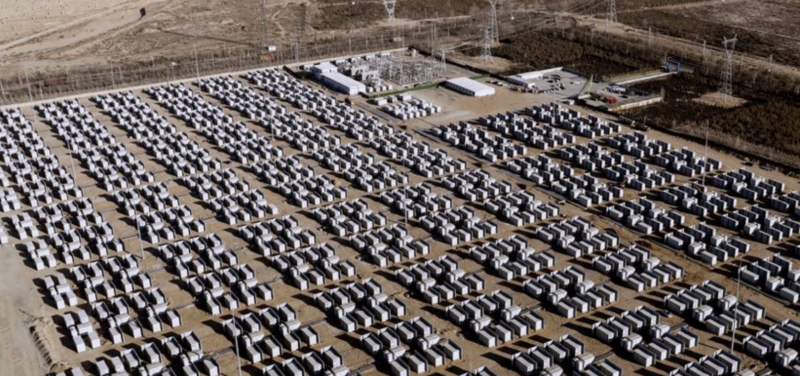
The centerpiece of this regional network is the Chagan Hada plant, which boasts a 4-GWh capacity at a single site. According to technical specifications and internal sources, this facility is currently positioned as the world’s largest single-site electrochemical energy storage project. The integration of AI algorithms directly into the battery management systems (BMS) allows the facility to move beyond simple storage, transforming it into an active participant in the regional power market. By automating real-time operational decisions, the system can respond to grid fluctuations in milliseconds, a capability that is becoming increasingly essential as intermittent renewable energy sources like wind and solar dominate the energy mix.
Technical Architecture and AI Capabilities
The AI management system deployed by Envision utilizes advanced machine learning models to oversee the health and efficiency of millions of individual battery cells. One of the primary technical challenges in large-scale lithium-ion storage is thermal management. The AI architecture monitors cell thermal behavior in real-time, predicting potential hotspots or degradation patterns before they impact system performance. This predictive maintenance approach is expected to significantly extend the operational lifespan of the hardware.
Beyond hardware health, the AI system functions as a sophisticated trading and dispatch agent. It interfaces directly with local electricity spot markets, utilizing deep learning to analyze live price trends and demand forecasts. By predicting when electricity prices will peak and when surplus generation will drive prices down, the system optimizes its charging and discharging cycles. Company engineers have modeled these operations and estimate that the predictive software architecture will increase the lifetime revenue of the assets by approximately 20 percent compared to conventional storage facilities that operate on fixed, pre-determined schedules.
The software also incorporates "grid-forming" capabilities. Unlike traditional "grid-following" inverters that require a stable voltage signal from a central power plant, grid-forming technology allows the BESS to stabilize the grid independently. This is particularly vital in remote areas of Inner Mongolia where the grid can be "weak" due to the long distances between generation sites and load centers.
Chronology of Development and Operational Milestones
The journey to the current 12.8-GWh operational capacity began in early 2023, with the first phases of the network coming online in February 2024. The development followed a rapid construction and integration timeline, reflecting the Chinese energy sector’s accelerated push toward energy storage mandates.
In the final months of 2024 and early 2025, Envision focused on the "intelligence layer" of the project. This involved the deployment of edge computing hardware at the site level and the synchronization of data with central cloud-based management platforms. The Chagan Hada plant recently underwent a rigorous 72-hour trial run to verify its stability under extreme conditions. Operating through the harsh winter temperatures of the Inner Mongolian steppe—where temperatures frequently drop below -30 degrees Celsius—the facility completed three full charge and discharge cycles at its rated power on its first attempt. This successful winter testing proved the efficacy of the system’s thermal management and the robustness of the AI’s environmental adaptation protocols.
The localized supply chain played a critical role in the project’s rapid deployment. Envision utilized a "vertical integration" model within the region, drawing from local facilities for battery cell production, containerized system assembly, and the development of operational controls. This regional approach not only reduced logistics costs and carbon footprints but also ensured that the technology was specifically tailored to the environmental and regulatory landscape of Inner Mongolia.
Regional Grid Expansion and Strategic Context
The Chagan Hada plant does not operate in isolation. It serves as the central anchor for a broader, distributed network of energy storage installations strategically located across Inner Mongolia’s primary energy production centers. These include the leagues of Bayannur, Ordos, Hohhot, Ulanqab, Xilingol, and Alxa. Collectively, these installations bring Envision’s total operational energy storage footprint in the region to over 14 GWh.
Inner Mongolia is a cornerstone of China’s "Dual Carbon" strategy, which aims for peak carbon emissions by 2030 and carbon neutrality by 2060. The region possesses some of the world’s most abundant wind and solar resources. However, the sheer volume of clean energy generated often exceeds the local grid’s capacity to consume or transport it, leading to "curtailment"—where wind turbines are braked or solar panels disconnected to prevent grid overloads.
The 12.8-GWh BESS cluster acts as a massive "energy sponge." During the day, when solar production is at its peak, or during high-wind events, the batteries absorb surplus electricity. This stored energy is then released during evening peaks or when weather conditions are unfavorable for generation. Furthermore, these clusters stabilize the long-distance ultra-high-voltage (UHV) transmission corridors that feed major metropolitan hubs in eastern China, such as Beijing, Shanghai, and Zhejiang, ensuring that the "green" electricity sent across the country is steady and reliable.

Convergence of Green Energy and AI Computing
A unique aspect of Envision’s strategy in Inner Mongolia is the direct integration of energy storage with high-density computing. Alongside the storage network, Envision commissioned the "Galaxy Campus" in Ulanqab. This 2-gigawatt green energy AI computing industrial park is designed to support up to one million AI accelerators (GPUs).
Data centers are notoriously energy-intensive and require a constant, stable power supply—something that weather-dependent wind and solar cannot provide on their own. By linking the 12.8-GWh storage cluster directly to the Galaxy Campus, Envision has created a blueprint for "Green Compute." The storage network buffers the intermittency of regional wind farms, delivering continuous, zero-carbon electricity to the data center. This synergy addresses two of the most significant challenges of the modern era: the massive energy demand of the AI revolution and the need for deep decarbonization of the industrial sector.
Market Implications and Future Outlook
The commissioning of the Chagan Hada cluster comes at a time of unprecedented growth in China’s utility-scale storage sector. National power producers, including state-owned giants like China Huadian Corporation, have accelerated large-scale equipment procurement. Current market trends show a preference for lithium iron phosphate (LFP) systems due to their safety profile and lower cost, though parallel demonstration projects for long-duration flow batteries and compressed air energy storage are also gaining traction.
Industry analysts suggest that the success of Envision’s AI-managed network will likely set a new standard for the industry. As profit margins for simple energy storage fluctuate with battery chemistry prices, the "intelligence" of the system—the ability to extract 20 percent more revenue through smart trading and optimized maintenance—becomes the primary competitive advantage.
The integration of AI into energy infrastructure also signals a shift in the labor market within the energy sector. The management of these massive facilities is moving away from manual oversight toward data science and software engineering. Envision’s use of coordinated trading agents and grid-forming software validates a future where the power grid is not just a collection of wires and turbines, but a self-optimizing digital ecosystem.
As China continues to build out its renewable energy bases in the Gobi Desert and other remote regions, the lessons learned from the Chagan Hada facility will be vital. The ability to operate reliably in extreme climates, coupled with the financial benefits of AI-driven market participation, provides a scalable model for global energy transitions. For now, the 12.8-GWh network stands as a testament to the scale of China’s clean energy ambitions and the critical role that artificial intelligence will play in stabilizing the green grids of the future.
