

Since the dawn of the Industrial Revolution, the world has witnessed an unprecedented dissemination of goods and technologies, reaching even the most remote corners of the globe. However, this widespread adoption has been shadowed by a persistent and concerning concentration of power: the ability to design, build, market, and extract value from these innovations has remained firmly in the hands of a select few. Unless humanity can fundamentally alter this historical trajectory, the prospect of a truly sufficient and equitable response to the escalating climate crisis will remain elusive.
The stark reality of this technological and economic divide was implicitly acknowledged in a hypothetical scenario that painted a picture of a global economy where nations possessed roughly equal capacities in research, development, and industrial production. Such a scenario, while potentially fostering fierce competition, also offered a more optimistic outlook. In this imagined world, each nation, intimately familiar with its unique challenges, could meticulously craft solutions tailored to its specific circumstances, thereby building systems and equipment precisely at the scale required. Furthermore, where distinct competencies complemented one another, governments could forge mutually beneficial collaborations, strategically mobilizing scientific expertise, technological prowess, and manufacturing might toward shared global objectives.
Unfortunately, the historical narrative of technological progress has consistently veered in the opposite direction. Following the First Industrial Revolution and the nascent formation of a truly global economy around the turn of the 19th century, the reach of manufactured goods and advanced technologies expanded exponentially. Yet, the critical capacities for their conceptualization, fabrication, commercialization, and the subsequent extraction of economic benefits remained overwhelmingly concentrated.
A Historical Pattern of Concentrated Innovation
This pattern of uneven development can be traced through various technological epochs. By the mid-19th century, steam locomotives, a defining symbol of industrial might, were operational in nearly 60 countries and colonies. However, the actual ability to manufacture these complex machines was confined to a mere handful of nations: Great Britain, the United States, and certain German states. The telegraphic network, a revolutionary communication technology of its time, followed a similarly skewed distribution. The automotive industry, emerging at the turn of the 20th century, became an emblem of globalization in the post-World War II era, characterized by the internationalization of manufacturing. While this led to the establishment of production facilities in large developing countries across Asia and Latin America, only two of these emerging economies – Japan and South Korea – successfully ascended to the ranks of "original equipment manufacturers," a testament to their advanced technological and industrial capabilities.
The end of the Cold War ushered in the information technology revolution, which further entrenched this model, famously encapsulated by the mantra "Designed in California, assembled in China." This paradigm clearly delineated between high-value, knowledge-intensive activities, typically well-remunerated and concentrated in developed nations, and labor-intensive, lower-paid operational tasks predominantly performed in developing countries. This division reinforced existing global inequalities and limited the capacity for genuine technological diffusion and value creation in many parts of the world.
The False Dawn of Green Technology Democratization
With the ascendance of the clean-energy industry and other climate technologies, a prevailing hope emerged that history might, for once, diverge from its established pattern. As China began to assert its dominance in the global market for solar panels and wind turbines, some analysts speculated about the potential for "green windows of opportunity" to emerge across the broader developing world. China’s successful acquisition of the inner workings of these new technologies through joint ventures and licensing agreements with advanced-economy providers appeared to offer a replicable blueprint for other nations.
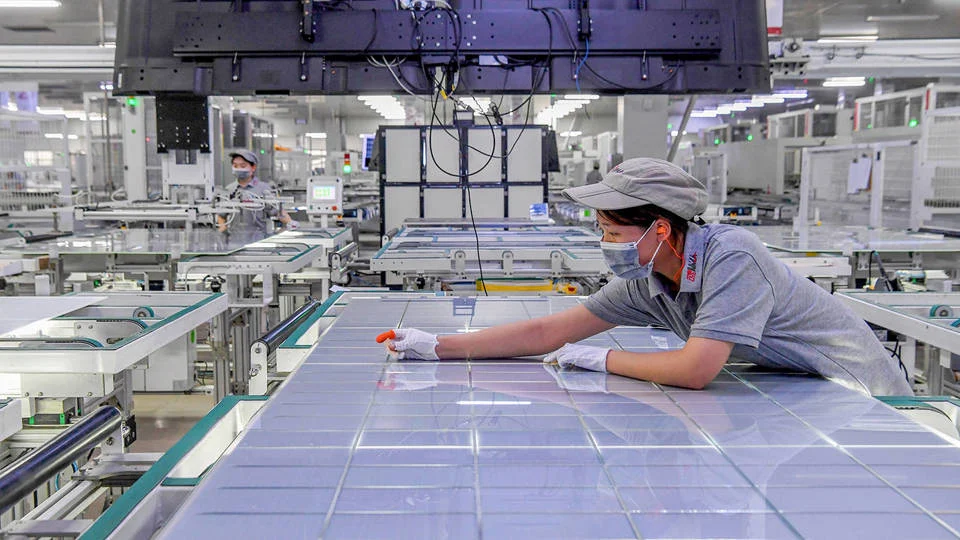
However, this optimistic vision of geographically diversified technological innovation has largely remained a theoretical aspiration rather than a concrete reality. The International Energy Agency (IEA) has consistently reported that while clean-energy technologies are indeed spreading rapidly – with solar capacity, for instance, increasing tenfold since 2015 – the crucial manufacturing capabilities remain highly concentrated. Data reveals that across the majority of clean-energy supply chains, an overwhelming 60% to 85% of production capacity is situated in no more than five countries, with certain individual segments exceeding a staggering 95%. Despite concerted efforts to diversify production geographically, projections indicate that no significant shift in the geographical distribution of these vital supply chains is likely before 2030.
This concentration is not confined to mature technologies such as solar panels, wind turbines, and batteries. Emerging sectors, including electrolyzers essential for low-emissions hydrogen production and small modular reactors for advanced nuclear power, are already exhibiting strikingly similar dynamics. Comprehensive data collected by the Organisation for Economic Co-operation and Development (OECD) highlights this trend, indicating that in 2023, approximately 92% of patents related to new environment- and climate change-focused technologies originated from China, Japan, South Korea, the United States, and the European Union. Consequently, rather than catalyzing a more distributed industrial and technological landscape, the global transition to a low-carbon economy appears to be perpetuating a familiar historical pattern: widespread adoption of technologies, but with the fundamental knowledge, productive capacity, and value creation remaining clustered within a remarkably small group of nations.
The Imperative for a "Big Push" and Technodiversity
Addressing this profound disparity in capabilities presents a formidable challenge. The Economic Commission for Latin America and the Caribbean (ECLAC) argues that a substantial and coordinated "big push" is indispensable. This initiative would require mobilizing significant and synchronized investments to fundamentally transform productive structures and cultivate domestic technological and innovation capabilities within countries and regions that have historically been left behind.
Multilateral climate institutions are acutely aware of this critical challenge. At the 27th Conference of the Parties (COP27) to the UN Framework Convention on Climate Change in Sharm El Sheikh, Egypt, in November 2022, parties adopted the Belém Technology Implementation Programme. This ambitious initiative is designed to ensure that environmentally sound technologies are effectively deployed in developing countries, recognizing the imperative for a more equitable distribution of climate solutions.
A pioneering aspect of the Belém program is its emphasis on fostering domestic innovation as a primary objective, rather than solely relying on the transfer of off-the-shelf technologies. The program wisely acknowledges that technologies conceived, developed, and produced locally are inherently best suited to address context-specific challenges and unlock localized economic value. This perspective is crucial for ensuring that climate solutions are not only effective but also sustainable and culturally relevant.
While technology transfer remains a foundational element of global climate action, it must be reimagined within a comprehensive framework that accounts for the entire technological lifecycle. This entails recognizing that technology transfer can and should occur across multiple stages of the innovation process – from initial research and design through demonstration, deployment, and eventual commercialization. Moving beyond the narrow focus on diffusing fully mature solutions will significantly expand opportunities for learning, adaptation, and endogenous innovation within recipient countries, thereby building their long-term capacity and resilience.
Overcoming Obstacles and Embracing Cosmotechnics
The implementation of the Belém program, and indeed any serious effort to democratize climate technology, will undoubtedly encounter significant obstacles. Geopolitical tensions, trade barriers, and the diversion of financial resources toward security and defense imperatives pose substantial risks to the allocation of necessary funding and international cooperation.
However, it is imperative not to lose sight of the immense additional value that can be unlocked through a paradigm shift in our approach to technology. The Chinese philosopher Yuk Hui, in his concept of "cosmotechnics," provides a profound reminder that technologies are not universally neutral. They inherently carry the worldviews, values, and cultural contexts of the places in which they were conceived. To effectively counter the enduring legacy of colonialism, current global inequalities, and the multifaceted ills associated with the industrial age, humanity must decisively embrace "technodiversity." This concept advocates for recognizing and nurturing a multiplicity of technological approaches, each tailored to specific cultural and environmental contexts.
A truly serious and effective response to climate change necessitates more than simply deploying homogeneous clean technologies at a massive scale. It demands an expansion of the world’s collective capacity to understand complex environmental problems, to generate innovative solutions, and to build the robust systems required to implement them. The ultimate success of the low-carbon transition should not be measured solely by the speed at which technologies spread across the globe, but more importantly, by the breadth and depth of distribution of the capabilities to innovate, adapt, and produce these vital technologies. In the final analysis, achieving a safer and more sustainable climate for all will depend not only on the decarbonization of the global economy but also on the democratization of the technological foundations that underpin such a monumental transformation. This necessitates a fundamental rebalancing of global power, knowledge, and productive capacity, ensuring that the benefits of the green transition are shared equitably and that all nations have a genuine stake in shaping their sustainable future.
The views expressed in this article are those of the author in his personal capacity and do not necessarily reflect the official views or positions of the institutions with which he is affiliated.
