

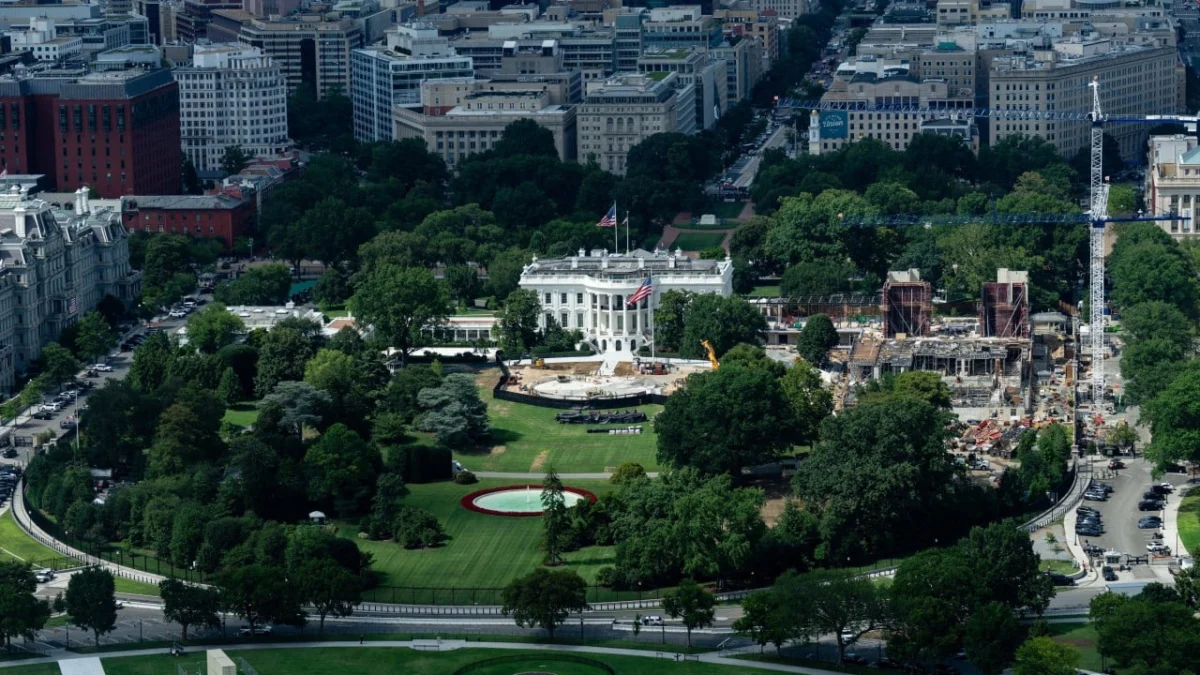
The United States Court of Appeals for the District of Columbia Circuit has issued a landmark ruling ordering the administration of President Donald Trump to immediately cease all construction activities on a controversial $400 million ballroom project currently being erected on the site of the former White House East Wing. In a 2-1 decision delivered on Friday, the federal appeals court dealt a significant blow to the executive branch’s efforts to unilaterally reshape the architectural and functional landscape of the Executive Mansion. The ruling reinforces the constitutional principle of legislative oversight, with the court pointedly noting that the president serves as a temporary steward of the people’s house rather than its absolute proprietor.
The decision upholds a preliminary injunction previously secured by the National Trust for Historic Preservation. The organization filed its lawsuit last year after the administration moved forward with the demolition of the East Wing to make way for a 90,000-square-foot (8,360-square-meter) grand ballroom. The court’s majority opinion stated that the fundamental restructuring of the White House requires explicit congressional authorization and funding, neither of which the administration had obtained before beginning the massive project. The court has granted a 14-day stay on its order, providing a narrow window for the administration to petition the U.S. Supreme Court for an emergency intervention.
Judicial Reasoning and the Scope of Executive Authority
The central legal question before the D.C. Circuit was whether the president possesses the inherent authority to modify federal property of such historical significance without the consent of Congress. Judges on the panel’s majority were unequivocal in their assessment of the limits of presidential power regarding the White House grounds.
“Each president is a temporary tenant, not the owner, of the White House,” the majority wrote in the opinion. The court emphasized that while the president is the head of the executive branch, the physical structure of the White House is a national monument and a public asset subject to the laws governing federal property and historic preservation. The judges argued that the scale of the proposed ballroom—roughly double the size of the existing West Wing—constituted a "fundamental reshaping" that falls outside the bounds of routine maintenance or minor administrative adjustments.
The court further addressed the administration’s argument that the project was a matter of "executive self-help" necessary for the modern functions of the presidency. The majority countered that "whether or not a massive ballroom should be constructed is for Congress to decide." This highlights the tension between the "unitary executive theory" often championed by the current administration and the traditional "power of the purse" held by the legislative branch.
In a dissenting opinion, the third judge on the panel suggested that the president’s role as Commander-in-Chief might grant broader latitude in modifying the White House for security purposes. This dissent provides the legal hook that the administration is expected to use in its appeal to the Supreme Court.
Chronology of the Ballroom Controversy
The dispute over the White House ballroom has its roots in the early months of the current administration’s second term, though the vision for a grander ceremonial space had been discussed intermittently for years.
- January 2025: The administration first proposed a "modernization plan" for the East Wing, citing outdated infrastructure and the need for a space capable of hosting larger state dinners and international summits.
- May 2025: Demolition of sections of the East Wing began. The East Wing, which originally housed the First Lady’s offices and the White House Social Office, was a structure with historical roots dating back to the Jefferson administration, though the modern version was largely completed in 1942.
- July 2025: The National Trust for Historic Preservation filed suit, alleging that the administration violated the National Historic Preservation Act and the Anti-Deficiency Act by using funds not specifically earmarked by Congress for such a large-scale capital project.
- October 2025: A lower district court issued a preliminary injunction, which the administration immediately appealed.
- March 2026: Construction briefly resumed after a stay was granted during the appeal process, leading to the rapid rise of the ballroom’s steel skeleton.
- August 7, 2026: The D.C. Circuit Court of Appeals issued its 2-1 ruling to halt construction, setting the stage for a Supreme Court showdown.
Project Details and Financial Scale
The proposed ballroom is the centerpiece of a broader initiative to redefine the aesthetic of central Washington. With an estimated price tag of $400 million, the project is one of the most expensive renovations in the history of the White House, surpassing the inflation-adjusted costs of the Truman reconstruction in the late 1940s.
The 90,000-square-foot facility was designed to feature a soaring glass-and-marble facade, a helipad integrated into the roof structure, and a subterranean level reportedly housing advanced communications equipment. The administration has frequently changed its characterization of the building. Initially marketed as a "Grand Ballroom for the 21st Century," it has more recently been described in official social media posts and press briefings as a "military centre" and a "key security feature."
The financial transparency of the project has been a point of contention in Congress. Critics argue that the administration has diverted funds from various Department of Defense and Department of the Interior accounts to bypass the standard appropriations process. The $400 million figure, while substantial, is believed by some budget analysts to be a conservative estimate, with the final costs for security integration and interior finishing potentially pushing the total closer to $600 million.
Official Responses and Political Fallout
President Trump responded to the court’s decision on Friday afternoon via social media, characterizing the ruling as "horrendous" and a threat to national security. He asserted that the structure is essential for protecting the presidency and conducting high-level military briefings. "The court is playing politics with our safety," the President wrote. "This is not just a ballroom; it is a vital military centre. We will be appealing to the Supreme Court immediately to protect the White House and our Country!"
The White House Counsel’s office issued a follow-up statement, arguing that the court failed to recognize the "unique exigencies" of the modern presidency. "The President must have the ability to ensure that the seat of government is equipped with the necessary facilities to handle 21st-century threats and diplomatic requirements," the statement read.
Conversely, the National Trust for Historic Preservation hailed the ruling as a victory for the rule of law. "The White House belongs to the American people, not to any one individual who happens to occupy it for a term of four or eight years," said a spokesperson for the Trust. "Preserving the historical integrity of our national monuments is a duty that the executive branch cannot simply ignore in favor of personal architectural preferences."
On Capitol Hill, reactions were split along partisan lines. Democratic leaders in the House of Representatives praised the court for "reining in executive overreach," while several prominent Republicans criticized the judiciary for interfering with what they termed "necessary infrastructure upgrades for the Commander-in-Chief."
Broader Impact and Implications for Federal Property
The legal battle over the ballroom has implications that extend far beyond the fence of 1600 Pennsylvania Avenue. If the Supreme Court chooses to hear the case, its ruling could redefine the balance of power between the president and Congress regarding the management of federal lands and historic sites.
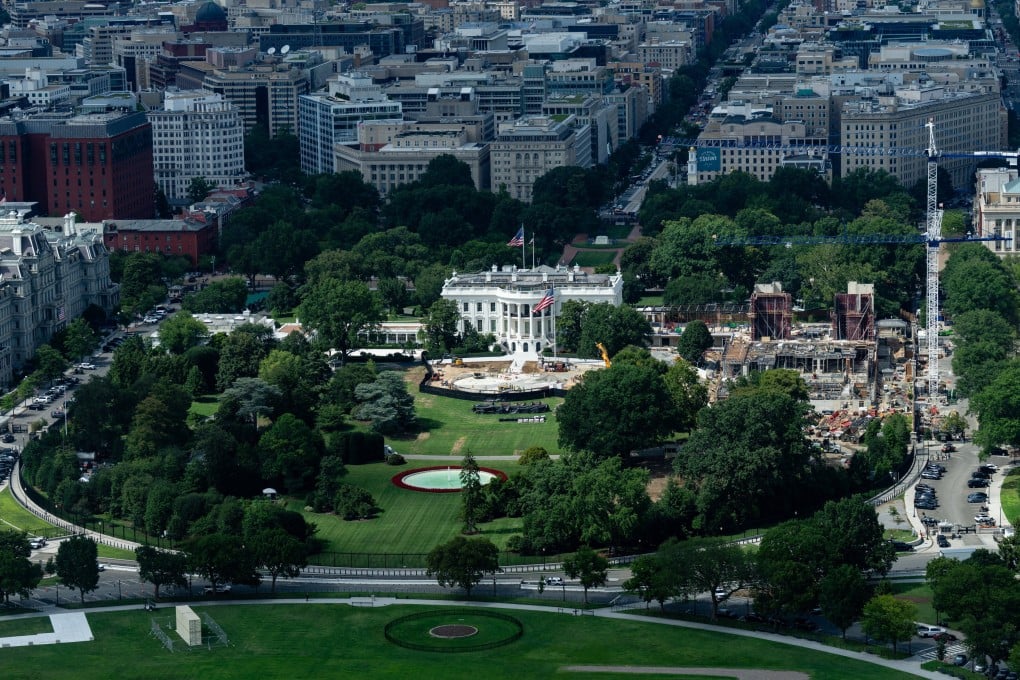
At stake is the interpretation of several key statutes, including the National Historic Preservation Act of 1966, which requires federal agencies to evaluate the impact of their actions on historic properties. A ruling in favor of the administration could potentially grant future presidents the power to demolish or significantly alter other national landmarks, such as the Lincoln Memorial or the U.S. Capitol grounds, under the guise of security or administrative necessity.
Furthermore, the case touches upon the "Power of the Purse" outlined in Article I of the Constitution. If the executive branch is permitted to fund massive construction projects through the reallocation of existing budgets without specific congressional line-item approval, it could undermine the legislature’s primary check on the executive.
Architectural critics have also noted that the ballroom plan is part of a larger trend. The administration has sought to impose a specific "classical" architectural style on all new federal buildings in Washington, a move that has faced pushback from the American Institute of Architects and various urban planning groups. The ballroom project is seen by many as the ultimate expression of this aesthetic and political philosophy.
Looking Toward the Supreme Court
The 14-day hold on the appellate court’s ruling puts the ball squarely in the Supreme Court’s court. Given the current composition of the high court, with its conservative majority, legal analysts are divided on the likely outcome.
Some believe the justices will adhere to a strict "originalist" interpretation of the Constitution, which would favor the legislative branch’s control over appropriations and property. Others suggest that the court’s expansion of executive immunity and authority in recent years may lead them to side with the President, particularly if the administration can provide classified evidence that the ballroom/military center is essential for national defense.
As the steel girders of the unfinished ballroom stand silent over the Washington landscape, the city awaits the next chapter in a legal saga that tests the very foundations of American governance. For now, the "temporary tenant" of the White House must wait for the highest court in the land to decide if he has the right to build his $400 million legacy.
