

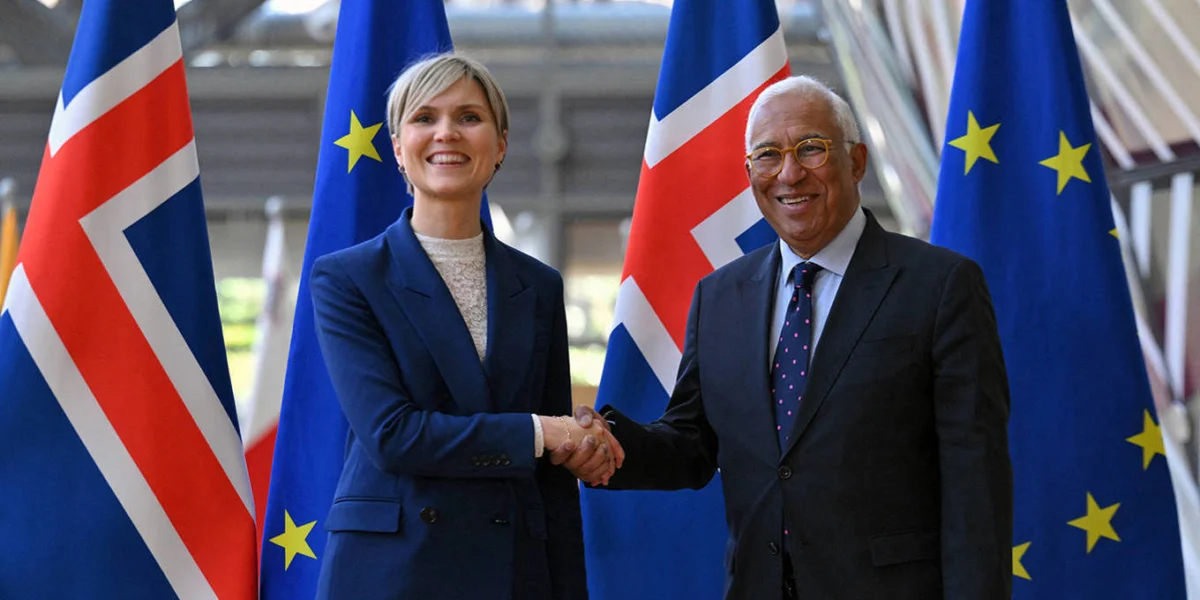
The looming August 29 referendum in Iceland, which will determine whether the nation reopens its long-dormant membership negotiations with the European Union, is intrinsically linked to the increasingly unpredictable geopolitical landscape, particularly the foreign policy of the United States under President Donald Trump. Trump’s assertive and often idiosyncratic approach to international relations, exemplified by his purported interest in acquiring Greenland, has cast a spotlight on Iceland’s strategic vulnerabilities and may significantly influence voter sentiment. This complex interplay of external pressures and domestic considerations forms the backdrop against which Icelanders will decide their nation’s future relationship with the European bloc.
Background: A History of EU Ambitions and Setbacks
Iceland’s journey toward potential European Union membership has been a protracted and often contentious one. The nation initially applied for EU membership in 2009, at the height of the global financial crisis, seeking economic stability and a stronger voice on the international stage. Negotiations proceeded for several years, with significant progress made in aligning Icelandic legislation with the acquis communautaire, the body of EU law. However, by 2013, domestic political shifts, coupled with growing public skepticism regarding the potential economic and sovereignty implications of membership, led to the suspension of negotiations. The conservative Independence Party, which had opposed membership, returned to power, effectively putting Iceland’s EU aspirations on hold.
The decision to hold a referendum on reopening these negotiations now, over a decade later, signifies a potential recalibration of Iceland’s foreign policy priorities. The intervening years have seen considerable global upheaval, from the rise of populism and nationalism in various Western democracies to increased geopolitical tensions and the resurgence of great power competition. These developments have prompted a reassessment of traditional alliances and security frameworks, leading many smaller nations, like Iceland, to consider their options for ensuring stability and influence.
The Greenland Factor: A Strategic Flashpoint
President Donald Trump’s overt and unsolicited expression of interest in purchasing Greenland from Denmark in August 2019 sent ripples of surprise and concern across the international community. While Denmark firmly rejected the notion, deeming it "absurd," the episode underscored Trump’s transactional approach to foreign policy and his willingness to pursue unconventional geopolitical objectives. Greenland, a vast territory with strategic importance due to its geographical location, resources, and military installations, occupies a unique position in the North Atlantic.
For Iceland, situated as it is between North America and Europe and sharing a maritime border with Greenland, any shifts in the geopolitical status or control of its larger neighbor are of significant consequence. While Iceland is not a territorial claimant to Greenland, a more assertive US presence or potential Danish weakening in its administration of the island could alter the regional security dynamic. The implied interest of the US in expanding its influence in the Arctic region, a move that has been met with mixed reactions from Arctic nations, also contributes to a sense of unease. This heightened awareness of external powers’ strategic interests in their immediate vicinity is a critical, albeit indirect, factor driving the current Icelandic debate on EU membership.
Shifting Sands of Global Security and Economic Interdependence
The broader context of evolving global security arrangements cannot be overstated. The post-World War II era was characterized by a relatively stable international order, underpinned by strong alliances and multilateral institutions. However, the past decade has witnessed a fragmentation of this order, marked by the rise of new global powers, the erosion of established norms, and increased friction between major geopolitical blocs.
Iceland, a nation of just over 370,000 people, has historically relied on its strategic location and its membership in NATO (through its lack of a standing army but participation in collective defense) to ensure its security. However, the perceived unpredictability of key allies, coupled with the growing importance of economic resilience, has led many to question whether continued solitude is the most prudent path.
The European Union, despite its own internal challenges, represents a significant bloc of economic and political power. Membership would offer Iceland access to the EU’s vast single market, further strengthening its export-oriented economy, particularly in sectors like fisheries and tourism. It would also provide a more robust platform for engaging with global economic and security issues, amplifying Iceland’s voice on the international stage.
Data Points: Economic and Political Considerations
- Trade: The EU is Iceland’s largest trading partner. In 2023, approximately 45% of Iceland’s exports went to EU member states, and about 55% of its imports originated from the EU. Membership would likely streamline these trade relations further.
- Fisheries: The fisheries sector is a cornerstone of the Icelandic economy. While Iceland currently manages its fishing quotas independently, EU membership would require adherence to the Common Fisheries Policy (CFP), a move that has historically been a point of contention. However, proponents argue that EU membership could offer greater market access for Icelandic fish products.
- Sovereignty: A key concern for many Icelanders is the potential erosion of national sovereignty. The acquis communautaire is extensive, and full membership would necessitate significant legislative alignment. Critics argue this could dilute Iceland’s decision-making autonomy, particularly in areas like resource management.
- NATO and Security: Iceland is a founding member of NATO. While the US presence in the North Atlantic remains crucial, the question of how EU membership would interact with Iceland’s NATO commitments is a complex one. Proponents argue that a stronger, more unified Europe, of which Iceland would be a part, could contribute to broader transatlantic security.
The Referendum and its Implications
The August 29 referendum is a crucial juncture. It is not a vote on full accession but rather on the principle of reopening negotiations. If the ‘yes’ vote prevails, the Icelandic government will be empowered to formally initiate talks with the EU. These negotiations, if successful, would then be subject to a separate ratification vote by the Icelandic people.
The outcome of this referendum will have several significant implications:
- For Iceland: A ‘yes’ vote would signal a decisive shift in Iceland’s foreign policy orientation, moving it closer to deeper integration with Europe. It would necessitate a renewed national debate on the terms of membership and the compromises required. A ‘no’ vote would likely reaffirm Iceland’s commitment to its current independent status, albeit within a potentially more challenging global environment.
- For the EU: Iceland’s accession, if it were to occur, would be another step in the EU’s eastward and northward expansion. It would bring a unique perspective and a strategically located member into the bloc, potentially strengthening the EU’s presence in the Arctic.
- For the US: While the US generally supports European integration, its specific approach to Iceland’s potential membership would likely be influenced by its broader strategic interests in the North Atlantic and the Arctic. The Trump administration’s transactional approach suggests a focus on how such a move would serve American objectives.
Reactions and Public Discourse
Public discourse in Iceland leading up to the referendum is expected to be vigorous and multifaceted. Proponents of reopening negotiations emphasize the benefits of economic security, increased geopolitical influence, and alignment with democratic European values. They point to the stability offered by the EU’s single market and the collective bargaining power it provides.
Opponents, however, voice concerns about the loss of sovereignty, the potential impact on key industries like fisheries, and the bureaucratic complexities of EU membership. They argue that Iceland’s current model of independent diplomacy and its existing alliances are sufficient to ensure its security and prosperity.
Official statements from political parties and civil society organizations are anticipated to intensify as the referendum date approaches. While no direct official statements from the US administration regarding this specific Icelandic referendum have been publicly released, the general stance of the US regarding European integration and its strategic interests in the Arctic will undoubtedly be a backdrop to the debate. The Danish government, having firmly rejected the idea of selling Greenland, would likely observe Iceland’s deliberations with keen interest, given the interconnectedness of the Nordic region.
A Nation at a Crossroads
In essence, Iceland stands at a significant crossroads. The referendum on August 29 is not merely a procedural vote but a profound national deliberation on identity, security, and economic destiny in an increasingly uncertain world. The volatile geopolitical currents, particularly the unpredictable nature of US foreign policy and its implications for regional stability, have undoubtedly amplified the debate. As Icelanders prepare to cast their ballots, they will be weighing the comfort of solitude against the perceived security and prosperity offered by closer ties with the European Union, a decision that will shape their nation’s trajectory for years to come.
