


The city of Twin Falls, Idaho, became the center of a national conversation regarding public safety and infrastructure security this past weekend following a violent shooting spree that left multiple individuals wounded. The incident, which unfolded across several high-traffic locations including an In-N-Out Burger parking lot and a local visitor center, has highlighted a specific vulnerability within the burgeoning electric vehicle (EV) ecosystem: the safety of drivers while stationary at charging stations. Among the victims was a professional taxi driver who was struck by gunfire while seated in his Tesla at a Supercharger station. As the victim undergoes a series of critical surgeries, the event has prompted a rigorous examination of the security protocols surrounding unmanned charging infrastructure and the practical steps drivers can take to mitigate risks in public spaces.
Chronology of the Twin Falls Incident
The sequence of events began on Saturday afternoon in a busy commercial district of Twin Falls, a city known as a regional hub for southern Idaho. According to preliminary police reports, the suspect initiated the shooting spree in the parking lot of an In-N-Out Burger, a location typically crowded with weekend travelers and local residents. The suspect then moved toward a nearby visitor center, continuing to discharge a firearm indiscriminately.
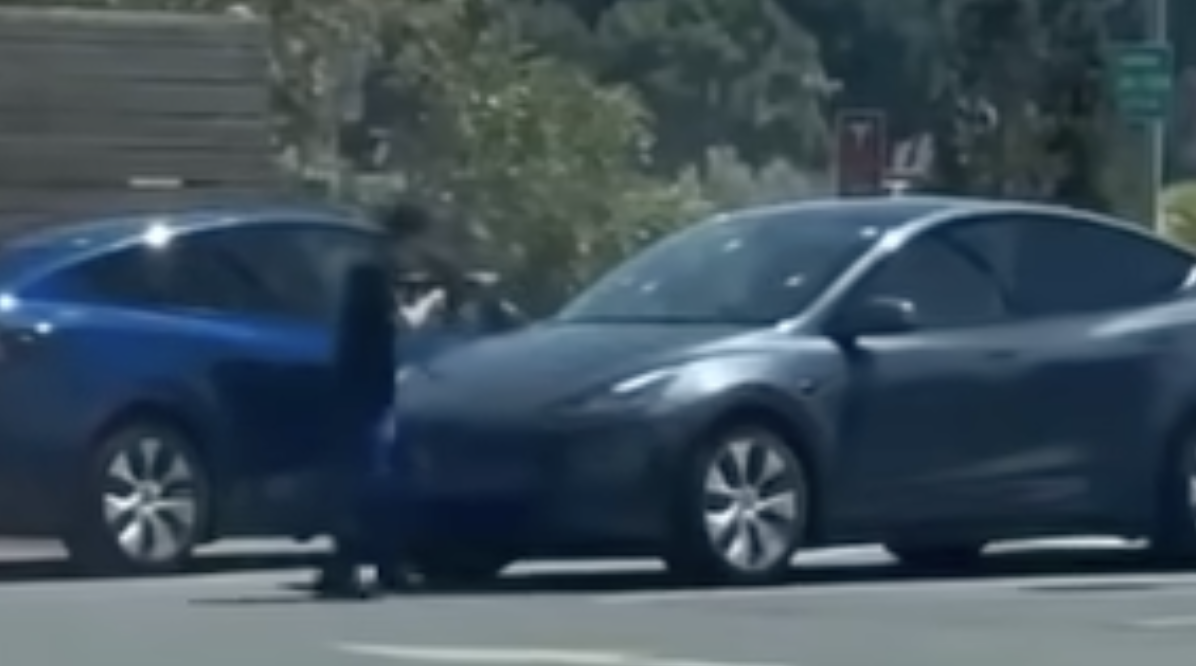
During this transition, the gunman opened fire on a taxi driver who was utilizing a Tesla Supercharger. The driver, identified as a local contractor, was inside the vehicle during the charging cycle. Unlike traditional refueling at a gasoline station, which typically requires a driver to stand outside for three to five minutes, EV charging often necessitates stays of twenty to forty minutes. This extended dwell time, while the vehicle is tethered to a high-voltage bollard, created a scenario where the victim was a stationary target in a public lot.
Emergency services arrived on the scene within minutes of the first 911 calls. The area was cordoned off as tactical units worked to apprehend the suspect. The wounded taxi driver was transported to a regional trauma center, where he remains in stable but serious condition following multiple surgical interventions. The Twin Falls Police Department has since taken the suspect into custody, and an investigation into the motive is ongoing.
The Geography of Vulnerability: EV Charging vs. Traditional Refueling
The Twin Falls incident has reignited a debate among urban planners and safety experts regarding the design and placement of EV charging stations. Historically, gasoline stations are designed as high-visibility, high-traffic hubs. They are frequently staffed by attendants, equipped with extensive surveillance systems, and characterized by bright, overhead canopy lighting. These elements are part of a strategy known as Crime Prevention Through Environmental Design (CPTED), which aims to deter criminal activity through natural surveillance and territorial reinforcement.
In contrast, many first-generation EV charging stations, including those in the Tesla Supercharger network and various Level 3 DC fast-charging sites, are situated in the peripheral corners of shopping center parking lots or behind large retail buildings. While these locations are convenient for electrical grid access, they often lack the "eyes on the street" present at traditional gas stations.
Data from the Department of Energy’s Alternative Fuel Data Center indicates that as of 2024, there are over 60,000 public charging stations across the United States. However, a significant portion of these are unstaffed and located in areas that may become desolate after business hours. The Twin Falls shooting serves as a case study for the "captive audience" effect, where a driver is physically linked to a stationary point for an extended duration, often with their attention diverted to mobile devices or in-car entertainment.
Statistical Analysis of Public Space Violence
While the Twin Falls shooting is a high-profile tragedy, safety experts urge the public to view the risks through a statistical lens. According to data from the Federal Bureau of Investigation (FBI) and the Centers for Disease Control and Prevention (CDC), the probability of an individual being involved in a mass shooting remains statistically low compared to other daily hazards.
For example, the National Safety Council reports that Americans face a significantly higher risk of injury or death from vehicular accidents, falls, and environmental pollutants than from targeted violence in public spaces. In the context of EV ownership, the transition to electric mobility is often driven by a desire to mitigate the long-term health risks associated with air pollution and the systemic threats of climate change. Experts suggest that while situational awareness is vital, the fear of public violence should not be a primary deterrent for those considering the switch to electric transportation, particularly as the majority of EV charging (estimated at over 80% by the Edison Electric Institute) occurs in the safety of private residences.
Security Infrastructure and Industry Responses
In the wake of the Idaho incident, there are growing calls for charging network operators like Tesla, Electrify America, and EVgo to enhance the security features of their sites. Several industry-leading responses are currently under consideration or in the early stages of implementation:
- Enhanced Lighting and Surveillance: Future site designs are increasingly incorporating high-intensity LED lighting and 360-degree AI-monitored camera systems that can detect unusual loitering or the presence of a weapon.
- Emergency "E-Stop" Integration: Some advocates are calling for physical emergency buttons at charging bollards that can instantly alert local law enforcement and activate high-decibel alarms.
- Strategic Co-Location: Newer charging "hubs" are being built in partnership with 24-hour convenience stores or within well-trafficked "charging lounges" that provide a physical barrier between the driver and the parking lot.
- Vehicle Software Updates: Tesla and other manufacturers have already begun utilizing onboard camera systems (such as Tesla’s "Sentry Mode") to record surroundings. Future updates could potentially allow the car to automatically alert the driver of approaching individuals while the vehicle is in a "Parked-Charging" state.
Practical Safety Protocols for EV Operators
While infrastructure improvements are a long-term solution, safety consultants emphasize that individual behavior is the most immediate factor in personal security. The Twin Falls shooting highlights the danger of the "stationary trap." Because a vehicle cannot be driven away while the charging cable is engaged, the driver is effectively immobilized.
Situational Awareness and "The Phone Trap"
The most common lapse in security at charging stations is "distracted dwelling." Drivers often use the 30-minute charging window to catch up on emails or social media, lowering their peripheral awareness. Security experts recommend "active scanning"—periodically looking up from devices to survey the perimeter. This not only allows a driver to spot potential threats early but also acts as a deterrent, as many opportunistic criminals avoid targets who appear alert and observant.
Site Selection and "The Creep Factor"
With the expansion of the charging network, drivers often have multiple options within a five-mile radius. Choosing a charger located in a well-lit, busy area—such as a grocery store parking lot—is preferable to a secluded site behind a mall. Safety professionals advise drivers to trust their "instinctual discomfort." If a location feels unsafe or is poorly maintained, it is often worth the extra battery drain to find a more secure alternative.

The Role of De-escalation
In many urban environments, conflict at charging stations arises from "charger rage" or disputes over stall availability. Understanding non-violent dispute resolution, often referred to as "Verbal Judo," can prevent a verbal altercation from escalating into physical violence. This involves maintaining a calm demeanor, using empathetic language, and knowing when to disengage and leave the area rather than defending a "right" to a specific charging stall.
Broader Implications for the Future of Mobility
The incident in Twin Falls is more than a local crime story; it is a signal of the growing pains associated with a massive shift in national infrastructure. As the United States moves toward a goal of 50% EV market share by 2030, the "filling station" of the future will need to be reimagined.
Urban planners are beginning to recognize that EV charging stations are not merely utility points but are, in fact, new types of public squares. This requires a shift in thinking from "equipment installation" to "place-making." By integrating charging into the fabric of safe, walkable, and well-monitored communities, the vulnerabilities exposed in the Idaho shooting can be systematically reduced.
Furthermore, the legal and social ramifications of self-defense at charging stations remain a complex issue. As some drivers consider carrying personal protection or seeking tactical training, legal experts warn that the laws regarding the use of force vary significantly by state. Responsibility and rigorous training remain the prerequisites for any individual choosing to take an active role in their own security.
Conclusion
The Twin Falls shooting remains a sobering reminder of the unpredictability of public violence. While the taxi driver’s recovery remains the immediate priority for the local community, the broader impact of the event will likely be felt in how charging networks are designed and how EV owners navigate the world. By combining better infrastructure design, increased situational awareness, and a rational assessment of risk, the transition to clean energy can continue without compromising the safety of those leading the charge. The path forward requires a balance between technological optimism and the practical reality of maintaining security in an ever-changing public landscape.
