

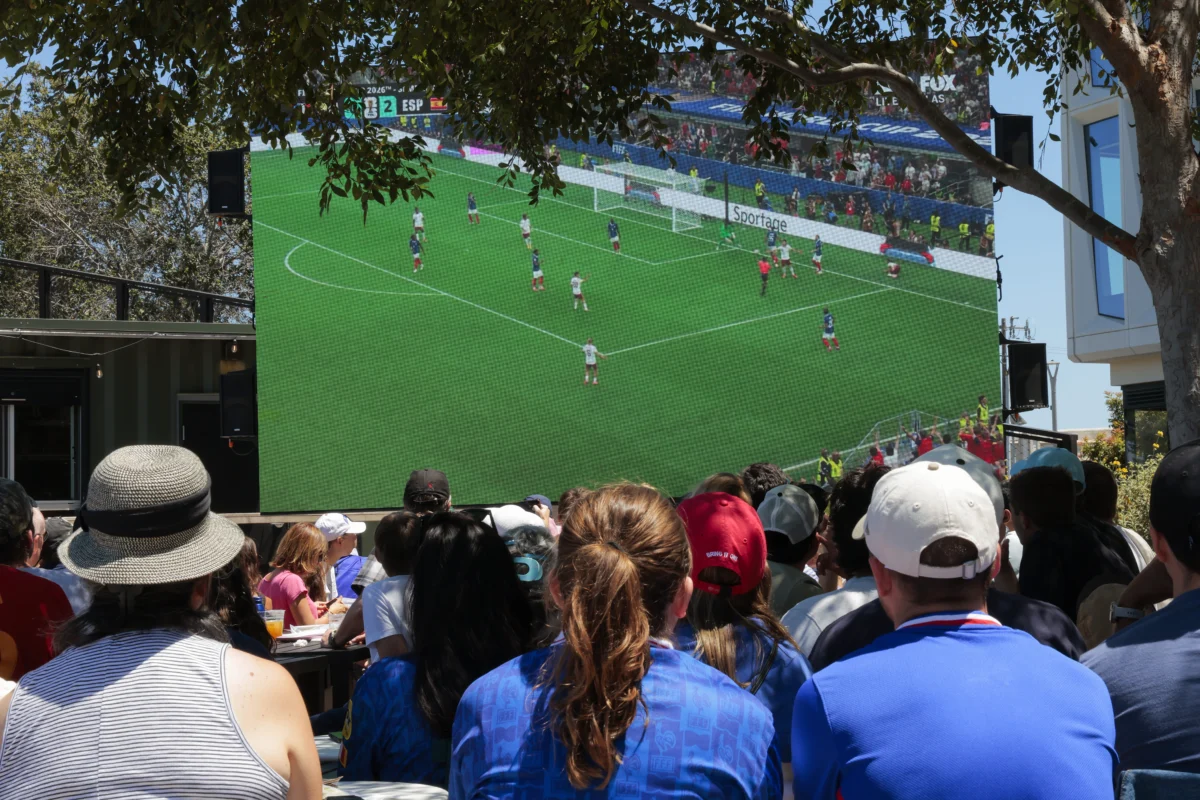
The recent FIFA World Cup, co-hosted by the United States, generated a significant tourism surge in its host cities, driving up hotel occupancy and ticket sales. However, a comprehensive report released by the Federal Reserve on Wednesday indicates that this localized economic uplift was partially overshadowed by broader economic weaknesses observed across other sectors and regions. While the global spectacle of international soccer brought fans and their spending power to select urban centers, the overall impact on national economic growth appears to have been more nuanced, with some areas experiencing less of a ripple effect than anticipated.
The report, the latest edition of the Federal Reserve’s Beige Book, which meticulously recaps regional economic conditions eight times a year, highlighted the dual nature of the World Cup’s economic influence. Data from TicketData revealed that median admission prices for World Cup matches soared to an impressive $900, underscoring the high demand and premium associated with the premier international soccer tournament. This influx of attendees, both domestic and international, naturally translated into increased revenue for hotels, restaurants, and local businesses in cities fortunate enough to host matches.
Boston’s Mixed Reception: From Empty Seats to Overflowing Bars
The Boston Federal Reserve’s district, which experienced several high-profile World Cup matches, presented a particularly interesting case study. Initially, hotel bookings related to the tournament were reported as softer than expected. This initial hesitation from potential travelers or a more conservative booking strategy by event organizers may have contributed to a less robust start. However, the report notes a significant turnaround as hotels strategically adjusted their pricing strategies. By offering more competitive room rates, they successfully stimulated demand, ultimately leading to stay levels that met or even exceeded earlier forecasts. This demonstrates a degree of price elasticity within the market, where adjustments could effectively unlock latent demand.
Beyond accommodation, the impact on the hospitality sector, particularly bars and restaurants, was more pronounced. Establishments in the Boston area reported a substantial increase in beer sales directly attributable to the World Cup. In a notable anecdote illustrating the fervent fan culture, some local watering holes reportedly experienced temporary stockouts of beer, particularly when fan groups from Scotland descended upon the city. This surge in demand for beverages highlights the direct correlation between major sporting events and the consumption patterns of their attendees.
Despite these localized successes, the Boston Fed’s coverage area also observed a decrease in cross-border tourism from Canada compared to the previous summer. While more Canadian visitors were noted in connection with the World Cup, their numbers still remained significantly below historical averages. This trend was particularly acute in towns situated in coastal Maine and northern Vermont, suggesting that the economic benefits of the tournament were not evenly distributed, and certain border regions continued to grapple with diminished international foot traffic.
New York City’s Economic Dichotomy: High Occupancy, Uneven Spending
In the bustling metropolis of New York City, the World Cup also presented a mixed economic picture. The New York Fed’s report indicated that bars and restaurants saw "strong" sales figures, largely driven by patrons gathering to watch matches. These viewing parties created a vibrant atmosphere and a consistent flow of customers eager to enjoy the games in a social setting.
However, this positive trend was juxtaposed with a noticeable decline in the number of international visitors, with foot traffic from Canada specifically reported as being down. This decline in Canadian visitors is not an isolated incident and appears to be linked to broader geopolitical and economic factors. The Canadian government has reported a decrease in its citizens crossing the U.S. border. This trend has been attributed, in part, to the economic policies and tariff rollouts implemented by the Trump administration, as well as perceived sovereignty threats. Furthermore, there’s a discernible push among Canadian residents to prioritize spending within their own country, focusing on domestic services and products. This "buy local" sentiment, amplified by the current geopolitical climate, appears to be impacting cross-border tourism and spending.
New York City hotels did report higher occupancy rates and increased revenue per room due to the World Cup. This indicates a successful capture of the tournament’s direct tourism impact. Yet, the broader economic landscape within the city revealed some weaknesses. The New York Fed noted that some mid-tier attractions were experiencing a slowdown in visitor numbers. Moreover, a department store reported that despite an increase in foot traffic directly attributed to the tournament, this surge did not translate into a corresponding rise in overall sales. This suggests that while the World Cup brought people to certain areas, their spending habits might have been more focused on specific activities or less inclined towards general retail purchases.

San Francisco Fed’s Observations: Tourist Peaks Amidst Local Pullback
The San Francisco Federal Reserve’s district, which also hosted World Cup matches, experienced robust tourist volumes in the cities directly involved in the tournament. This influx of international and domestic fans undoubtedly provided a significant boost to the local economies of these host cities, supporting hotels, restaurants, and various entertainment venues.
However, the report from the San Francisco Fed also highlighted a contrasting trend observed in other markets within its jurisdiction. In these non-hosting areas, local residents reportedly scaled back their spending on restaurants, hotels, and entertainment. This suggests a potential diversion of consumer spending towards the major events in hosting cities or a general retrenchment in discretionary spending among locals in other regions.
On a broader net basis, the San Francisco Fed concluded that the demand for consumer and business services experienced a "slowed somewhat." This observation indicates that while the World Cup provided a localized economic stimulus, the overall trend for service-based industries across the district was one of moderation rather than acceleration.
Broader Economic Currents: Rising Oil Prices and Consumer Prudence
The Federal Reserve’s report underscored a consistent theme across multiple districts: the impact of rising oil prices on consumer spending. Across the board, the Fed noted that the escalation in fuel costs acted as a significant constraint on consumer budgets. Faced with higher expenses at the pump, consumers were compelled to cut back on other discretionary spending to maintain their overall financial equilibrium.
This economic pressure manifested in various ways. Several regions reported observing consumers actively seeking out cheaper alternatives for products or deliberately decreasing their spending on non-essential goods and services to conserve funds. This trend points towards a heightened sense of economic prudence among consumers, who are becoming more price-sensitive and strategic in their purchasing decisions. The World Cup, while a significant event, was not sufficient to entirely offset the pervasive influence of inflation and the rising cost of living on the broader consumer economy.
The World Cup’s Legacy: A Tale of Two Economies
The 2026 FIFA World Cup undoubtedly served as a powerful economic engine for the cities fortunate enough to host its matches. The influx of fans, the high demand for event-related services, and the surge in local spending created tangible economic benefits for these communities. Hotel occupancy rates climbed, bars and restaurants saw a significant uptick in sales, and the overall vibrancy of these urban centers was amplified. The strategic adjustments made by the hospitality sector, particularly in lowering prices to meet demand, further underscore the adaptability of businesses in capitalizing on major events.
However, the Federal Reserve’s report serves as a crucial reminder that economic impacts are rarely monolithic. The localized boom in host cities was counterbalanced by persistent economic weaknesses elsewhere. The decline in Canadian tourism, influenced by geopolitical factors and a growing domestic spending trend, impacted border regions. The uneven distribution of spending, with some mid-tier attractions and general retail sectors failing to fully capitalize on increased foot traffic, suggests that the World Cup’s economic benefits were not universally shared.
Furthermore, the overarching economic environment, characterized by rising oil prices and a general consumer inclination towards cost-saving measures, played a significant role in tempering the overall economic uplift. The World Cup, while a celebrated global event, operated within a broader economic context where inflation and consumer prudence dictated spending patterns. The report’s findings offer a comprehensive, albeit nuanced, perspective on the complex interplay between major sporting events and the national economy, highlighting both the localized power of such spectacles and the enduring influence of wider economic forces. The legacy of the 2026 World Cup, therefore, is not just one of thrilling soccer matches and passionate fan gatherings, but also a testament to the intricate and often uneven nature of economic recovery and growth in a dynamic global landscape.
