

A federal judge in Massachusetts has formally rebuked the Trump administration, ruling on Wednesday that the Department of Homeland Security (DHS) violated a standing court order by attempting to deport a group of migrants to South Sudan without providing them a legal window to contest the move. District Court Judge Brian Murphy stated during an emergency hearing that the administration’s actions were "unquestionably violative" of a preliminary injunction he issued in March, which was designed to protect individuals from being sent to third countries where they might face persecution or torture without first having their cases heard.
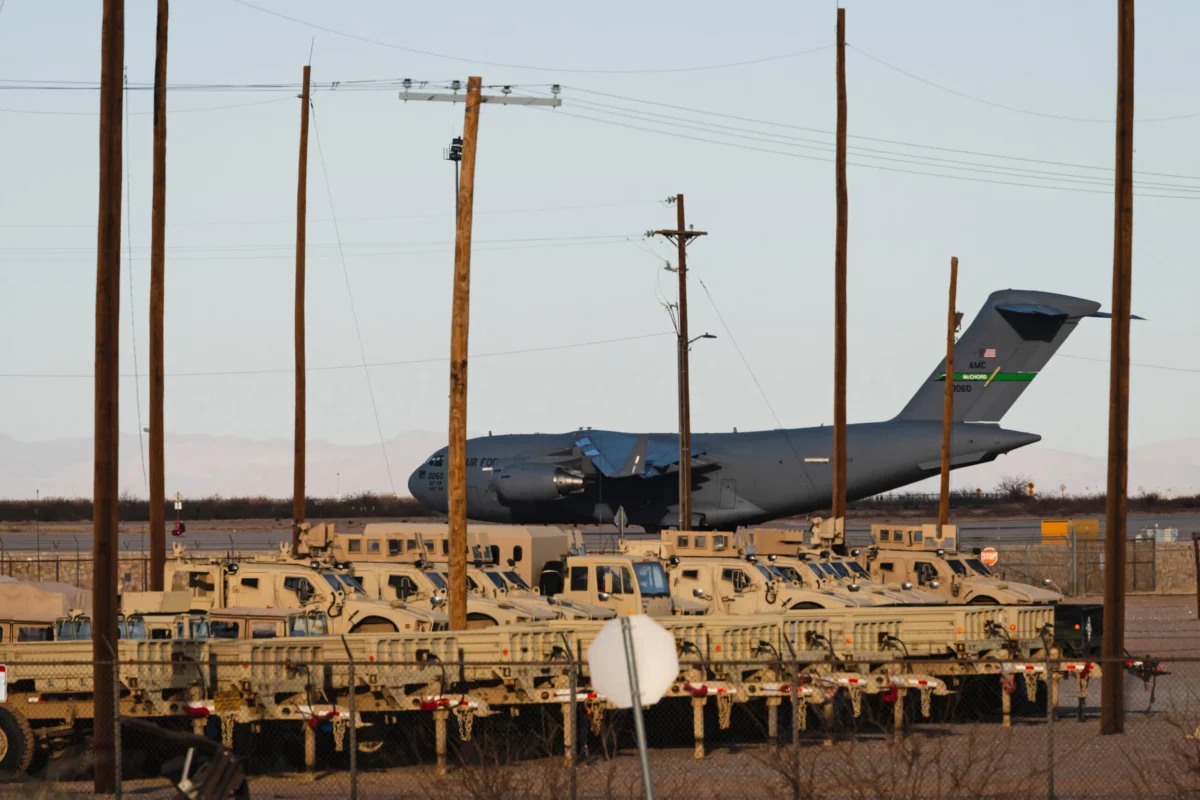
The ruling follows a series of events involving a high-profile deportation flight that departed from Texas this week. The flight, which utilized a United States Air Force Boeing C-17 transport aircraft, was reportedly bound for South Sudan, a nation currently grappling with severe internal instability and the threat of renewed civil war. The controversy centers on eight individuals from diverse national backgrounds—Myanmar, Laos, Vietnam, Cuba, Mexico, and South Sudan—who were processed for removal under the administration’s intensified interior enforcement protocols.
The Judicial Ruling and Violation of Due Process
Judge Murphy’s decision highlights a significant legal clash between the executive branch’s immigration enforcement agenda and the judicial branch’s oversight of due process. The injunction at the heart of the matter, issued in March 2025, specifically prohibited the government from deporting individuals to any country other than their own—a practice known as "third-country deportation"—unless the individuals were given a meaningful opportunity to raise "fears of persecution or torture" in that specific destination.
During Wednesday’s hearing, Judge Murphy detailed a timeline that suggested the administration had deliberately circumvented the legal process. According to the judge, the eight individuals were notified of their final destination "sometime in the evening" on Monday, well after standard business hours when legal counsel would be available. By the following morning, between 9:00 a.m. and 10:00 a.m., the migrants were already being moved out of the Immigration and Customs Enforcement (ICE) facility and onto the transport aircraft.
Judge Murphy emphasized that this narrow window made it "impossible" for the detainees to consult with attorneys or family members. Without such access, the judge argued, the individuals were denied the ability to file emergency motions or object to their deportation to South Sudan, a country where many of them had no ties and where conditions are deemed life-threatening by the U.S. State Department.
Profile of the Deportees and DHS Justification
The Department of Homeland Security has defended the removals, asserting that the mission was part of a broader effort to prioritize the deportation of individuals with criminal backgrounds. In a press briefing held Wednesday morning, DHS officials confirmed that the eight individuals included those with convictions for violent crimes, such as murder and sexual assault.
The individuals identified in government documents include Enrique Arias-Hierro, Jose Manuel Rodriguez-Quinones, Thongxay Nilakout, Jesus Munoz-Gutierrez, Dian Peter Domach, Kyaw Mya, Tuan Thanh Phan, and Nyo Myint. While some of these individuals may have been born in South Sudan, several others originated from Southeast Asia and Latin America, raising questions about why South Sudan was selected as a destination for the entire group.
Despite the criminal records cited by DHS, immigration advocates and legal experts argue that the severity of a person’s criminal history does not waive their constitutional right to due process or their protections under international "non-refoulement" principles, which forbid the return of individuals to a country where they are likely to face torture. Jonathan Ryan, a San Antonio-based immigration attorney representing one of the men, argued that the government is treating due process as a "privilege" rather than a fundamental right. Ryan noted that his client, Nyo Myint, an individual from Myanmar, has essentially "disappeared" within the system, as the government has provided conflicting information regarding his current location.
Chronology of the Deportation Flight
The logistics of the deportation mission underscore the scale of the administration’s current enforcement operations.
- Monday, February 10, 2025: Detainees at a Texas ICE facility are reportedly informed late in the evening that they will be deported to South Sudan.
- Tuesday, February 11, 2025: Between 9:00 a.m. and 10:30 a.m., the migrants are loaded onto a Boeing C-17 Globemaster III at Biggs Army Airfield in Fort Bliss, El Paso, Texas. The flight departs shortly thereafter.
- Tuesday Afternoon: Immigration attorneys file emergency motions with the Massachusetts District Court, alleging that the government is in breach of Judge Murphy’s March injunction.
- Wednesday, February 12, 2025: Judge Murphy holds a 30-minute sealed proceeding followed by a public hearing. He rules that the administration violated the court order.
- Wednesday Afternoon: Government attorneys confirm the plane has landed but refuse to disclose the final destination or the current status of the migrants, other than stating they remain in "ICE custody."
The use of a Boeing C-17, a massive military cargo plane, for a group of eight individuals has also drawn scrutiny regarding the cost and the optics of using military assets for civil immigration enforcement. Biggs Army Airfield has become a central hub for these operations, facilitating the rapid movement of detainees across international borders.
Background: The Volatile Situation in South Sudan
The choice of South Sudan as a deportation destination is particularly contentious given the current geopolitical climate in the region. South Sudan, the world’s youngest nation, has been plagued by instability since gaining independence in 2011. While a 2018 power-sharing agreement between President Salva Kiir and Vice President Riek Machar officially ended a five-year civil war, that peace has become increasingly fragile in early 2025.
Recent reports indicate that violent clashes between various factions have intensified, leading many international observers to warn that the country is on the cusp of another full-scale civil conflict. The U.S. State Department currently maintains a "Level 4: Do Not Travel" advisory for South Sudan, the highest possible warning level. The advisory cites rampant crime, kidnapping, and armed conflict as primary threats.
In a significant move in March 2025, the State Department ordered the departure of all non-emergency U.S. government employees from South Sudan due to the deteriorating security situation. Legal advocates argue that if the environment is too dangerous for American government personnel, it is inherently too dangerous to serve as a dumping ground for deportees from other nations.
Broader Implications for Immigration Policy
This is not the first time Judge Murphy has intervened to stop the Trump administration from utilizing third countries for deportations. Earlier this month, the judge blocked a similar attempt to deport individuals from the Philippines, Vietnam, and Laos to Libya—another nation currently designated as a high-risk conflict zone.
These incidents point toward a strategic shift in U.S. immigration policy, where the administration appears to be seeking out nations willing to accept deportees in exchange for diplomatic or financial considerations, regardless of the deportees’ country of origin. This "third-country" strategy is a cornerstone of the administration’s promise to conduct the largest deportation operation in American history. However, as the ruling in Massachusetts demonstrates, this strategy faces significant legal hurdles when it conflicts with established judicial orders and the Administrative Procedure Act.
The legal community is closely watching these developments, as they represent a test of the "unitary executive theory" and the extent to which the presidency can bypass lower court injunctions. If the administration continues to carry out removals in defiance of court orders, it could lead to charges of contempt of court or a constitutional crisis regarding the separation of powers.
Statements and Reactions
The reaction to Judge Murphy’s ruling has been polarized. Supporters of the administration’s "zero-tolerance" approach argue that the executive branch must have the latitude to remove violent criminals by any means necessary to ensure national security. They view the judicial intervention as an overreach that hampers the efficiency of law enforcement.
Conversely, human rights organizations and legal advocacy groups have praised the ruling as a necessary check on executive power. "The government cannot simply ‘disappear’ people or fly them into active war zones under the cover of night to avoid judicial scrutiny," said a spokesperson for a national immigration law center. "Due process is not an optional luxury; it is the bedrock of our legal system."
Attorney Jonathan Ryan expressed deep concern for the safety of his client and the others on the flight. "We have a situation where the government is refusing to tell a federal judge where these people are," Ryan said. "This lack of transparency is characteristic of regimes we usually criticize, not the United States."
Conclusion and Next Steps
As of Wednesday evening, the exact whereabouts of the eight migrants remain unknown to their legal counsel. While the government maintains they are in custody, the refusal to share the plane’s final destination has fueled speculation that the individuals may have already been offloaded in a third country or are being held at a remote transit point.
The Trump administration is expected to appeal Judge Murphy’s ruling, likely arguing that the President’s authority over border security and foreign affairs supersedes the district court’s injunction. In the meantime, the ruling serves as a temporary blockade against the use of South Sudan as a destination for non-nationals, setting the stage for a high-stakes legal battle in the appellate courts.
The outcome of this case will likely define the boundaries of the administration’s deportation powers for the remainder of the term, determining whether the "third-country" model becomes a standard operational procedure or a discarded policy due to its legal and humanitarian complications. For now, the eight men at the center of the storm remain in a state of legal and physical limbo, caught between a determined executive branch and a cautious judiciary.
