

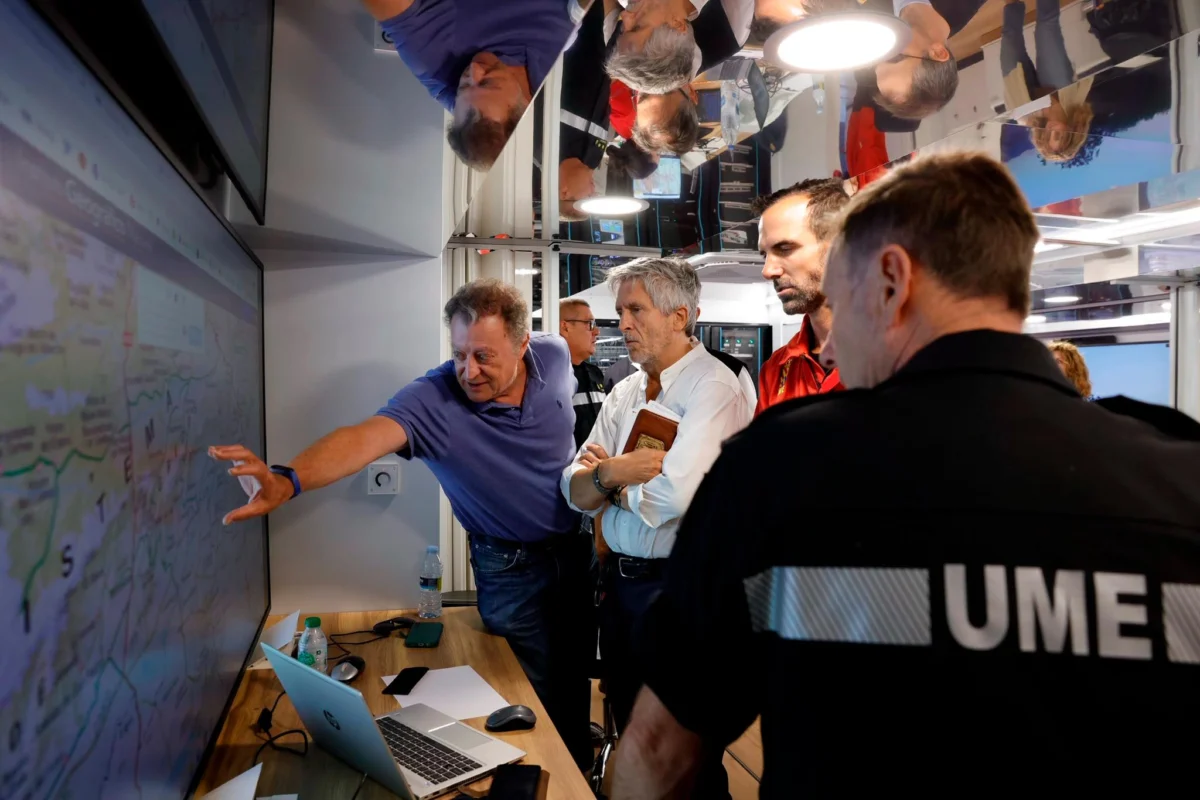
The European continent is currently grappling with a humanitarian and environmental emergency of historic proportions as a relentless series of heatwaves fuels some of the most destructive wildfires ever recorded in modern history. Over the past several weeks, hundreds of thousands of residents across France and Spain have been forced to flee their homes, often under the cover of darkness with only the belongings they could carry. As evacuation orders begin to lift in certain regions, the scale of the devastation is becoming clear: while some will return to partially damaged infrastructure, others will find their communities reduced to ash. This crisis represents one of the largest mass displacements of people on the European continent since the end of the Second World War, signaling a profound shift in the continent’s climate security landscape.
The current emergency is not a localized or freak occurrence but the culmination of a "perfect storm" of climatic factors. According to a landmark study released by World Weather Attribution (WWA), a scientific nonprofit specializing in the rapid analysis of extreme weather events, human-induced climate change has fundamentally altered the probability of these disasters. The study concludes that global warming has made the likelihood of fire-prone conditions in France at least twice as likely, and in central Spain, the risk has increased by a staggering factor of twenty. As the fourth major heatwave of a "broiling" summer continues to bake Western Europe, scientists warn that this is the new reality for a warming world.
A Season of Record-Breaking Extremes
The 2026 wildfire season has already surpassed several grim milestones. While 2025 was previously regarded as the worst wildfire season in European history—with over 2 million hectares consumed by September—current data suggests that 2026 is on a trajectory to eclipse those figures. By late July, approximately 430,000 hectares had already burned across the continent. This figure is roughly 100,000 hectares higher than the total recorded at the same point in the previous year, despite there being two full months of peak fire season remaining. In Spain alone, the total area scorched is now roughly equivalent to the entire geographic footprint of London.
This environmental catastrophe follows the hottest June ever recorded in Western Europe. The extreme temperatures have not only fueled the flames but have also crippled essential infrastructure. Throughout the region, train lines have been forced to shut down due to buckling tracks, and nuclear power plants have reduced output because the water used to cool reactors has become too warm. More tragically, the oppressive heat has been linked to thousands of excess deaths across the continent, highlighting the lethal nature of the heat even in areas not directly touched by fire.
The Chronology of a Crisis: From Winter Growth to Summer Tinder
The origins of the current wildfire crisis can be traced back to the early months of the year. Meteorologists point to a phenomenon known as "weather whiplash" as a primary driver of the intensity of this year’s fires. In January and February, Western Europe experienced an unusually rainy winter. This abundance of moisture prompted a significant burst of vegetation growth during the spring, covering the landscape in lush greenery.
However, as the spring turned to summer, the pattern shifted abruptly. An extended, multi-month drought set in, coupled with back-to-back heatwaves. The lush vegetation that grew in the winter quickly dried out, turning from healthy flora into highly flammable tinder. This sequence of events is a direct consequence of a warming atmosphere; as the air warms, it becomes "thirstier," sucking moisture out of the soil and vegetation at an accelerated rate. This creates a landscape that is primed for ignition, where a single spark—whether from a lightning strike or human activity—can ignite an uncontrollable conflagration.
The Science of Attribution
The field of attribution science has been instrumental in helping the public and policymakers understand the link between specific weather events and global warming. Organizations like World Weather Attribution utilize rapid analysis methods to bypass the traditional, multi-year scientific publishing process, providing answers while the events are still unfolding.
Clair Barnes, a research associate at WWA who led the recent analysis, noted that this study was completed with unprecedented speed by drawing on previous research regarding European heat and drought. By analyzing historical weather data and comparing it with computer simulations of a world without human-induced greenhouse gas emissions, the team was able to quantify exactly how much more likely these fires have become. The conclusion is stark: as long as fossil fuel emissions continue to rise, the intensity and frequency of these "fire weather" conditions will continue to escalate. "This is just the beginning of how bad it’s going to be," Barnes warned.
Landscape Management and Vulnerability
While climate change provides the spark and the fuel, experts argue that how land is managed in Europe has exacerbated the crisis. Robert Field, a fire and climate researcher at Columbia University, suggests that the issue is not merely one of firefighting capacity or investment in equipment, but a fundamental problem of landscape management.
In France, the wildfire outbreak has been most severe in the Landes de Gascogne, a coastal region characterized by vast, planted pine forests. Research has shown that these commercial timber plantations can be up to twice as flammable as natural, biodiverse forests. Similarly, in Spain, a "rural exodus" has seen many farming communities abandoned. Without cattle to graze on undergrowth or farmers to manage the land, shrubs and dry grass have accumulated unchecked, providing a continuous path for fires to travel across the countryside. The shift away from traditional agricultural practices has left the Mediterranean landscape more vulnerable to rapid fire spread than in previous decades.
Humanitarian and Economic Consequences
The human toll of the fires is immense. At the height of the crisis, more than 300,000 people were displaced. Maria Alcazar Castilla, deputy regional director of the International Federation of Red Cross in Europe, noted that the Red Cross has been coordinating a massive disaster response, providing temporary shelter and emergency supplies to thousands.
The economic impact is expected to be felt for years. The worst-hit areas are primarily rural regions that rely heavily on agriculture and tourism. Vineyards in France and olive groves in Spain have been scorched, and the destruction of the natural landscape threatens the tourism industry that many small towns depend on for survival. "The impact to the livelihoods of people will be huge," Alcazar stated, emphasizing that for many, the loss of their land means the loss of their future.
Official Responses and the National Security Threat
The severity of the summer has prompted high-level political reactions. In a joint statement issued on Thursday, officials from the United Kingdom and Spain described climate change as a "national security emergency facing Europe and threatening our way of life." This framing marks a significant shift in how European governments view environmental issues, moving them from the realm of "ecology" to "defense and security."
The statement emphasizes the need for international cooperation in firefighting resources and a more aggressive approach to meeting carbon reduction targets. It also acknowledges that the current infrastructure of European nations—from health services to emergency response teams—was not designed to handle the frequency of extremes currently being observed.
Future Outlook: A Precarious Window of Relief
As of late this week, firefighters have achieved partial containment of several major blazes, and authorities in southwest France have begun allowing some of the 100,000 evacuees to return to their homes. A weak cold front is expected to move across Europe, offering a brief reprieve from the triple-digit temperatures.
However, meteorologists remain cautious. Jason Nicholls, an international forecasting lead at AccuWeather, warns that another surge of heat is projected for mid-August. With no significant drought relief in the near-term forecast, the risk of new ignitions remains critically high. "I’ve been doing international forecasting for 20 years," Nicholls said. "These wildfires have been some of the worst I’ve ever seen."
The ongoing crisis in France and Spain serves as a vivid illustration of the challenges facing a warming continent. As the drought continues to smother Central and Western Europe, including Germany and Hungary, the events of this summer are likely to be remembered as a turning point in the European struggle to adapt to an increasingly volatile climate. The focus now shifts from immediate fire suppression to the long-term challenges of rebuilding communities and redesigning landscapes to survive a more dangerous environmental future.
