

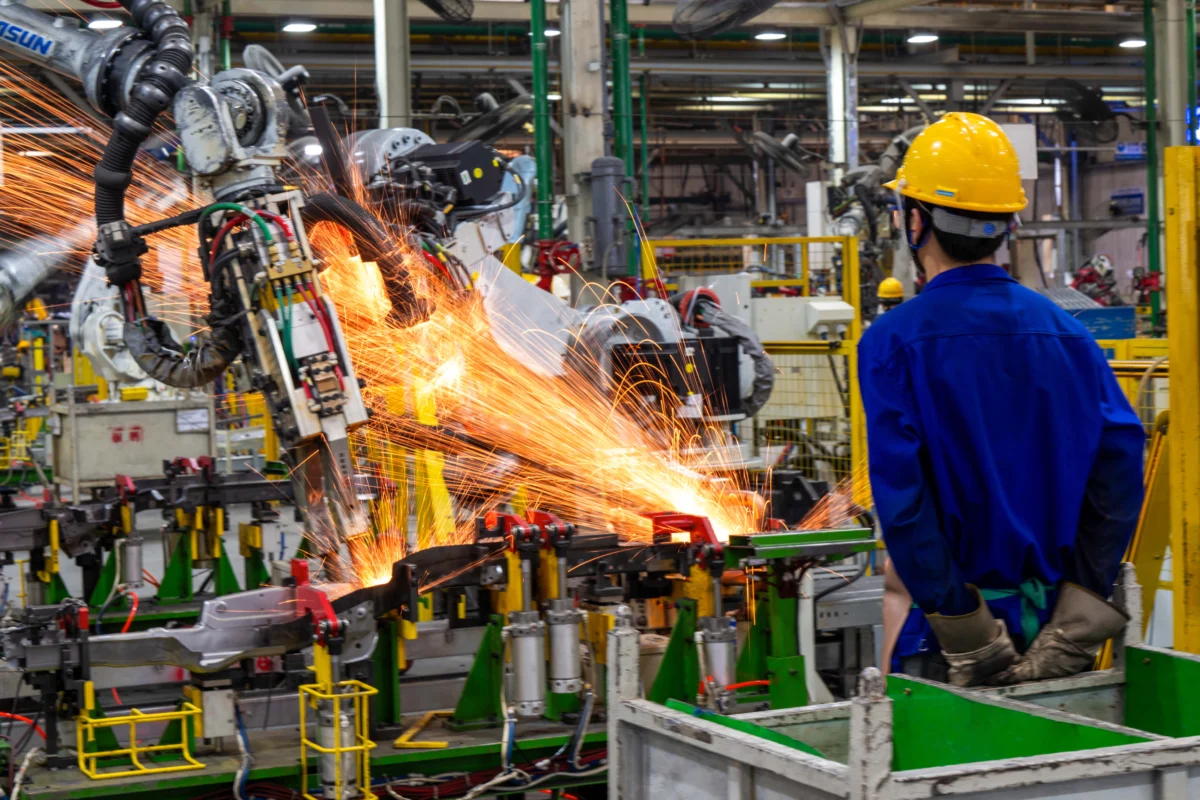
China’s manufacturing sector experienced an unexpected contraction in July, marking the first downturn since February, as a significant slump in domestic orders and disruptions caused by a series of typhoons weighed heavily on industrial output. This reversal, which saw the official manufacturing Purchasing Managers’ Index (PMI) fall below the crucial 50-point threshold, signals a unwinding of earlier front-loading momentum and intensifies pressure on Beijing to stimulate domestic consumption.
The National Bureau of Statistics reported on Friday that the headline manufacturing PMI dropped to 49.2 in July, a notable decrease from 50.3 in June. This figure fell short of economists’ median forecast of 50, which indicates a neutral state between expansion and contraction. The July reading represents the weakest performance for the manufacturing sector since February, breaking a four-month streak of activity at or above the expansionary mark. This earlier surge had been partly fueled by exporters expediting shipments in anticipation of potential U.S. tariff increases.
The sharpest decline was observed in the new orders sub-index, which plummeted to 48.5. This represents the lowest level recorded in 38 months, according to official data accessed via Wind. This steep drop in new domestic orders suggests a significant weakening of underlying demand within China’s economy.
"Domestic weakness appears largely to blame – while the export orders index softened a bit," commented Julian Evans-Pritchard, head of China economics at Capital Economics. He anticipates that local governments will likely implement Beijing’s pledged policy support measures to bolster domestic demand. The sub-index for factory-gate prices also extended its decline, a trend that began after a brief, war-driven energy price spike earlier this year, further indicating subdued producer price pressures and a lack of robust demand.
The contraction was not confined to the manufacturing sector. Weakness permeated across the broader economy, with other key indices also showing significant downturns. The construction PMI slumped to a record low of 47.0, signaling a severe slowdown in infrastructure and property development. The services sector gauge fell to its weakest point since the initial COVID-19 lockdowns, indicating a significant hit to consumer-facing industries. Consequently, the composite PMI, which aggregates manufacturing, services, and construction, dropped to 49.3, the lowest figure recorded since the official end of the pandemic in 2022, according to Wind data.
A spokesperson for the statistics bureau attributed a portion of the PMI weakness to the recent spate of typhoons that disrupted work on numerous projects across the country. These natural disasters not only halted construction and damaged infrastructure but also impacted logistics and supply chains, further exacerbating existing economic headwinds.
Despite the downbeat readings for current activity, indices tracking firms’ expectations for future output remained relatively resilient across all official PMI categories in July. Notably, the construction sector even saw an improvement in future expectations. "Firms believe the latest deterioration in activity will prove short-lived, perhaps because they anticipate a stronger tailwind from fiscal policy over the rest of the year," Evans-Pritchard observed. This suggests that businesses are banking on government intervention to steer the economy back towards growth in the latter half of the year.
Economic Headwinds and Policy Responses
This disappointing economic data emerges just a day after China’s top policymakers convened for their mid-year meeting. At this crucial gathering, leaders acknowledged the presence of "difficulties and challenges facing the economy." In response, they pledged to accelerate fiscal spending and roll out "incremental policies" aimed at shoring up growth in the second half of the year. The urgency of these pronouncements underscores the growing concern within Beijing about the economic trajectory.
The broader economic performance has been a cause for concern. China’s economy expanded by 4.3% in the second quarter compared to a year earlier, marking the slowest pace in over three years. This growth rate fell short of the lower end of the government’s full-year target range of 4.5% to 5%. The slowdown indicates that the initial post-pandemic recovery momentum is waning, and structural challenges are becoming more pronounced.
Export Engine Strains Under Pressure
Exports have served as one of the economy’s few reliable growth engines throughout the year. However, this crucial sector is now showing clear signs of strain. A survey conducted by the China Beige Book revealed that "U.S.-bound shipments fell outright for the first time in several months." This suggests a cooling of demand from one of China’s largest trading partners.
The research firm’s findings indicated a general deceleration in factory activity in July, with manufacturing experiencing its worst performance in terms of employment. Job growth deteriorated across all surveyed sectors when compared to the previous year. This marks a stark reversal from June, when shipments to the U.S. had surged by 14%, contributing to an overall export growth of 27% – the fastest pace in nearly five years. That surge in June was largely attributed to businesses front-loading orders to preempt anticipated higher American tariffs later in the summer. Manufacturers had been preparing for additional levies under President Donald Trump’s Section 301 investigations, especially after the 10% broad-based duty expired on July 24.
Domestic Demand Weakness Deepens
Beyond exports, domestic demand also appears to be weakening. The China Beige Book survey also found that retail sales in July fell compared to both the preceding month and the same period last year. This decline was particularly sharp in sectors like travel and restaurants, indicating a contraction in consumer spending on discretionary goods and services.
The accumulation of these disappointing economic indicators is likely to sharpen expectations for further stimulus measures from the Chinese government. While the Politburo readout following the mid-year meeting highlighted the need for policy action, it stopped short of detailing concrete steps.
Broader Economic Outlook and Structural Risks
Analysts at Eurasia Group noted in a post-meeting analysis that Chinese leaders perceive the economy’s growth to be at risk of falling below the target in the second half of the year. They observed that new-economy sectors, such as artificial intelligence, are currently failing to offset the slowdown in traditional industries.
The Eurasia Group further characterized the government’s approach, stating, "Officials continue to prioritize risk containment over near-term growth." This suggests that Beijing’s policy decisions are being shaped by a long-term strategy of managing systemic risks, including those associated with the property market, local government debt, and smaller financial institutions. These structural issues are viewed as challenges to be managed over time rather than immediate crises requiring aggressive, short-term interventions that could potentially destabilize the financial system.
The recent economic data underscores the complex balancing act facing Chinese policymakers. While the global economic environment presents external challenges, the persistent weakness in domestic demand and the impact of unforeseen events like typhoons highlight the internal vulnerabilities that require careful and strategic management to ensure sustained and balanced economic growth. The coming months will be critical in observing the effectiveness of the pledged fiscal stimulus and other "incremental policies" in reversing the current contractionary trend and reigniting the engines of China’s economy.
