

RABAT – Data emerging from a significant period where both China and India actively pursued deliberate industrial policies reveals a crucial insight for the global economic community: neither nation’s development trajectory is directly transferable to other countries. While their experiences offer invaluable lessons, particularly in highlighting persistent structural limitations and intricate coordination challenges, they underscore the necessity for each nation to forge its own unique, homegrown solutions rather than attempting to replicate these complex, context-specific models. This analysis, presented by economists Hinh T. Dinh and Karim El Aynaoui, delves into the nuances of these diverging paths and their implications for a world grappling with an increasingly fragmented global economy.
The fundamental question facing policymakers worldwide is how to navigate the most reliable development path in an era characterized by geopolitical tensions, supply chain disruptions, and diverging economic ideologies. China and India, representing the two most populous nations on Earth, offer contrasting yet equally compelling narratives of state-led industrialization. However, the central tenet of the analysis is that the specific conditions, historical junctures, and internal dynamics that propelled their growth are not easily replicated, rendering their experiences more as cautionary tales and sources of strategic awareness than as readily applicable blueprints.
China’s State-Directed Manufacturing Engine
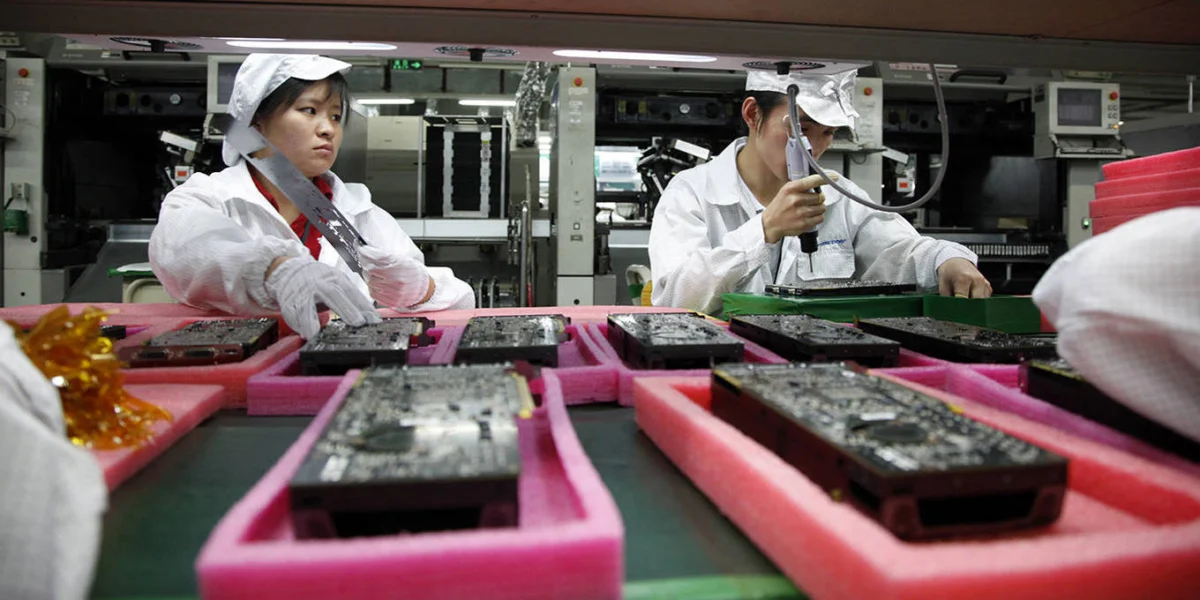
China’s economic ascent over the past four decades is a testament to a highly centralized and strategic approach to industrial policy. Beginning in the late 1970s under Deng Xiaoping’s "Reform and Opening Up" policy, China systematically transformed itself from an agrarian economy into the world’s manufacturing powerhouse. This transformation was driven by a confluence of factors: a vast, low-cost labor force, significant foreign direct investment attracted by these cost advantages, and a deliberate, top-down industrial strategy.
Key Elements of China’s Industrial Policy:
- Export-Oriented Growth: China initially focused on labor-intensive manufacturing for export, leveraging its abundant workforce to gain a competitive edge in global markets. This strategy was supported by policies that kept the Chinese Yuan undervalued for extended periods, making its exports cheaper.
- State-Owned Enterprises (SOEs): A significant portion of China’s industrial capacity was, and continues to be, held by SOEs. The government used these entities as instruments of its industrial policy, directing investment, production, and employment according to national priorities.
- Targeted Subsidies and Incentives: The Chinese government provided substantial subsidies, tax breaks, and preferential financing to key industries deemed strategic for national development. This included sectors like textiles, electronics, and later, advanced manufacturing and technology.
- Infrastructure Development: Massive investment in infrastructure – ports, railways, highways, and power grids – was crucial for facilitating trade, reducing logistics costs, and supporting industrial clusters.
- Technology Acquisition and Indigenous Innovation: While initially relying on technology transfer and foreign investment, China progressively shifted its focus towards indigenous innovation and developing its own technological capabilities, particularly in high-tech sectors. This involved significant R&D investment and intellectual property protection efforts, albeit with a history of contentious practices.
Supporting Data and Timeline:
The period under scrutiny typically encompasses the decades following the initiation of economic reforms in 1978. China’s GDP growth consistently averaged around 10% annually for much of this period, lifting hundreds of millions out of poverty. By the early 2010s, China had become the world’s largest exporter and second-largest economy. Its manufacturing output became unparalleled, accounting for a significant percentage of global production across numerous sectors. For instance, by 2020, China’s share of global manufacturing value added was estimated to be around 28%, dwarfing that of any other nation.
India’s Diverse and Decentralized Development Model
In contrast to China’s centralized approach, India’s development journey has been characterized by a more democratic, albeit often slower and more complex, process. Following independence in 1947, India initially pursued a socialist-inspired mixed economy, emphasizing self-reliance and import substitution. While this period saw the establishment of a nascent industrial base, it was often hampered by bureaucratic hurdles, protectionist policies, and a lack of global competitiveness.
The significant liberalization reforms of 1991 marked a pivotal moment, opening India’s economy to foreign investment and global trade. Since then, India has pursued a more market-oriented approach, though the role of the state in guiding development remains a significant factor, albeit in a different form than in China.
Key Elements of India’s Industrial Policy Evolution:
- Import Substitution and Self-Reliance (Pre-1991): The initial phase focused on building domestic industries through protectionist measures, aiming for self-sufficiency. This led to the development of heavy industries, public sector enterprises, and a regulated private sector.
- Liberalization and Market Reforms (Post-1991): The 1991 reforms dismantled many licensing requirements, reduced tariffs, and encouraged foreign investment. This spurred growth in the services sector, particularly IT and business process outsourcing, and gradually opened up manufacturing.
- Focus on Services Sector Dominance: India’s economic growth has been significantly driven by its robust services sector, which accounts for over half of its GDP. This sector’s growth has been fueled by a highly educated English-speaking workforce and a conducive global environment for outsourcing.
- "Make in India" and Sector-Specific Initiatives: More recently, the Indian government has launched initiatives like "Make in India" (2014) to boost domestic manufacturing, attract foreign investment, and create jobs. These efforts often involve targeted incentives and policy reforms aimed at specific sectors such as automotive, electronics, and defense.
- Challenges in Manufacturing Scale: Despite efforts, India has struggled to achieve the same scale of manufacturing dominance as China. Challenges include complex labor laws, infrastructure deficits, land acquisition issues, and a fragmented supply chain.
Supporting Data and Timeline:
India’s economic growth, while substantial since liberalization, has generally been more moderate than China’s, averaging around 6-7% annually in recent decades. The IT services sector, for example, grew exponentially, becoming a major foreign exchange earner. India’s share of global manufacturing, while growing, remains considerably smaller than China’s. By 2020, its share of global manufacturing value added was around 3-4%. The population of India, however, continues to grow, presenting a massive domestic market that is increasingly being targeted by both domestic and international businesses.
The Unreplicable Nature of Their Paths
The core argument presented by Dinh and El Aynaoui is that the unique confluence of factors enabling China’s and India’s respective development models is not replicable for several critical reasons:
- Geopolitical Context: Both nations benefited from specific global geopolitical conditions. China, for instance, was able to integrate into the global trading system at a time when Western economies were actively seeking lower-cost manufacturing bases and were less concerned about the geopolitical implications of China’s rise. This era of globalization is now significantly different, marked by increasing protectionism and strategic competition.
- Scale and Demographics: The sheer scale of their populations provided an enormous labor pool and, eventually, a massive domestic market. While other countries may have large populations, the specific demographic structures and historical circumstances that allowed China and India to leverage these assets are unique.
- State Capacity and Autonomy: China’s authoritarian political system allowed for rapid decision-making, large-scale mobilization of resources, and the implementation of long-term industrial strategies with minimal domestic opposition. India, with its robust democratic institutions, faces greater challenges in achieving such swift and centralized policy implementation, often requiring broader consensus-building and navigating diverse stakeholder interests.
- Timing of Industrialization: Both countries industrialized during different eras of global economic development. China’s manufacturing boom coincided with the peak of globalization and the rise of global value chains. India’s more recent push for manufacturing is happening in a more complex global environment with emerging technologies and different patterns of global trade.
- Resource Endowments and Geography: Specific natural resources, geographical advantages (like access to ports for China), and historical development patterns also played a role that cannot be easily replicated.
Lessons for Other Developing Nations
Despite the non-replicability of their exact models, the experiences of China and India offer critical lessons for other developing economies:
- Understanding Structural Limitations: Both countries faced and continue to face significant structural challenges, such as infrastructure gaps, regulatory hurdles, and the need for skilled labor development. Their attempts to overcome these highlight the persistent nature of such problems and the long-term commitment required to address them.
- Coordination Problems: Industrial policy inherently involves coordinating various actors – government agencies, private firms, labor, and international partners. The successes and failures in managing these coordination challenges in both China and India provide valuable case studies. For instance, China’s ability to direct resources efficiently, while controversial in its methods, demonstrated a high degree of coordination. India’s more fragmented approach, while democratic, has often struggled with fragmented implementation.
- The Importance of Homegrown Solutions: The analysis strongly emphasizes that each country must identify its unique comparative advantages, domestic market needs, and institutional capabilities. Relying on imported development models can be counterproductive. Policymakers must engage in rigorous self-assessment and develop strategies tailored to their specific context. This might involve leveraging digital technologies, focusing on niche industries, or building resilient regional supply chains.
- The Evolving Global Economic Landscape: The current fragmented global economy necessitates a more nuanced approach than the export-led growth models of the past. Countries need to consider diversification, resilience, and sustainable development as integral parts of their industrial strategies. The rise of protectionism and geopolitical competition means that reliance on a single export market or a particular set of foreign investments may be riskier than before.
Expert Reactions and Broader Implications
Economists and international development experts have widely acknowledged the profound impact of China and India on the global economic order. Dr. Anya Sharma, a development economist at the London School of Economics, commented, "The Dinh and El Aynaoui analysis is timely. We are moving away from a unipolar view of development, and these two giants offer us incredibly complex case studies. The key takeaway is that context matters immensely. What worked for China, given its political system and the global economic environment of the late 20th century, cannot simply be copied by a developing democracy in Africa or Latin America today."
Similarly, Dr. Kenji Tanaka, a trade specialist at the Asian Development Bank, noted, "India’s journey, particularly its services-led growth, presents a different paradigm. It demonstrates that industrialization doesn’t always have to follow the manufacturing-first route. However, the challenge for India remains to translate its service sector strengths into broader-based industrial development and job creation for its vast, young population."
The implications of this analysis are far-reaching. For international financial institutions and development agencies, it underscores the need to move beyond one-size-fits-all policy recommendations. For national governments, it calls for introspection, strategic planning, and the courage to design and implement policies that are authentic to their own national circumstances.
In conclusion, while the specific development paths forged by China and India are largely inimitable, their ambitious industrial policies offer a rich tapestry of lessons. These lessons pertain not to replication, but to a deeper understanding of the complexities of economic transformation, the persistent challenges of state capacity and market coordination, and the imperative for each nation to chart its own course in an ever-changing global economic landscape. The era of readily available development blueprints is over; the future demands tailored, context-specific strategies grounded in rigorous analysis and a clear-eyed assessment of national realities.
