

The geopolitical landscape of the Middle East was plunged into a new phase of heightened tension on July 30, 2026, following a direct threat from President Donald Trump of retaliatory strikes against Iran. This stern warning came in the wake of a deadly drone attack on a US military base in Jordan, which resulted in the deaths of three American service members and injuries to dozens more. Simultaneously, Iranian state media reported that four Iranian nationals were killed in what they described as joint US-Saudi aerial assaults in Iraq, further fueling a dangerous cycle of escalation that risks igniting a wider regional conflict. The confluence of these events has underscored the precarious security situation in the region, characterized by proxy conflicts and direct confrontations between state and non-state actors.
Escalation in Jordan and Iraq: A Dangerous Nexus
The attack on the US base, identified by Pentagon officials as "Tower 22," situated near the Syrian border in northeastern Jordan, occurred on July 29, 2026. The sophisticated one-way attack drone managed to penetrate air defenses, striking living quarters and causing significant casualties. The deceased American soldiers were identified as Sergeant First Class William "Billy" Rivers, Specialist Maya Jenkins, and Private First Class David Chen. Their deaths mark the first direct US fatalities from hostile fire in the Middle East in recent years, significantly raising the stakes. While no group immediately claimed responsibility, US intelligence agencies and military officials were quick to attribute the assault to "Iran-backed militia groups" operating from Syria or Iraq, vowing a "decisive response."
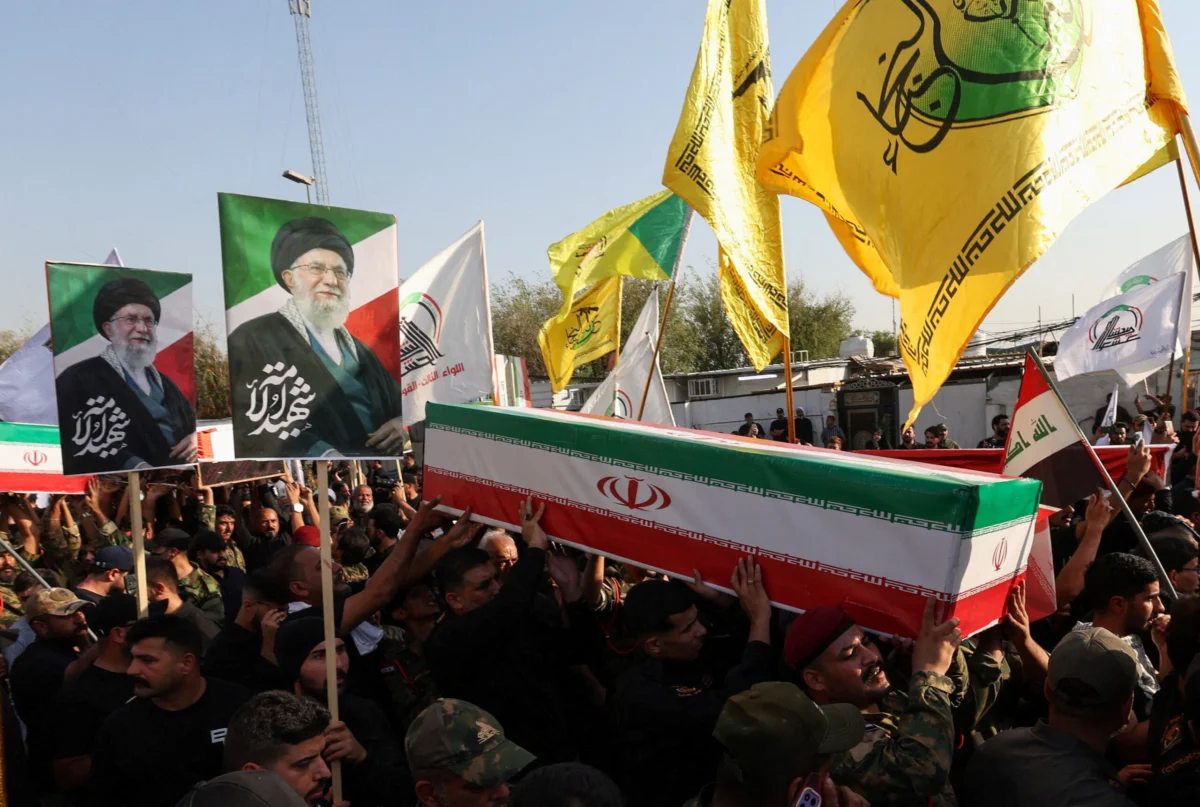
Just hours before the Jordan attack, and adding another layer of complexity to the unfolding crisis, Iranian news agencies reported a series of airstrikes in Iraq. According to Tehran’s Mehr News Agency and Press TV, these strikes, which occurred on July 28, 2026, targeted facilities belonging to the Popular Mobilization Forces (PMF), an umbrella group of Iraqi paramilitary units, some of which have strong ties to Iran. The reports specifically claimed that four Iranian military advisors, embedded with PMF units in the Anbar and Diyala provinces, were killed in these "joint US-Saudi aerial attacks." The PMF itself confirmed strikes on its positions and announced a funeral procession in Baghdad for its fallen members, alongside coffins draped in Iranian flags, as depicted in images circulating from the Iraqi capital on July 29. These Iraqi reports, however, did not explicitly confirm Saudi involvement, leaving that assertion primarily to Iranian media.
President Trump’s Immediate Response and White House Stance
Speaking from the White House just hours after the Pentagon confirmed the casualties in Jordan, President Trump delivered a stark message. "This attack on our forces in Jordan will not go unpunished," he declared, his voice firm. "Let me be clear: we know who is ultimately responsible, and Iran will pay a heavy price. We will respond at a time and place of our choosing, and our response will be swift, decisive, and proportionate to the grave loss we have suffered." He emphasized his administration’s commitment to protecting American personnel and interests abroad, asserting that "any attack on American lives is an attack on America itself."
Secretary of State Michael Pompeo echoed the President’s sentiments, condemning the "cowardly act of terror" and reiterating the administration’s resolve. "We call upon Iran to immediately cease its destabilizing actions in the region, including its support for terrorist proxies," Pompeo stated in a press briefing. "The path of escalation chosen by Tehran and its surrogates is fraught with danger, and we are prepared to defend our allies and our personnel with all necessary means." The Pentagon confirmed that options for military retaliation were being presented to the President, ranging from targeted strikes on militia infrastructure to broader actions against Iranian assets.
Background Context: A Region on Edge
The current crisis is not an isolated incident but rather the latest flashpoint in a long-standing and deeply entrenched rivalry between the United States and Iran, often playing out through a network of proxy conflicts across the Middle East.
The US military presence in Jordan, Iraq, and Syria is primarily framed within the ongoing mission to counter ISIS and to support regional stability. "Tower 22" in Jordan, for instance, serves as a crucial logistical hub and training facility, often working in conjunction with Jordanian forces to secure borders and conduct counter-terrorism operations. Its strategic location near the Iraqi and Syrian borders makes it vulnerable to attacks from various non-state actors operating in the porous frontier regions.
In Iraq, the Popular Mobilization Forces (PMF) emerged in 2014 to combat ISIS, sanctioned by a fatwa from Grand Ayatollah Ali al-Sistani. While officially integrated into Iraq’s security apparatus, many factions within the PMF maintain strong ideological and material ties to Iran’s Islamic Revolutionary Guard Corps (IRGC), particularly its Quds Force. These factions have frequently targeted US interests in Iraq, viewing the American presence as an occupation force. The US has, in turn, conducted strikes against these groups, often citing self-defense and the protection of its personnel.
The involvement of Saudi Arabia, as reported by Iranian media, adds another complex dimension. Riyadh and Tehran are regional arch-rivals, locked in a struggle for influence across the Middle East. Saudi Arabia has long been a key US ally in the region, and its participation in any joint military action against Iran-backed groups, if confirmed, would signify a significant escalation of the regional power struggle. While the US routinely conducts joint military exercises and intelligence sharing with Saudi Arabia, explicit "joint attacks" in Iraq would mark a notable shift in operational coordination.
A Chronology of Escalation (July 2026)
The events of late July 2026 did not occur in a vacuum but were preceded by a period of simmering tensions and sporadic violence:
- Early July 2026: An increase in rocket and drone attacks targeting US and coalition bases in eastern Syria and western Iraq is reported by US military sources. These attacks, though largely ineffective in causing casualties, signal a heightened threat posture from Iran-backed militias.
- July 15, 2026: US intelligence issues a private warning to regional allies about credible threats of more sophisticated attacks against American interests, citing intelligence on increased activity by specific Iran-backed groups.
- July 20, 2026: A large-scale US-led military exercise, "Desert Shield," involving Jordanian and Saudi forces, concludes in the region, designed to enhance interoperability and demonstrate regional deterrence capabilities. Iran’s state media criticizes the exercise as provocative.
- July 28, 2026: Iranian state media and PMF sources report a series of "joint US-Saudi airstrikes" in Iraq’s Anbar and Diyala provinces, allegedly targeting PMF facilities. These reports claim four Iranian military advisors are among the casualties. The Pentagon issues a statement confirming "defensive strikes against pre-identified threats to US personnel" in Iraq but offers no details on Saudi involvement or specific casualty figures.
- July 29, 2026 (Morning): A funeral procession is held in Baghdad for PMF members killed in the July 28 strikes. Images show coffins draped in Iraqi and Iranian flags, further highlighting the alleged Iranian casualties and the PMF’s strong ties to Tehran.
- July 29, 2026 (Evening): A sophisticated drone attack strikes "Tower 22," a US military base in northeastern Jordan, resulting in three American service members killed and dozens injured. The attack prompts immediate condemnation from Washington.
- July 30, 2026: President Donald Trump publicly threatens Iran with "swift and decisive" retaliation for the Jordan attack. Iranian Foreign Ministry denies direct involvement in the Jordan incident but condemns the "illegal US-Saudi aggression" in Iraq.
Reactions from Key Players
The immediate aftermath saw a flurry of diplomatic activity and strong rhetoric from all sides.
Iran’s Stance:
Iran’s Foreign Ministry spokesperson, Saeed Khatibzadeh, vehemently denied any direct Iranian involvement in the attack on the US base in Jordan. "The Islamic Republic of Iran categorically rejects the unfounded accusations linking us to the attack in Jordan," Khatibzadeh stated. "These allegations are a desperate attempt by the United States to deflect attention from its own destabilizing actions and illegal military presence in the region." He went on to condemn the "barbaric US-Saudi aggression against Iraqi sovereignty and the Popular Mobilization Forces," calling it a "flagrant violation of international law and a provocation that will not go unanswered." General Hossein Salami, Commander-in-Chief of the Islamic Revolutionary Guard Corps (IRGC), warned Washington against any retaliatory strikes, stating, "Any aggression against Iran or its interests will be met with a crushing and comprehensive response that will inflict severe damage on the aggressor."
Iraq’s Precarious Position:
The Iraqi government found itself in an unenviable position, caught between its key security partner, the United States, and powerful, Iran-aligned internal factions. Prime Minister Mustafa al-Kadhimi’s office issued a statement condemning all actions that violate Iraqi sovereignty and jeopardize regional stability. "Iraq reiterates its firm stance against any foreign interference on its soil and calls upon all parties to exercise maximum restraint," the statement read. "The sanctity of Iraqi blood and sovereignty must be respected by all. We have initiated a thorough investigation into the alleged airstrikes within our borders and demand full transparency from all involved parties." The PMF leadership, however, was less conciliatory, with a spokesperson for Kataib Hezbollah stating, "The American occupation forces and their Saudi collaborators will pay a heavy price for the blood of our martyrs, both Iraqi and Iranian. Our response will be fierce and painful."
Saudi Arabia’s Role:
The Saudi Ministry of Foreign Affairs issued a brief statement confirming its ongoing cooperation with the United States on counter-terrorism efforts in the region but did not explicitly confirm or deny direct involvement in the specific strikes in Iraq reported by Iranian media. "The Kingdom of Saudi Arabia remains committed to regional security and stability, working closely with its allies to counter all forms of terrorism and extremism," the statement affirmed, subtly aligning itself with the US narrative of targeting threats.
International Calls for De-escalation:
The United Nations Secretary-General, António Guterres, expressed "deep concern" over the escalating tensions and called for an immediate cessation of hostilities and a return to dialogue. "The Secretary-General urges all parties to exercise maximum restraint and to avoid any actions that could further destabilize an already volatile region," a UN spokesperson stated. The European Union also weighed in, with its High Representative for Foreign Affairs and Security Policy, Josep Borrell, calling for "urgent de-escalation" and emphasizing the need for diplomatic channels to prevent a full-blown regional conflict.
Broader Implications and Analysis
The current crisis carries profound implications for regional stability, international relations, and global energy markets.
Risk of Wider Regional Conflict: The most immediate and alarming implication is the potential for a direct military confrontation between the United States and Iran. President Trump’s strong rhetoric suggests that a limited, targeted retaliation is highly probable. However, the intertwined nature of regional conflicts and the presence of numerous state and non-state actors mean that even a "proportionate" response could trigger a wider, unpredictable conflict, drawing in other regional powers like Israel and Saudi Arabia. Such a conflict would be devastating, leading to widespread casualties, mass displacement, and severe economic disruption.
Impact on US Foreign Policy: The attack on "Tower 22" represents a significant challenge for the Trump administration. Having campaigned on a platform of "America First" and reducing foreign entanglements, a direct military response against Iran would test the limits of that policy and potentially lead to a prolonged military engagement. Domestically, the loss of American lives will exert immense pressure on the administration to act decisively, while also risking accusations of dragging the US into another Middle Eastern war.
Iran’s Regional Influence: Iran’s strategy of leveraging proxy forces to project power and deter adversaries has long been a cornerstone of its regional policy. However, the direct casualties suffered by its advisors in Iraq, coupled with the potential for direct US retaliation, could force Tehran to reassess the risks and benefits of its current approach. While Iran’s leadership is unlikely to back down entirely, they may seek to calibrate their responses to avoid a catastrophic confrontation.
Iraq’s Sovereignty and Stability: Iraq remains a critical battleground in the US-Iran rivalry. The alleged "joint US-Saudi attacks" and the subsequent drone strike from Iraqi soil highlight the severe erosion of Baghdad’s sovereignty. The Iraqi government’s ability to assert control over its territory and prevent it from becoming a launchpad for attacks or a target for foreign powers is increasingly challenged. This internal instability could further empower hardline factions and undermine efforts towards national reconciliation and reconstruction.
Global Energy Markets: The Strait of Hormuz, a critical chokepoint for global oil shipments, lies at the heart of any potential US-Iran conflict. Even the threat of disruption can send crude oil prices soaring, impacting global economies already grappling with inflationary pressures. A full-scale conflict would undoubtedly lead to a severe energy crisis, with far-reaching consequences.
As the world watches with bated breath, the coming days will be critical in determining whether the Middle East spirals into a new, dangerous chapter of open warfare or if diplomatic efforts, however strained, can prevail in de-escalating the most severe crisis the region has faced in years. The delicate balance of power, the intricate web of alliances and enmities, and the history of miscalculation all contribute to a highly volatile situation where a single misstep could have catastrophic consequences for millions.
