

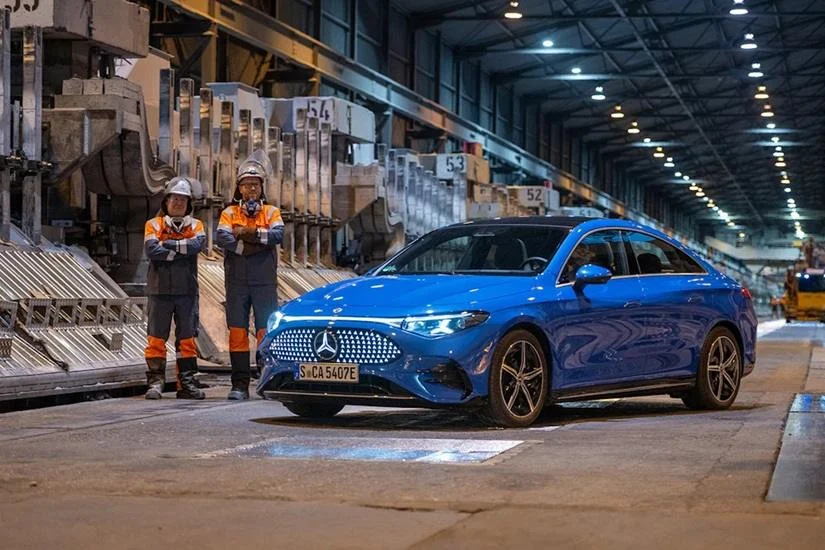
Mercedes-Benz and the Norway-based aluminum and renewable energy giant Hydro have announced a significant expansion of their strategic partnership, marking a pivotal milestone in the decarbonization of the automotive supply chain. This collaboration is specifically designed to provide low-carbon and recycled aluminum for the German automaker’s next generation of large electric vehicles (EVs), representing a shift from pilot-scale experimentation to industrial-scale series production. Under the terms of the new agreement, Mercedes-Benz becomes the first European automotive manufacturer to integrate Hydro’s proprietary recycled aluminum, known as Hydro CIRCAL, into its mass-market production lines. This material is distinguished by its high post-consumer recycled content, which exceeds 75%, a substantial leap from the approximately 25% recycled content found in the aluminum currently utilized by the company.
The move comes at a critical juncture for the global automotive industry as manufacturers transition their focus from reducing tailpipe emissions—which are eliminated in electric vehicles—to addressing "embodied carbon." Embodied carbon refers to the greenhouse gas emissions generated during the extraction, processing, and manufacturing of vehicle components. For electric vehicles, which require lightweight materials to offset the weight of heavy battery packs and extend driving range, aluminum is an indispensable resource. However, traditional aluminum production is notoriously energy-intensive, making the shift to low-carbon alternatives a prerequisite for any manufacturer aiming for net-zero targets.
The Evolution of the Mercedes-Benz and Hydro Partnership
The current agreement is the culmination of a multi-year roadmap focused on technological innovation and supply chain transparency. The relationship between the two companies reached a formal turning point in 2022 with the signing of a letter of intent. This document outlined a low-carbon technology roadmap spanning from 2023 to 2030, aimed at exploring ways to reduce the carbon footprint of aluminum through improved smelting techniques and increased recycling.
In 2024, the collaboration was significantly broadened to encompass the entire aluminum value chain. This "mine-to-market" approach ensures that sustainability criteria are met at every stage, including the sourcing of bauxite, the refining of alumina, the electrolysis process used to create primary aluminum, and the final fabrication of automotive components. By 2026, the partnership has transitioned into the implementation phase, with Hydro’s low-carbon products being integrated directly into the production of Mercedes-Benz’s flagship electric models, such as the EQS and EQE platforms.
The partnership also emphasizes regional resilience. By sourcing aluminum from Hydro’s Norwegian plants, which are powered almost exclusively by hydroelectricity, Mercedes-Benz reduces its exposure to the volatile energy markets and high-carbon grids often found in other major aluminum-producing regions. This regional focus aligns with broader European efforts to secure "green" industrial value chains within the continent’s borders.
Understanding the Technology: Hydro CIRCAL and Hydro REDUXA
Central to the deal are two specific product lines developed by Hydro that address different aspects of the carbon challenge: Hydro CIRCAL and Hydro REDUXA.
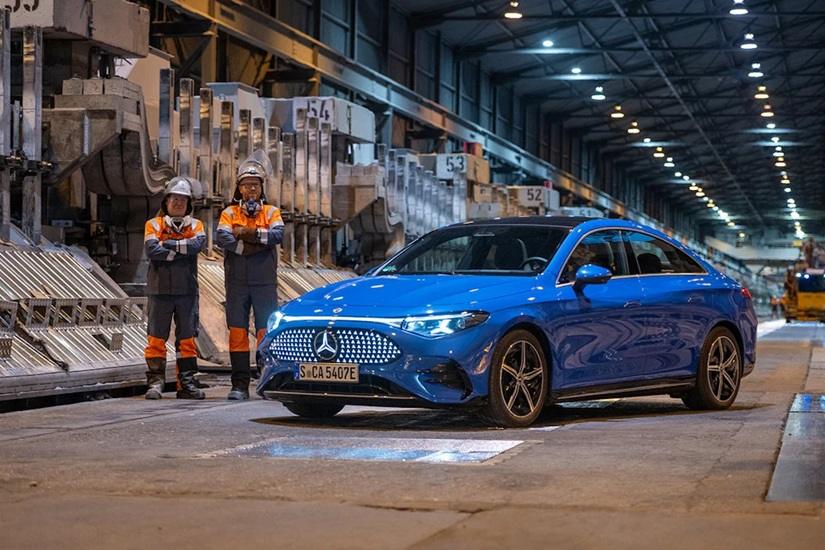
Hydro CIRCAL is a range of prime-quality recycled aluminum made with a minimum of 75% post-consumer scrap. Unlike pre-consumer scrap, which consists of factory offcuts that have never reached a customer, post-consumer scrap is derived from products that have reached the end of their life cycle, such as old buildings, discarded infrastructure, or decommissioned vehicles. The process of recycling aluminum requires only 5% of the energy needed to produce primary aluminum from ore. By utilizing Hydro CIRCAL, Mercedes-Benz is effectively closing the material loop, ensuring that aluminum remains in circulation rather than being diverted to landfills.
Hydro REDUXA, on the other hand, is a low-carbon primary aluminum. While it is made from virgin ore, the smelting process is powered by renewable energy sources—primarily wind and solar, but most significantly, Norwegian hydropower. The carbon footprint of Hydro REDUXA is verified at less than 4.0 kg of CO2 per kg of aluminum produced. For context, the global average for primary aluminum production is approximately 16.7 kg of CO2 per kg of aluminum, often due to the heavy reliance on coal-fired power plants in major producing nations like China and India. By sourcing REDUXA, Mercedes-Benz can reduce the carbon footprint of its primary aluminum components by more than 70% compared to the global average.
Strategic Alignment with Ambition 2039
The deal with Hydro is a foundational element of Mercedes-Benz’s "Ambition 2039" strategy. This corporate initiative outlines a comprehensive path toward carbon neutrality across the entire value chain. Key targets within this framework include an 80% reduction in CO2 emissions from production facilities by 2030 and a commitment that all production materials procured for Mercedes-Benz Cars and Vans be net carbon-neutral by 2039.
To achieve these goals, the company has adopted a "Lead in Electric" and "Lead in Car Software" strategy, but the "Lead in Sustainability" pillar is what drives the procurement of low-carbon raw materials. Aluminum is the second most used material in Mercedes-Benz vehicles after steel. In a large electric sedan, the aluminum content can exceed 200 kilograms. Transitioning this volume to low-carbon variants provides a massive lever for reducing the total life-cycle emissions of the vehicle.
Yanni von Roy-Jiang, Head of Purchasing & Supplier Management at Mercedes-Benz AG, emphasized that the future of the automotive industry depends on more than just the end product. "The next generation of automotive supply chains will be characterized by transparency, a circular economy, and strong regional value chains," von Roy-Jiang stated. He noted that the partnership with Hydro demonstrates that resilient supply chains and lower emissions are not mutually exclusive but are, in fact, drivers of long-term value for customers and society.
The Role of the Circular Economy in Automotive Manufacturing
The shift toward a circular economy is a response to the increasing scarcity of raw materials and the rising cost of carbon emissions. For an automaker like Mercedes-Benz, "circularity" means designing vehicles that can be easily disassembled and ensuring that materials like aluminum, steel, and battery minerals can be recovered and reused in new vehicles.
The use of Hydro CIRCAL is a practical application of this philosophy. By using 75% post-consumer recycled material, Mercedes-Benz is helping to create a market for high-quality scrap. This incentivizes the development of more sophisticated sorting and shredding technologies that can separate different aluminum alloys more effectively. In the past, recycled aluminum was often "downcycled" into lower-quality casting alloys for engine blocks; however, Hydro’s technology allows for the creation of high-strength structural components from recycled content, meeting the rigorous safety and performance standards of the luxury automotive sector.

Industrial and Economic Implications
The collaboration between Mercedes-Benz and Hydro is likely to set a precedent for the wider automotive industry. As the European Union moves forward with the Carbon Border Adjustment Mechanism (CBAM), which will eventually impose a carbon price on imported goods like aluminum and steel, the economic incentive to source low-carbon materials domestically or from "green" partners will only grow.
Furthermore, investors are increasingly scrutinizing the Scope 3 emissions of major corporations. Scope 3 emissions, which include all indirect emissions that occur in the value chain of the reporting company, often represent the largest portion of an automaker’s carbon footprint. By securing a reliable supply of low-carbon aluminum, Mercedes-Benz is de-risking its business model against future carbon taxes and enhancing its appeal to ESG-conscious (Environmental, Social, and Governance) investors.
Eivind Kallevik, President and CEO of Hydro, highlighted the scalability of these solutions. "By combining recycled aluminum Hydro CIRCAL with CO2-reduced primary aluminum Hydro REDUXA, we can accelerate the transition to lower-carbon vehicles while building more resilient value chains," Kallevik said. He added that the partnership proves Hydro can deliver industrial-scale solutions that support both decarbonization and the competitive edge of European manufacturing.
Technical Challenges and Future Outlook
While the move to low-carbon aluminum is a significant step, it is not without challenges. High-strength aluminum alloys used in vehicle frames and crash structures require precise chemical compositions. Contaminants in post-consumer scrap can weaken the material, which is why Hydro’s advanced sorting and refining processes are so critical to the deal’s success. As the partnership progresses, the focus will likely shift toward reaching a 100% recycled content goal for certain components and exploring the use of "near-zero" carbon aluminum produced through experimental inert anode technology, which eliminates CO2 emissions from the smelting process entirely.
Looking ahead, the success of the Mercedes-Hydro partnership will be measured by the total carbon reduction achieved across the 2026-2030 vehicle generations. If the integration of Hydro CIRCAL and REDUXA performs as expected, it could trigger a wave of similar agreements across the industry, potentially leading to a shortage of high-quality "green" aluminum as demand outstrips supply. For now, Mercedes-Benz has secured a first-mover advantage, positioning itself at the forefront of the sustainable luxury market.
As the automotive world continues its rapid transformation, the focus is clearly shifting from what comes out of the tailpipe to what goes into the factory. The deal between Mercedes-Benz and Hydro serves as a blueprint for how heavy industry and high-end manufacturing can collaborate to meet the urgent demands of the climate crisis while maintaining industrial excellence. By 2039, the goal is for a Mercedes-Benz vehicle to be as clean in its creation as it is in its operation, and this expanded partnership with Hydro is a major stride toward that reality.
