

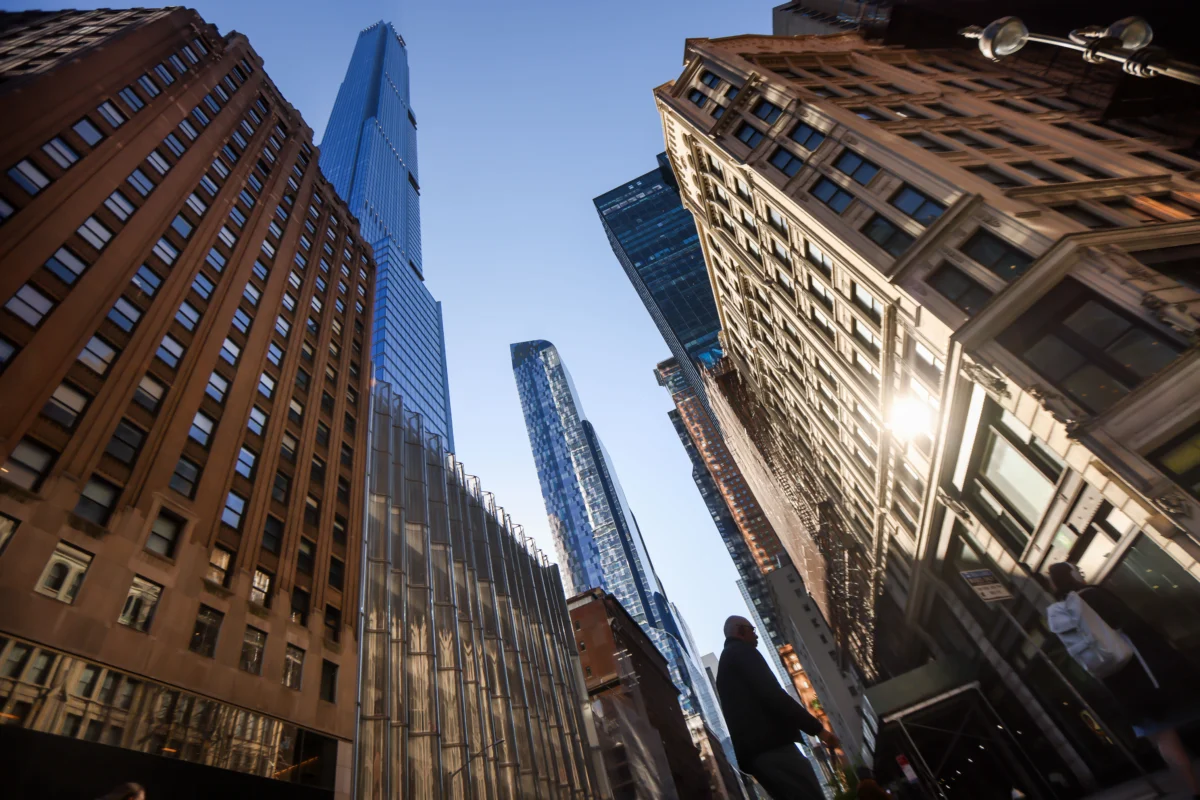
A mere month after the implementation of a controversial new tax on second homes in New York City, the luxury real estate market continues to exhibit surprising strength, confounding early predictions of a significant downturn. Brokers and market analysts report robust sales activity and a notable decline in available inventory, signaling a resilient high-end sector seemingly impervious to the new fiscal measure.
Initial Fears and the ‘Mamdani Effect’
The "pied-à-terre tax," officially approved by New York Governor Kathy Hochul and the state legislature on May 27, 2026, was met with immediate and widespread apprehension from various stakeholders within the real estate industry. When the bill passed, following its proposal in April, real estate agents and developers voiced concerns that the levy would act as a substantial deterrent to high-net-worth individuals, leading to a flight of capital and investment from the city.
Many industry observers pointed to what they termed "the Mamdani effect," referencing New York City Mayor Zohran Mamdani, a prominent advocate for the tax, and the potential for a broad exodus of wealthy residents in response to increased taxation. The Real Estate Board of New York (REBNY), a powerful lobbying group, issued a stern warning shortly after the measure’s passage. "The tax on second homes will dampen market activity, reduce property values, hurt new development and weaken the city’s economy," REBNY declared in a statement, reflecting a prevalent sentiment that the tax would inevitably lead to a contraction across the luxury segment. Developers, in particular, threatened to halt new construction projects, citing diminished profitability and investment uncertainty. Predictions of job losses within the real estate and ancillary industries also circulated widely.
Current Market Performance: A Paradox of Strength
Despite these dire forecasts, the market data for June 2026 paints a remarkably different picture. According to Olshan Realty, a firm specializing in luxury market analysis, there were 126 contracts signed for apartments priced at $4 million or more during the four-week period in June. This figure represents a slight but significant increase from the 124 contracts signed during the corresponding period in the previous year, directly contradicting expectations of a slump.
Further reinforcing this trend, Brown Harris Stevens reported that the average price of a Manhattan apartment reached its second-highest level ever during the second quarter of 2026, climbing 5% over the past year to approximately $2.2 million. The ultra-luxury segment demonstrated even more dramatic growth. Data from Compass, another leading real estate brokerage, revealed a substantial 55% surge in sales of condominiums priced between $10 million and $20 million. For properties exceeding $20 million, sales were up an impressive 33%, with average asking prices in this rarefied tier increasing by 14%.
These statistics are not merely abstract figures; they are reflected in a series of high-profile transactions. June’s deals included the sale of an $80 million duplex penthouse in a newly constructed condo building near Manhattan’s West Village, a $26 million downtown condominium, and a $22 million co-op situated on the prestigious Upper East Side. These transactions underscore that demand for prime New York City real estate remains exceptionally robust.
Underlying Drivers: A Flood of Liquidity and Scarcity
Real estate professionals on the ground attribute this unexpected resilience to a confluence of powerful economic forces. Brokers highlight a "flood of liquidity" stemming from recent initial public offerings (IPOs) and a sustained surge in asset prices, which has significantly augmented the wealth of potential buyers. "The amount of money out there is insane," remarked Lauren Muss of Douglas Elliman, whose $17.5 million condo listing went into contract in June. "We’re seeing big things come to us every day. It’s only getting stronger."
This immense influx of capital into the hands of the ultra-wealthy is colliding with an unprecedented scarcity of available luxury properties. Jonathan Miller, CEO of the appraisal and research firm Miller Samuel, noted that luxury inventory in Manhattan has plummeted by 40% compared to last year. This marks the lowest level of luxury inventory Miller has observed since he began tracking the market in 2004, creating an intensely competitive environment for buyers.
Adding to the demand is the ongoing "great wealth transfer," where substantial assets are being passed down through generations. Marc Palermo of Douglas Elliman highlighted an increasing number of high-end deals involving buyers under the age of 40, often with financial backing from parents, family offices, or trusts. "We’re seeing a lot of gifts coming in from parents," Palermo explained. "If you’re under 40 and you’re buying in New York City, chances are you’re not making enough to buy on your own." This generational wealth transfer is injecting fresh capital into the market, ensuring a continuous pipeline of affluent buyers.
The Pied-à-Terre Tax: Mechanics and Timeline
The pied-à-terre tax, a surcharge imposed on non-primary residences valued by the city at more than $1 million, officially took effect in early July 2026. Its journey from proposal to implementation was swift:
- April 2026: The tax was first formally proposed by Governor Hochul and Mayor Mamdani.
- May 27, 2026: The New York State Legislature approved the measure, sending it to the Governor for signing.
- Early July 2026: The tax officially became effective.
Crucially, the tax applies to residences that fit the specified criteria as of January 5, 2026. This means that any buyers of eligible pied-à-terres throughout 2026 will be subject to the new levy. The specifics of the tax, including its progressive rate structure for properties above certain valuation thresholds, aim to generate revenue for city services and affordable housing initiatives.
Buyer Behavior: A Brief Pause, Then Renewed Confidence
Initially, the uncertainty surrounding the tax did cause some buyers to hesitate. Scott Hustis, of Paradigm Advisory at Compass, recounted an experience with a $16.5 million penthouse duplex in Madison Square Park Tower. Listed on April 8, the property quickly attracted an interested buyer poised to make an offer. However, when Governor Hochul announced the proposed tax just a week later, the buyer immediately pulled back, adopting a wait-and-see approach.
By late May, as more granular details of the tax began to emerge and the market digested the new reality, buyers started to re-engage. The Madison Square Park penthouse, for instance, ultimately went into contract on June 6. "There is a lot of confidence out there," Hustis observed. "Markets are strong. A lot more New York buyers are coming out of the woodwork." While Hustis declined to comment on whether the buyer of the $16.5 million penthouse intends it as a primary residence, if not, the property would incur an estimated pied-à-terre tax bill of over $98,000 for the current fiscal year, in addition to existing property taxes.
However, Hustis emphasized that for ultra-wealthy purchasers, the primary concern is often timing the market correctly rather than avoiding an incremental tax. "Right now, they’re seeing things go into contract and prices not coming down and they decide to execute," he stated, indicating a fear of missing out on opportunities in a rapidly appreciating market.
Another compelling anecdote comes from Marc Palermo, who listed a $19 million, 4,700-square-foot apartment at 565 Broome Street, a prestigious glass condo tower known for its high-profile residents like tennis star Novak Djokovic, Uber co-founder Travis Kalanick, and Mary Trump. In the fall of 2025 and early 2026, the listing attracted offers significantly below the asking price, some as much as 20% or 25% lower. Yet, the building’s sellers held firm. By late spring, as the market moved past geopolitical anxieties (such as concerns over an "Iran war") and significant liquidity events like the SpaceX IPO further fueled investor confidence, the Manhattan market surged. Palermo ultimately secured a "strong offer" for the $19 million apartment, which went to contract at the end of June. The buyer, already an owner in the building seeking to expand, is not a primary New York tax resident and will likely incur the pied-à-terre tax. "People took a breath, they settled into the new reality and the smart ones charged in," Palermo concluded. He also noted that the other two early bidders for the Broome Street listing subsequently closed on other high-end apartments, illustrating the pervasive demand. Virtually all high-end transactions in Manhattan, he added, are cash purchases, bypassing mortgage considerations entirely.
Fiscal Projections and Legal Ramifications
While the market’s immediate reaction has been one of resilience, the long-term impacts of the tax remain to be fully assessed. Governor Hochul and Mayor Mamdani had initially projected that the pied-à-terre tax would generate approximately $500 million annually for the city. However, the New York City Comptroller’s office has offered a more conservative estimate, predicting annual revenue closer to $340 million to $380 million. This discrepancy highlights the inherent challenges in forecasting tax revenues from a volatile sector like luxury real estate, particularly for a newly introduced levy.
Furthermore, real estate lawyers anticipate years of complex litigation stemming from the new tax. Disputes are expected to arise concerning property valuations, the roles and responsibilities of co-op boards in determining residency status, and the precise definition of primary versus secondary residences, among other intricate legal issues. These legal battles could potentially tie up revenue and create ongoing administrative burdens for the city and property owners alike.
Broader Implications and Future Outlook
The current strength of New York City’s luxury real estate market in the face of the pied-à-terre tax presents a fascinating economic paradox. It suggests that for a segment of the ultra-wealthy, the added cost of the tax is a marginal consideration, easily absorbed by surging asset values and a strong desire for prime real estate in a globally significant city. The "fear of missing out" on opportunities in a low-inventory, appreciating market appears to outweigh the burden of a new tax.
However, it is premature to draw definitive conclusions about the tax’s long-term effects. Should global economic conditions shift, asset prices stabilize or decline, or the flow of new wealth diminish, the dynamics could change. The ongoing scarcity of inventory, driven by factors such as limited new construction and existing owners holding onto their properties, continues to exert upward pressure on prices. Whether this supply constraint can indefinitely offset increased taxation remains a critical question for the future.
For now, the New York City luxury real estate market stands as a testament to the immense concentration of global wealth and the enduring appeal of the city as a premier destination for investment and lifestyle, even when faced with new fiscal hurdles. The "Mamdani effect," initially feared as a catalyst for decline, has, in the short term, been overshadowed by the sheer force of market liquidity and scarcity. The coming months and years will reveal if this resilience is a temporary phenomenon or a new baseline for Manhattan’s high-end property landscape.
