

Washington has announced a strategic pause in its intensive two-week bombing campaign targeting Iranian military infrastructure, a move that has been swiftly reciprocated by Tehran, which confirmed the suspension of its regional retaliatory operations. The significant de-escalation, occurring as the protracted conflict between the two nations approaches its fifth month, comes amid emerging reports suggesting that concerns over dwindling munitions stockpiles within the US military played a pivotal role in restraining plans for further escalation. This development, unfolding on July 26, 2026, marks the most substantial halt in hostilities since the conflict began, offering a glimmer of hope for a potential diplomatic off-ramp in a region teetering on the brink of wider conflagration.
The cessation of hostilities represents a critical juncture in a conflict that has profoundly destabilized the Middle East and sent ripple effects across global energy markets and international security alliances. For the past two weeks, US airpower had been relentlessly striking strategic targets within Iran, including missile sites, drone facilities, command-and-control centers, and naval assets, in what US Central Command (CENTCOM) described as a proportional response to a sustained pattern of Iranian aggression. Iran, in turn, had unleashed a series of retaliatory actions through its proxies and direct military capabilities, targeting US interests and allies across the Gulf, including critical shipping lanes and military installations in neighboring countries.
Genesis of the Crisis: A Region on Edge
The roots of the current conflict extend far beyond the recent two-week bombing campaign, tracing back to decades of geopolitical friction, punctuated by proxy wars, economic sanctions, and a profound mistrust between Washington and Tehran. The "war nearing its fifth month" refers to an intensified period of direct and indirect confrontation that began in earnest in early March 2026. This particular escalation was triggered by a series of events, most notably a coordinated drone and missile attack on a major US military base in Iraq, Camp Victory, which resulted in significant casualties among US personnel. Washington immediately attributed the attack to Iranian-backed militias, vowing a decisive response.
Prior to March, tensions had been steadily mounting. The collapse of the 2015 Joint Comprehensive Plan of Action (JCPOA) in 2018, followed by the re-imposition of crippling US sanctions, had severely strained diplomatic ties. Iran’s accelerated nuclear enrichment program, coupled with its robust development of ballistic missile capabilities and its extensive network of regional proxies—including Hezbollah in Lebanon, various militias in Iraq and Syria, and the Houthi movement in Yemen—had been a constant source of alarm for the US and its regional allies, particularly Israel and Saudi Arabia. Maritime incidents in the Strait of Hormuz, cyberattacks attributed to both sides, and targeted assassinations of military and scientific figures had kept the region on a knife-edge for years. The March 2026 attack on Camp Victory, however, crossed a perceived red line, compelling the US to move beyond punitive sanctions and limited strikes to a more direct and sustained military posture.
A Chronology of Escalation (March-July 2026)
- Early March 2026: Coordinated drone and missile attack on Camp Victory in Iraq, attributed to Iranian-backed militias, kills 15 US service members and injures dozens. US President convenes an emergency National Security Council meeting.
- Mid-March 2026: US launches retaliatory airstrikes against dozens of targets belonging to Iranian-backed militias in Iraq and Syria. Iran condemns the strikes as acts of aggression.
- Late March 2026: Iran escalates by launching several ballistic missiles targeting oil infrastructure in Saudi Arabia, which it claims hosted facilities supporting US operations. Saudi Arabia activates its air defenses, but some damage is reported. Global oil prices surge.
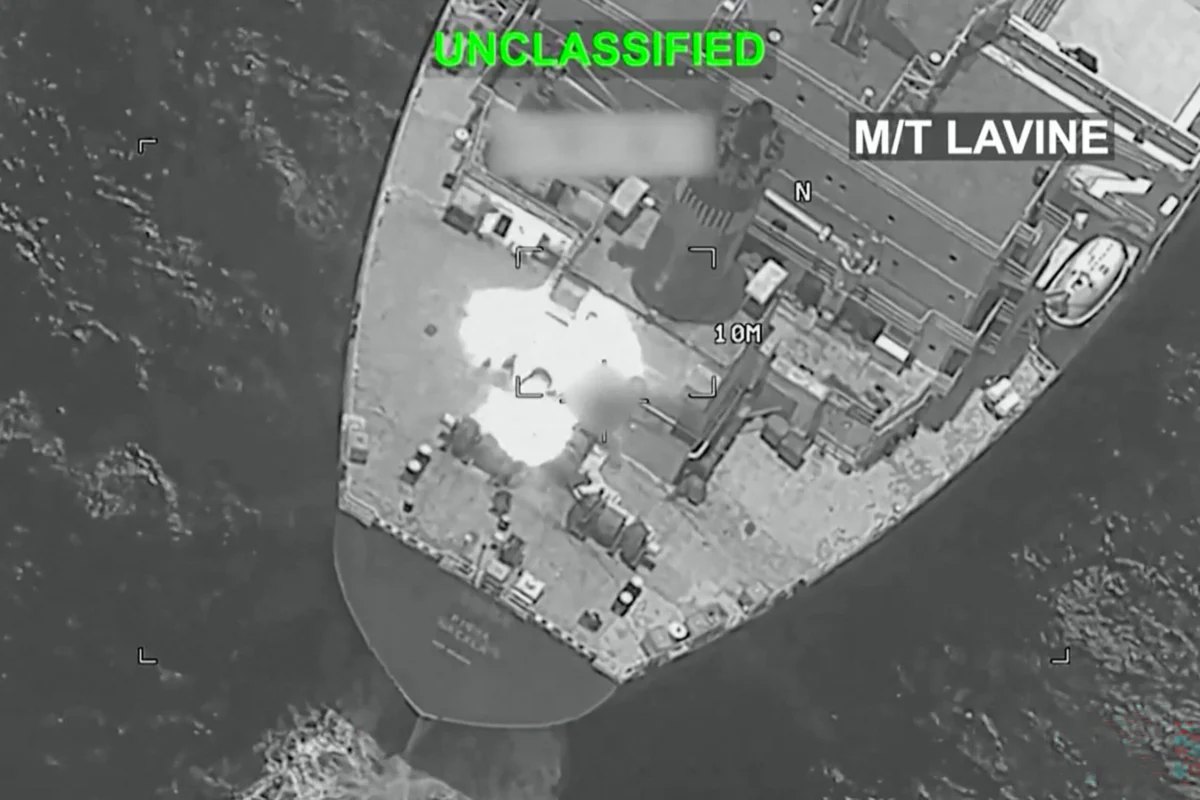
- April 2026: The US implements a naval blockade in the Persian Gulf and the Strait of Hormuz, aiming to disrupt Iranian oil exports and arms shipments, as depicted in images released by CENTCOM. This move significantly increases maritime tensions, leading to several close encounters between US and Iranian naval forces. Iran vows to break the blockade and conducts military drills.
- Early May 2026: Iran is suspected of launching a major cyberattack against critical infrastructure in a key US ally in the Gulf, causing widespread disruptions. The US vows a robust response to cyber aggression.
- Mid-May 2026: Intense diplomatic efforts by the United Nations and European powers to de-escalate fail as both sides refuse direct talks, setting preconditions deemed unacceptable by the other.
- June 2026: The conflict enters a phase of sustained, lower-intensity skirmishes. US naval assets intercept several Iranian vessels suspected of arms smuggling. Iranian drones probe US airspace in the Gulf.
- Early July 2026: A significant escalation occurs when Iran reportedly downs a sophisticated US surveillance drone over international waters, claiming it violated Iranian airspace. The US denies the claim and launches immediate, limited retaliatory strikes against Iranian air defense systems.
- Mid-July 2026 (The Two-Week Bombing Campaign): Following the drone incident and what Washington characterized as a "pattern of increasingly reckless and provocative actions," the US initiates a broad, sustained bombing campaign against Iran. This marks a significant shift, targeting core Iranian military capabilities rather than just proxies or limited retaliatory strikes. The campaign focuses on degrading Iran’s missile and drone capabilities, naval capacity, and command structures. During this period, Iran responds by intensifying its proxy attacks on US bases and shipping, and allegedly fires several cruise missiles towards US naval vessels in the Gulf, which are reportedly intercepted.
- July 26, 2026: The US announces a pause in its bombing campaign. Iran confirms the suspension of its retaliatory attacks.
The Strategic Pause: Munitions and Diplomacy
The decision by the US to halt its bombing campaign, after two weeks of intense air operations, signals a complex strategic calculus. While official statements from the Pentagon cited a desire to "allow space for de-escalation and potential diplomatic engagement," behind-the-scenes reports from intelligence sources and defense analysts indicate a more pragmatic, resource-driven motivation. Multiple sources familiar with internal Pentagon discussions have suggested that concerns over the rapid depletion of precision-guided munitions (PGMs) and other advanced weaponry played a significant role in the decision.
The two-week bombing campaign, characterized by high-intensity strikes against hardened targets, consumed a substantial volume of munitions, including advanced cruise missiles, JDAMs (Joint Direct Attack Munitions), and various air-to-ground missiles. A senior defense official, speaking anonymously due to the sensitivity of the matter, reportedly indicated that "at the current rate of expenditure, our stockpiles for certain key PGMs would have reached critically low levels within weeks, impacting our readiness for other potential contingencies globally." This raises significant questions about the US military’s industrial base capacity and its ability to sustain prolonged, high-intensity conflicts against well-armed adversaries, a concern amplified by recent global supply chain disruptions. The US, while possessing the most advanced military in the world, relies on a steady production line for its sophisticated munitions, and even short, intense conflicts can strain these resources.
Furthermore, the naval blockade enforced by CENTCOM, involving a significant deployment of warships and surveillance assets, has also incurred substantial operational costs and logistical challenges, requiring constant resupply and maintenance in a volatile environment. The image released by CENTCOM, showing naval blockade operations, underscores the sustained effort involved in this aspect of the conflict.
The pause could also be interpreted as a strategic attempt by the US to pressure Iran into direct negotiations. By demonstrating its military capability and willingness to use force, then offering a temporary reprieve, Washington might be signaling a desire for a diplomatic resolution while maintaining leverage.
International Calls for Calm
The international community has largely welcomed the pause, viewing it as a critical first step towards de-escalation. United Nations Secretary-General António Guterres issued a statement urging both sides to "seize this fragile moment to pursue sustained dialogue and de-escalation, preventing further human suffering and regional instability." He reiterated the UN’s readiness to mediate negotiations.
European Union High Representative for Foreign Affairs and Security Policy, Josep Borrell, also expressed cautious optimism, stating that "this pause offers a vital window for diplomacy. All parties must now exercise maximum restraint and engage in constructive talks to find a lasting, peaceful solution." Concerns had been mounting in Europe over the potential for refugee flows, economic disruption, and the broader impact on global security.
Russia and China, while critical of what they termed "unilateral US aggression" in previous statements, also called for an immediate and unconditional cessation of all hostilities and a return to diplomatic engagement. Their statements emphasized the need to respect national sovereignty and the principles of international law, while tacitly acknowledging the need to prevent a wider conflict that could destabilize global energy markets and disrupt strategic alliances.
Allied and Adversary Perspectives
Reactions from regional players have been mixed, reflecting their complex interests and anxieties. Israel, a staunch US ally and a primary target of Iranian regional influence, reportedly conveyed its "deep concern" to Washington regarding the pause. Israeli officials, speaking off the record, stressed the importance of continued pressure on Iran to dismantle its nuclear program and curtail its support for proxy groups. They fear that any prolonged pause might allow Iran to regroup and further advance its strategic capabilities.
Saudi Arabia and the United Arab Emirates, while also wary of Iranian expansionism, have expressed a desire for regional stability. Their economies are highly dependent on unimpeded oil exports through the Strait of Hormuz, and any prolonged conflict severely impacts their national interests. Official statements from Riyadh and Abu Dhabi called for "prudence and dialogue," emphasizing the need for a comprehensive security framework that ensures the stability of the Gulf region.
Within Iran, the suspension of retaliatory attacks was announced by the Foreign Ministry, which framed it as a "response to the temporary cessation of illegal American aggression." Iranian officials maintained that their actions were purely defensive and warned that "any resumption of hostile acts by the US will be met with an immediate and decisive response." The Islamic Revolutionary Guard Corps (IRGC) reaffirmed its readiness to defend Iran’s sovereignty and interests, signaling that the pause is conditional and not a sign of capitulation.
Global Markets React to Tentative Peace
The news of the de-escalation immediately impacted global markets. Oil prices, which had surged to multi-year highs during the two-week bombing campaign due to fears of supply disruptions in the Strait of Hormuz, experienced a noticeable dip. Brent crude futures fell by over 3%, and WTI crude futures saw a similar decline, reflecting a cautious optimism among traders about the easing of geopolitical risk. Shipping insurance premiums for vessels transiting the Persian Gulf, which had skyrocketed, also showed initial signs of reduction.
However, market analysts warned against complacency. "While this pause is a positive signal, the underlying tensions remain unresolved," stated Dr. Lena Khan, a senior economist at Global Insight Group. "The market will remain highly sensitive to any further developments, and a return to full stability will require concrete steps towards a lasting diplomatic solution." The broader global economy, already grappling with post-pandemic recovery challenges and inflationary pressures, views any reduction in Middle East volatility as a welcome, albeit tentative, relief.
Looking Ahead: Fragile Peace or Strategic Repositioning?
The current pause, while significant, does not inherently signify an end to the protracted US-Iran standoff. Instead, it might represent a tactical repositioning by both sides, driven by military logistics, economic pressures, and perhaps the quiet efforts of international mediators. The reported munitions concerns highlight a critical vulnerability for the US in sustaining high-intensity, long-duration conflicts, potentially influencing future military doctrine and procurement strategies. For Iran, the suspension of its retaliatory attacks could be an acknowledgment of the intense pressure it faced, offering a moment to assess its strategy and capabilities.
The critical question now is whether this fragile pause can be leveraged into meaningful diplomatic engagement. Direct talks between Washington and Tehran remain elusive, complicated by decades of animosity and a profound lack of trust. Any pathway to a lasting resolution would likely involve a multifaceted approach, addressing Iran’s nuclear program, its regional activities, and the broader security architecture of the Middle East. This could entail indirect negotiations facilitated by European powers or regional intermediaries, aiming for a de-escalation framework, perhaps mirroring previous efforts to stabilize the region.
However, the long shadow of regional instability persists. The underlying issues that fueled the current conflict—Iran’s geopolitical ambitions, its nuclear program, and the security concerns of its neighbors and the US—are far from resolved. The current de-escalation, therefore, remains a precarious moment, a breath held collectively by a world weary of conflict, awaiting the next move in a dangerous and unpredictable geopolitical chess game. The coming weeks will be crucial in determining whether this pause evolves into a genuine path towards peace or merely a temporary lull before the next storm.
