

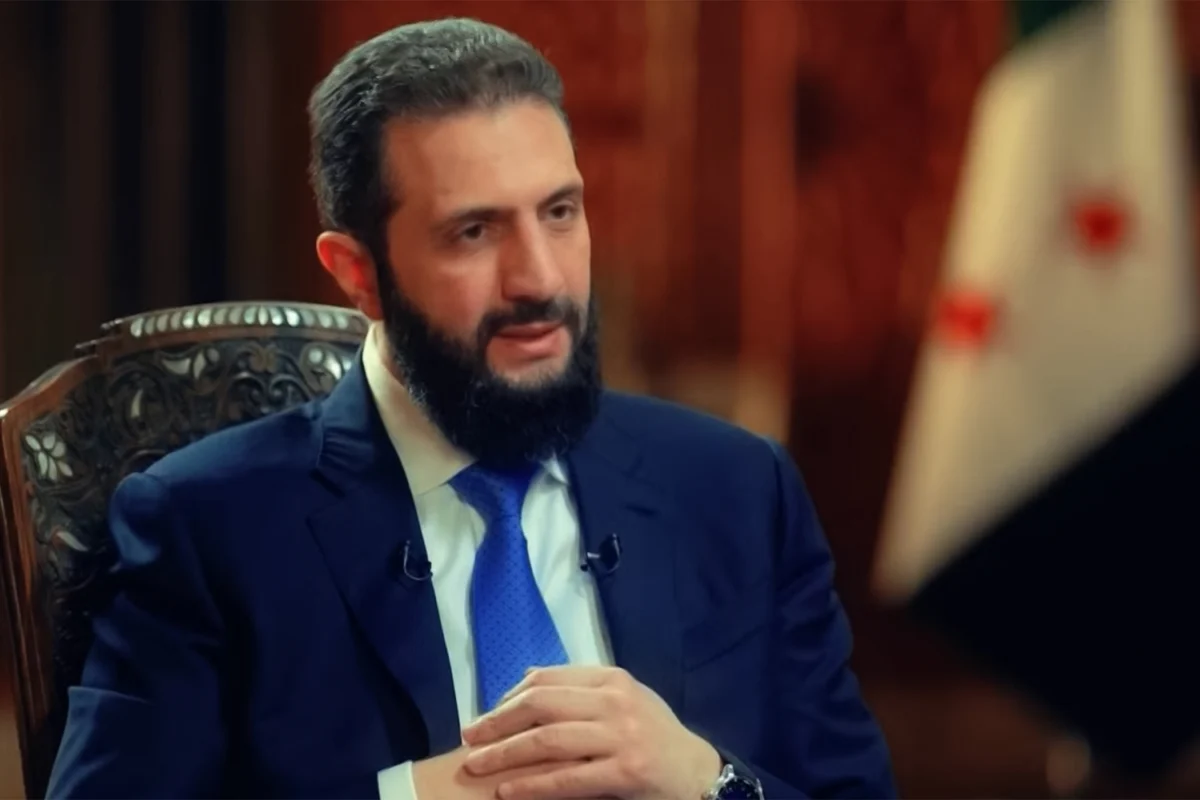
Syrian President Ahmed al-Sharaa has announced that Damascus is actively engaged in multilateral negotiations to establish a comprehensive security agreement with Israel, marking a seismic shift in the geopolitical landscape of the Middle East. Speaking in an extensive interview on Al Jazeera’s Al Muqabala programme, the leader of Syria’s transitional government characterized the potential deal as a vital "gateway" toward a broader regional peace, while emphasizing that any such arrangement would not forfeit Syria’s sovereign claim to the occupied Golan Heights. This revelation comes at a pivotal moment for Syria, which is currently navigating a complex transition following the collapse of the Bashar al-Assad administration in December 2024.
The president’s remarks signal a departure from decades of "resistance" rhetoric that defined the previous regime, opting instead for a pragmatic approach to border security and international legitimacy. Al-Sharaa noted that the proposed security framework involves the participation of several regional and international stakeholders, aimed at stabilizing the volatile southern border and preventing further military escalations. Since al-Sharaa assumed power, the region has been marred by repeated Israeli incursions and airstrikes targeting various factions in southern Syria, particularly in the Quneitra region. By pursuing a formal security arrangement, the transitional government hopes to mitigate these kinetic engagements and focus on domestic reconstruction.
The Diplomatic Pivot and the Golan Heights
Central to al-Sharaa’s foreign policy is the delicate balance between pragmatism and national sovereignty. During the interview, he was firm in stating that a security agreement is a functional necessity to prevent war, rather than a surrender of territory. He reiterated that the Golan Heights, which Israel has occupied since the 1967 Six-Day War and effectively annexed in 1981—an act not recognized by the majority of the international community—remains Syrian land. Al-Sharaa argued that a structured security dialogue could eventually provide a diplomatic path toward resolving the status of the Heights, which have been a flashpoint for over half a century.
The president explained that Syria is currently prioritizing the avoidance of direct clashes with Israeli forces. This "de-confliction" strategy is intended to provide the transitional government with the breathing room necessary to consolidate power and address the humanitarian crises within its borders. By involving multiple countries in the negotiation process, Damascus seeks to create a robust oversight mechanism that ensures both sides adhere to the terms of the agreement, potentially involving international monitors or modernized peacekeeping protocols.
Non-Intervention and the Lebanese Crisis
Addressing the deteriorating situation in neighboring Lebanon, al-Sharaa dismissed rumors of a Syrian military intervention. For decades, Syria maintained a significant military and political presence in Lebanon, which ended only in 2005. Al-Sharaa was clear that his government has no desire to return to that era. Instead, he expressed a commitment to supporting the Lebanese state’s efforts to assert its own sovereignty and reclaim territories currently under Israeli occupation in the south.
The president’s stance on Lebanon is rooted in the principle of state monopoly on violence. He declared Syria’s firm support for the Lebanese government’s quest to restrict weapons to the national army and to ensure that decisions regarding war and peace remain solely within the purview of the state. This is a significant nod toward the containment of non-state actors, such as Hezbollah, whose influence has been a major point of contention both within Lebanon and internationally. Al-Sharaa warned that any descent into total chaos in Lebanon would have an immediate "spillover effect" on Syria, potentially destabilizing the fragile peace his government is trying to build. He also voiced concerns regarding the potential for a wider conflict between the United States, Israel, and Iran, noting that a regional conflagration would lead to a catastrophic fallout for all neighboring states.
Economic Hurdles and the "State Sponsor of Terrorism" List
On the domestic front, al-Sharaa identified the Syrian economy as the most pressing challenge facing the transitional period. While many international observers have called for the lifting of economic sanctions—such as those imposed under the U.S. Caesar Act—al-Sharaa argued that such measures would be insufficient on their own. He emphasized that for Syria to truly reintegrate into the global financial system and attract necessary investment for reconstruction, the country must be removed from the U.S. list of State Sponsors of Terrorism.

The designation, which Syria has held for decades, prevents the country from accessing international credit, receiving certain types of foreign aid, and engaging in normalized trade. Al-Sharaa’s government is currently lobbying international partners to demonstrate that the new administration is distinct from the previous regime’s policies and is committed to international law. The president suggested that progress on the security deal with Israel and cooperation on counter-terrorism efforts are key components of the strategy to change Syria’s international standing.
The Kurdish Question and Internal Reconciliation
Internal stability remains a significant hurdle, particularly regarding the relationship between Damascus and the Syrian Democratic Forces (SDF). The Kurdish-led alliance, which controls significant portions of northern and eastern Syria, including vital oil fields and agricultural hubs, has been in a state of uneasy truce with the central government. Al-Sharaa acknowledged that there have been delays in implementing the internal agreements reached with the SDF but reaffirmed his government’s commitment to a unified Syria.
The president stated that the government continues to "bet on the success" of these negotiations, which involve complex discussions on regional autonomy, the integration of armed forces, and the distribution of natural resources. Observers suggest that the success of the Damascus-SDF agreement is essential for preventing a resurgence of extremist groups and for ensuring that the country does not fracture into permanent ethnic or sectarian enclaves.
Addressing the Legacy of the Disappeared
Perhaps the most sensitive domestic issue discussed was the fate of the "forcibly disappeared." According to United Nations estimates, approximately 100,000 people went missing during the Syrian conflict between 2011 and 2024. Local organizations, such as the National Commission on Missing Persons, believe the number could be as high as 300,000. These individuals include political activists, protesters, and civilians caught in the crossfire of the decade-long war.
Al-Sharaa announced the establishment of a special committee dedicated to managing this file. He pledged that the committee would operate according to international standards and work in close coordination with foreign experts and humanitarian organizations. Resolving the issue of the missing is seen as a prerequisite for national reconciliation and for providing closure to millions of Syrian families. The president’s willingness to address this issue openly is a marked departure from the previous administration’s denial of the problem.
Chronology of Recent Events in Syria
- December 2024: The government of Bashar al-Assad collapses following a rapid offensive by opposition forces. A transitional government is formed with Ahmed al-Sharaa as president.
- January 2025: The transitional government begins outreach to regional neighbors, including Turkey, Jordan, and the UAE, to discuss border security.
- February 2025: Israel carries out a series of military incursions into Quneitra, citing the need to prevent "hostile build-ups" during the Syrian power vacuum.
- May 2025: Syria and the SDF sign a preliminary framework for governance and resource sharing, though implementation remains slow.
- August 2025: The United Nations and human rights groups renew calls for justice for Syria’s disappeared, leading to the formation of the National Commission.
- January 2026: President al-Sharaa confirms ongoing negotiations for a security deal with Israel during his interview with Al Jazeera.
Analysis of Regional Implications
The potential for a security agreement between Syria and Israel represents one of the most significant diplomatic shifts in the modern history of the Middle East. For decades, the "Syrian front" was characterized by a cold peace punctuated by proxy conflicts. A formalized agreement would likely lead to:
- Diminished Iranian Influence: A security deal would almost certainly require Syria to limit the presence of Iranian-backed militias on its soil, particularly near the Israeli border. This would align with the interests of several Gulf states and the West.
- Economic Reintegration: If Syria can prove it is a stabilizing force, it may see an influx of reconstruction capital from Arab neighbors who are keen to see a stable Syria as a bulwark against regional instability.
- Pressure on Non-State Actors: By supporting the Lebanese state’s monopoly on weapons, al-Sharaa is signaling a move toward a "Westphalian" model of sovereignty, which could further marginalize groups like Hezbollah that operate outside of state control.
- US Policy Shift: The Biden (or subsequent) administration may face pressure to re-evaluate the "State Sponsor of Terrorism" designation if Damascus demonstrates tangible progress on security and human rights.
As Syria moves forward under al-Sharaa’s transitional leadership, the international community remains cautiously optimistic but wary of the immense challenges ahead. The success of the proposed security deal with Israel will likely serve as the ultimate litmus test for the new government’s ability to transform Syria from a regional battlefield into a stable, sovereign participant in the international community.
