

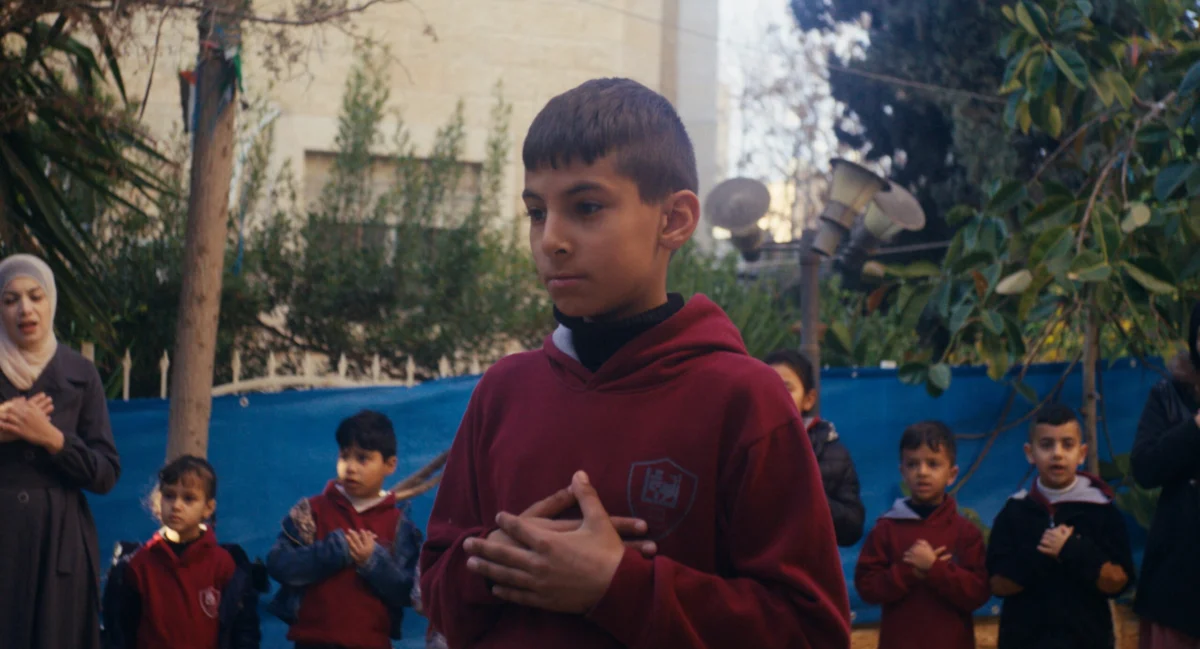
In a poignant moment captured within the documentary "House of Hope," Manar Wahhab, the visionary founder of a Waldorf school in the occupied West Bank, collapses in a classroom corner, overwhelmed by the immense pressures of her reality. The cameras, chosen by mutual agreement, continue to roll, offering an unfiltered glimpse into the profound emotional toll endured by those striving to cultivate peace and education amidst persistent conflict. Director Marjolein Busstra, reflecting on this raw portrayal, told Al Jazeera, "To step into someone’s life with a camera at the moment when they’re really down, it feels a little bit uncomfortable, but we made the choice together to keep filming during these moments. I wanted the audience to be there with them." This unwavering commitment to authenticity defines "House of Hope," a film that transcends mere observation to become a profound exploration of human endurance, educational innovation, and the quiet power of non-violent resistance.
The film meticulously chronicles the life of Manar Wahhab, a Palestinian woman, and her husband, Milad Vosgueritchian, as they navigate the complexities of running the House of Hope Vision Kindergarten & School in al-Eizariya, a town steeped in historical significance within the occupied West Bank. Their institution is not merely a school; it is a sanctuary, built upon the principles of Waldorf education, designed to shield children from the pervasive trauma of occupation and equip them with the tools for emotional expression and self-agency.
The Genesis of Hope: Founding the Waldorf School
The House of Hope school was born from a deep-seated desire to offer an alternative educational paradigm to Palestinian children, one that prioritizes holistic development over rote learning and fosters resilience in the face of adversity. Manar Wahhab and Milad Vosgueritchian, driven by their observations of the hardships surrounding their community, envisioned a space where children could thrive, feel safe, and freely express their emotions. "The school was born many years ago when we saw the hardships surrounding our community and wanted to create something different, a space of love, safety, creativity and healing," Wahhab explained. This vision materialized in al-Eizariya, a town east of Jerusalem, historically known as Bethany, a place that, despite its biblical resonance, now finds itself fragmented by Israeli checkpoints and settlement expansion, making daily life a constant challenge.
The Waldorf Educational Philosophy: Principles and Relevance
At the core of the House of Hope’s mission is the Waldorf educational philosophy, an approach developed by Rudolf Steiner in the early 20th century. This pedagogy emphasizes the development of the whole child—head, heart, and hands—integrating academic, artistic, and practical skills. Key tenets include a strong focus on imagination, creativity, social responsibility, and a deep connection to nature. In the context of the occupied West Bank, these principles take on a particularly vital significance. Waldorf education’s emphasis on fostering inner strength, critical thinking, and empathy provides a crucial counter-narrative to the often-brutal realities children face. It cultivates a sense of self-worth and agency, empowering them to process trauma and envision a future beyond conflict. Busstra elaborates, "The school protects the children’s dignity in the present moment. It’s more about refusing to let occupation shape their inner world, so that they can actually be children and have agency. It’s in Waldorf philosophy that they make space to express the feelings." This framework encourages children to explore their emotions safely, providing a vital outlet for anxieties and fears stemming from their environment, a critical component often overlooked in conventional education systems in conflict zones.
A Lens on Vulnerability: The Filming Process
Director Marjolein Busstra’s journey with Manar Wahhab began nearly two decades ago, during a film workshop in the West Bank. This long-standing relationship cultivated a profound level of trust, which proved indispensable during the three years of intense filming for "House of Hope." Working with a Palestinian crew, Busstra made nine trips to the occupied West Bank, meticulously documenting Wahhab’s life both within the school and at home with her family. This intimate access allowed the documentary to delve beyond the institutional facade and into the protagonist’s deeply personal struggles and triumphs.
The Director’s Vision and Relationship with Manar
Busstra initially set out to film the school but quickly recognized that Wahhab’s inner life was the true narrative engine. "I started filming the school, but right away, I knew I wanted to do it about Manar’s inner life," Busstra noted. The director expressed profound admiration for Wahhab’s unwavering dedication: "I think hope is a difficult word at the moment, but I have a deep awe for Manar, who keeps creating and teaching even while carrying so much herself." This respect and shared commitment to education, creativity, and the inherent worth of every human being formed the bedrock of their collaboration. Wahhab herself acknowledged the importance of this rapport, stating, "We both believe deeply in education, in children’s creativity and freedom and in seeing the human being as something whole and beautiful in mind, soul and spirit. Those shared values created openness and trust between us and helped shape a film that is not only about events but also about humanity."
Authenticity and Representation: Manar’s Perspective
Wahhab’s willingness to expose her vulnerabilities on camera was a conscious and difficult decision, motivated by a desire to represent her community authentically. "Over those three years, the crew met many versions of Manar. Sometimes they arrived, and I was fresh, energetic and cooperative. Other times, they found me exhausted, angry, overwhelmed, or ill," she recounted. This commitment to authenticity stemmed from a powerful sense of responsibility: "I understood that I had to be as authentic as possible, because I was representing not only myself, but also my community, hope, peace and the voice of Palestinians." This candid portrayal allows the audience to connect with Wahhab not just as a figure of hope, but as a complex human being grappling with extraordinary circumstances, thereby enriching the narrative with profound emotional depth.
Living Under Occupation: Daily Realities and Trauma

The documentary unflinchingly portrays the daily realities of living under Israeli occupation, showcasing the constant psychological and physical pressures exerted on Palestinian families. The film highlights how the "safe haven" created by the school is perpetually threatened by the external environment. The trauma experienced by children in the West Bank is well-documented; studies by organizations like UNICEF and the Palestine Red Crescent Society consistently report high rates of psychological distress, anxiety, and PTSD among Palestinian youth due to military incursions, settler violence, arbitrary detentions, and movement restrictions.
The Psychological Toll on Children
Children at the House of Hope, when given the freedom to draw, often depict the brutal realities of their lives, illustrating tanks, checkpoints, and soldiers—a stark contrast to the innocent imagery one might expect from childhood art. This serves as a powerful testament to how deeply the occupation permeates their young minds. The school’s Waldorf approach, with its emphasis on artistic expression and emotional literacy, becomes a critical therapeutic tool, allowing children to process and externalize their fears in a supportive environment. Without such outlets, the long-term psychological impact of constant exposure to violence and instability can be devastating, affecting cognitive development, social skills, and overall well-being.
The Specter of Violence: Checkpoints and Military Actions
The film includes a particularly harrowing scene where Wahhab watches her son leave for school, meticulously checking his bag for a phone charger and spare clothes—contingency items for potential hours-long detentions at military checkpoints. This mundane yet chilling ritual underscores the pervasive anxiety that defines daily life. Israeli military actions in the West Bank, including search operations, arrests, and confrontations, often result in civilian casualties, including children. Reports from human rights organizations frequently detail incidents of excessive force, restrictions on movement, and the systematic erosion of Palestinian rights, all of which contribute to an environment of chronic insecurity. The documentary captures this ever-present danger, reminding audiences that the "rattling at the door" of occupation is not merely metaphorical.
The Unyielding Philosophy of Non-Violence
Central to Manar Wahhab’s ethos and the school’s philosophy is a profound belief in non-violent resistance. In a region frequently defined by conflict, her stance is both radical and deeply courageous. Wahhab articulates this conviction with clarity: "I do not see nonviolence as weakness. Actually, I believe the opposite. Violence is easy. Nonviolence requires courage, awareness, patience and inner work. It asks us to see beyond our own pain and ego and to hold on to our humility even when circumstances are trying to pull us away from it." This philosophy isn’t a passive acceptance of injustice but an active, conscious choice requiring immense inner strength and moral fortitude. It is a form of resistance that seeks to preserve humanity and dignity in the face of dehumanizing forces.
Non-Violence as Strength: A Counter-Narrative
Wahhab believes that the energy we cultivate profoundly impacts the world around us. In an era saturated with fear, anger, and violence, she advocates for an internal shift towards peace. "The world absorbs the energy that we create, and right now, there is so much fear, anger and violence in our world. I think we need more peace within ourselves, peace with one another and peace with nature," she asserts. This perspective offers a powerful counter-narrative to the prevailing discourse of armed conflict, suggesting that true strength lies in the capacity for empathy, resilience, and an unwavering commitment to human dignity, even under the most trying circumstances.
Escalation and Endurance: Post-October 7, 2023
The events following Hamas’s incursion into southern Israel on October 7, 2023, and Israel’s subsequent brutal military response in Gaza, cast a long, heavy shadow over the West Bank. Life for Wahhab, Vosgueritchian, and the children at House of Hope became exponentially more difficult. The already precarious situation intensified with increased military raids, heightened tensions, and a pervasive sense of despair.
The Deepening Crisis and Its Impact on Hope
Busstra observed the profound impact of these events on the community: "The story I wanted to create with Manar stayed the same, but after October 7, everything became heavier. They were so down for a while. They were like different people, like they lost all hope." The escalation brought a new wave of grief, fear, and uncertainty, threatening to extinguish the very "hope" the school embodied. The already thin veil of normalcy was ripped apart, revealing the raw vulnerability of life under intensified occupation. The school’s role as a "safe haven" was tested to its limits, constantly besieged by the external chaos.
Continuing to Document: The Crew’s Commitment

Despite the deepening crisis, the film crew continued their documentation, recognizing the critical importance of capturing these evolving realities. Their perseverance underscores the journalistic imperative to bear witness, even when the narrative becomes more painful and complex. This commitment ensured that the documentary would provide a comprehensive, albeit heartbreaking, account of life in the West Bank before and after a pivotal moment in the Israeli-Palestinian conflict.
Beyond Stereotypes: A Call for Shared Humanity
One of the most crucial objectives of "House of Hope" is to dismantle the pervasive stereotypes that often define perceptions of Palestinians in Western media. Wahhab believes that the film offers a more nuanced and human perspective, moving beyond the limited and often negative portrayals.
Reframing the Palestinian Narrative
"I think that in the West, many people see a very limited picture of Palestine and the Middle East. Sometimes they see us through stereotypes as terrorists, as people who are undeveloped or somehow less than themselves," Wahhab contends. She hopes the film will encourage viewers to look beyond these simplistic images, which often fail to capture the essence of Palestinian life. News reports, she argues, frequently focus solely on violence and conflict, neglecting the rich tapestry of human experiences, resilience, and the everyday struggles and joys that constitute life for Palestinians. "The news does not tell the full reality. It often shows only violence and people killing one another. It doesn’t show the essence of people’s lives. It shows negativity," she added.
Universal Themes of Love and Safety in an Unsafe World
Director Marjolein Busstra shares this desire for deeper understanding, urging audiences to move "beyond the framing of us vs them." She hopes the film’s message will resonate personally, transcending geographical and political divides: "I hope that this stays with people, not as something distant that happens to others, but something they can locate within their own understanding of what it means to love someone in an unsafe world." By focusing on the universal human experience of seeking safety, dignity, and love amidst adversity, the documentary invites empathy and connection, fostering a recognition of shared humanity. Wahhab actively encourages viewers to engage with the film through this lens of shared human experience, believing it holds the key to greater understanding and, ultimately, peace.
International Recognition and Future Impact
"House of Hope" has already garnered significant international acclaim, underscoring the universal resonance of its message. In May 2026, the documentary secured the prestigious best international feature documentary prize at the Hot Docs Canadian International Documentary Festival, one of the world’s leading documentary festivals. Following this, it was screened at UNESCO in Paris, an institution dedicated to promoting peace through education, science, and culture, further amplifying its global reach. The film is also slated for screening at the Jerusalem Arab Film Festival, ensuring its message reaches audiences closer to home.
Awards and Screenings: A Growing Platform
These accolades and screenings are not merely recognition for artistic merit; they serve as a vital platform for sharing Manar Wahhab’s story and the plight of Palestinian children with a global audience. Each screening is an opportunity to challenge misconceptions, foster empathy, and advocate for basic human rights. Wahhab articulates this hope eloquently: "Even though our story is deeply rooted in the West Bank, its message is universal. Our hope is that people everywhere can see our story and take something meaningful from it."
"The Voice of Hind Rajab" and Think-Film’s Legacy
The film was produced by Think-Film, a company known for its commitment to powerful, socially conscious storytelling. Notably, Think-Film was also behind "The Voice of Hind Rajab," a documentary that brought to light the tragic story of five-year-old Hind Rajab, killed by Israeli forces in 2024. The incident, where soldiers fired 335 bullets into the car carrying Hind and six of her family members, became a grim symbol of the systemic failure to protect children in Gaza. This previous work by Think-Film highlights their consistent dedication to documenting the human cost of conflict and amplifying the voices of those most affected, reinforcing the critical role of independent cinema in humanitarian advocacy.
In conclusion, "House of Hope" is more than a documentary about a school; it is a profound testament to the enduring power of the human spirit. Through Manar Wahhab’s unwavering dedication, the film illuminates the possibility of cultivating peace and dignity even in the most challenging environments. It is a compelling call to recognize the shared humanity that binds us, to look beyond headlines and stereotypes, and to acknowledge the fundamental right of every child to a life of safety, freedom, and hope. As the world absorbs the film’s powerful narrative, it serves as a poignant reminder that while occupation may rattle at the door, the inner world of hope, resilience, and non-violent resistance can never be fully silenced.
