

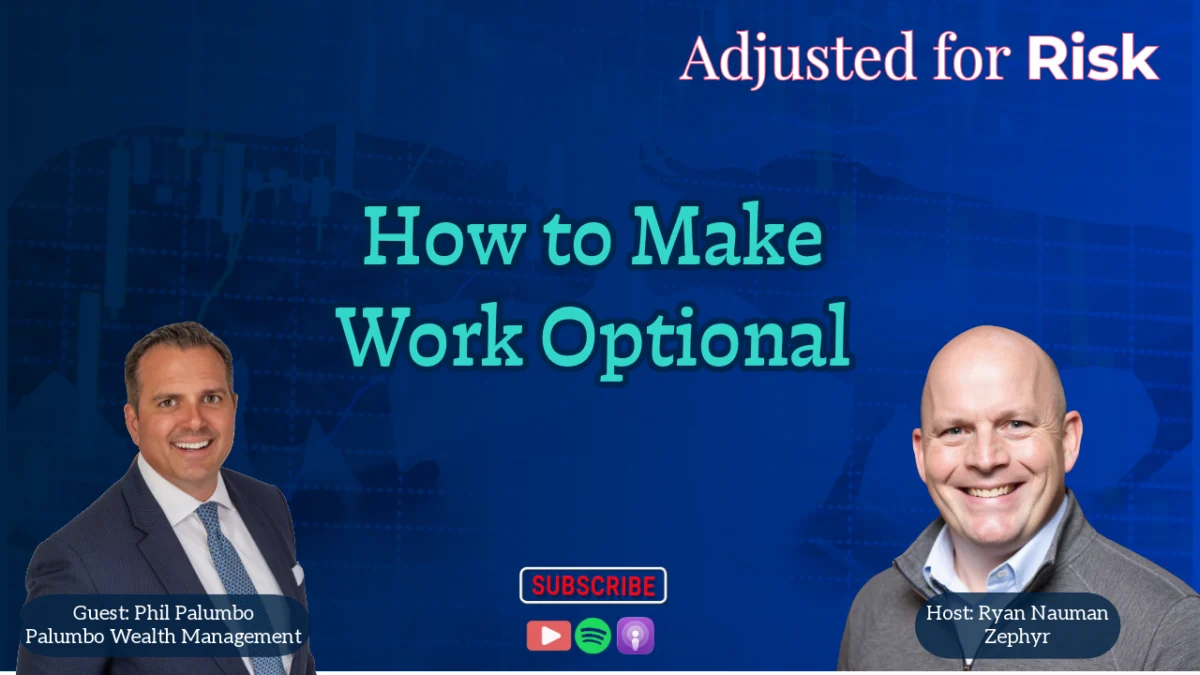
Ryan Nauman, host of Zephyr’s Adjusted for Risk podcast, recently welcomed Phil Palumbo, CEO and Chief Investment Officer of Palumbo Wealth Management and creator of the Palumbo Pulse podcast, for an in-depth discussion on the profound implications of aging demographics for retirement planning and the advisory profession. Palumbo, a prominent figure in independent wealth management, shared his insights on transitioning from a large wirehouse to an independent Registered Investment Advisor (RIA) model, his firm’s specialized approach to advising business founders, and the critical strategies needed to navigate the complexities of modern retirement.
The Journey to Independence: A Fiduciary Imperative
Palumbo’s decision to leave UBS, a major global financial services firm, and establish Palumbo Wealth Management as an independent RIA was driven by a confluence of factors, chief among them a desire for deeper fiduciary alignment. "When you’re at a large institution, the incentive structures can sometimes create a misalignment between what’s best for the client and what’s best for the firm," Palumbo explained during the podcast. "Going independent allowed me to fully embrace the fiduciary standard, meaning I’m legally obligated to act in my clients’ best interests at all times. This was paramount for me."
Beyond fiduciary duty, Palumbo cited economic advantages and broader investment access as key motivators for his transition. The independent RIA model often offers more competitive fee structures and greater flexibility in selecting investment products and services, unconstrained by proprietary offerings. This allows advisors to tailor solutions more precisely to individual client needs. The shift, which occurred in the early 2010s, marked a significant turning point for Palumbo, enabling him to build a practice centered on client advocacy and personalized service.
Empowering Founders: A Specialized Exit Planning Playbook
A cornerstone of Palumbo Wealth Management’s service offering is its specialized focus on advising entrepreneurs and business founders through the intricate process of exiting their companies. This often involves years of planning, culminating in a significant liquidity event that can transform an individual’s financial landscape.
"Founders have a unique set of challenges," Palumbo noted. "They’ve dedicated their lives to building something, and the exit isn’t just a financial transaction; it’s often an emotional and personal transition. Our role is to help them prepare for every facet of this event, from the valuation and negotiation stages to the crucial post-exit management of their newfound wealth."
The firm’s comprehensive approach encompasses not only the mechanics of the business sale but also the critical subsequent steps: tax mitigation strategies, sophisticated financial planning, diversified investment management, and robust estate and wealth transfer planning. This holistic methodology aims to ensure that founders can maximize the value of their hard-earned success and secure their financial future and legacy. The timeline for such planning can be extensive, often beginning five to ten years before an anticipated exit, allowing for strategic tax deferral, business restructuring, and wealth accumulation.
Redefining Retirement: "Make Work Optional"
Palumbo introduced a compelling reframing of the traditional concept of retirement, proposing the idea of "making work optional." This distinction is crucial in an era where individuals are living longer and often seeking purpose and engagement beyond a cessation of all professional activity.
"The traditional retirement model, where you simply stop working at a certain age, is becoming increasingly outdated," Palumbo stated. "Longevity is increasing – people are living well into their 80s and 90s. The concept of ‘making work optional’ acknowledges this reality. It’s about building a financial foundation so robust that you have the freedom and flexibility to choose whether or not you want to work, engage in passion projects, or pursue other interests, without financial necessity dictating your choices."
This shift in perspective places a greater emphasis on long-term financial discipline and a strategic approach to wealth accumulation and preservation. It underscores the importance of sustained saving, the power of compounding returns over extended periods, and the necessity of maintaining exposure to growth-oriented assets.
Combating Longevity and Inflation Risk: The Role of Risk Assets
The twin specters of increasing longevity and persistent inflation pose significant challenges to traditional retirement planning. To effectively combat these risks, Palumbo emphasized the critical role of risk assets, such as stocks, real estate, and private equity.
"Inflation erodes purchasing power, and living longer means your retirement nest egg needs to last for a greater duration," Palumbo explained. "To outpace inflation and ensure your savings can support a longer lifespan, you need assets that have the potential for growth. This inherently means taking on some level of risk."
He elaborated on the power of compounding, a concept popularized by Albert Einstein, who reportedly called it the "eighth wonder of the world." Compounding allows returns to generate further returns, creating exponential growth over time. However, this requires consistent saving and a willingness to remain invested through market cycles. For instance, historical data from organizations like the S&P Dow Jones Indices consistently show that while stocks can be volatile in the short term, they have historically provided superior long-term returns compared to less volatile assets, helping to outpace inflation. Over the past 50 years, the S&P 500 has delivered an average annual return of approximately 10-12%, a figure that significantly outpaces the average inflation rate during the same period.
The Imperative of a Written Financial Plan
In an environment characterized by market volatility and complex financial decisions, Palumbo stressed the non-negotiable need for a written financial plan. This document serves as a roadmap, guiding individuals through accumulation, distribution, and wealth transfer phases, and crucially, acting as a bulwark against emotional decision-making during turbulent market conditions.
"Panic selling is one of the biggest destroyers of wealth," Palumbo asserted. "When markets plunge, it’s natural to feel fear. But without a well-defined plan, people often make impulsive decisions that can derail years of progress. A written plan, developed in conjunction with an advisor, provides a framework for staying disciplined and focused on long-term objectives."
The implications of a well-structured plan are far-reaching. It helps to:
- Define Goals: Clearly articulate short-term and long-term financial aspirations.
- Quantify Needs: Estimate future expenses, including healthcare, lifestyle, and legacy goals.
- Establish a Strategy: Outline investment approaches, savings targets, and risk management techniques.
- Provide Discipline: Serve as a reference point during periods of market uncertainty, preventing rash decisions.
Data from financial planning associations, such as the CFP Board, often highlight that individuals with comprehensive financial plans tend to achieve their financial goals more consistently than those without.
Tax-Aware Investing and Distribution Strategies
Tax efficiency is a critical, yet often overlooked, component of successful retirement planning. Palumbo highlighted the importance of tax-aware investing, emphasizing that the way investments are structured and managed can significantly impact net returns.
"It’s not just about how much you earn; it’s about how much you keep after taxes," he explained. "We work closely with clients to ensure their investment portfolios are tax-efficient, utilizing strategies like asset location – placing tax-inefficient assets in tax-advantaged accounts and tax-efficient assets in taxable accounts – and tax-loss harvesting where appropriate."
During the distribution phase of retirement, the strategy becomes even more nuanced. Palumbo discussed the efficacy of bucket-based income planning. This approach involves segmenting retirement assets into different "buckets" based on time horizon and liquidity needs. A short-term bucket might hold cash and short-term bonds for immediate living expenses, a medium-term bucket for income needs over the next 5-10 years, and a long-term bucket invested in growth-oriented assets to combat inflation and longevity. This systematic approach helps ensure that clients have access to funds when needed without being forced to sell growth assets at an inopportune time.
Navigating Market Volatility: The Advisor’s Role
The current economic climate, marked by inflation concerns and geopolitical uncertainties, has amplified market volatility. Palumbo stressed the crucial role of financial advisors in guiding clients through these periods of uncertainty.
"Our role is to be a calming influence, to educate clients about market dynamics, and to reinforce the long-term perspective," Palumbo stated. "It’s about helping them understand that market downturns are a normal part of investing, not a reason to abandon a sound strategy."
Key strategies for advisors and clients to navigate volatility include:
- Diversification: Spreading investments across various asset classes, geographies, and sectors to reduce overall portfolio risk.
- Risk Management: Appropriately adjusting asset allocation based on an individual’s risk tolerance, time horizon, and financial goals, especially during the distribution phase.
- Client Education: Proactively communicating with clients about market conditions, the rationale behind portfolio decisions, and the importance of staying the course.
- Emotional Intelligence: Recognizing and addressing the emotional impact of market fluctuations on clients, fostering a "marathon mindset" rather than a "sprint mentality."
The implications of failing to manage emotions during market downturns can be severe. Research from Vanguard, for example, has shown that investor returns can be significantly hampered by emotional decision-making, often leading to buying high and selling low.
The Evolving Landscape for Advisors
The conversation also touched upon the broader implications for the financial advisory profession. Palumbo’s journey highlights a trend toward specialization and a heightened focus on fiduciary responsibility. As demographics shift and retirement becomes more complex, advisors who can offer specialized expertise, such as exit planning for entrepreneurs or comprehensive tax-efficient retirement income strategies, will likely see increased demand.
The rise of independent RIAs, driven by a desire for client-centricity and operational autonomy, signals a maturing industry. This shift empowers advisors to build businesses aligned with their values and to serve clients with greater transparency and customization. The ongoing challenge for advisors will be to continuously adapt to evolving client needs, technological advancements, and regulatory changes, all while maintaining a steadfast commitment to fiduciary duty.
In conclusion, the discussion between Ryan Nauman and Phil Palumbo offered a comprehensive overview of the challenges and opportunities in modern retirement planning. By emphasizing a fiduciary commitment, specialized expertise for entrepreneurs, the strategic concept of "making work optional," and robust planning and tax-aware strategies, Palumbo Wealth Management is positioning itself to guide clients through the complexities of aging demographics and evolving financial landscapes. The overarching message underscores the critical need for disciplined saving, long-term investing, and a well-defined financial plan to achieve financial security and personal fulfillment throughout a potentially extended retirement.
Learn more about Palumbo Wealth Management at https://palumbowm.com/.
Connect with Ryan Nauman on LinkedIn: https://www.linkedin.com/in/ryannauman1/ and X: https://twitter.com/LkTahoeBadger.
