

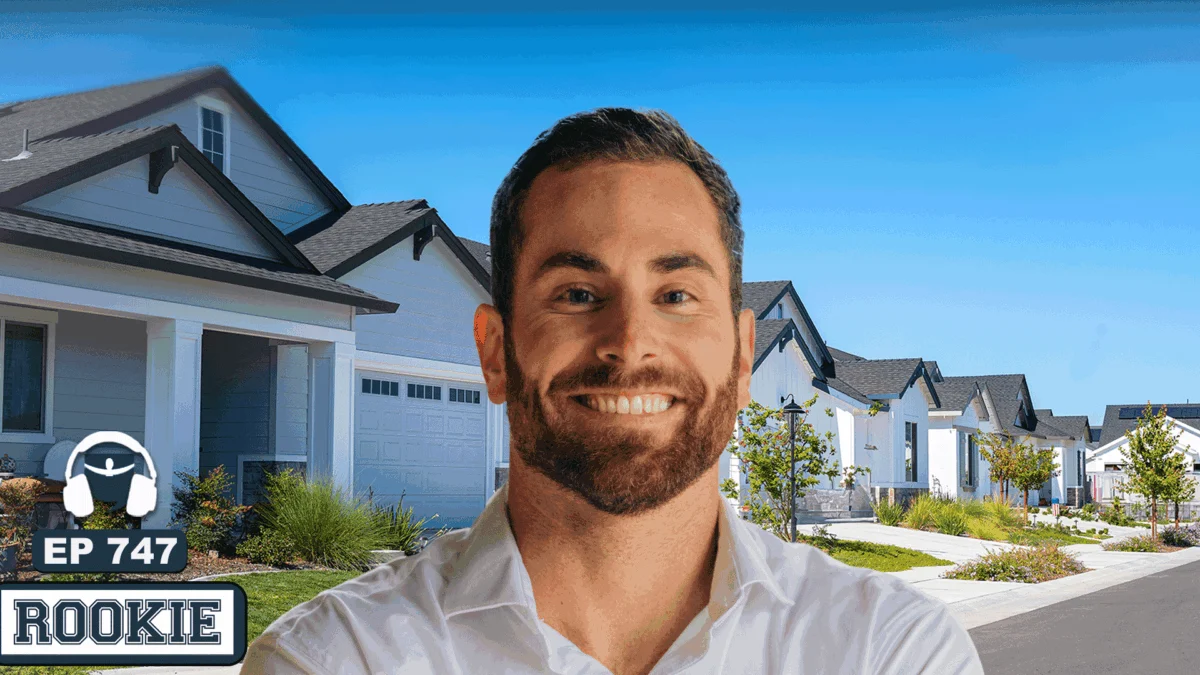
The landscape of residential real estate investing is undergoing a significant shift as sophisticated investors move away from high-volume "door counts" toward high-yield, specialized niches. Luke Frizzell, a former Navy SEAL, has emerged as a leading proponent of this transition, utilizing rigorous military mission-planning frameworks to navigate the complexities of Residential Assisted Living (RAL). By prioritizing worst-case scenario underwriting and a "lease-to-operator" model, Frizzell has demonstrated a method for generating significant monthly cash flow—often exceeding $3,000 per property—while minimizing the operational burdens typically associated with high-intensity real estate assets.
The Foundation of Mission-Based Investing
The transition from military service to private sector investment often requires a translation of skill sets. For Frizzell, the cornerstone of his real estate success is the SMEAC framework, a standard military acronym used for five-paragraph field orders. In a professional investment context, this framework serves as a comprehensive due diligence and execution blueprint:
- Situation: This involves a macro-level analysis of the environment. Investors evaluate interest rate trends, local zoning laws, and demographic shifts. In Frizzell’s case, the "situation" was the aging American population and the rising demand for senior housing.
- Mission: A clear, concise statement of the objective. Rather than a vague goal of "making money," a mission might be "to acquire a five-bedroom residential property in Phoenix, Arizona, for under $900,000 to be converted into a licensed assisted living facility."
- Execution: The tactical plan to achieve the mission. This includes the specific underwriting parameters, the search for properties that meet ADA (Americans with Disabilities Act) potential, and the timeline for renovations.
- Admin and Logistics: The infrastructure supporting the deal. This covers the coordination with lenders, securing specialized insurance, and managing the capital stack.
- Command and Control: The management structure. For Frizzell, this defines the relationship between the property owner (the landlord) and the professional care operator who manages the daily residents.
By applying this level of discipline, Frizzell argues that investors can avoid the "upside-only" bias that often leads to financial distress during market downturns. Instead of underwriting for the best-case scenario, his approach focuses on the "floor"—ensuring the deal remains viable even if occupancy lags or expenses rise.
Chronology of a Strategic Pivot: 2017 to Present
Frizzell’s journey into real estate began in 2017, providing a case study in how "house hacking" can serve as a springboard for more complex commercial-style ventures.
2017–2019: The Primary Residence and the ADU Strategy
While on active duty in San Diego, Frizzell purchased a primary residence for $650,000 using a VA loan, which allowed for 0% down payment. Initially, the property functioned as a financial liability, with high California mortgage payments outstripping his military salary. To mitigate this, Frizzell invested approximately $70,000—funded through a combination of personal savings and a refinance—to convert a 400-square-foot garage into an Accessory Dwelling Unit (ADU).
The result was a 25% cash-on-cash return on the renovation costs, as the unit generated $1,500 in monthly rental income. Furthermore, the addition of the ADU forced an estimated $200,000 in property appreciation. This early success highlighted the value of "extracting more value from existing assets" rather than simply chasing new acquisitions.
2022: The Pivot to Residential Assisted Living
As interest rates began to climb and the Southern California market reached a plateau, Frizzell looked toward Phoenix, Arizona. He identified a significant gap in the market: the "Silver Tsunami." With approximately 10,000 Baby Boomers turning 65 every day in the United States, the demand for senior care is projected to outpace supply for decades.
Frizzell pivoted his focus to the "lease-to-operator" model. Unlike traditional assisted living investors who manage the care staff and medical requirements themselves, Frizzell chose to remain solely as the real estate owner. He acquires residential homes, converts them to meet state licensing and ADA requirements, and then leases them to professional care providers.
The Economics of the Lease-to-Operator Model
The financial disparity between traditional residential renting and the RAL lease-to-operator model is stark. In a typical Phoenix suburb, a large residential home might command a market rent of $3,200 per month. However, a property converted for assisted living can command a commercial lease of $8,000 per month or more.
Comparative Financial Analysis
- Property Acquisition: $875,000.
- Monthly Mortgage (P&I, Taxes, Insurance): Approximately $4,700.
- Standard Market Rent: $3,200 (Resulting in a monthly loss of $1,500).
- RAL Commercial Lease: $8,000 (Resulting in a monthly profit of $3,300).
The premium paid by the operator is justified by the property’s specialized infrastructure. To qualify for a license, these homes must often feature fire sprinkler systems, wheelchair ramps, widened doorways, and grab bars. By providing a "turnkey" facility, the investor allows the operator to focus on their core competency—caregiving—without the burden of real estate acquisition or major structural renovations.
Furthermore, these leases are typically structured as "triple net" or modified gross leases, where the operator handles utilities, minor maintenance, and even cosmetic upkeep. This creates a "hands-free" income stream for the investor, similar to commercial real estate but within the familiar framework of residential housing.
Supporting Data: The Senior Care Crisis
The viability of Frizzell’s model is supported by broader economic and demographic data. According to the Genworth Cost of Care Survey, the national median cost for a private room in an assisted living facility has risen steadily, now exceeding $5,000 to $6,000 per month in many markets.
Residential assisted living facilities (typically housing 6 to 10 residents) are often preferred by families over large, institutional "big box" facilities. Small-format homes offer a higher staff-to-resident ratio and a more familiar, less clinical environment. For investors, this translates to high demand and low vacancy rates. In Phoenix, where Frizzell operates, the density of the retiree population provides a consistent pipeline of residents, ensuring that his operators can maintain the revenue necessary to support high commercial lease payments.
Risk Management and Operational Challenges
Despite the high returns, the RAL niche is not without risks. Frizzell emphasizes that "everything is figure-outable," but requires active contingency planning.
Regulatory and Licensing Hurdles
One of the primary risks involves changes in local zoning or state licensing. Frizzell cites an instance in Phoenix where a moratorium was suddenly placed on new behavioral health licenses. While his operators were initially affected, the commercial nature of the lease protected his income. He worked with the operators to "backfill" the property with a different care niche, demonstrating the importance of maintaining a network of various providers.
The Human Element
Because the property’s value is tied to its use as a care facility, the relationship between the landlord and the operator is critical. Frizzell advocates for extensive vetting of operators, including background checks and interviews with multiple candidates. He also notes that while the lease may technically place maintenance burdens on the operator, a wise investor acts as a partner. Frizzell recounted a situation where he chose to cover a $15,000 HVAC replacement despite it being the operator’s contractual responsibility. His reasoning was strategic: by supporting the operator’s business during a period of low occupancy, he ensured the long-term stability of a tenant paying $96,000 in annual rent.
Broader Impact and Industry Implications
The "Frizzell Model" represents a broader trend toward the decentralization of healthcare and senior services. By repurposing existing residential stock into specialized care facilities, investors are providing a solution to the shortage of senior housing without the environmental impact or time lag of new large-scale construction.
Professional Analysis of Implications
Industry analysts suggest that the success of military-trained investors like Frizzell highlights a growing need for "systems-based" thinking in real estate. As the market for traditional single-family rentals becomes increasingly crowded and low-yield, the ability to navigate complex regulatory environments (like ADA and state health departments) becomes a competitive advantage.
The lease-to-operator model also offers a middle ground for investors who are wary of the liabilities associated with medical care. By separating the real estate ownership from the care operations, the investor limits their exposure to medical malpractice or operational staffing crises, while still capturing the "alpha" generated by the high-demand senior care sector.
Conclusion: Quality Over Quantity
The story of Luke Frizzell serves as a rebuttal to the common investor obsession with "unit count." By focusing on five high-performing assets rather than 100 low-margin apartments, Frizzell has achieved a level of financial freedom and operational simplicity that eludes many larger-scale investors.
His reliance on military mission planning—SMEAC—provides a repeatable template for rookies and experienced investors alike. As the "Silver Tsunami" continues to reshape the American economy, the intersection of residential real estate and professional senior care remains one of the most compelling frontiers for those disciplined enough to underwrite for the worst and plan for the mission. Through his platform, "The RAL Room," Frizzell now aims to decentralize this knowledge, empowering a new generation of investors to prioritize cash flow, quality of care, and strategic discipline over traditional, lower-yield real estate strategies.
