

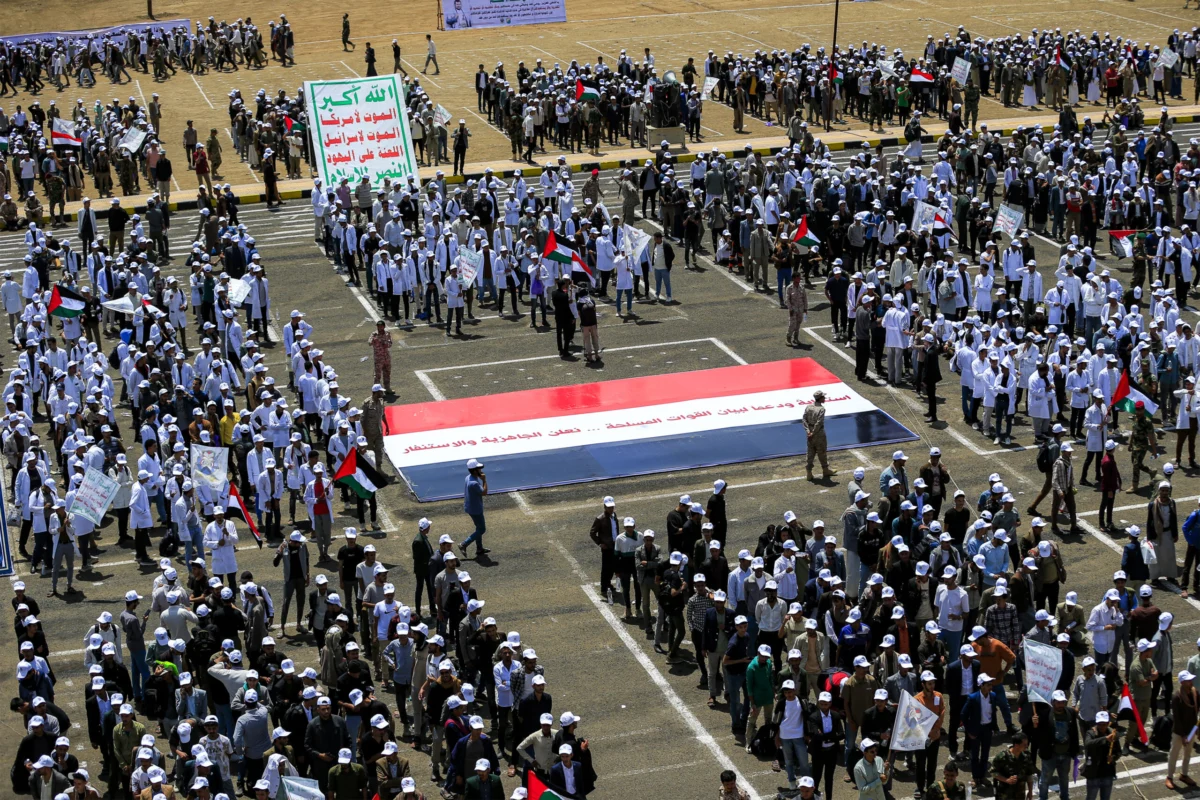
The United Nations envoy for Yemen, Hans Grundberg, has issued a stark warning that renewed attacks by the Houthis (Ansar Allah) on Red Sea shipping lanes risk dragging the war-torn nation back into a devastating full-scale conflict, exacerbating an already dire humanitarian situation. Grundberg’s admonition, delivered in a statement on Thursday, highlighted his profound alarm over the resumption of assaults on commercial vessels and underscored the urgent need for a diplomatic resolution to the country’s protracted crisis. He emphasized that “escalatory actions risk putting Yemen on a path toward further confrontation, drawing the country deeper into an already volatile regional environment, and deepening the suffering of the Yemeni people.” The envoy reiterated that a pathway to de-escalation remains viable, urging a return to negotiations that prioritize Yemen’s political, economic, and security challenges, with the welfare of its populace at the forefront. Such a negotiated political settlement, Grundberg asserted, would also be instrumental in fostering greater stability across the wider Middle East.
Escalation in the Red Sea and Immediate Triggers
The recent surge in Houthi aggression against maritime traffic marks a dangerous turn after a period of relative calm in the primary conflict zones within Yemen. On Wednesday, the Houthis claimed responsibility for striking two Saudi oil tankers, identified as the Encelia and the Layla, with a combination of missiles and drones. This incident represented their first declared attack since announcing a broader blockade of Saudi-linked shipping on July 20. Yahya Saree, the Houthi military spokesman, justified these actions, stating the vessels were targeted "for their violation of the blockade decision issued by the armed forces."
This blockade, and the subsequent attacks, were imposed in direct retaliation for a July 13 bombing of Sanaa airport’s runway. Yemen’s internationally recognized government, backed primarily by Saudi Arabia, stated it carried out the airport strike to prevent an Iranian aircraft from landing, alleging illicit arms transfers. The Houthis, who are allied with Iran, vehemently blamed Saudi Arabia for the attack. In addition to the maritime targeting, the Houthis also launched missiles into Saudi Arabia, specifically aiming at an airport, further demonstrating their capacity and willingness to escalate beyond Yemen’s borders.
The ripple effects of this maritime campaign have been immediate and significant. At least five tankers have reportedly altered their courses to avoid the strategically vital Bab al-Mandeb Strait, a narrow chokepoint off Yemen’s coast connecting the Red Sea to the Gulf of Aden. This disruption has already contributed to a notable increase in global oil prices, with Brent crude surpassing $100 a barrel, signaling broader economic anxieties. The Red Sea, a crucial conduit for global trade, especially energy shipments from the Middle East to Europe and North America, is now facing a heightened risk profile, leading to increased insurance premiums and potential rerouting of vessels, which adds significant time and cost to supply chains.
A Protracted Conflict’s History: The Yemeni Civil War
Yemen has been ensnared in a devastating civil war for nearly 12 years, a conflict that has profoundly reshaped its political landscape and inflicted immense suffering upon its population. The roots of the current crisis trace back to 2014 when the Houthis, an armed Zaidi Shia movement originating from northern Yemen, seized control of the capital, Sanaa. This forceful takeover effectively drove the internationally recognized government, then led by President Abdrabbuh Mansur Hadi, to seek refuge in Aden and eventually in Saudi Arabia.
In response to the Houthi advance and their perceived alignment with Iran, a Saudi-led military coalition, comprising several Sunni Arab states, intervened in Yemen in March 2015. Their stated objective was to restore the legitimate government and curb Iranian influence in what Saudi Arabia considers its strategic backyard. The conflict quickly devolved into a complex proxy war, with the Saudi-led coalition providing air support and military aid to government forces, while Iran allegedly supplied the Houthis with weapons, training, and logistical support, despite Tehran’s denials of direct military involvement.
For years, the conflict was characterized by intense ground fighting, widespread aerial bombardment, and a naval blockade imposed by the Saudi-led coalition, severely restricting the flow of goods, including vital humanitarian aid, into Yemen. Millions were displaced, infrastructure was decimated, and the economy collapsed. While a comprehensive peace agreement remained elusive, a significant de-escalation occurred in 2022, leading to what has been described as a "no war, no peace" deadlock. This period saw a significant reduction in direct military clashes and offered a glimmer of hope for a political resolution, even as the fundamental political divisions between the Houthi-controlled north and the internationally recognized government persisted. However, the recent Red Sea attacks threaten to shatter this fragile equilibrium, reactivating hostilities and plunging the nation into deeper strife.
Humanitarian Catastrophe: A Nation on the Brink
The human cost of the Yemeni civil war is staggering, making it one of the world’s most severe humanitarian crises. The United Nations estimates that a staggering 22 million Yemenis, out of a total population of approximately 30 million, are in need of humanitarian assistance and protection this year. Among these, an alarming 18.3 million people are suffering from acute food insecurity, meaning they do not have enough to eat and are on the brink of famine. Malnutrition rates, particularly among children, remain among the highest globally, with thousands succumbing to preventable diseases due to a collapsed healthcare system and lack of access to clean water and sanitation.
The recent escalation in the Red Sea poses an existential threat to the already precarious humanitarian aid operations. Any disruption to commercial shipping, particularly for fuel and food imports, could lead to catastrophic shortages. Yemen imports over 90% of its food, and any impediment to this flow, whether due to increased costs, insurance difficulties, or direct attacks, would have immediate and devastating consequences for millions already on the verge of starvation. Humanitarian organizations, including the World Food Programme (WFP) and UNICEF, have consistently warned that funding shortfalls combined with access challenges and escalating violence could push Yemen past the point of no return, reversing any fragile gains made during the recent lull in fighting. The UN’s Office for the Coordination of Humanitarian Affairs (OCHA) has repeatedly called for unimpeded access for aid, emphasizing that the suffering of the Yemeni people should not be used as a political bargaining chip.
Regional Dynamics and US Involvement
The renewed Houthi attacks are not occurring in a vacuum but are deeply intertwined with a broader pattern of escalating regional tensions, particularly concerning the United States, Israel, and Iran. The source article refers to a "US-Israel war on Iran," which should be interpreted as a heightened state of confrontation and proxy conflict involving these nations, rather than a declared direct war. This regional volatility has been exacerbated by the ongoing series of US strikes against Iran-linked targets in the region. The UN warning on Thursday coincided with the United States carrying out its 12th consecutive night of strikes against Iran-linked targets, part of a broader response to attacks on US personnel and interests in the Middle East. These strikes have already disrupted shipping through another critical global chokepoint, the Strait of Hormuz, further demonstrating the fragility of maritime security in the region.
US President Donald Trump issued a stern warning on Wednesday, stating that Washington would hold Iran directly responsible for any further Houthi attacks on shipping. He unequivocally labeled the Houthis as a proxy of Tehran and threatened severe retaliation against both. On his social media platform, Truth Social, Trump declared, "Major military punishment will be inflicted upon Iran and, of course, the Houthis." This statement underscores the US administration’s view of the Houthis as an extension of Iranian regional strategy and signals a potential for direct military intervention against Houthi targets, and potentially Iranian assets, should the attacks continue. The US has maintained a naval presence in the Red Sea and Gulf of Aden, conducting freedom of navigation operations and monitoring maritime security. The possibility of these forces becoming directly embroiled in the conflict, either defensively or offensively, adds another dangerous dimension to the regional powder keg.
Saudi Arabia, the primary backer of the internationally recognized Yemeni government, has not yet issued an official statement regarding the recent Houthi attacks on its oil tankers. However, historically, Riyadh has responded robustly to Houthi provocations, often with retaliatory airstrikes. The targeting of Saudi oil tankers and airports represents a direct challenge to Saudi security and economic interests, making a forceful response highly probable. The internationally recognized government of Yemen, currently based in Aden, is also likely to condemn the Houthi actions and call for international intervention to protect maritime routes and support its efforts to regain control of the country.
Economic Repercussions and Global Trade
The economic implications of prolonged instability in the Red Sea are substantial, extending far beyond the immediate region. The Bab al-Mandeb Strait, a narrow waterway approximately 18 miles wide at its narrowest point, is a critical transit point for an estimated 10% of global trade and a significant portion of the world’s oil and gas shipments. When combined with the Suez Canal, it forms a vital artery connecting Asia and Europe.
The current disruption, marked by rerouting and increased insurance costs, is already impacting global supply chains. For vessels opting to avoid the strait, the alternative route around the Cape of Good Hope in Southern Africa adds thousands of miles and weeks to voyages, significantly increasing fuel consumption, operational costs, and delivery times. This additional burden on shipping companies ultimately translates into higher prices for consumers worldwide, fueling inflationary pressures in an already fragile global economy. Energy markets are particularly sensitive, as evidenced by the immediate spike in Brent crude oil prices. A sustained period of insecurity could push oil prices even higher, impacting energy-dependent economies globally and potentially triggering broader economic downturns. The long-term implications could include a re-evaluation of global trade routes, with some companies potentially seeking more resilient but less efficient alternatives, thereby altering established patterns of international commerce.
Pathways to Peace or Further Conflict
Hans Grundberg’s plea for negotiations highlights the critical juncture at which Yemen now stands. Despite the "no war, no peace" stalemate since 2022, there was a discernible momentum towards diplomatic engagement, albeit slow and fraught with challenges. The recent escalation threatens to dismantle these fragile efforts and push Yemen back into the abyss of a full-blown war, potentially eclipsing the intensity of previous years.
A negotiated political settlement remains the only viable long-term solution. This would necessitate meaningful concessions from all parties: the Houthis, the internationally recognized government, and their respective regional backers. Key issues that need to be addressed include power-sharing arrangements, the future status of various armed groups, economic recovery, and guarantees for humanitarian access. However, the current environment of heightened regional tensions, coupled with the Houthi’s increasingly assertive posture, makes such negotiations immensely difficult.
The alternative is a further descent into conflict, with devastating consequences for the Yemeni people and profound implications for regional and global stability. The risk of the Yemeni conflict spilling over into a wider regional confrontation, drawing in more international actors and further entrenching proxy battles, is now higher than ever. The international community, led by the United Nations, faces a monumental challenge in de-escalating the situation, protecting maritime freedom, and ultimately guiding Yemen towards a sustainable peace. Without concerted diplomatic efforts and a genuine commitment from all parties to prioritize the welfare of the Yemeni people, the future appears bleak, marked by continued suffering and instability.
