

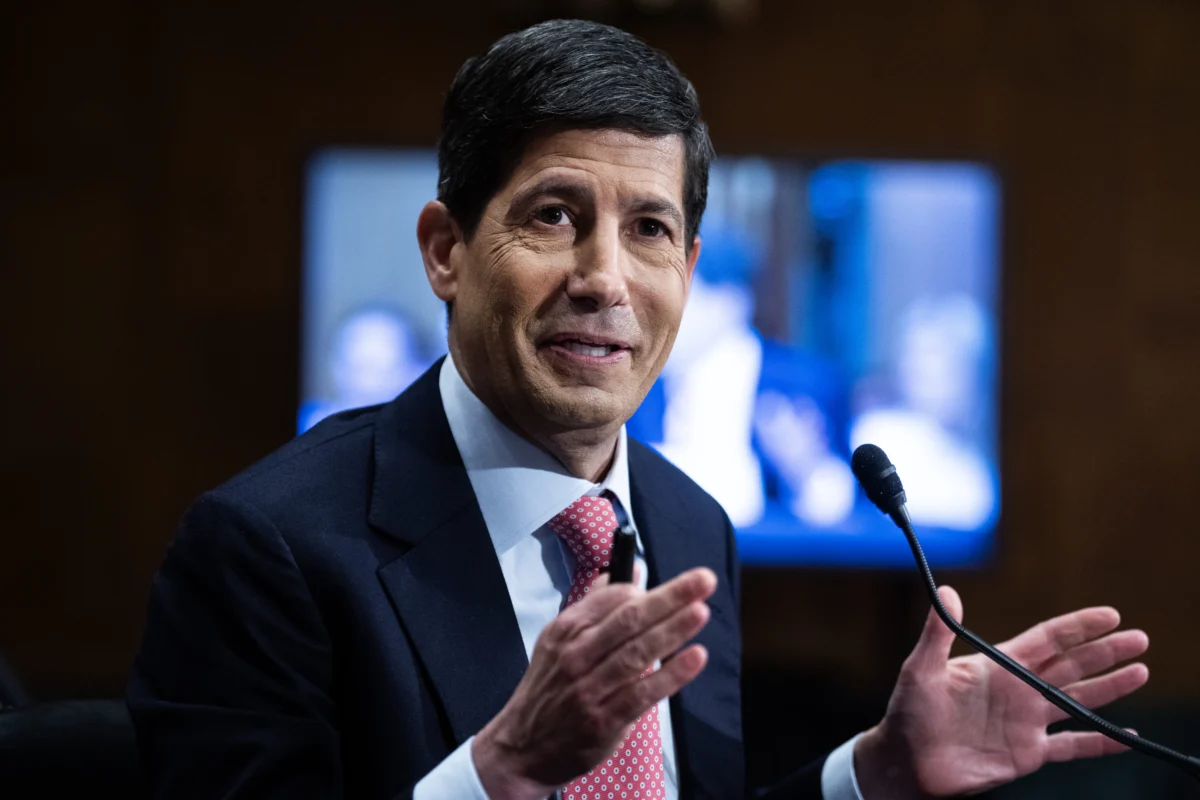
In a series of revelations that have sent ripples through both the financial and technological sectors, Federal Reserve Chairman Kevin Warsh testified before the Senate Banking, Housing, and Urban Affairs Committee on July 15, 2026, disclosing a significant gap in the central bank’s defensive capabilities. Despite the Federal Reserve’s role as the primary overseer of the American financial system, the institution has remained without access to a critical artificial intelligence model designed to identify and patch systemic cybersecurity vulnerabilities. The model, known as Claude Mythos Preview, was developed by the AI firm Anthropic and has already been deployed to several of the nation’s largest private commercial banks and technology giants.
The testimony highlights a growing disconnect between the rapid pace of artificial intelligence development and the regulatory framework intended to safeguard the nation’s infrastructure. As the Fed struggles to secure the same tools currently utilized by the private sector, concerns are mounting regarding the potential for a "security asymmetry" that could leave the most systemically important global financial institution vulnerable to sophisticated cyberattacks.
The Genesis of the AI Security Crisis
The current dilemma traces back to an extraordinary meeting convened in April 2026. At that time, then-Federal Reserve Chairman Jerome Powell and Treasury Secretary Scott Bessent summoned the CEOs of the nation’s top financial institutions to discuss an emerging class of "advanced new artificial intelligence models." During this briefing, officials sounded the alarm regarding the dual-use nature of these models: while they represent a pinnacle of technological achievement, they also pose an unprecedented cybersecurity threat.
Anthropic, a leading player in the AI space, unveiled its Claude Mythos Preview and the accompanying "Project Glasswing" initiative shortly thereafter. According to the company, Mythos excels at identifying weaknesses and security vulnerabilities within complex software architectures—a capability that is essential for defense but catastrophic if exploited by bad actors.
To manage the risk, Anthropic initially released the model to a select group of approximately 50 organizations. This list included "Too Big to Fail" banks such as JPMorgan Chase, as well as technology conglomerates including Amazon, Apple, and Google. However, despite being the architect of U.S. monetary policy and the "lender of last resort," the Federal Reserve was notably absent from the initial cohort of users.
Chairman Warsh’s Senate Testimony
Kevin Warsh, who succeeded Jerome Powell as Chairman of the Federal Reserve, addressed this disparity during the Semiannual Monetary Policy Report to Congress. Responding to inquiries from Senator Jack Reed (D.-R.I.), Warsh confirmed that as of mid-July, the Fed was still effectively "locked out" of the Mythos ecosystem.
"We are not the deciders as to who has access," Warsh told the committee, emphasizing that the central bank is dependent on private vendors and other government agencies for clearance. "I have not been shy in sharing my views with authorities across the government about the vulnerabilities, and have been asking for access not just for the Federal Reserve but for other institutions to a whole range of these new artificial intelligence models so that they can protect themselves."
Warsh’s comments suggest that the Fed’s concerns extend beyond a single model. He clarified that Mythos is merely the most prominent example of a broader trend where cutting-edge AI is being integrated into the financial system faster than regulators can monitor it. "I wouldn’t want to just isolate Mythos," Warsh added. "As these new models find their way more broadly, our banking system and frankly, the Federal Reserve, needs to do all we can to patch any vulnerabilities that we have."
A Timeline of Regulatory Friction and Export Controls
The delay in the Fed’s access to Mythos is inextricably linked to a volatile regulatory environment and shifting personnel within the Trump administration. The rollout of Mythos has been characterized by a sequence of administrative hurdles:
- April 2026: Anthropic launches Project Glasswing and Claude Mythos Preview. Access is granted to 50 "trusted partners" in the private sector.
- June 2, 2026: Anthropic expands access to over 150 organizations across 15 countries.
- June 15, 2026: President Trump signs a comprehensive AI Executive Order, signaling a more interventionist approach to AI regulation and national security.
- Late June 2026: Anthropic is forced to temporarily disable access to Mythos 5 and Fable 5 following an export control directive from the Department of Commerce, citing "national security authorities."
- June 30, 2026: Commerce Secretary Howard Lutnick grants permission to restore access for a specific subset of partners, eventually lifting the controls entirely after intense industry lobbying.
- July 15, 2026: Chairman Warsh testifies that the Fed still lacks access to the model, three months after the initial high-level warnings were issued.
The internal "chaos" within the administration’s AI oversight bodies has further complicated the situation. David Sacks, who served as the White House AI and crypto czar, stepped down in March 2026. More recently, Chris Fall, the head of the Center for AI Standards and Innovation, resigned his post just three months after being appointed. This vacuum in leadership has left the Federal Reserve in a precarious position, navigating a landscape where the rules for AI access are being written—and rewritten—in real-time.
The Geopolitical Stakes: The Rise of Moonshot AI
The urgency of the Fed’s request for access is underscored by the rapid advancement of international competitors, particularly from China. While U.S. agencies and firms debate access protocols for Anthropic’s models, Chinese "open-weight" models are gaining significant momentum.
Earlier this month, the Chinese startup Moonshot AI released Kimi K3, a model that has reportedly outperformed both OpenAI and Anthropic offerings across several industry benchmarks. The emergence of Kimi K3 has sparked concerns that the U.S. may be losing its competitive edge due to domestic regulatory bottlenecks.
Former AI czar David Sacks expressed his concerns on social media, stating that the U.S. is "tying itself in knots" with internal disputes while global competitors move forward at full speed. "This is how you lose the AI race," Sacks wrote. "The rest of the world won’t play by our rules if we bog ourselves down."
For the Federal Reserve, the threat is twofold: not only could the U.S. financial system be targeted by foreign-developed AI, but the Fed itself could be left using "legacy" defensive tools while the institutions it regulates—and the adversaries it faces—are equipped with the latest technology.
Expert Analysis: The Risks of Regulatory Lag
Industry analysts have expressed surprise at the Federal Reserve’s exclusion from Project Glasswing. Daniel Newman, CEO of The Futurum Group, noted that the Fed’s role as a policy driver makes its lack of access particularly concerning.
"You would think that the financial institution that sort of drives all the policy for the rest of the financial institutions would be front and center of at least having a chance to evaluate the new technology," Newman told CNBC. He warned that the Fed is now in a position where it must "play catch up," a dangerous posture in an era where cyber threats evolve in days rather than years.
The implications of this "catch-up" period are significant. If the Federal Reserve cannot use Mythos to identify vulnerabilities in its own systems—such as the Fedwire Funds Service, which processes trillions of dollars in transactions daily—the entire global economy could be at risk. Furthermore, without a deep understanding of how Mythos works, the Fed’s ability to supervise the AI-driven risk management strategies of banks like JPMorgan Chase is severely diminished.
Future Implications for Monetary Policy and Stability
Chairman Warsh has been a vocal proponent of AI adoption, describing it as a "transformational technology" that could eventually assist in everything from economic forecasting to real-time inflation monitoring. However, the current standoff over Claude Mythos suggests that the path to integration will be fraught with political and security-related obstacles.
As the Federal Reserve continues to lobby for access, the broader question remains: who ultimately controls the keys to the nation’s AI defenses? The current situation implies that for now, the power resides with private corporations and a fragmented group of executive branch officials, leaving the independent central bank on the outside looking in.
Anthropic has not yet responded to requests for comment regarding why the Federal Reserve was not included in the Project Glasswing expansion. The Federal Reserve has similarly declined to provide further details beyond Chairman Warsh’s public testimony.
As the Senate Banking Committee continues its oversight, the pressure is mounting on the Trump administration to streamline the process for granting AI access to systemic regulators. In the words of Chairman Warsh, the goal is simple but the execution remains elusive: "Our banking system and frankly, the Federal Reserve, needs to do all we can to patch any vulnerabilities that we have." Without the tools to find those patches, the system remains a "glasswing"—impressive in its complexity, but dangerously transparent to those who know where to strike.
