

For decades, the international community has approached climate change through the lens of carbon management, focusing on the atmospheric consequences of industrial activity rather than the primary source of the problem. However, a significant shift in diplomatic strategy is currently underway. For those disillusioned by the slow, grueling grind of the United Nations Climate Change Conference (COP) negotiations, the emergence of a second parallel track of international talks to accelerate progress is bringing renewed hope for action on one of the thorniest issues of the environmental struggle: the direct phaseout of oil, coal, and gas.
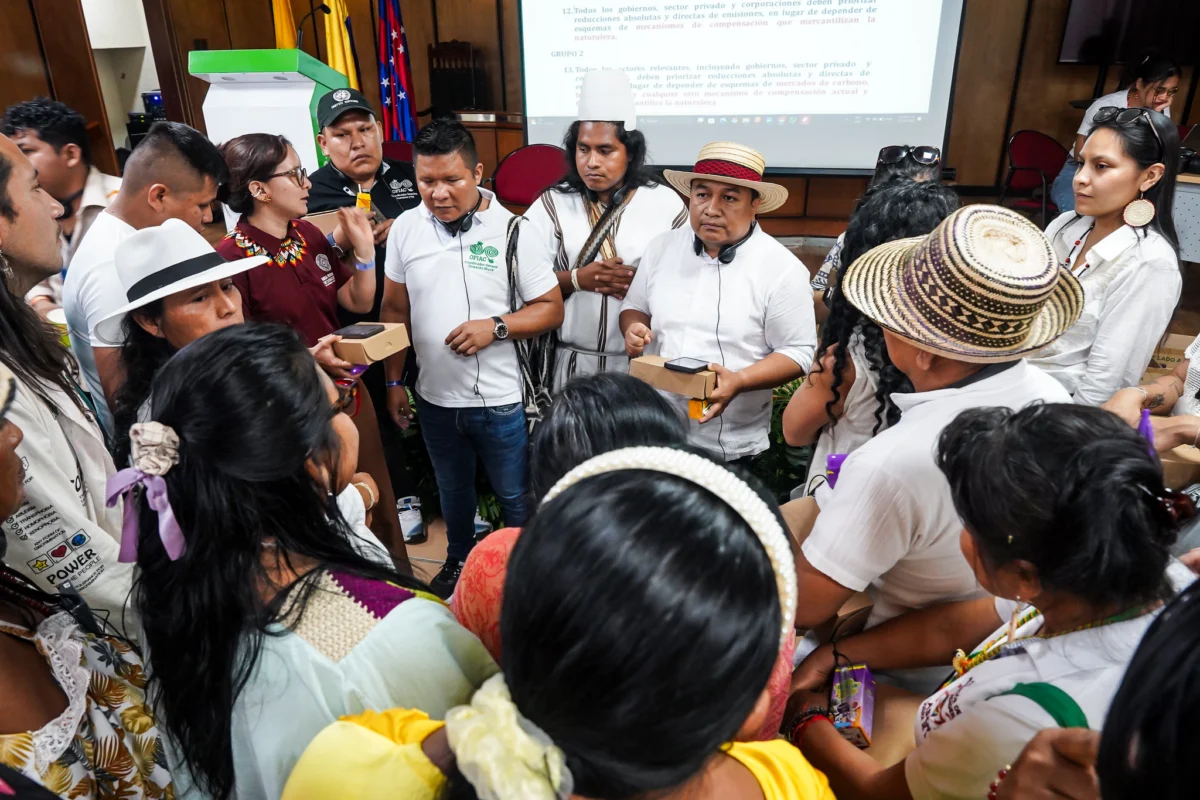
In April 2024, a landmark event took place in the Colombian port city of Santa Marta. Known as the first-ever conference on Transitioning Away from Fossil Fuels (TAFF), the summit brought together 57 countries representing approximately one-third of global gross domestic product. This initiative, now formally dubbed the Santa Marta process, signals a departure from traditional climate diplomacy by prioritizing the supply side of the energy equation. Participants included not only national governments but also subnational entities, nongovernmental organizations, leading climate scientists, trade unions, and Indigenous Peoples. For many observers, the meeting was more than a technical workshop; it was a historic pivot in how the world addresses the root cause of global warming.
A New Speed for Climate Diplomacy
The traditional United Nations Framework Convention on Climate Change (UNFCCC) process operates on the principle of universal consensus. While this ensures that every nation has a seat at the table, it also means that progress is often dictated by the slowest-moving participants—specifically those with significant economic interests in the continued extraction of hydrocarbons. The Santa Marta conference, co-hosted by Colombia and the Netherlands, was explicitly designed as a "complementary space" rather than a replacement for COP. Its purpose was to foster a more agile environment where "coalitions of the willing" could move faster than the consensus-driven UN system.
Tzeporah Berman, the British Columbia-based founder and chair of the Fossil Fuel Treaty Initiative, highlighted the significance of this shift. She noted that for thirty years, global negotiations focused on managing emissions while ignoring the proliferation of fossil fuel extraction. Santa Marta represented the first time countries convened to discuss not just whether a phaseout was necessary, but the practical, logistical, and economic mechanisms of how to achieve it.
This "two-speed" approach to climate diplomacy is gaining traction among researchers. Wesley Morgan, a research associate at the Institute for Climate Risk and Response at the University of New South Wales, observed that while the UN talks remain the primary anchor for global climate policy, the Santa Marta process offers a high-velocity alternative. This second track allows ambitious nations to develop frameworks and roadmaps without being derailed by the veto power of major petrostates.
Strategic Exclusion and Open Dialogue
One of the most notable aspects of the Santa Marta summit was its invitation list. To ensure productive discussions, the organizers excluded the world’s major fossil fuel producers that have historically blocked progress in UN forums. While some oil-producing nations with transition ambitions, such as Canada, Norway, and Brazil, were present, none of the Middle Eastern petrostates were invited. Furthermore, major emitters like the United States, Russia, China, and India were absent.
The absence of these vested interests created a unique psychological and political environment. Participants reported a sense of freedom that is rarely found in the high-stakes, adversarial atmosphere of COP. Without the need to word-smith every sentence to appease oil-exporting giants, ministers, scientists, and activists were able to engage in creative problem-solving. The focus shifted from debating the reality of the energy transition to identifying the economic and diplomatic tools required to replace fossil fuel revenue and ensure energy security during the shift.
The Three Pillars of the Santa Marta Process
The work of the Santa Marta process is structured around three core themes, which were formalized into work streams during the April summit. These pillars are intended to provide "flesh to the bones" of the transition roadmap:
- Reducing Economic Dependence: Many developing nations are caught in a "carbon trap," where their national budgets are heavily reliant on fossil fuel exports. The Santa Marta process seeks to identify international financial mechanisms and diversification strategies to help these nations move toward green economies without facing total financial collapse.
- Transforming Supply and Demand: This work stream focuses on the technical aspects of the energy transition. It involves mapping out the decommissioning of extraction sites and the simultaneous scaling of renewable energy infrastructure to ensure that global energy needs are met without a resurgence in coal or gas usage.
- Advancing International Cooperation and Climate Diplomacy: This pillar aims to build a robust legal and diplomatic framework that could eventually be integrated into formal UN processes. It draws inspiration from previous international successes, such as the Ottawa Treaty to ban landmines, which began as a small movement outside the UN and eventually gained enough political weight to become international law.
Chronology and the Path to COP31
The momentum for the Santa Marta process did not emerge in a vacuum. It was born out of the frustrations of COP28 in Dubai and the lead-up to COP30 in Belém, Brazil. During negotiations in late 2023, a push to include a fossil fuel transition roadmap in the official COP text was blocked by a coalition of oil-producing countries. In response, Brazil’s COP30 presidency promised to facilitate a separate roadmap to be presented at COP31 in Turkey.
The Santa Marta conference served as the intellectual and political engine for this roadmap. Following the April summit, a comprehensive report was released on June 23, 2024, during the Global Energy Transition and Electrification Summit in London. This report, which forms the basis of the "Spirit of Santa Marta," outlines the findings and recommendations that will be carried forward into future negotiations.
The process is already looking toward the long term. A second TAFF conference is scheduled for 2027, to be co-hosted by Tuvalu and Ireland. This choice of hosts is symbolic; Tuvalu represents the small island nations facing an existential threat from rising seas, while Ireland represents the European commitment to legislative fossil fuel bans. Between 2024 and 2027, specialized working groups will meet regularly to formalize agreements on the three primary work streams.
Geopolitical Context and Energy Security
The Santa Marta dialogues were also shaped by the volatile geopolitical landscape of 2024. Ongoing conflicts in the Middle East, specifically tensions involving Iran and the potential for a logjam in the Strait of Hormuz, have cast a shadow over global energy markets. Historically, such instability might have led countries to double down on domestic fossil fuel production. However, at Santa Marta, the conversation took a different turn.
Participants increasingly framed the fossil fuel phaseout as a matter of national and economic security. The inherent volatility of the global oil market, exacerbated by regional conflicts, was cited as a primary reason to accelerate the transition to localized, renewable energy sources. This shift in narrative—from climate protection to political stability—has helped broaden the appeal of the Santa Marta process to more conservative elements of government and industry.
Subnational Momentum and the "Build It" Model
The influence of the Santa Marta process is already trickling down to the subnational level. Major coalitions like C40 Cities and the Under2 Coalition, which represent hundreds of state and local governments, have begun to pivot their own programs. Previously, these groups focused almost exclusively on promoting renewables and energy efficiency. Following the Santa Marta summit, they have started developing "handbooks and toolkits" for cities and states to manage the phaseout of fossil fuel production within their jurisdictions.
This strategy follows a historical precedent often cited by policy experts at the International Institute for Sustainable Development (IISD). Natalie Jones and Paola Yanguas Parra, policy advisers at the IISD, argue that the Santa Marta process is following a "build it and they will come" model. By creating a robust, functional framework for phaseout outside the formal UN system, the coalition is building a "gradual accumulation of political weight."
The goal is not to stay outside the UN system forever, but to enter it only when the proposed solutions are so well-developed and have such broad support that they become hard for the remaining "blocker" nations to resist. This strategy avoids the "dilution of ambition" that typically occurs when negotiators try to accommodate the most resistant parties in the early stages of a treaty’s development.
Conclusion: A Turning Point for the Transition
The Santa Marta process represents a sophisticated evolution in climate diplomacy. It acknowledges that while the UN remains a vital forum for global consensus, it is currently ill-equipped to handle the aggressive timelines required to meet the goals of the Paris Agreement. By focusing on the "how" of the transition rather than the "if," the 57 countries involved in this initiative are providing a blueprint for a post-fossil fuel world.
As the international community prepares for COP31 and the subsequent 2027 summit in Tuvalu, the "Spirit of Santa Marta" serves as a reminder that progress is possible when ambitious leaders are willing to step outside traditional boundaries. The transition away from fossil fuels is no longer just a theoretical environmental goal; it is becoming a structured, diplomatic reality, fueled by a growing realization that economic and political stability depends on a swift and orderly exit from the hydrocarbon era.
