

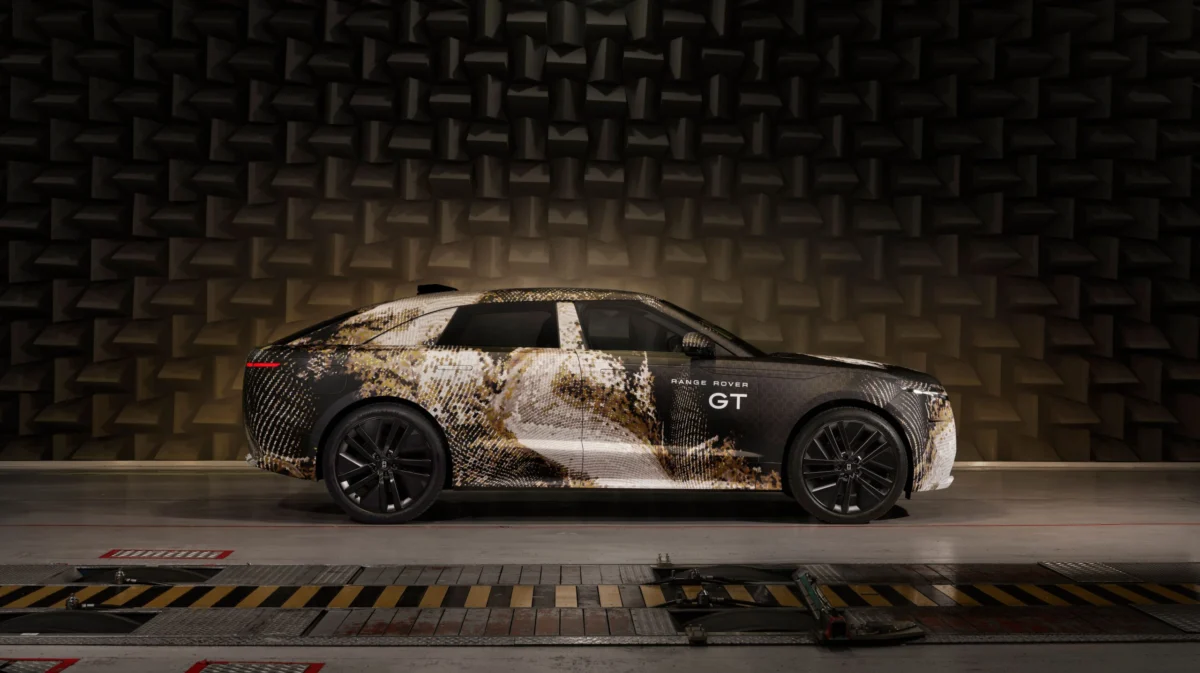
In a move that signals a profound transformation of its brand identity, JLR (formerly Jaguar Land Rover) has officially confirmed the addition of a fifth model to its Range Rover lineup: the Range Rover GT. This all-electric grand tourer represents a radical departure from the boxy, high-riding silhouettes that have defined the marque for over half a century. Built on the company’s advanced Electrified Modular Architecture (EMA), the GT is positioned not merely as another luxury vehicle, but as a strategic pivot toward a future where "Range Rover" signifies a specific philosophy of luxury rather than a specific vehicle segment.
While the automotive world has long associated Range Rover with peerless off-road capability and commanding "command driving" positions, the GT aims to capture a different demographic. It is a low-slung, aerodynamically optimized grand tourer designed for high-speed, long-distance travel, blending the brand’s signature refinement with the performance characteristics of a high-end electric vehicle (EV). With a confirmed road-arrival date of 2027, the Range Rover GT is set to become a cornerstone of JLR’s "Reimagine" strategy, a multi-billion-dollar initiative aimed at electrifying its entire portfolio.
A New Design Language: The Silhouette of the Future
Initial imagery of camouflaged prototypes reveals a vehicle that challenges traditional brand expectations. The Range Rover GT features a sleek, sweeping silhouette and classic coupé proportions, characterized by a long hood, a dramatically raked windshield, and a roofline that tapers elegantly toward the rear. To the casual observer, these lines might more closely resemble the offerings of its sister brand, Jaguar, than the traditional Range Rover stable.
However, design leadership at JLR insists that the GT remains "uniquely Range Rover." The vehicle maintains a sense of "reductive design"—a philosophy championed by JLR Chief Creative Officer Gerry McGovern—which emphasizes clean surfaces and the removal of unnecessary ornamentation. The GT’s aesthetic is intended to convey a sense of effortless poise, a quality the brand calls "GT poise," which differentiates it from more aggressive, track-focused electric sports cars.
Inside, the cabin previews a minimalist vision of modern luxury. Official interior images showcase a "clean" dashboard layout that eschews the traditional clutter of buttons and switches. A wide, slender driver’s display provides essential telemetry, while a larger, floating central touchscreen handles the majority of infotainment and vehicle functions. In a move that goes against recent industry trends—where some manufacturers are returning to physical switchgear following customer feedback—Range Rover has doubled down on a touch-centric interface. Even climate controls appear to be integrated into the digital ecosystem, a decision that highlights the brand’s commitment to a high-tech, streamlined user experience.
The EMA Platform: The Foundation of JLR’s Electric Future
The Range Rover GT is significant not just for its design, but for its role as the pioneer of the Electrified Modular Architecture (EMA). While the larger Range Rover Electric (the EV version of the flagship SUV) utilizes the Modular Longitudinal Architecture (MLA)—a flexible platform capable of housing internal combustion engines, hybrids, and electric powertrains—the EMA is a "born-electric" platform designed specifically for mid-sized vehicles.

The EMA architecture will be the backbone of JLR’s next generation of core models. Following the launch of the Range Rover GT, the platform will underpin:
- The next-generation Range Rover Evoque EV.
- The all-electric successor to the Range Rover Velar.
- The Land Rover Discovery Sport replacement.
- The highly anticipated "Baby Defender," a smaller, more accessible version of the rugged off-road icon.
By utilizing a dedicated EV platform, the Range Rover GT can maximize interior space. The absence of a traditional transmission tunnel allows for a flat floor, providing rear passengers with "limousine-like" legroom, despite the car’s lower roofline. The platform also supports ultra-fast charging capabilities and advanced battery management systems, although specific battery capacities and range figures remain under wraps.
Strategic Positioning: Range Rover vs. Jaguar
One of the most pressing questions facing JLR is how the Range Rover GT will coexist with the upcoming Jaguar Type 01. Both vehicles are all-electric four-door grand tourers. Both are scheduled for a 2027 launch. Both target a similar "ultra-luxury" price bracket.
This internal overlap has led to intense scrutiny of JLR’s "House of Brands" strategy. Under this structure, Range Rover, Defender, Discovery, and Jaguar operate as distinct entities. JLR management argues that the two GTs serve different masters. A company spokesperson clarified that while the Jaguar Type 01 is a complete "reset" for the Jaguar brand—aimed at being an avant-garde, electric-only luxury disruptor—the Range Rover GT is an evolution of a formula.
Crucially, Range Rover asserts that the GT will retain the brand’s legendary all-terrain capability. Martin Limpert, Global Managing Director for Range Rover, stated that the EV will offer "capabilities no conventional GT can match." This implies that despite its sleek appearance, the GT will feature sophisticated all-wheel-drive systems and air suspension capable of tackling surfaces that would immobilize a standard luxury sedan. This "go-anywhere" DNA is the primary differentiator intended to prevent the GT from cannibalizing Jaguar’s sales.
Manufacturing and Economic Impact
The production of the Range Rover GT is a vital component of the UK’s automotive manufacturing landscape. The vehicle will be built at JLR’s Halewood plant in Merseyside. This facility is currently undergoing a £15 billion ($19 billion) transformation to become an all-electric production hub.
The investment in Halewood is seen as a major vote of confidence in the UK’s industrial sector, securing thousands of jobs and positioning the region at the center of the global EV transition. While the GT will debut as a pure electric vehicle, JLR has hinted that the EMA platform is flexible enough to accommodate hybrid options "later in the lifecycle" should market demand necessitate a more diversified powertrain strategy. This flexibility is a pragmatic hedge against the fluctuating global adoption rates of pure EVs.

Chronology of Development
The path to the Range Rover GT has been a multi-year journey of engineering and brand repositioning:
- 2021: JLR announces the "Reimagine" strategy, confirming that Range Rover will receive its first all-electric model by 2024.
- 2023: JLR transitions to a "House of Brands" organization, elevating Range Rover to a standalone brand identity.
- Early 2024: Testing begins for the flagship Range Rover Electric (MLA platform) in extreme cold-weather conditions.
- Late 2024: First official confirmation of the "Range Rover GT" as the fifth model in the lineup, built on the EMA platform.
- 2025-2026: Full technical specifications, including range, horsepower, and pricing, are expected to be revealed during global launch events.
- 2027: The Range Rover GT is scheduled to reach customers globally.
Industry Analysis: The Risks and Rewards
The Range Rover GT is a high-stakes gamble for JLR. By moving away from the SUV format, the brand is entering a segment currently dominated by the Porsche Taycan, Audi e-tron GT, and Lucid Air. To succeed, the GT must offer something those competitors cannot.
The "reward" of this strategy is the potential to capture a younger, more urban-focused demographic that finds traditional SUVs too cumbersome but still desires the prestige associated with the Range Rover badge. By offering a "car-like" driving experience with "SUV-like" peace of mind (via off-road capability), Range Rover is attempting to create a sub-segment of one.
However, the "risk" lies in brand dilution. There is a segment of the loyalist customer base that views the Range Rover name as synonymous with a specific upright, utilitarian-yet-luxurious aesthetic. A low-slung GT could be perceived as a departure too far. Furthermore, the reliance on touchscreens and the omission of physical buttons is a polarizing design choice that could alienate traditional luxury buyers who value tactile, mechanical quality.
Conclusion: A Redefined Legacy
As the automotive industry hurtles toward an electric-only future, the Range Rover GT represents a bold attempt to future-proof one of the world’s most recognizable luxury brands. It is a vehicle of contradictions: a grand tourer that can go off-road, a Range Rover that isn’t an SUV, and a minimalist interior that houses maximalist technology.
By 2027, the success of the GT will serve as a bellwether for JLR’s broader ambitions. If the market embraces a Range Rover that prioritizes "long-distance refinement" and "sleek silhouettes" over traditional boxy dimensions, it will validate the company’s "House of Brands" philosophy. For now, the GT remains a tantalizing glimpse into a future where the boundaries between vehicle segments continue to blur, and where "Range Rover" is no longer defined by the height of its roof, but by the sophistication of its journey.
