

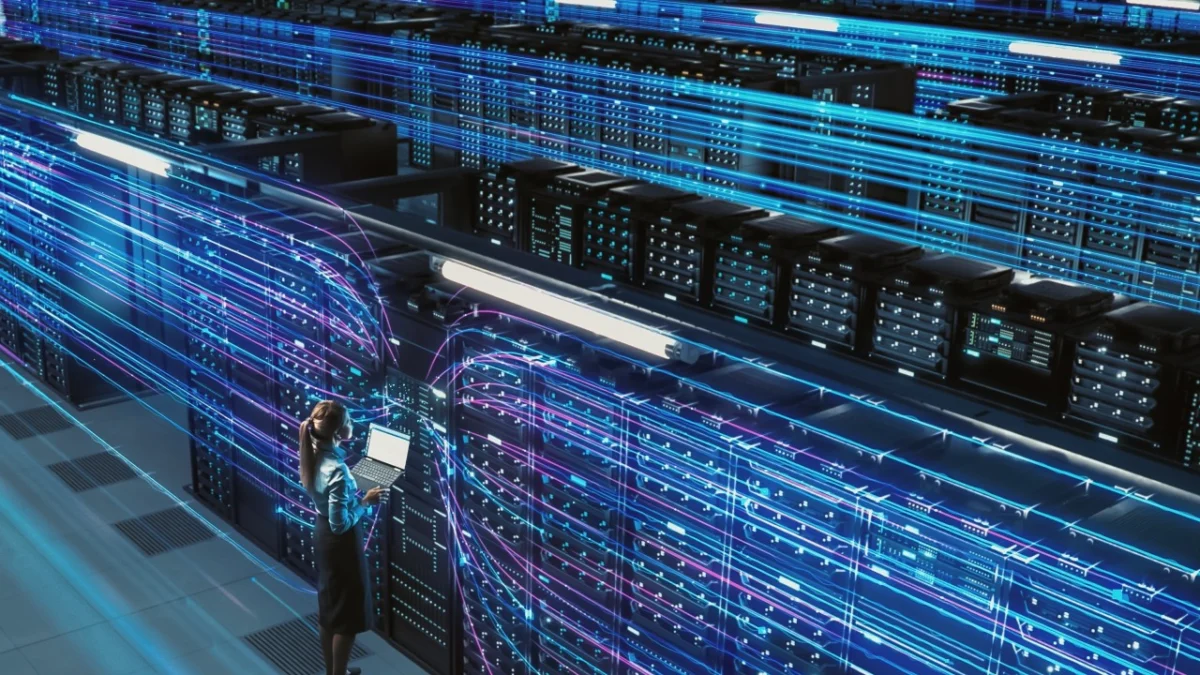
Shares of the prominent Chinese artificial intelligence developer Zhipu AI, operating under the brand Z.ai, experienced a dramatic recovery in the Hong Kong equity market on Tuesday, surging by 37 per cent to close at HK$1,219 (US$155). This sharp rebound follows a turbulent week during which the company’s valuation plummeted by more than 40 per cent amid broader market volatility and concerns over the scalability of domestic AI infrastructure. The rally was primarily catalyzed by internal reports confirming the successful completion of a massive 1-gigawatt (GW) AI computing centre, a facility notable for its exclusive reliance on domestically produced semiconductors.
The achievement marks a significant milestone for the Beijing-based firm, which has emerged as a frontrunner in China’s race to achieve technological self-sufficiency in the face of tightening international export controls. By successfully integrating a 1-gigawatt power capacity into a single computing ecosystem using only Chinese-made chips, Zhipu AI has demonstrated a viable path forward for large-scale model training that bypasses the need for high-end American silicon.
The 1-Gigawatt Milestone and the GLM Roadmap
The newly completed data centre is reportedly one of the largest dedicated AI training facilities in the world. At a capacity of 1 gigawatt, the site is designed to provide the immense computational throughput required to train and deploy the next generation of Zhipu’s General Language Models (GLM). Sources familiar with the project indicate that the facility is currently being utilized to refine GLM-5.2, a model that Zhipu AI has positioned as a direct competitor to top-tier international offerings such as Anthropic’s Claude and OpenAI’s GPT series.
The scale of a 1-gigawatt facility is difficult to overstate. In the context of data centre infrastructure, 1GW of power capacity is sufficient to support hundreds of thousands of high-performance server racks. For Zhipu AI, this infrastructure represents the "physical moat" necessary to sustain the iterative demands of deep learning. As LLMs grow in complexity, the relationship between available compute and model performance becomes increasingly linear; by securing this volume of domestic compute, Zhipu AI is effectively insulating its research and development pipeline from future supply chain disruptions.
The decision to utilize only domestic chips—likely sourced from a combination of Chinese providers such as Huawei’s Ascend division, Biren Technology, or Moore Threads—highlights a maturing ecosystem within China’s semiconductor industry. While domestic chips have historically faced challenges regarding interconnect speeds and software compatibility, Zhipu’s successful deployment suggests that these hurdles are being overcome at an industrial scale.
Strategic Acquisition of XCore Sigma
Parallel to the infrastructure expansion, Zhipu AI has finalized the acquisition of XCore Sigma, a specialist in infrastructure software and a spin-off from the prestigious Chinese Academy of Sciences (CAS). This acquisition is viewed by industry analysts as a tactical masterstroke aimed at solving the "software gap" that often plagues heterogeneous computing environments.
XCore Sigma specializes in the development of compilers, runtime systems, and inference engines. These components are essential for "heterogeneous computing"—the practice of using different types of processors (such as CPUs, GPUs, and specialized AI accelerators) in tandem to execute complex tasks. In an environment where a company cannot rely on a single, unified hardware architecture like NVIDIA’s CUDA platform, software that can harmonize disparate domestic chipsets is invaluable.
The integration of XCore Sigma’s technology is expected to:
- Improve Chip Utilization: By optimizing how data flows between different hardware components, Zhipu can extract higher performance from domestic silicon that may have lower raw specifications than restricted Western alternatives.
- Reduce Inference Costs: Efficient software allows models to run on fewer resources, lowering the "cost per query" for end-users of Zhipu’s AI services.
- Accelerate Deployment: Advanced compilers allow Zhipu to move models from the training phase to the commercial deployment phase with significantly less friction.
Financial Context and Market Rebound
The 37 per cent surge in Zhipu’s stock price provides a much-needed reprieve for the company’s investors. Prior to Tuesday’s rally, the stock had been under intense pressure, losing nearly half its value in a matter of days. This volatility was attributed to a combination of profit-taking after a sustained 2025 bull run and growing skepticism regarding the "power problem" facing Chinese AI firms.
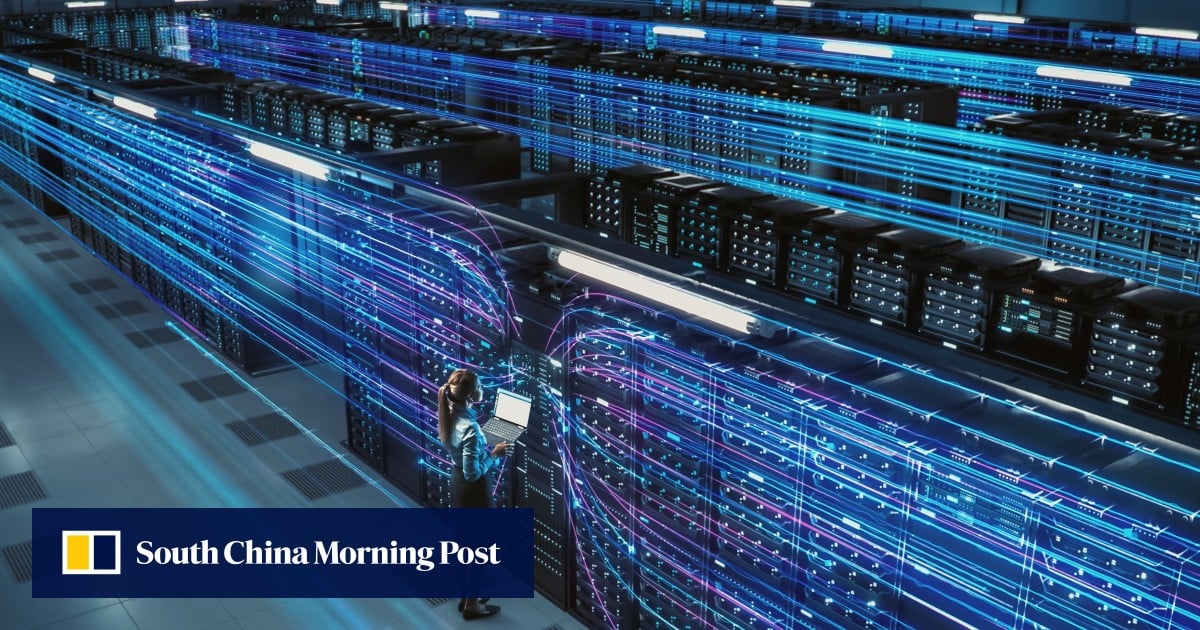
The "power problem" refers to the dual challenge of sourcing enough electricity to run massive data centres and sourcing enough high-end chips to fill them. By announcing the completion of the 1GW centre, Zhipu AI addressed both concerns simultaneously. The market reaction suggests a renewed confidence that Zhipu AI can maintain its growth trajectory despite the geopolitical headwinds affecting the broader tech sector in North Asia.
A Chronology of Zhipu AI’s Rise
Zhipu AI’s journey from a university research project to a multi-billion-dollar "AI Tiger" has been characterized by rapid scaling and academic excellence.
- 2019: Zhipu AI is founded by members of the Knowledge Engineering Group (KEG) at Tsinghua University. The firm focuses on building bilingual (Chinese and English) models from the ground up.
- 2022-2023: The company releases the early versions of its GLM (General Language Model) framework, gaining traction for its open-source contributions and its ability to perform high-level reasoning tasks.
- Late 2024: Amid tightening US export bans on NVIDIA’s H100 and B200 chips, Zhipu AI pivots its infrastructure strategy to focus on domestic clusters.
- Early 2026: Zhipu AI announces GLM-5.0, claiming parity with leading global models in coding and mathematical reasoning.
- July 2026: The company completes its 1GW computing centre and acquires XCore Sigma, signaling its transition from a software-heavy research firm to a vertically integrated AI infrastructure giant.
Broader Implications for the Chinese AI Sector
The success of Zhipu AI in building a 1GW domestic cluster serves as a bellwether for the entire Chinese technology landscape. It suggests that the "de-NVIDIA-fication" of the Chinese AI industry is moving faster than many Western analysts had predicted.
For other domestic players—such as Baichuan, Moonshot AI, and MiniMax—the Zhipu milestone provides a blueprint for survival. If Zhipu can successfully train a frontier-class model like GLM-5.2 on domestic silicon, it proves that the "compute wall" can be scaled through sheer volume and software optimization rather than relying on the most advanced 3nm or 2nm process nodes from overseas foundries.
Furthermore, the acquisition of XCore Sigma underscores the growing importance of the "software stack" in the AI race. As hardware becomes more fragmented due to trade restrictions, the value shifts to the middleware that can make that hardware usable. Zhipu’s move to bring this expertise in-house suggests that the next phase of competition will not just be about who has the most chips, but who has the smartest software to manage them.
Infrastructure and Energy Challenges
The scale of the 1GW project also brings to the forefront the immense energy requirements of the AI era. A 1-gigawatt facility requires a stable, high-voltage connection to the national grid and sophisticated cooling systems to manage the heat generated by hundreds of thousands of processors.
The completion of this facility aligns with China’s "East-to-West" (Dongshu Xisuan) computing project, a national strategy aimed at relocating data-intensive computing tasks to western provinces where renewable energy and land are more abundant. While Zhipu has not disclosed the exact location of the 1GW centre, industry experts suggest it likely benefits from integrated power solutions, possibly involving dedicated solar or wind farms to offset the carbon footprint and ensure energy security.
Future Outlook
Looking ahead, Zhipu AI faces the daunting task of maintaining its lead. While the 1GW facility provides the raw power, the ultimate test will be the performance of the GLM-5.2 model in real-world applications. The company is reportedly targeting enterprise sectors including finance, healthcare, and autonomous systems, where high-reliability AI is in high demand.
The acquisition of XCore Sigma is expected to be fully integrated by the end of the third quarter, at which point Zhipu may release further data on the efficiency gains achieved through its new heterogeneous computing stack.
As of Tuesday’s close, Zhipu AI’s market capitalization has recovered a significant portion of its losses, but the road remains complex. The company must continue to navigate a landscape defined by rapid technological shifts and a delicate geopolitical environment. However, with its new 1-gigawatt "engine" and its expanded software capabilities, Zhipu AI has sent a clear message to the market: it has the infrastructure and the ingenuity to compete on the global stage, regardless of external constraints.
