

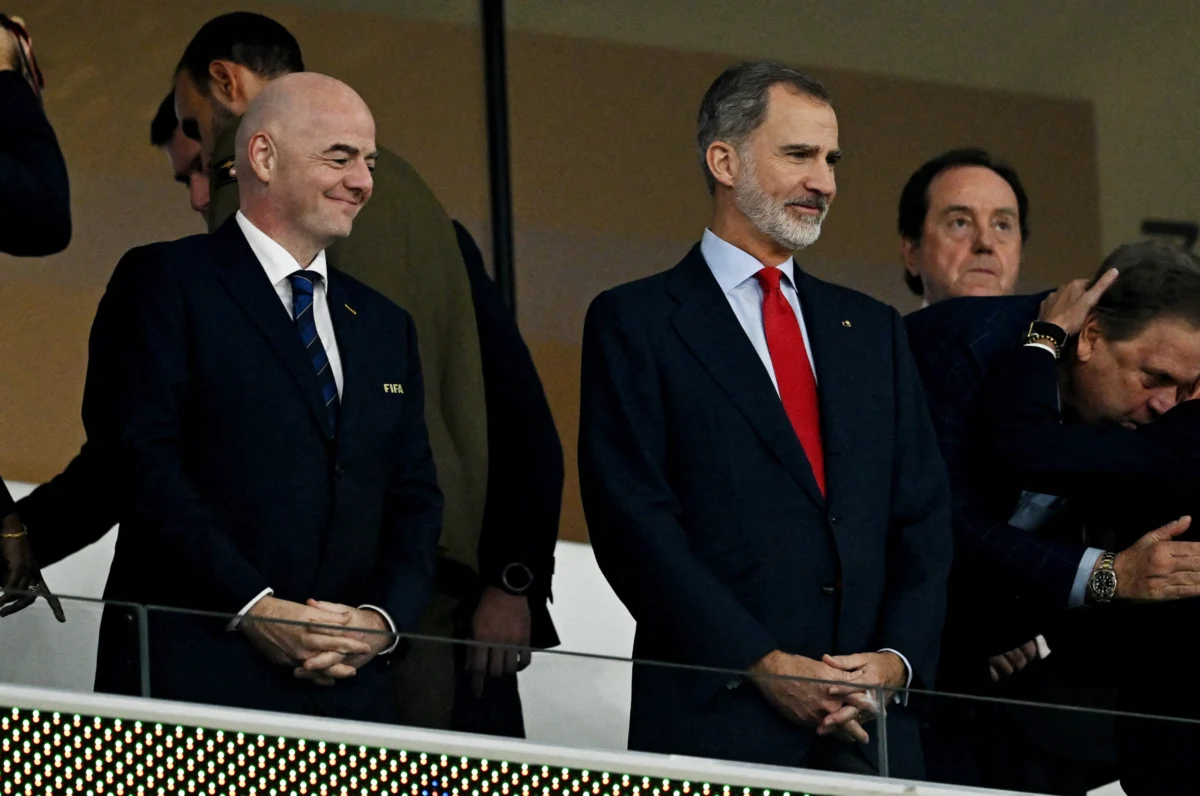
The ink has barely dried on the plans for the first-ever 48-team FIFA World Cup, set to debut in 2026, yet the prospect of an even grander tournament, potentially involving 64 nations, is already on the table. FIFA President Gianni Infantino has acknowledged this possibility, a move that could fundamentally reshape the economic and logistical landscape of global football. Speaking to Swiss television during a recent tournament, Infantino indicated that a 64-team World Cup was among the "ideas that could be examined" once the final whistle of the current cycle had blown, reigniting a vigorous debate over the realistic limits of football’s premier event.
A History of Expansion: From Modest Beginnings to Global Showpiece
The World Cup has a long history of expansion, mirroring the sport’s global growth and FIFA’s ambition to include more nations. Originating as a 13-team invitational tournament in Uruguay in 1930, it grew to 16 teams by 1934. The format remained largely consistent for decades, with minor fluctuations due to geopolitical events, until the 1982 tournament in Spain, which saw an expansion to 24 teams. This was followed by another significant jump to 32 teams for the 1998 World Cup in France, a format that endured for six editions, through to the 2022 tournament in Qatar.
The decision to expand to 48 teams for the 2026 edition, co-hosted by Canada, Mexico, and the United States, was made in 2017. This change marked a 50% increase in participating nations and a substantial rise in matches, from 64 to 104, extending the tournament duration to more than five weeks. FIFA justified this expansion on grounds of global inclusivity, offering more opportunities for nations from Asia, Africa, and CONCACAF to qualify, thereby fostering football development worldwide and increasing commercial revenue. Infantino has consistently championed this vision, stating, "If you don’t give smaller countries a chance to participate in the World Cup, they’ll lack the incentive to keep improving," a sentiment he reiterated when discussing the potential for a 64-team format.
The Mechanics of a 64-Team World Cup: Unprecedented Scale
Should FIFA proceed with a 64-team tournament, the scale would be unprecedented. Retaining the basic structure of four-team groups followed by a knockout stage would see a significant increase in the number of matches. A common proposal involves 16 groups of four teams, with the top two from each advancing to a 32-team knockout stage. This format would comprise a staggering 128 matches – 24 more than the 2026 tournament and exactly double the total staged under the long-standing 32-team format.
Such an expansion would inevitably lead to a longer tournament. Unless FIFA drastically compresses the schedule or stages an impractical number of simultaneous games, it could add roughly another week to a competition already projected to last over five weeks. This extended duration would place immense pressure on the international match calendar, impacting domestic leagues and player availability.
Logistical Hurdles: Host Nation Demands
The logistical implications of a 64-team World Cup are formidable, pushing the boundaries of what a host nation, or even multiple nations, can realistically accommodate. A tournament of this magnitude would require:
- More Stadiums: Significantly more venues capable of hosting World Cup matches, often with strict capacity and infrastructure requirements. The 2026 tournament already requires a broad spread of stadia across three nations.
- Vast Accommodation: An exponential increase in hotel rooms and other lodging options for teams, officials, media, and millions of visiting fans.
- Enhanced Transport Infrastructure: Robust and efficient transport networks (air, rail, road) to move teams and fans across potentially vast distances between host cities.
- Expanded Training Facilities: A greater number of high-quality training grounds, often one for each participating team, meeting FIFA standards.
- Massive Volunteer Workforce: A substantially larger contingent of volunteers to manage operations, guide fans, and support various logistical aspects.
The upcoming 2030 World Cup, planned to be predominantly staged by Spain, Portugal, and Morocco, with Uruguay, Argentina, and Paraguay each hosting a single opening-round match to mark the tournament’s centenary, already presents a complex organisational challenge. Accommodating 64 teams across six disparate host nations would exacerbate these issues, potentially stretching resources and coordination capabilities to their limits.
Even more demanding would be the prospect of a single country hosting a 64-team World Cup. Saudi Arabia, slated to host the tournament alone in 2034, already faces significant scheduling and infrastructure questions for the 48-team format. Ramadan is expected to begin in mid-November that year, making the November-December window used for the 2022 World Cup in neighbouring Qatar difficult to replicate. This could necessitate another unprecedented reshaping of the global football calendar, potentially pushing the tournament into the summer months in a region known for extreme heat, or an even earlier start. A 64-team tournament would magnify these challenges, demanding more stadiums, training facilities, hotels, transport capacity, and volunteers, while placing additional pressure on a country still rapidly developing its tourism and sporting infrastructure. For the existing 48-team format, the Saudis have proposed 15 venues, including eight in Riyadh, four in Jeddah, and others in Khobar, Neom, and Abha. Scaling this up for 64 teams would require substantial additional investment and rapid construction, much of which would need to be in place well before the 2027 Asian Cup, which Saudi Arabia is also hosting.

Financial Repercussions and Shifting Power Dynamics
While FIFA undoubtedly stands to gain financially from an expanded World Cup due to increased broadcast rights, sponsorship deals, and ticket sales, the financial implications for the broader football ecosystem are more nuanced and potentially contentious. A key concern is the potential reduction in the commercial value of qualifying competitions. By making qualification easier for many of the game’s traditional powerhouse nations, the allure and competitive intensity of regional qualifiers could diminish.
If broadcasters and sponsors place less value on these qualifying campaigns, the six regional confederations (UEFA, CONMEBOL, CAF, AFC, CONCACAF, and OFC) could become increasingly dependent on FIFA’s own financial distributions. This shift would consolidate more financial influence – and by extension, power – towards the global governing body, potentially at the expense of regional autonomy and financial independence. This concern has been explicitly voiced by prominent figures in football. UEFA President Aleksander Ceferin, for instance, has been a vocal critic of further expansion, stating last year, “I don’t think it’s a good idea for the World Cup itself, and it’s not a good idea for our qualifiers either. So I’m not supporting that idea.” The European governing body’s position has remained unchanged. Similarly, Asian Football Confederation President Sheikh Salman bin Ibrahim Al Khalifa has voiced opposition, questioning where such continuous expansion “might end.”
Beyond the confederations, participating national federations would also face increased financial burdens. Even wealthy federations, such as the French Football Federation, estimate significant costs for World Cup participation. The FFF was expecting to spend around 24.5 million euros ($28 million) at a recent World Cup, with federation President Philippe Diallo noting that Les Bleus would likely need to reach at least the semifinals to avoid a financial loss. At the April FIFA Congress in Vancouver, Diallo called for greater financial support from FIFA to participating nations. A longer, 64-team event would inevitably increase these costs further, covering extended travel, accommodation, training camps, and staffing for a prolonged period. For smaller, less affluent federations, these escalating costs could become a significant barrier, even if qualification becomes more accessible.
Player Welfare and Calendar Congestion
The welfare of elite players is another critical concern that would intensify with a 64-team World Cup. More matches mean a greater workload for players, increasing the risk of injuries, fatigue, and burnout. FIFPRO, the global players’ union, has consistently raised alarms about the already congested international match calendar and the demands placed on professional footballers. Adding 24 more high-stakes matches to the World Cup schedule would exacerbate these issues, potentially forcing players to choose between club and country or risking their long-term health.
Furthermore, an expanded World Cup would place greater strain on an already saturated international calendar. Domestic leagues, many of which have historically aligned themselves with Europe’s traditional August-to-May season, would face unprecedented disruption. Japan’s J-League is about to begin its first August-to-May campaign, while US Major League Soccer plans a similar switch from next year. Any future winter World Cup, which might become necessary for hosts like Saudi Arabia, would therefore disrupt an ever-growing number of competitions across continents, rather than primarily Europe’s major leagues, as was largely the case in 2022. This global disruption would create logistical nightmares for clubs, players, and broadcasters worldwide.
Competitive Balance, Fan Experience, and the World Cup’s Essence
While the stated aim of expansion is to give more nations access to football’s biggest stage, a 64-team tournament could also reignite debates over competitive balance. While it might produce more "Cinderella" stories, there is a risk of diluting the overall quality of the early stages, leading to more lopsided matches between traditional powerhouses and less developed footballing nations. This could potentially diminish the spectacle and competitive intensity that fans expect from the World Cup.
The fan experience itself could also be impacted. A longer tournament implies increased travel, accommodation, and ticket costs for supporters wishing to follow their teams. There’s also the potential for lower attendance in early-stage matches involving lesser-known teams, particularly in very large stadiums, if the sheer volume of games overwhelms fan interest or financial capacity.
Ultimately, a 64-team World Cup raises fundamental questions about whether the tournament risks losing some of the exclusivity and prestige that has long underpinned its immense global appeal. The World Cup’s magic has always stemmed from its rarity, its intense competition, and the feeling that only the very best reach its hallowed grounds. Over-expansion, critics argue, could dilute this unique selling point, transforming it from a pinnacle of sporting excellence into a more generalized global festival.
The progression of this idea beyond discussion will likely hinge on the reception and perceived success of the first 48-team World Cup in 2026. How that tournament is judged – financially, logistically, competitively, and in terms of fan and player experience – will be a crucial barometer for FIFA’s appetite for further expansion. The complex trade-offs between global inclusivity, commercial gain, and the integrity and sustainability of the sport will continue to define the future trajectory of football’s most celebrated event.
