

The Crisis of Carbon in Construction
To understand the significance of NeoCem’s recent funding, one must first look at the staggering environmental toll of traditional cement production. Cement is the primary ingredient in concrete, the most consumed man-made substance on Earth. Currently, the cement industry is responsible for approximately 8% of total global carbon dioxide emissions. If the cement industry were a country, it would be the third-largest emitter in the world, trailing only China and the United States.
The core of the problem lies in the production of "clinker," the binding agent in conventional Portland cement. Clinker is created by heating limestone and other materials to temperatures exceeding 1,450°C (2,640°F) in massive kilns. This process is carbon-intensive for two reasons: first, the enormous amount of energy required to reach those temperatures usually comes from burning fossil fuels; second, and more importantly, a chemical reaction called calcination occurs. As limestone (calcium carbonate) is heated, it breaks down into lime and releases carbon dioxide as a direct byproduct. For every 1,000 kilograms of traditional cement produced, roughly 900 kilograms of CO2 are released into the atmosphere. With global urbanization continuing at a rapid pace, finding a substitute for traditional clinker has become a holy grail for environmental scientists and green tech investors alike.
NeoCem’s Technological Breakthrough
Founded in 2021 by Christophe Deboffe and Benjamin Constant, NeoCem has developed a proprietary technology that addresses the clinker problem at its source. Instead of relying on carbon-heavy limestone, the company produces low-carbon cement binders using activated clays derived from recycled industrial waste and co-products. This circular economy approach allows NeoCem to bypass the most emissive stages of traditional manufacturing.
The company claims that its technology can reduce CO2 emissions by up to 90% compared to standard Portland cement. Crucially, NeoCem’s binders maintain technical performance equivalent to traditional materials, ensuring that structural integrity is not sacrificed for sustainability. Furthermore, the company has focused on market competitiveness, aiming to provide these materials at no additional cost to the end-user—a critical factor in an industry known for its tight margins and resistance to expensive "green premiums."
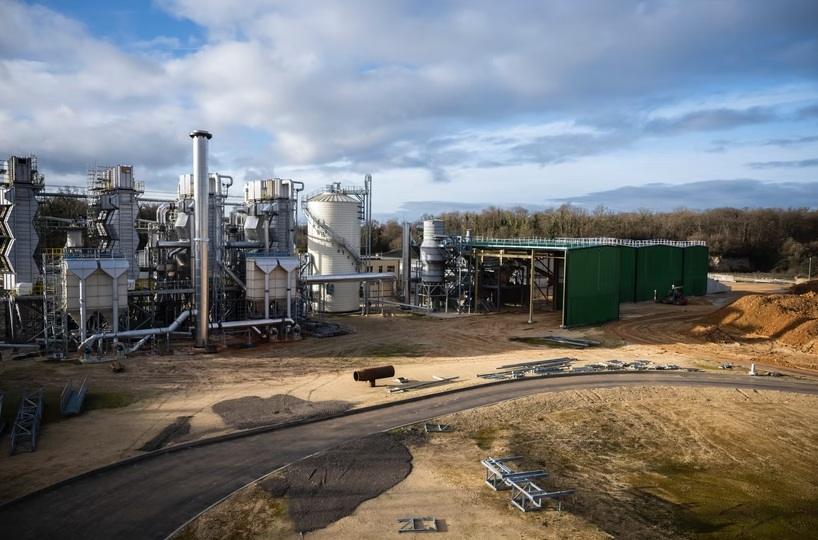
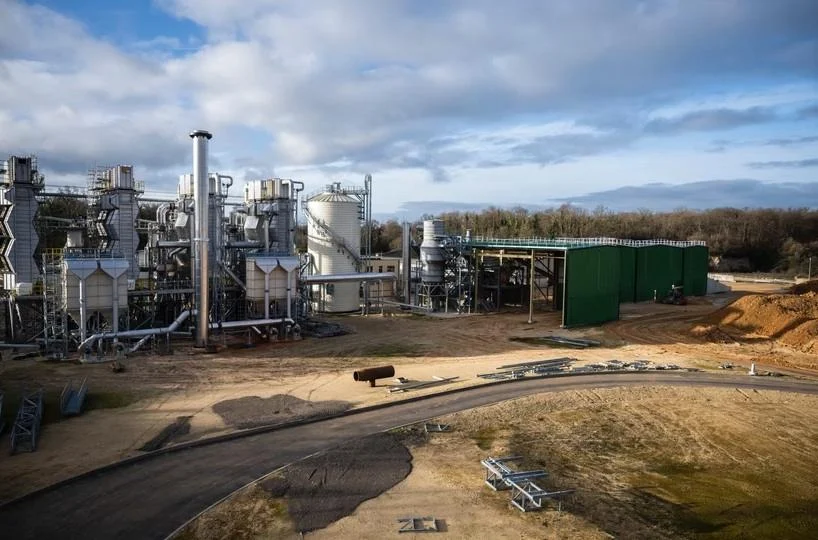
NeoCem’s process utilizes abundantly available industrial clay waste, often sourced from construction excavation sites or mining byproducts. By transforming this waste into a high-performance binder, the company solves two problems at once: reducing the carbon footprint of new buildings and finding a productive use for industrial waste that would otherwise end up in landfills.
Strategic Allocation of the $19 Million Investment
The €17 million (USD $19 million) raised in this round is earmarked for a multi-phase expansion strategy. The primary objective is the scaling of NeoCem’s existing industrial production site. Currently operating at a smaller capacity, the facility is being upgraded to reach a target output of 200,000 tons of low-carbon binder per year.
Beyond physical infrastructure, the capital will support NeoCem’s "asset-light" expansion model. Rather than attempting to build and own every factory globally, the company intends to deploy its technology through industrial partnerships and joint ventures. This strategy allows NeoCem to integrate its technology into existing cement plants or regional construction hubs, facilitating faster adoption across France and international markets.
The funding round was led by the Fonds Révolution Environnementale et Solidaire, an Article 9 fund managed by Crédit Mutuel Impact. Article 9 funds, under the European Union’s Sustainable Finance Disclosure Regulation (SFDR), are those that have sustainable investment as their core objective, representing the highest standard of "green" financial products.
Official Responses and Market Validation
The investment has been met with enthusiasm from both the financial and construction sectors, signaling a growing appetite for mature decarbonization solutions. Nadia Bouzigues, Chief Executive Officer of Crédit Mutuel Impact, emphasized the immediate readiness of NeoCem’s solution.

"NeoCem has developed a decarbonizing and competitive solution to advance one of the country’s most emitting industrial sectors," Bouzigues stated. "The offer is available immediately and is already of interest to big names in construction. With this investment, we are continuing our commitment to the environment and enabling the company to increase both its industrial capabilities and its commercial efficiency."
Industry analysts note that NeoCem’s timing is optimal. Major construction firms in Europe are currently navigating the transition to stricter environmental regulations, such as the RE2020 in France, which mandates a reduction in the carbon impact of new buildings. By offering a "drop-in" replacement for traditional cement that does not require architects or engineers to rewrite their specifications, NeoCem is positioning itself as a low-friction solution for a high-pressure problem.
A Chronology of NeoCem’s Development
The path from a 2021 startup to a $19 million-funded industrial contender has been rapid, reflecting the urgency of the climate crisis.
- 2021: NeoCem is founded by Christophe Deboffe and Benjamin Constant. The founders combine backgrounds in industrial engineering and sustainable materials to focus on the "calcined clay" opportunity.
- 2022-2023: The company focuses on R&D and pilot testing. During this period, NeoCem refines its ability to use various types of waste clay, ensuring the technology is versatile enough to be deployed in different geographic regions with varying soil compositions.
- 2024: NeoCem begins establishing its first industrial-scale production footprint in France, proving that the laboratory results can be replicated at volume.
- July 2026: The company announces the successful closing of its €17 million funding round. This milestone marks the shift from localized production to a strategy of national and international scaling.
Data and Environmental Impact Analysis
The potential impact of NeoCem’s technology, if adopted at scale, is substantial. To put the 200,000-ton production target into perspective, replacing 200,000 tons of traditional cement with NeoCem’s 90% reduced-carbon alternative would save approximately 160,000 tons of CO2 emissions annually. This is equivalent to taking roughly 35,000 gasoline-powered passenger vehicles off the road for an entire year.
Furthermore, the use of recycled clays supports the European Union’s Circular Economy Action Plan. By sourcing raw materials from excavation waste, NeoCem reduces the need for new limestone quarrying, preserving natural landscapes and biodiversity. The "local sourcing" model also reduces the carbon emissions associated with the long-distance transport of heavy raw materials, as clay waste is generally available near major urban construction centers.
Broader Implications for the Global Cement Market
NeoCem’s rise is part of a broader "Green Cement" movement that includes other innovative companies like Ecocem, Hoffmann Green Cement, and U.S.-based Brimstone. However, NeoCem’s specific focus on recycled clay byproducts gives it a unique niche. While some competitors rely on ground granulated blast-furnace slag (GGBS)—a byproduct of the steel industry—the supply of slag is limited and expected to decline as the steel industry itself transitions to "green hydrogen" processes that do not produce slag. Clay, by contrast, is nearly inexhaustible and widely distributed across the globe.
The success of this funding round also highlights the shifting landscape of industrial finance. Investors are increasingly looking for "hard tech" solutions that offer tangible decarbonization in physical industries, rather than focusing solely on software or digital platforms. The involvement of Crédit Mutuel Impact suggests that institutional capital is becoming more comfortable with the capital-expenditure-heavy nature of industrial scaling, provided the technology has a clear path to market parity.
Future Outlook: From France to the Global Stage
Looking ahead, the primary challenge for NeoCem will be the speed of adoption within a traditionally conservative construction sector. Builders and insurers are often hesitant to adopt new materials due to long-term liability concerns. However, by achieving technical equivalence and securing partnerships with "big names in construction," as noted by Nadia Bouzigues, NeoCem is clearing the hurdles of trust and reliability.
The company’s plan to use joint ventures for international deployment is a strategic move to navigate differing regional building codes and material availability. As countries like China, India, and the United States look for ways to meet their 2050 climate pledges, the demand for low-carbon binders is expected to skyrocket.
NeoCem’s $19 million infusion is more than just a corporate milestone; it is a signal that the technology required to decarbonize the foundation of modern civilization—concrete—is moving out of the lab and into the city. With a 90% reduction in emissions and a cost-competitive model, NeoCem is helping to build a future where the growth of our cities no longer comes at the expense of the planet’s climate stability.
