

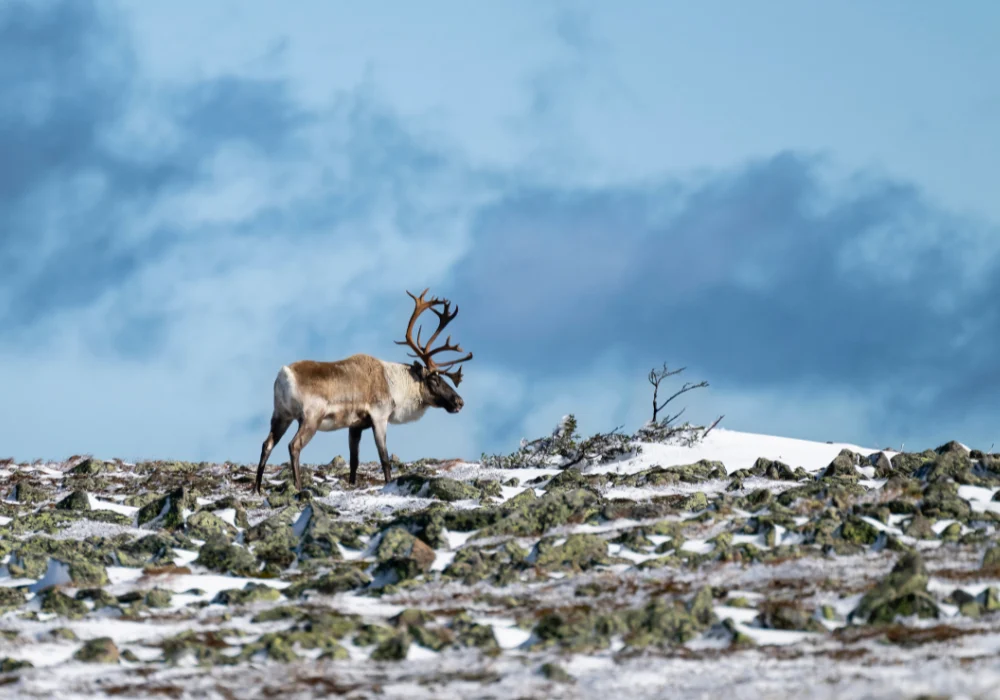
The barren-ground caribou, a subspecies of Rangifer tarandus, represents one of nature’s most extraordinary examples of endurance and navigational precision. These hoofed mammals, or ungulates, undertake the longest seasonal migration of any terrestrial animal on Earth, a journey that spans approximately 1,300 kilometers. This trek is not merely a physical movement across the landscape but a complex biological ritual that bridges the gap between the sheltered boreal forests used in winter and the nutrient-rich Arctic tundra where calving occurs in the summer. While the sheer distance of this migration is well-documented, recent scientific inquiry has turned toward a more ephemeral aspect of their survival: the concept of collective memory. Researchers now believe that the caribou’s ability to adapt to shifting weather conditions and varying forage availability is rooted in a social learning process passed down through generations. However, as human-led infrastructure projects begin to fragment the northern wilderness, this ancient repository of knowledge is facing an existential threat.
The Biological Blueprint of Collective Memory
The concept of collective memory in wildlife suggests that migration routes are not entirely dictated by instinct, but are instead learned behaviors. Biologist Anne Gunn, a leading expert on Arctic caribou, notes that while there is no tangible evidence of "memory" in the human sense, the behavioral patterns of tundra caribou suggest a sophisticated use of past experience. When environmental conditions turn hostile—such as when unseasonal ice layers prevent access to lichen—the herd does not simply perish or wander aimlessly. Instead, older female caribou, who typically lead the herds, appear to recall alternative routes used in previous years or even decades.
This matrilineal transfer of knowledge is the cornerstone of the herd’s resilience. A typical cow may live for 15 years. During her first year of life, she follows her mother, who in turn followed her own mother. This creates a chain of information that can span centuries. If this chain is broken, either through the death of the elders or the physical obstruction of the routes, the "memory" of the landscape is effectively erased. "They learn from each other," Gunn explains, emphasizing that sociality is just as vital to their survival as their physical adaptations to the cold.
A Population on the Precipice: The Bathurst Herd
The urgency of preserving this collective memory is underscored by the staggering decline in caribou numbers across the Canadian Arctic. The Bathurst herd, once one of the most populous and stable groups, has seen its numbers plummet by 98%. This decline is attributed to a "perfect storm" of factors, including climate change, increased predation, and the cumulative effects of industrial disturbance. When a herd thins out to this extent, the risk of losing their collective memory increases exponentially. With fewer "knowledgeable individuals" remaining, the likelihood that the herd can successfully navigate around new obstacles or find refuge during extreme weather events diminishes.
The loss of these animals is not just an ecological disaster but a cultural one. For the Indigenous peoples of the North, the caribou are a keystone species that has provided food, clothing, and spiritual significance for millennia. The decline of the Bathurst herd has already led to strict hunting moratoria, impacting the food security and traditional practices of the Tlicho, the Yellowknives Dene, and other groups.
The $40-Billion Corridor and the Threat of Fragmentation
The most immediate physical threat to the remaining caribou populations is a series of ambitious infrastructure projects designed to unlock the economic potential of the North. Chief among these is the proposed 400-kilometer all-season road stretching from the Northwest Territories into Nunavut. This road is a central component of a $40-billion initiative known as the Arctic Economic and Security Corridor. Framed as a "nation-building" project under the direction of high-level economic planning, the corridor is intended to link remote mines, military outposts, and northern communities to southern markets.
While the project promises economic growth and enhanced Arctic sovereignty, its path is set to cut directly through the heart of the caribou’s migratory range. A specific segment, known as the Grays Bay Road and Port project, is particularly contentious. It is poised to bisect the dwindling range of the Bathurst herd. Because the project is categorized as a matter of national security and economic priority, it has been positioned for a fast-tracked approval process, often bypassing the rigorous, multi-year environmental assessments that typically govern such developments.
The Science of Avoidance: Why Roads Block Migration
To the casual observer, a road might seem like a minor obstacle for an animal capable of traveling thousands of kilometers. However, wildlife ecologists point out that caribou are uniquely sensitive to linear disturbances. Elie Gurarie, a professor of wildlife ecology at the College of Environmental Science and Forestry at the State University of New York, notes that barren-ground caribou have an inherent aversion to crossing roads.
This behavior has been documented through GPS-collar data collected by the Northwest Territories’ Department of Environment and Climate Change. Researchers monitored caribou movements near existing mining roads, such as those connecting the Diavik and Ekati diamond mines to Yellowknife. Even though these roads are private and have relatively low traffic volumes compared to public highways, the data showed caribou "crowding" along the embankments. The animals would often pace back and forth for days, unable or unwilling to cross, effectively cutting them off from vast swaths of their natural range.
The reasons for this avoidance are multifaceted. Roads introduce noise, dust, and human activity into a silent landscape. Furthermore, the physical construction of the roads—often involving high gravel embankments to prevent melting the permafrost—creates a vertical barrier that caribou find difficult to navigate. When an all-season road is introduced, these impacts are permanent, unlike seasonal winter roads that disappear in the spring.
Strategies for Mitigation and Coexistence
Despite the dire outlook, researchers believe there is still a window of opportunity to mitigate the impact of the Arctic Economic and Security Corridor. Gurarie and other experts have proposed three primary strategies to ensure that the caribou’s collective memory is not severed by the new infrastructure.
First, there must be a commitment to collaborative mapping. By working with both academic researchers and Indigenous wildlife monitoring groups—such as the North Slave Métis Alliance, the Tlicho Ekwǫ̀ Nàxoèhdee K’è, and the Yellowknives Dene First Nation—planners can identify the most critical migratory "choke points." This traditional ecological knowledge, combined with satellite telemetry, could allow for the rerouting of segments of the road to less sensitive areas.
Second, the engineering of the road itself must be adapted for wildlife. This includes the construction of "wildlife crossings" with lower embankments and gradual slopes that allow caribou to cross without physical strain. In some cases, overpasses or underpasses designed specifically for ungulates could be integrated into the design, though these are costly and have seen varying levels of success in Arctic environments.
Third, the government could implement seasonal closures. This strategy has already been tested with some success on mining roads. By halting all traffic for several hours a day, or entirely for several weeks during the peak of the spring and fall migrations, the "barrier effect" of the road is temporarily lifted, allowing the herds to pass through.
The Broader Implications of Arctic Development
The struggle over the Grays Bay Road is a microcosm of a larger global tension between industrial development and conservation in the face of climate change. The Arctic is warming at nearly four times the global average, leading to "shrubification"—the encroachment of woody plants into the tundra—which alters the vegetation caribou rely on. As their habitat becomes increasingly fragmented by both environmental shifts and human activity, the caribou’s ability to move freely becomes their only hope for survival.
The loss of the barren-ground caribou would trigger a trophic cascade, affecting everything from soil nutrients to the populations of wolves and grizzly bears that prey on them. Furthermore, the extinction of a herd means the permanent loss of the collective memory associated with that specific landscape. Once the elders are gone and the calves have no one to follow, the ancient pathways are forgotten forever.
As the Grays Bay Road and Port project moves through its early stages, the decisions made by policymakers will determine whether the North remains a functional ecosystem or becomes a fragmented industrial zone. "If we don’t look after the herd well enough when they’re declining, and we lose most or all of a herd, all that collective memory of the landscape is lost," Anne Gunn warns. However, she remains cautiously optimistic, noting that the herds are still present and "knowledgeable individuals" still lead them. The preservation of these animals is not just a matter of biology; it is a matter of respecting a social structure that has outlasted every human civilization to date. The survival of the barren-ground caribou depends on our ability to value their freedom of movement as much as we value the resources beneath their feet.
