

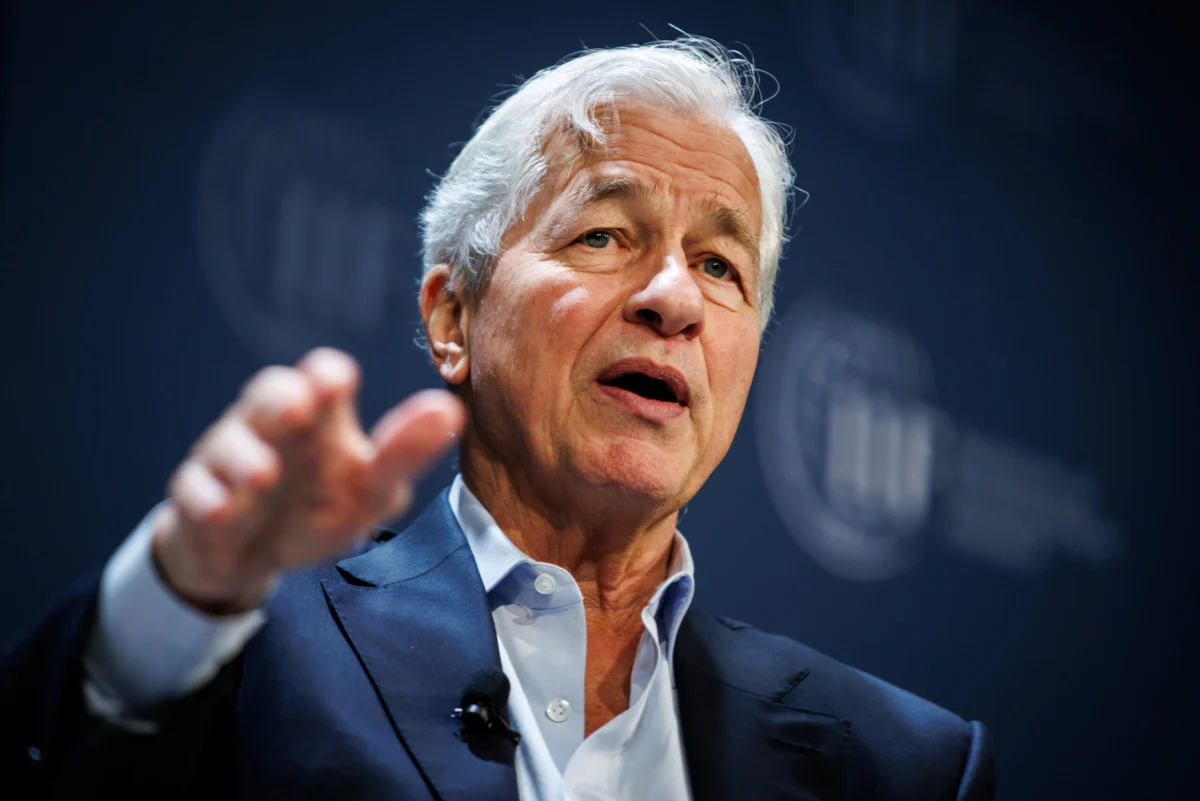
Jamie Dimon, the influential Chief Executive Officer of JPMorgan Chase & Co., has issued a stark warning to investors, asserting that current market valuations fail to adequately account for a burgeoning array of geopolitical and fiscal threats facing the global economy. Speaking during an hourlong interview with Wilfred Frost for "The Master Investor Podcast," released late Monday, Dimon articulated his deep skepticism regarding the perceived stability of financial markets, advising against purchasing either equities or long-dated U.S. Treasurys at their prevailing prices. His remarks, delivered against a backdrop of resilient corporate earnings and a surging stock market, underscore a significant divergence between institutional caution and prevailing investor optimism.
Unpacking Dimon’s Global Risk Assessment
Dimon, a seasoned veteran of financial markets and a frequent commentator on economic trends, posited that the risks currently confronting the world are "probably bigger than other people think." He meticulously detailed a confluence of factors contributing to this precarious outlook, including the ongoing conflicts in Ukraine and the Middle East, escalating tensions between the United States and China, and the pronounced rise in global military spending occurring concurrently with burgeoning government deficits.
The protracted conflict in Ukraine, now in its third year, continues to exert multifaceted pressures on the global economy. Beyond the immediate humanitarian catastrophe, it has triggered significant disruptions to energy and food supply chains, fueling inflationary pressures and forcing a reevaluation of geopolitical alliances. Similarly, the renewed hostilities and instability in the Middle East threaten vital oil shipping lanes, raising the specter of energy price spikes and further complicating global trade routes. These regional conflicts, Dimon implied, are not isolated incidents but rather symptoms of a more fractured and unpredictable global order.
Parallel to these direct military confrontations, the simmering rivalry between the U.S. and China presents a systemic risk of a different magnitude. Dimon’s concerns likely stem from the ongoing trade disputes, technological decoupling efforts, and competition for global influence, which could lead to fractured supply chains, reduced international cooperation, and a slowdown in global economic growth. The specter of further tariffs or restrictions on technology transfer could severely impact multinational corporations and global investment flows, challenging the integrated global economy that has underpinned decades of prosperity.
Compounding these geopolitical flashpoints is the alarming trend of rising military expenditures worldwide. While driven by perceived security imperatives, this surge in defense spending often comes at the expense of other public investments and contributes significantly to national debt burdens. Dimon linked this directly to "mounting government deficits," particularly in major economies like the United States. He emphasized that persistent deficits eventually necessitate a "reckoning," which could manifest as higher interest rates as bond markets demand greater compensation for financing government debt, a phenomenon he referred to as "bond vigilantes" asserting their influence.
The Market’s Disconnect and Dimon’s Cautionary Stance
Dimon’s latest pronouncements stand in stark contrast to the prevailing investor sentiment that has largely overlooked or downplayed these very risks. The S&P 500, a key barometer of U.S. stock market health, has returned nearly 10% year-to-date, buoyed by robust consumer spending, moderating inflation figures, and an enthusiastic embrace of the artificial intelligence (AI) trade. This market resilience has led many to believe that the U.S. economy has successfully navigated the recent geopolitical turmoil better than anticipated.
Indeed, last week’s quarterly earnings reports from JPMorgan Chase and its industry peers reinforced this optimistic narrative. The banking giants posted "blockbuster" results, largely powered by surging trading revenues and a strong rebound in investment banking activity. These strong performances suggested a vibrant financial sector thriving amidst seemingly challenging global conditions, further solidifying the market’s willingness to look past potential headwinds.
However, Dimon, who leads the world’s largest bank by market capitalization, has a well-established history of issuing cautionary warnings about impending economic risks. His notable pronouncement in June 2022, urging the public to "brace yourself for an economic hurricane" caused by the Federal Reserve’s quantitative tightening and the Ukraine war, serves as a prominent example of his consistent vigilance. While that "hurricane" did not materialize with the ferocity some anticipated, his continued warnings reflect a deep-seated conviction that systemic vulnerabilities are being underestimated.
When pressed on whether markets are underpricing the chance of a major shock, Dimon acknowledged the difficulty in precisely gauging what risks are already reflected in asset prices. "It’s possible something’s baked in," he conceded, "but what’s not baked in is what actually happens." This subtle distinction highlights his concern that while general awareness of risks exists, the specific, cascading consequences of a severe geopolitical or fiscal event are not adequately factored into current valuations.
The "Camel’s Back" Analogy: Resilience Versus Inflection Point
Despite his deep-seated concerns, Dimon did acknowledge a degree of increased resilience within the global economy. He noted in the interview that the world has become less dependent on certain energy sources compared to previous decades, a factor that might mitigate the impact of some shocks. However, he swiftly countered this by warning that such resilience does not eliminate the possibility of a sudden and dramatic "inflection point."

Employing a vivid analogy, Dimon stated, "You may need more straws in the camel’s back to cause that tipping point." He elaborated, "Even this current war starting up again, maybe that’s not enough to do it." This perspective suggests that while the global economy might withstand several individual shocks, there is a cumulative effect. Each new crisis, each new fiscal burden, each new geopolitical friction point adds a "straw" to the metaphorical camel’s back, gradually increasing the load until a seemingly minor additional stressor could trigger a catastrophic collapse. This concept underscores the unpredictable nature of systemic risk and the difficulty in forecasting the precise trigger for a major downturn.
Investment Posture: Avoiding Long-Dated Treasurys and the Broader Market
Dimon’s caution translated directly into specific investment advice. When asked about purchasing long-dated U.S. Treasurys, he unequivocally stated, "Personally, no." His reasoning is rooted in the belief that persistent U.S. budget deficits will inevitably force a reckoning, driving interest rates higher. Even if inflation were to successfully moderate back to the Federal Reserve’s 2% target, Dimon projected that the 10-year Treasury bond yield "should probably be at 4% to 4.5%," implying significant downside risk for bond prices from current levels.
This view is heavily influenced by the dynamics of the U.S. national debt. With the national debt exceeding $35 trillion and projected to grow further, the government’s need to issue more debt to finance its operations and service existing obligations creates supply pressure on the bond market. If global investors, particularly major foreign holders of U.S. debt, become less willing to absorb this supply without higher compensation, or if domestic demand wanes, interest rates would naturally rise. Dimon’s "bond vigilantes" reference harks back to an era where market participants, by demanding higher yields, effectively disciplined governments perceived as fiscally irresponsible.
His skepticism extended to the broader equity market as well. While he would consider an individual stock if it presented "a great investment" opportunity, Dimon expressed reluctance to be a buyer of the overall market at its current valuations. This stance suggests a belief that the market, as a whole, is overvalued given the underlying economic and geopolitical risks, making broad-based investment less appealing compared to targeted opportunities in companies with robust fundamentals and compelling growth prospects.
A Measured View on the Artificial Intelligence Cycle
Beyond his macroeconomic warnings, Dimon also offered a nuanced perspective on the artificial intelligence boom, comparing the current surge in spending and excitement to the early days of the internet. While acknowledging the "huge" amount of money being invested in AI, he questioned the timing and specific outcomes of these investments.
"Will it in total pay off? Probably, just like the internet did," Dimon said, suggesting long-term optimism for the technology’s transformative power. However, he quickly added a crucial caveat: "Will it pay off the way you expect and the timetable you expect? Definitely not."
To illustrate his point, Dimon referenced the internet boom of the late 1990s and early 2000s. He reminded listeners that many prominent early players, such as Yahoo and Netscape, eventually faded or were significantly diminished, while the ultimate winners like Google and Facebook (now Meta) emerged later and dominated the subsequent phases of technological evolution. This historical parallel serves as a powerful reminder that while a new technology may indeed be revolutionary, the path to profitability and market leadership is often circuitous and fraught with uncertainty. It implies that investors betting on current AI leaders should temper their expectations regarding immediate returns and be prepared for significant shifts in market dominance as the technology matures.
Broader Implications and the Path Forward
Dimon’s warnings arrive at a critical juncture for the global economy. The confluence of elevated geopolitical tensions, persistently high inflation (though moderating), and rapidly expanding national debts presents a complex challenge for policymakers and investors alike.
The implications of persistent U.S. budget deficits are particularly salient. The Congressional Budget Office (CBO) frequently projects a worsening fiscal outlook, with debt-to-GDP ratios reaching unprecedented levels in the coming decades. Servicing this debt consumes an ever-larger share of the federal budget, potentially crowding out vital public investments in infrastructure, education, and research, which are crucial for long-term economic growth. Should Dimon’s "bond vigilantes" indeed emerge, a sudden surge in interest rates could trigger a fiscal crisis, making it exponentially more expensive for the government to borrow and potentially leading to drastic cuts in public services or tax increases.
From a geopolitical standpoint, the fragmented international landscape poses significant risks to global trade and investment frameworks. The weaponization of economic tools, such as sanctions and trade restrictions, while intended to exert pressure, also creates systemic instability and encourages nations to diversify supply chains away from perceived risks, potentially leading to less efficient and more costly global production. For investors, this translates to increased uncertainty in international markets and a higher premium on geopolitical risk analysis.
Ultimately, Dimon’s message serves as a powerful counter-narrative to the prevailing market exuberance. While the U.S. economy has demonstrated remarkable resilience in the face of recent shocks, the JPMorgan CEO believes that the cumulative weight of geopolitical instability and fiscal irresponsibility is creating an environment where future shocks could have far more severe and unpredictable consequences. His advice to exercise extreme caution in broad market investments and long-dated government bonds reflects a deep-seated belief that the current pricing of assets does not adequately reflect the profound, yet often underestimated, risks lurking beneath the surface of the global financial system. Investors, therefore, are encouraged to consider the potential for "what actually happens" rather than solely relying on what might already be "baked in" to current market valuations.
